Yoloha Unity Pro Cork vs Gaiam Premium 6mm: Which One Should You Buy?
GearLab tested both of these in its 2026 round of 19 mats and they finished 10th and 11th, four points apart. The list prices are $159 and $29.98. A gap that big on price and that small on score is worth a closer look, because the individual columns are not close at all.
As an Amazon Associate, we earn from qualifying purchases made through links on this page. How this works
The quick answer
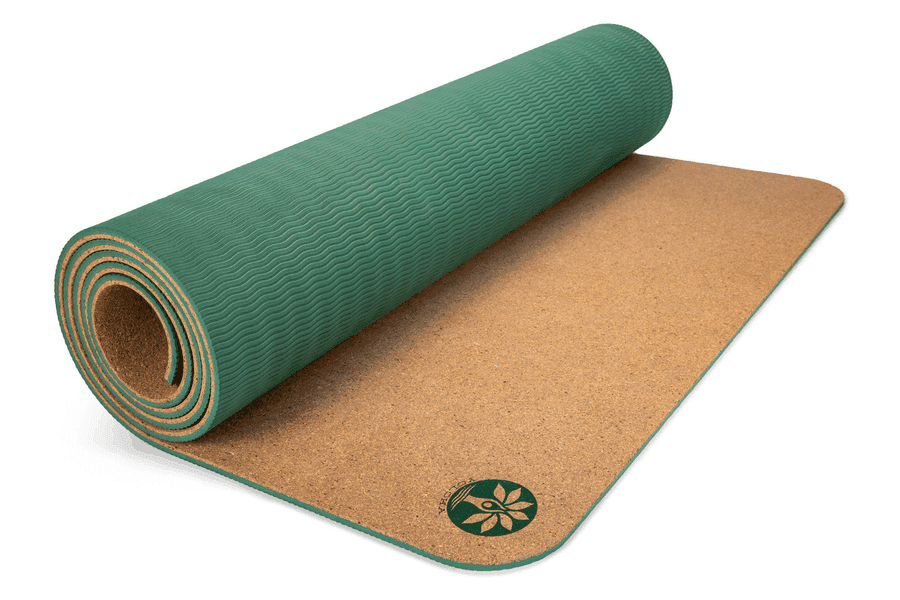
The cork mat buys you wet grip: 7.5 dry and 6 wet against the Gaiam’s 6 and 4. It also buys four inches of length, two of width, and a mat made in the USA from cork, natural rubber and plant-based foam. It loses on cleaning, scoring 5 out of 10 there against the Gaiam’s 8, and it weighs 7 pounds against 3.3.
Get the Yoloha if you sweat, want the bigger surface, or want natural materials. Get the Gaiam if you practice in a cool room, because most of what you give up is grip you may never need.
Get the Yoloha Unity Pro if...
- You practice hot or you sweat a lot
- You want 72 by 26 rather than 68 by 24
- A mat made in the USA from cork and rubber is what you want
- You might want the 80 or 84 inch version later
Get the Gaiam Premium if...
- Your room is not heated
- You want to carry 3.3 pounds instead of 7
- You clean the mat hard and often
- You would rather keep about $129
Side by side
Price
The Gaiam Premium lists for about $129 less.
$159
List price · check price at yolohayoga.com
$29.98
List price · check price at Amazon
Thickness
Identical thickness.
6 mm0.24″
6 mm0.24″
Weight
The Gaiam Premium is 3.7 lbs lighter.
7 lbs3.2 kg
3.3 lbs1.5 kg
Size
The Unity Pro is 4″ longer; the Unity Pro is 2″ wider.
Same on both
- 6 mm thick
- Comfort scores within half a point of each other
- No third-party certifications
- Both lie flat from the first unroll
Full specs
Dimensions
Materials & build
Buying
- Long80" × 26"
- XL84" × 30"
A hundred and thirty dollars for four points
GearLab tested both of these in its 2026 round of 19 mats. The Yoloha Unity Pro Cork came 10th at 66 out of 100. The Gaiam Premium came 11th at 62, with a Best Buy award. They list at $159 and $29.98.
Four points of separation for $129 is the kind of number that deserves a closer look rather than a shrug. The overall scores are close; the individual columns are not, and that is where this decision actually lives.
The cork mat buys you wet grip
Yoloha scored 7.5 dry and 6 wet. Gaiam scored 6 dry and 4 wet. On a dry floor that is a modest edge; once you are sweating it is the difference between a mat that holds and one that does not.
That gap is the single clearest thing the extra money buys. If you practice in a heated room, or you just sweat a lot, it is the argument for the Yoloha and it is a real one.
For context on where 6 out of 10 wet actually sits, the best mat in that field managed 8.5 and most of the cheap ones are at 4. The Yoloha is good rather than exceptional here.
Why cork gets grippier as you sweat
Cork contains suberin, a waxy substance that becomes tackier with a little moisture on it. So a cork surface that feels slightly slick under dry hands firms up once your palms are damp, which is the reverse of what PVC does.
The Unity Pro blends cork with natural rubber over a plant-based foam base. That rubber content means it is not an option if you react to latex, and it is part of why the mat weighs what it does.
Cleaning is where the Yoloha loses
GearLab gave the Yoloha 5 out of 10 for care and cleaning, the lowest score in that column among the mats near it. Cork does not like being soaked, does not like alcohol-based sprays, and shows water marks.
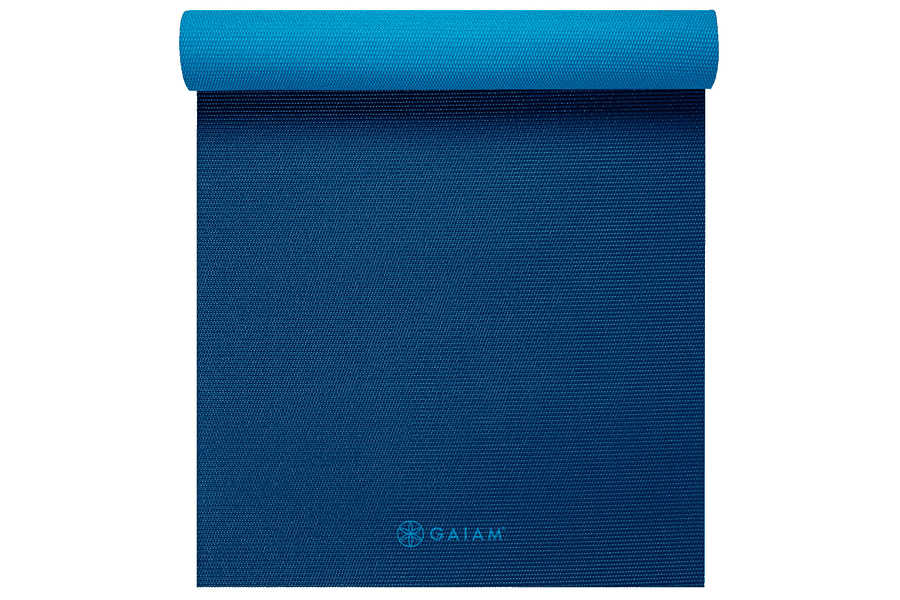
The Gaiam took an 8 in the same column. PVC is the easiest mat material to keep clean: wipe it, spray it, it does not care. If your routine involves dousing the mat after every hot class, that is worth weighing against the grip.
Seven pounds against three and a bit
7 pounds for the Yoloha, measured at 7.0 by GearLab, against 3.3 for the Gaiam. In a field where the median is around five, the Yoloha is on the heavy side and the Gaiam is one of the lightest.
Cork over rubber over foam is simply a lot of material. If the mat lives in one room this is irrelevant; if you walk it to a studio twice a week you will notice every session.
The Yoloha is bigger in both directions
72″ × 26″ against 68″ × 24″. Four inches of length and two of width, and the width is the one people underestimate until they have tried it.
Yoloha also sells the Unity Pro at 80″ × 26″ and 84″ × 30″ for more money. Gaiam has no larger Premium, so if you are tall the Premium simply runs out. That is a bigger practical gap than the four points on the scorecard suggests.
Materials and where they are made
The Yoloha is made in the USA from cork, natural rubber and a plant-based foam. GearLab scored its materials 6.5. The Gaiam is PVC with no stated country of origin and scored 6 in the same column.
Half a point is not much, and it is a fair reminder that buying a natural-materials mat is mostly a values decision rather than a performance one. Neither mat carries a third-party certification, which for a mat sold on its eco credentials is a gap worth naming.
Same six millimetres, firmer feel
Both are 6 mm. Comfort scores came out 7 for the Yoloha and 6.5 for the Gaiam, so they are close on paper.
The feel is different. Cork over rubber is dense and does not give much, which is steadier in standing poses and less forgiving on a kneecap. The Gaiam’s PVC squashes more. If your knees are the problem, neither of these solves it and a thicker foam mat will.
Where to buy, and what the prices really are
Yoloha sells direct only. The Unity Pro lists at $159 on yolohayoga.com and was discounted to $139 when we last checked, which is a pattern rather than a one-off. There is no Amazon listing, and returns run 30 days.
The Gaiam is on Amazon and everywhere else, and carries Gaiam’s lifetime guarantee on defects. Check the current price before ordering, since the four reversible color combos are not always priced the same.
Bottom line
Buy the Yoloha Unity Pro if you sweat, if you want the bigger surface, or if a natural-materials mat made in the USA is what you are shopping for. Six out of ten wet grip and a 72 by 26 footprint are things the Gaiam cannot give you at any price.
Buy the Gaiam Premium if you practice in a cool room and want to spend thirty dollars. The test result says you give up four points overall, and most of what you give up is grip you may never need. It is also half the weight and far easier to clean.
Yoloha Unity Pro Cork
List price $159
Gaiam Premium 6mm
List price $29.98
Frequently Asked Questions
- Is the Yoloha worth $129 more?
- Only for the grip and the size. On overall score the gap is four points, 66 against 62. What that hides is a wet grip score of 6 against 4, four inches of extra length and two of width, and a care and cleaning score of 5 against 8. If your room is not heated and you are not tall, the Gaiam does most of the same job.
- How does cork grip work?
- Cork contains suberin, a waxy substance that becomes tackier with a little moisture on it. So a cork surface that feels slightly slick under dry hands firms up once your palms are damp, which is the reverse of what PVC does. Yoloha blends the cork with natural rubber, which means it is not an option if you react to latex.
- Why did the Yoloha score badly on cleaning?
- GearLab gave it 5 out of 10, the lowest in that column among the mats near it. Cork does not like being soaked, does not like alcohol-based sprays, and shows water marks. The Gaiam took an 8 because PVC is the easiest mat material to keep clean. If you douse your mat after every hot class, weigh that against the grip.
- How heavy is the Yoloha?
- Seven pounds, and GearLab measured 7.0 to confirm it. Cork over rubber over foam is a lot of material. The Gaiam is 3.3 pounds. If the mat lives in one room this does not matter; if you walk it to a studio twice a week you will notice every session.
- Is either one thicker or softer?
- Both are 6 mm and the comfort scores were 7 and 6.5, so they are close on paper. The feel differs: cork over rubber is dense and does not give much, which is steadier standing and less forgiving on a knee, where the Gaiam’s PVC squashes more. Neither solves sore knees.
- Where do I buy each one?
- Yoloha sells direct only, with no Amazon listing and a 30 day return window. The Unity Pro lists at $159 and was discounted to $139 when we last checked, which is a recurring pattern rather than a one-off. The Gaiam is on Amazon and everywhere else and carries a lifetime guarantee on defects.
Related comparisons
- Gaiam Premium 6mm vs Gruper TPE 6mm
- Amazon Basics 1/4 Inch Thick TPE vs Gaiam Premium 6mm
- Gaiam Premium 6mm vs YogaAccessories Extra Thick Deluxe 1/4"
- Manduka PRO vs Yoloha Unity Pro Cork
- Manduka PRO Long vs Yoloha Unity Pro Cork
- JadeYoga Harmony XW vs Yoloha Unity Pro Cork
- Alo Warrior vs Yoloha Unity Pro Cork
- Yoloha Unity Pro Cork vs b, halfmoon B Mat Strong 6mm
- Manduka PROlite Long & Wide vs Yoloha Unity Pro Cork