Manduka X vs Yoloha Unity Pro Cork: Which One Should You Buy?
A cross-training mat against a cork mat, $87 apart. The Yoloha is bigger, thicker, and made in South Carolina from cork and plant foam; the X is half the weight and half the price and cleans with a hose. OutdoorGearLab tested the Yoloha and scored it tenth of nineteen mats.
As an Amazon Associate, we earn from qualifying purchases made through links on this page. How this works
The quick answer
The Yoloha is 6 mm of cork blended with natural rubber over a plant foam base, and GearLab scored it 66 of 100 with 7 of 10 for both comfort and grip, 7.5 dry and 6 wet. It also took the lowest care and cleaning score in the lineup at 5 of 10, and GearLab called it expensive, heavy, bulky, and slick when wet. The X is 5 mm of closed-cell TPE, 3.4 pounds, and it shrugs off treatment that would ruin a premium mat.
Buy the X if the mat has other jobs or the budget matters. Buy the Yoloha if you specifically want cork: firm, grounded, natural, made in the USA.
Get the Manduka X if...
- Your mat also sees weights, cardio, or outdoor sessions
- You want to wipe or hose it clean with no thought
- You want the lighter mat, 3.4 pounds against 7
- You'd rather keep about $87
Get the Yoloha Unity Pro if...
- You want the grainy, firm feel of a cork surface
- You want the bigger mat, 72" × 26" against 71" × 24"
- Natural materials and USA manufacturing matter to you
- You practice outdoors, where testers found it especially stable
Side by side
Price
The X lists for $87 less.
$72
List price · check price at Amazon
$159
List price · check price at yolohayoga.com
Thickness
The Unity Pro is 20% thicker.
5 mm0.2″
6 mm0.24″
Weight
The X is 3.6 lbs lighter.
3.4 lbs1.5 kg
7 lbs3.2 kg
Size
The Unity Pro is 1″ longer; the Unity Pro is 2″ wider.
Same on both
- Both are firm rather than plush
- Neither absorbs sweat into the mat
- Both come with a 30 day return window and no warranty
- Neither is a hot yoga mat without a towel
Full specs
Dimensions
Materials & build
Buying
- Long80" × 26"
- XL84" × 30"
A gym mat and a cork mat, $87 apart
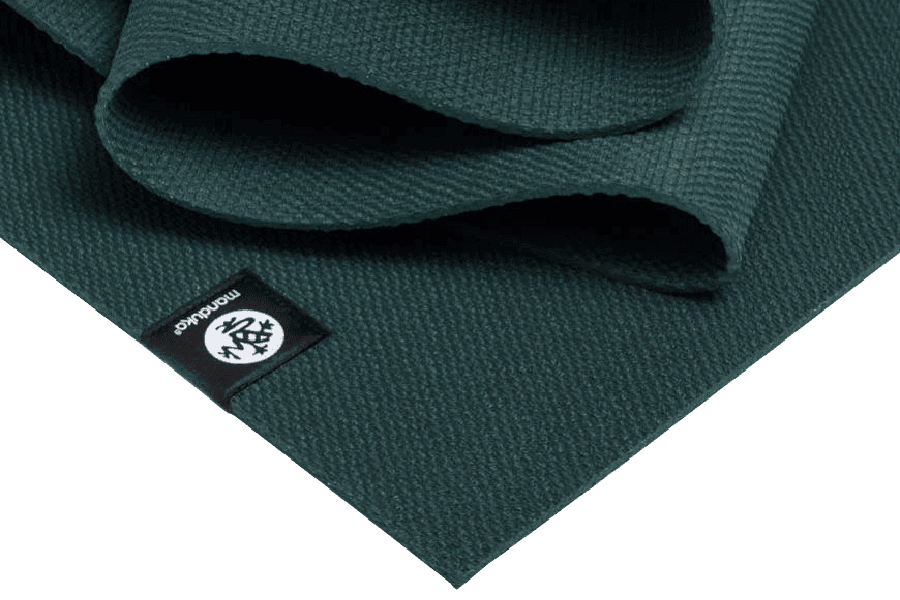
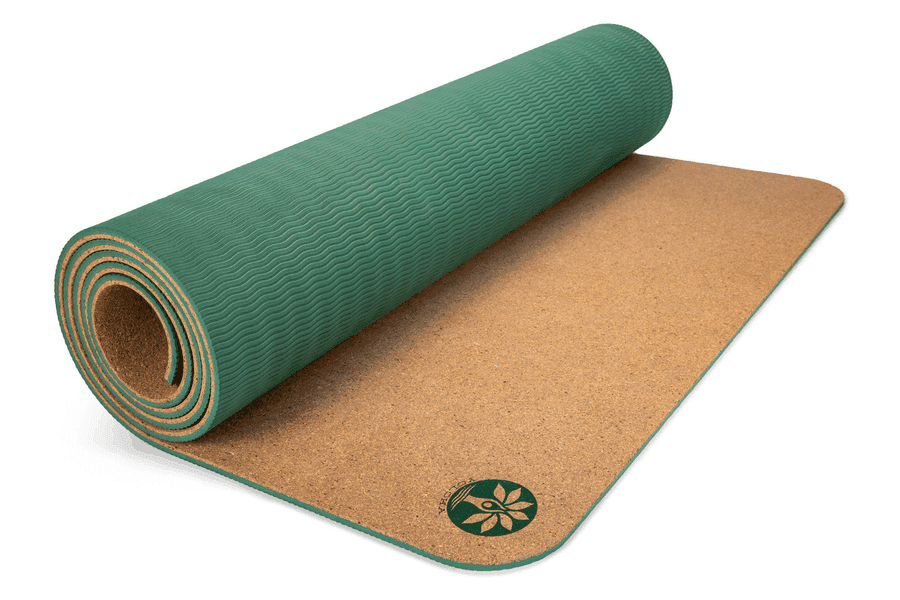
The Manduka X is $72 of closed-cell TPE, sold as a hybrid fitness mat and built to survive weights, pavement, and a hose. The Yoloha Unity Pro is $159 of cork blended with natural rubber over a plant-based foam base, made in South Carolina.
OutdoorGearLab scored the Yoloha 66 of 100 in its 2026 roundup, tenth of nineteen, with no award. The X was not in that lineup. So this comes down to what you want the mat to do rather than to a ranking.
Grip: cork behaves differently from everything else
Cork gets grippier with a little moisture, which is the pitch, and it is largely true: GearLab rated the Yoloha 7.5 dry and 6 wet. The caveat they added matters, though. Water does not absorb into the surface, so once sweat starts to pool you want a towel, and “slick when wet” is on their list of cons.
The X holds well with dry hands, and its crosshatch TPE is not slick. Owner reviews split sharply once sweat is involved: some report no slipping while dripping, others call it very slippery in a heated class and say they bought a towel. Closed-cell TPE is the reason, since a wet patch stays exactly where it lands. Neither of these is the mat to buy for a 105 degree room.
How each one feels
The Yoloha is grainy, firm, and noticeably different from any rubber or foam mat. GearLab described its extra-firm material as one of the most stable bases they used for practicing outside, and its testers used the word grounding, which is roughly what people mean when they like cork.
The X is firm too, but smooth and slightly slick to the touch, tuned by Manduka for impact absorption rather than for tack. It is the right feel for a mat that sees jumping or a knee landing hard, and a plainer one for a slow yoga practice.
Cushion and size
The Yoloha is 6 mm and 72″ × 26″; GearLab scored its comfort 7 of 10. The X is 5 mm and 71″ × 24″. An extra millimeter and two extra inches of width both count, and the X’s 24 inch width is its clearest compromise in any wide-legged pose.
Yoloha goes bigger if you need it: an 80″ × 26″ Long at $179 and an 84″ × 30″ XL at $219. Manduka sells the X in one size only, so what you see is the whole line.
Weight: 3.4 pounds against 7
This is not close. The X is 3.4 pounds, light for a full-thickness mat. The Yoloha is 7 pounds, and GearLab listed heavy and bulky among its cons alongside expensive.
Cork mats are thick to roll as well as heavy, so the Yoloha takes up real space in a car or a closet. If the mat commutes, the X is twice the mat to live with and half the weight.
What each one does on the floor
GearLab noted that the Yoloha’s tread grips most of the time but can slide a little on smoother surfaces like hardwood, which is worth knowing if your practice space is a polished floor. On concrete, grass, or a deck it stays planted, and its stability outdoors was one of the things testers liked most.
The X stays put on hard floors and shrugs off surfaces that would damage a rubber mat. Manduka sells it for exactly that: driveway workouts, garage sessions, and anywhere you would not put a $150 mat.
Cleaning: the Yoloha’s weakest score
GearLab scored the Yoloha 5 of 10 for care and cleaning, the lowest score in the entire nineteen mat lineup. Cork is naturally antimicrobial, which helps with smell, but it does not like being soaked and it does not wipe down as thoughtlessly as a synthetic surface.
The X is the opposite. TPE holds nothing, so a cloth deals with a class and a tap deals with an outdoor session, and there is nothing inside the mat to go stale. If low maintenance is a priority, this is a real gap.
Materials and coverage
The Yoloha is cork and natural rubber over plant-based foam, made in the USA, and GearLab called it eco-friendly and biodegradable in its pros while scoring the materials 6.5 of 10. Yoloha backs it with a 30 day return window.
The X is high-density TPE built around Manduka’s Double-Weave scrim, made in Taiwan, with no certifications and a 30 day return window. TPE is recyclable in principle in a way PVC largely is not, but it is a synthetic and Manduka does not claim otherwise.
Price and where to buy
$72 against $159. The X discounts by colorway fairly often, both on Manduka’s site and through the current Manduka X listing at Amazon, where one shade has been running well below the rest.
Yoloha sells the Unity Pro direct from yolohayoga.com in plain cork and a range of printed art designs. It is not on Amazon, and the price rarely moves.
Bottom line
Buy the X if the mat has jobs other than yoga, if it needs to be cleaned without thought, or if you carry it anywhere. Half the price, half the weight, and nothing about it is precious.
Buy the Yoloha if you want cork specifically: the firm grounded feel, the natural material, the fact that it is made in the USA and biodegrades. It is a mat with a point of view and a real following. Go in knowing it is heavy, needs care, and is not a hot yoga solution. If grip is what you actually want at this budget, the Manduka GRP Adapt 2.0 took GearLab’s hot yoga award with 9.5 dry and 8.5 wet.
Manduka X
List price $72
Yoloha Unity Pro Cork
List price $159
Frequently Asked Questions
- Is cork actually grippy?
- It gets grippier with a little moisture, which is the pitch, and GearLab rated the Yoloha 7.5 dry and 6 wet. The caveat matters though: water does not absorb into the surface, so once sweat starts to pool you want a towel, and slick when wet is on GearLab's list of cons. It is better than most mats when damp and not a substitute for a proper hot yoga surface.
- How hard is the Yoloha to clean?
- Harder than most. GearLab scored it 5 of 10 for care and cleaning, the lowest score in its entire nineteen mat lineup. Cork is naturally antimicrobial, which helps with smell, but it does not like being soaked and it does not wipe down as thoughtlessly as a synthetic surface. The X is the opposite: closed-cell TPE that a hose will clean.
- Does the Yoloha slide on hardwood?
- GearLab noted that its tread grips most of the time but can slide a little on smoother surfaces like hardwood, which is worth knowing if your practice space is a polished floor. On concrete, grass, or a deck it stays planted, and its stability outdoors was one of the things testers liked most about it.
- Can the Manduka X handle yoga?
- Yes, for an unheated practice. Its crosshatch TPE holds well with dry hands and it is firm and stable. Sweat is where owner reviews split: some report no slipping while dripping, others call it very slippery in a heated class. Closed-cell TPE is the reason, since a wet patch stays where it lands until you wipe it.
- Which is more comfortable?
- The Yoloha, marginally. It is 6 mm against the X's 5, and GearLab scored its comfort 7 of 10. Neither is a plush mat; both are firm by design. The Yoloha's extra two inches of width does more for a wide-legged stance than the millimeter of thickness does for a knee.
- What sizes do they come in?
- Yoloha sells the Unity Pro in three: the standard 72 by 26, an 80 by 26 Long at $179, and an 84 by 30 XL at $219. Manduka sells the X in one size only, 71 by 24, so what you see is the whole line.
Related comparisons
- Manduka X vs Gaiam Performance Dry-Grip 5mm
- Manduka X vs Gaiam Performance Dry-Grip Long & Wide
- Manduka X vs IUGA Eco Friendly Non Slip PU
- Manduka X vs Hugger Mugger Earth Elements 5mm
- Manduka PRO vs Yoloha Unity Pro Cork
- Manduka X vs JadeYoga Level One
- Manduka PRO Long vs Yoloha Unity Pro Cork
- JadeYoga Harmony XW vs Yoloha Unity Pro Cork
- Alo Warrior vs Yoloha Unity Pro Cork