Manduka PROlite vs eKO Superlite: Which One Should You Buy?
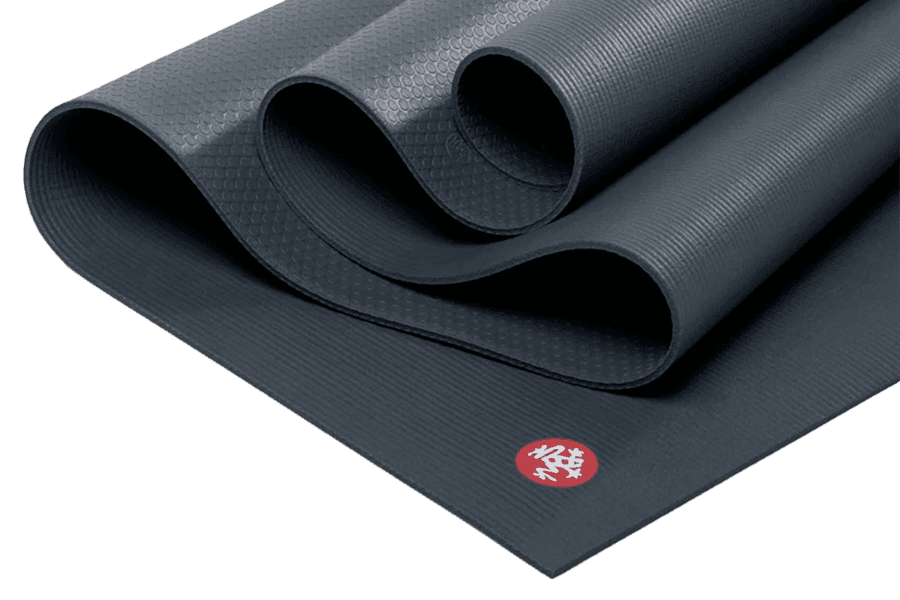
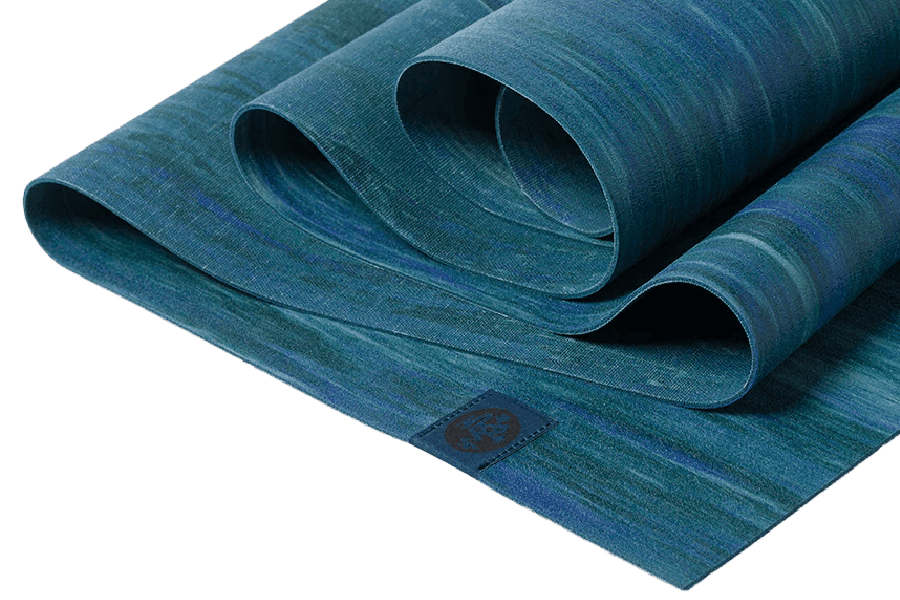
Half the price and a third of the thickness: the eKO Superlite is not a budget PROlite, it's a different tool. The PROlite is Manduka's everyday mat, 4.7 mm of PVC you practice on for years. The Superlite is 1.5 mm of natural rubber that folds into a suitcase, weighs 2.2 pounds, and assumes there's already a floor, carpet, or studio mat underneath you. Settle which of those two jobs you need done and the rest follows.
As an Amazon Associate, we earn from qualifying purchases made through links on this page. How this works
The quick answer
As a primary mat, the PROlite wins and it isn't close: real cushioning, a surface that improves for years, and the lifetime guarantee. The Superlite's 1.5 mm puts your knees essentially on the floor, which is the price of a mat that folds to notebook size and disappears into luggage.
Buy the PROlite as the mat you practice on. Buy the Superlite as the mat you pack, or as a hygienic layer over hotel carpet and rented studio mats. Plenty of people sensibly own both; almost nobody should own only the Superlite.
Get the PROlite if...
- This is your main mat and you practice on hard floors
- You want cushioning your knees can feel (4.7 mm vs 1.5)
- You want a mat that lasts decades, with the guarantee
- You practice daily and want a stable, planted surface
Get the Superlite if...
- You need a mat that folds flat into a carry-on
- It's a second mat for trips, not your daily driver
- You want rubber grip at 2.2 pounds for $54
- You'd use it as a clean layer over borrowed mats
Side by side
Price
The Superlite lists for $58 less.
$112
List price · check price at Amazon
$54
List price · check price at Amazon
Thickness
The PROlite is 213% thicker.
4.7 mm0.19″
1.5 mm0.06″
Weight
The Superlite is 2.4 lbs lighter.
4.6 lbs2.1 kg
2.2 lbs1 kg
Size
Same length; same width.
Same on both
- Same 71" × 24" footprint
- Made by Manduka
- Closed-cell surface (sweat can't soak in)
- Light enough to carry anywhere
Full specs
Dimensions
Materials & build
Buying
A mat and a travel accessory
Put these side by side and the $112 versus $54 price gap suggests a budget decision. It isn’t one. The PROlite is an everyday mat: 4.7 mm of dense PVC you unroll several times a week for a decade. The eKO Superlite is a travel tool: 1.5 mm of natural rubber, 2.2 pounds, folds flat like a beach towel, and offers roughly as much cushioning as one.
Manduka sells both to the same customer, often at the same time, because they don’t compete. The question this page answers isn’t so much which is better as whether the Superlite can plausibly be someone’s only mat. Short version: rarely.
Cushioning: 4.7 mm vs a rounding error
The PROlite’s dense PVC is firm but genuinely protective; knees, hips, and forearms on hard floors are its job. The Superlite’s 1.5 mm is a surface, not padding. Kneeling poses on wood or tile press through to the floor almost immediately, and anything resembling a restorative practice gets uncomfortable.
That’s by design. The Superlite expects backup: hotel carpet, a studio’s loaner mat underneath, grass, sand. Used as a top layer it’s excellent, adding grip and hygiene to whatever’s below. Used alone on concrete it punishes you for the weight it saved. Practitioners who prefer maximum ground contact and stability in balances are the exception; they choose thin mats on purpose.
Portability: rolling vs folding
The PROlite is portable the way mats are portable: 4.6 pounds, rolls into a tube, rides a shoulder strap to class without complaint. The Superlite is portable the way clothes are. It folds flat into roughly a laptop-sized square, slips inside a carry-on or backpack, and at 2.2 pounds you stop noticing it.
That folding trick is the entire purchase. If your travel is a weekly drive across town, the PROlite travels fine and you don’t need a second mat. If your travel involves airports, no rolled mat is coming along, and the Superlite is the Manduka answer to that problem.
Grip: instant rubber, with an asterisk
The Superlite’s textured rubber grips from the first practice, which matters more on a travel mat than anywhere else; nobody wants a break-in period on a mat used two weeks a year. The PROlite arrives slick and earns its grip over a few weeks of regular use, Manduka’s current guidance being simply to keep practicing until the surface wakes up.
The asterisk: a 1.5 mm mat is only as planted as the surface under it. On smooth hotel tile the whole mat can creep in ways a 4.6 pound mat never does. And both surfaces are closed-cell, so serious sweat calls for a towel on either; neither of these is a hot yoga mat.
Durability: a decade vs a passport’s worth of trips
The PROlite carries Manduka’s lifetime guarantee, which in the fine print runs about 10 years of regular use with one replacement, proof of purchase from an authorized seller required. The construction deserves it; this PVC family shows up in GearLab’s reporting still serviceable after five to twenty years.
The Superlite gets 30 days, and thin rubber lives a thin rubber life: folding, sun exposure in transit, and rough floors all take a toll, and a heavily used Superlite showing wear after a few years is normal, not defective. As a sometimes-mat it lasts fine. As a daily mat it’s consumable, and rubber’s care rules, shade and gentle cleaners, still apply at any thickness.
Sizes and colors
Both mats are 71″ × 24″, and both lines offer length: the PROlite in a 79″ Long and 79″ × 30″ Long & Wide, the Superlite in a 79″ Long at $58 for tall travelers. Color is a quiet Superlite win: around 19 colorways at last count, one of Manduka’s widest decks, against roughly 13 for the PROlite. Cheap and colorful is a nice combination in a second mat.
Price and value
List prices are $112 and $54, and colorway sales on the Superlite regularly dip below list. Check current prices on the PROlite and the eKO Superlite before buying.
Comparing their value head-to-head mostly misses how people buy them. For most readers the budget works out to $112 for the practice mat now, and $54 later if a trip demands it. Buying the Superlite instead of a real mat saves $58 and costs you comfort at every session in between; that trade only pays if you’re on the road more than you’re home.
Bottom line
The PROlite is the mat. If you’re choosing one surface to practice on for years, its cushioning, lifespan, and guarantee settle this page in a paragraph, and its 4.6 pounds is already light enough for any commute.
The Superlite is the mat you pack, and judged as that it’s excellent: instant grip, featherweight, folds into luggage, cheerful color options, $54. Buy it alongside a proper mat when travel or over-carpet practice enters your life. Just don’t make it your only mat unless your knees rarely touch the floor.
Manduka PROlite
List price $112
Frequently Asked Questions
- Can the eKO Superlite work as an only mat?
- Only for a narrow slice of practitioners: people who practice on carpet, prefer maximum floor feel, or do mostly standing work. At 1.5 mm there is effectively no padding, so kneeling poses on wood or tile are uncomfortable fast. Most owners use it as a travel mat or a topper over studio mats, with a cushioned mat like the PROlite at home.
- Does the eKO Superlite actually fold?
- Yes, and that's its defining trick. At 1.5 mm it folds flat like a thick towel into roughly a laptop-sized square that fits in a carry-on or backpack, no straps needed. The PROlite only rolls; it's compact for an everyday mat but it's still a tube you carry, not something that packs inside luggage.
- Which grips better, the PROlite or the eKO Superlite?
- The Superlite grips immediately; its textured natural rubber holds from the first practice, while a new PROlite is slick until a few weeks of use break in the surface. But grip on a 1.5 mm mat depends partly on what's under it: on a slippery hotel floor the mat itself can shift more than a heavy mat would. Both are closed-cell, so heavy sweat wants a towel on either.
- Is the eKO Superlite covered by Manduka's lifetime guarantee?
- No. The guarantee covers the PRO series only, so the PROlite is in and the Superlite gets Manduka's standard 30 day return window. Thin rubber also wears faster than any everyday mat: dragged over rough floors and folded repeatedly, a heavily used Superlite is doing well to last a few years. At $54 most owners treat that as acceptable.
- How much lighter is the Superlite, really?
- It's 2.2 pounds to the PROlite's 4.6, but the number undersells the difference. The PROlite is a rolled tube you carry over a shoulder; the Superlite folds into the bag you were already bringing. For commuting to a local class either works. For flights, the Superlite is the only one of the two you'd actually pack.
- Does the eKO Superlite come in other sizes and colors?
- Yes on both counts. There's a 79" × 24" Superlite Long at $58 for tall travelers, sold through Manduka directly in three colors at last count. The standard 71" mat comes in around 19 colorways, one of the widest palettes Manduka offers, against about 13 for the PROlite.
Related comparisons
- Manduka PROlite vs JadeYoga Harmony 74"
- Manduka eKO Superlite vs JadeYoga Voyager
- Manduka PROlite vs Lululemon The Mat 5mm
- Manduka PROlite vs JadeYoga Harmony 68"
- Manduka PROlite vs b, halfmoon B Mat Everyday 4mm
- Manduka PROlite vs Suga SugaMat
- Manduka PROlite vs Yoga Design Lab Combo 3.5mm
- Manduka PROlite vs Lululemon The (Big) Mat 5mm
- Manduka PROlite vs 42 Birds The Robin