Manduka PROlite vs eKO: Which One Should You Buy?
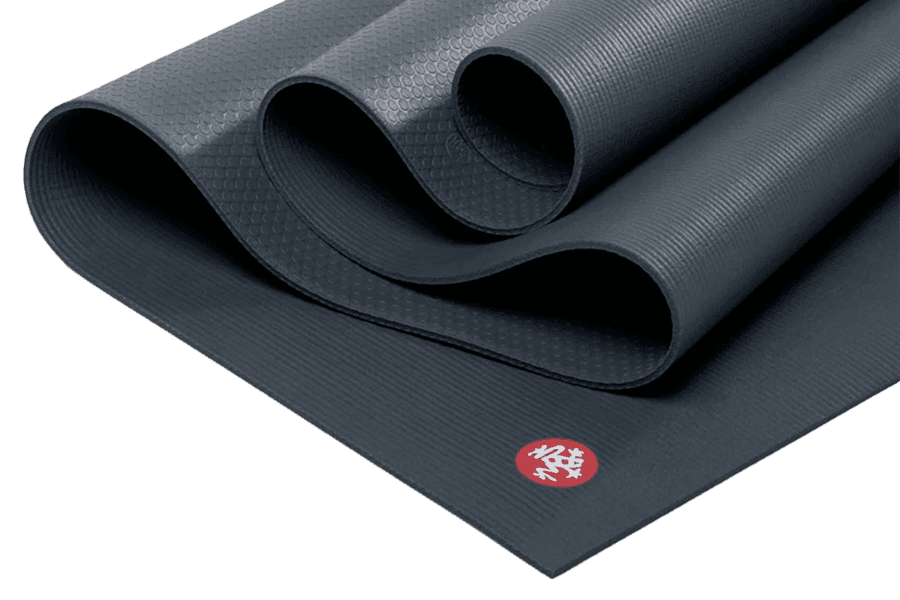
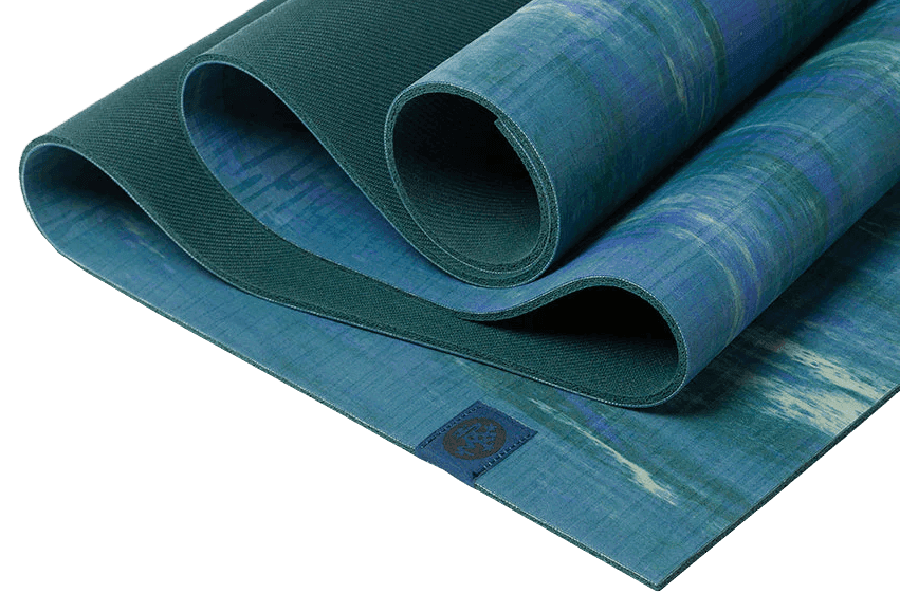
The PROlite and eKO sit two dollars apart in Manduka's lineup and answer the same question in opposite ways. The PROlite is the light cut of Manduka's PVC formula: 4.6 pounds, guaranteed for life, slick until it breaks in. The eKO is natural rubber: grippy from the first class, two inches wider, and at 7 pounds firmly in stay-at-home territory. Price won't decide this one; the material and the weight will.
As an Amazon Associate, we earn from qualifying purchases made through links on this page. How this works
The quick answer
These two are close in price and far apart everywhere else. The PROlite is 2.4 pounds lighter, starts slick and needs a few weeks of use to grip well, and carries Manduka's lifetime guarantee. The eKO grips from day one, gives you a wider 26" surface with a warmer rubber feel, and is the more sustainable material, but it weighs 7 pounds and Manduka backs it with nothing beyond a 30 day return window.
If the mat leaves the house with you, get the PROlite; it's the one built for carrying and the one Manduka stands behind for the long haul. If it stays home and you want rubber's immediate grip, get the eKO.
Get the PROlite if...
- You carry your mat to class; 4.6 pounds beats 7
- You want the lifetime guarantee (the eKO has none)
- You want a mat that shrugs off sun, hot cars, and neglect
- You can live with a slick surface for the first few weeks
Get the eKO if...
- You want real traction from the very first practice
- You'd use the extra 2 inches of width
- You prefer the warm, slightly springy feel of natural rubber
- A renewable material with recycled content matters to you
Side by side
Price
The PROlite lists for $2 less.
$112
List price · check price at Amazon
$114
List price · check price at Amazon
Thickness
The eKO is 6% thicker.
4.7 mm0.19″
5 mm0.2″
Weight
The PROlite is 2.4 lbs lighter.
4.6 lbs2.1 kg
7 lbs3.2 kg
Size
Same length; the eKO is 2″ wider.
Same on both
- Made by Manduka
- Same 71" length
- Closed-cell surface (sweat can't soak in)
- Firm, supportive cushioning
- Lies flat without curling
Full specs
Dimensions
Materials & build
Buying
Two dollars apart, built from opposite ideas
At $112 and $114, these two Manduka mats are priced like twins, which makes the comparison unusually clean: for once, cost tells you nothing. The PROlite is the carry-friendly version of Manduka’s German PVC recipe, 4.6 pounds with the lifetime guarantee attached. The eKO is the company’s natural rubber mat, made in Taiwan with over 30% recycled content, grippy out of the box, and at 7 pounds a full weight class heavier.
So the decision runs on two axes instead. One is the material: PVC that outlives its owner’s enthusiasm versus rubber that feels better sooner and wears out sooner. The other is the scale of the thing: the eKO is heavier and two inches wider, which changes where the mat can realistically live.
Grip: rubber wins the opening weeks
A new eKO needs no introduction period. The textured rubber surface holds palms and feet from the first class, with the slightly tacky, warm feel that makes natural rubber mats easy to like immediately.
A new PROlite is a different experience. The surface arrives slick, and the first few weeks are the worst thing about the mat. Manduka no longer recommends the old salt-scrub trick; its current position is that regular practice wears the slickness off on its own. It does, and a broken-in PROlite grips well in dry conditions for years afterward, but you pay the toll up front.
Sweat levels the field. Both mats are closed-cell, so moisture beads on top rather than soaking in, and Manduka itself frames the eKO’s grip as most dependable when dry. Damp palms are manageable on either; a heated class means a towel on either. If sweat performance is the deciding factor, an open-cell mat like the Jade Harmony is the better tool, and our PROlite vs Harmony comparison walks through that matchup.
Cushioning and the extra two inches
The eKO carries 5 mm of rubber to the PROlite’s 4.7 mm of PVC, and the rubber has a touch more give, so it reads as the slightly softer mat even though both are firm by any normal standard. Kneeling work on hard floors is tolerable on both and luxurious on neither; that’s the 6 mm tier’s job.
The quieter difference is width. The eKO is 26″ across, the PROlite 24″, and those two inches are easy to underrate. Wide stances, savasana, and anything with splayed elbows all feel roomier, which is part of why the eKO makes sense as a mat that stays unrolled at home. The PROlite’s narrower cut is the standard studio footprint and rolls up smaller for the same reason.
Weight decides who buys which
The PROlite exists because people asked for a Manduka they could carry, and 4.6 pounds delivers that: over shoulder or bike rack, it commutes without complaint. The eKO’s 7 pounds is PRO territory, and its wider roll makes it bulkier under an arm than the number suggests. Owners who buy one to schlep to class tend to stop schlepping it.
Put plainly: the eKO is a home mat that can visit a studio, and the PROlite is a studio commuter that’s perfectly happy at home. If you already know the mat will never leave the living room, the weight argument disappears and the material question below carries the decision alone.
Durability: one gets a guarantee, one gets 30 days
The PROlite shares the PRO family’s party trick, which is refusing to wear out. GearLab has found mats of this construction still working after five to twenty years, and Manduka puts a lifetime guarantee behind it: about 10 years of regular use per the fine print, one replacement, proof of purchase from an authorized seller required, with Amazon counting only when the mat is sold and shipped by Amazon itself.
The eKO is excluded from that guarantee entirely. Manduka covers the PRO series and stops there, leaving the eKO with a 30 day return window. The exclusion matches how the material behaves: natural rubber softens and sheds with hard use, owners report visible wear inside a few years of daily practice, and sun exposure actively damages it. Care rules follow suit. The PROlite survives car trunks and careless cleaning; the eKO wants shade and gentle products.
The sustainability trade
If the environmental ledger is what brought you here, the eKO is the reason this comparison exists. Tree-tapped rubber, over 30% recycled content, and none of PVC’s end-of-life problems; PVC is effectively unrecyclable, and the PROlite’s OEKO-TEX Standard 100 certification speaks to manufacturing safety, not disposal.
Manduka’s defense of its own PVC mats is longevity: one mat used for fifteen years can beat a parade of shorter-lived rubber mats on total impact. Both claims hold up; they just count different costs. Buy the eKO if the material itself is the point, and plan to care for it well enough to keep the replacement cycle slow.
Sizes, colors, and the eKO 2.0 wrinkle
The PROlite line runs four cuts: a 68″ Short, this 71″ standard, a 79″ Long, and a 79″ × 30″ Long & Wide, in around 13 colorways at last count. The eKO offers this 71″ mat in about 5 colors and a 79″ × 26″ Long in exactly one, plus the lighter eKO Lite and Superlite spin-offs.
One buying note: Manduka re-engineered the eKO a few years ago, and some retailers still tag the current mat as eKO 2.0. The version sold today is the recycled-content Taiwan build. Older reviews may be describing its predecessor, so check dates before trusting specifics.
Price and value
List prices are $112 for the PROlite and $114 for the eKO, close enough to ignore. Street prices swing by colorway, so check the current numbers on both the PROlite and the eKO before ordering.
With the sticker a wash, value comes down to lifespan. A PROlite that serves ten years, with a guarantee underwriting the early ones, costs less per year of practice than an eKO replaced every three to five. The eKO’s return on that gap is immediate grip, a roomier surface, and a material you may feel better about; nothing in the value column, just things worth paying for.
Bottom line
Get the PROlite if the mat travels with you or if you want this purchase to be the last one for a long while. It asks for a few slick weeks and repays them with a decade of durable, guaranteed service at a weight you’ll actually carry.
Get the eKO if it’s staying home and you want the nicer first-day experience: instant grip, a wide warm surface, and a renewable material, for the same money. Keep it out of the sun, expect it to age like the plant product it is, and enjoy that it never once asks you to wait for the grip to show up.
Manduka PROlite
List price $112
Manduka eKO
List price $114
Frequently Asked Questions
- Is the Manduka eKO covered by the same lifetime guarantee as the PROlite?
- No. Manduka's lifetime guarantee covers the PRO series only, and the PROlite qualifies. The eKO has no stated warranty; you get Manduka's standard 30 day return window and nothing after it. The fine print on the PROlite's guarantee is roughly 10 years of regular use, one replacement, with proof of purchase from an authorized seller.
- Which grips better, the Manduka PROlite or the eKO?
- Out of the box, the eKO by a wide margin. Its textured natural rubber holds from the first practice, while a new PROlite is slick and needs a few weeks of regular use before the grip develops. Once broken in, the PROlite's dry grip is very good. Both mats are closed-cell, so sweat sits on the surface; in a hot class either one wants a towel.
- How big is the weight difference between the PROlite and the eKO?
- Substantial. The PROlite is 4.6 pounds; the eKO is 7. Both are 71" long, but the eKO is also 26" wide to the PROlite's 24", so it rolls up bulkier as well as heavier. If you walk or bike to class, that 2.4 pound gap is the difference between a mat you carry daily and one you leave at home.
- Is the Manduka eKO good for hot yoga?
- It's workable, not ideal. The eKO is closed-cell, so sweat pools on the surface instead of soaking in, and Manduka itself describes the grip as most reliable in dry conditions. Light sweat is fine; heavy sweat means a towel. The upside is hygiene: the mat wipes clean and doesn't absorb moisture or odor. The PROlite has the same limitation once palms get wet.
- Which lasts longer, the PROlite or the eKO?
- The PROlite. Its dense PVC is the same construction GearLab has found still in service after five to twenty years, and Manduka guarantees it. The eKO's natural rubber wears faster: owners report surface wear after a few years of heavy use, and sunlight degrades rubber outright. Manduka warranties one of these mats and not the other, which tells you its own expectation.
- Is the current eKO the same mat older reviews describe?
- Not exactly. Manduka re-engineered the eKO line a few years back, and some retailers still label the current version eKO 2.0. Today's eKO is made in Taiwan from natural rubber with over 30% recycled content. Older reviews may describe the previous generation, so check which version a review covers before leaning on it.
Related comparisons
- Manduka PROlite vs JadeYoga Harmony 74"
- Manduka PROlite vs Lululemon The Mat 5mm
- Manduka PROlite vs JadeYoga Harmony 68"
- Manduka eKO vs Lululemon The (Big) Mat 5mm
- Lululemon The Mat 5mm vs Manduka eKO
- Manduka PROlite vs b, halfmoon B Mat Everyday 4mm
- JadeYoga Harmony 74" vs Manduka eKO
- Manduka PROlite vs Suga SugaMat
- Manduka PROlite vs Yoga Design Lab Combo 3.5mm