Manduka PROlite vs Liforme: Which One Should You Buy?
The PROlite is the carry-friendly version of the most durable mat formula in yoga: dense German PVC, a lifetime guarantee, and grip that takes a few weeks to arrive. The Liforme Classic is its opposite: instant grip wet or dry, etched alignment lines, and materials designed to biodegrade rather than outlast you. The $53 between them buys two genuinely different philosophies.
As an Amazon Associate, we earn from qualifying purchases made through links on this page. How this works
The quick answer
The PROlite is the buy-once pick. Its dense closed-cell PVC handles a decade of practice, Manduka backs it with a lifetime guarantee, and at 4.6 pounds it's one of the easiest premium mats to carry. Its weaknesses are real, though: the surface ships slick and needs weeks of break-in, and sweat sits on top where wet palms slide. The Liforme flips every one of those traits. It grips immediately with wet or dry hands, GearLab rated its sweaty-palm traction among the best it tested, and the etched alignment lines are genuinely useful. In exchange it wears like the natural material it is, weighs about a pound more, and carries no warranty.
If your practice is mostly dry and you want a mat that outlasts the decade, get the PROlite. If grip in sweat or alignment feedback would change how you practice, the Liforme is worth the extra $53, as long as you accept it won't last forever.
Get the PROlite if...
- You want the mat that's still in service ten years from now
- You carry your mat to class (4.6 pounds vs 5.5)
- You'd rather keep the $53
- You need a latex-free mat (the Liforme has a natural rubber base)
Get the Liforme if...
- You want grip from the first class, with wet or dry hands
- You'd use the etched alignment lines for placement and form
- You want the bigger platform (72.8 by 26.8 inches vs 71 by 24)
- You'd rather skip the PROlite's slick break-in weeks entirely
Side by side
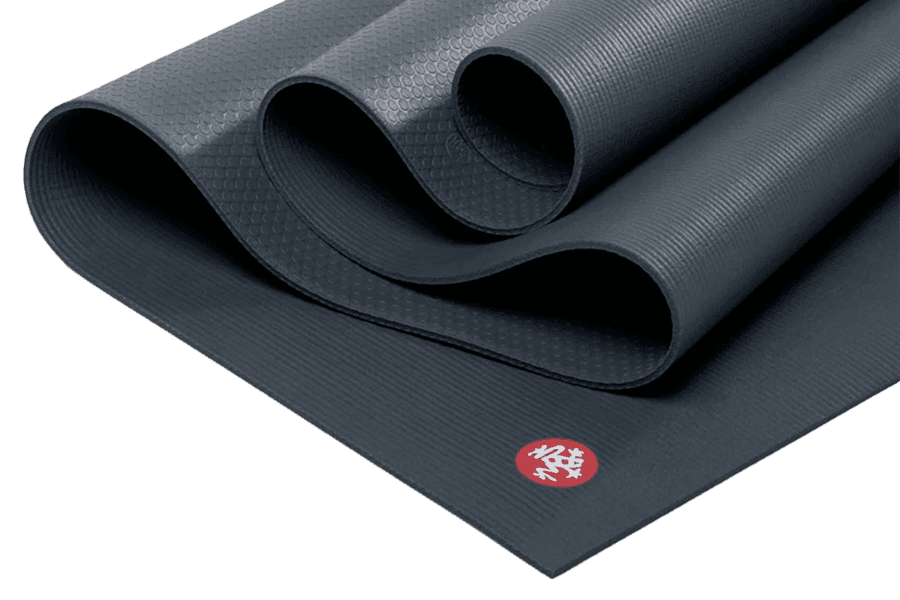
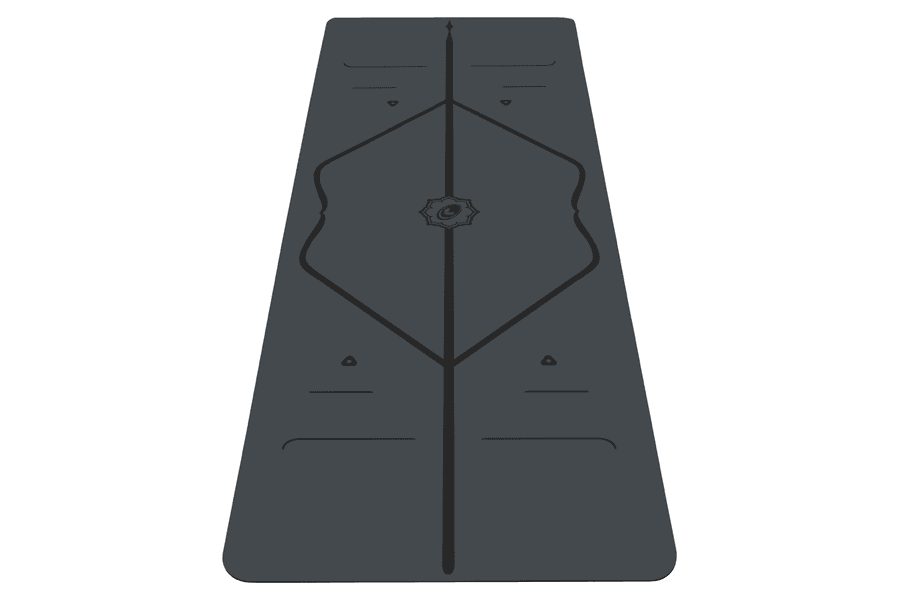
Price
The PROlite lists for $53 less.
$112
List price · check price at Amazon
$165
List price · check price at Amazon
Thickness
The PROlite is 12% thicker.
4.7 mm0.19″
4.2 mm0.17″
Weight
The PROlite is 0.9 lbs lighter.
4.6 lbs2.1 kg
5.5 lbs2.5 kg
Size
The Liforme is 1.8″ longer; the Liforme is 2.8″ wider.
Same on both
- Firm, stable platforms under balance poses
- Thinner than 5 mm, so kneeling work may want a folded blanket
- Lies flat without curling
- Wipe-down cleaning, no machine washing
Full specs
Dimensions
Materials & build
Buying
A durability mat against a grip mat
The PROlite is Manduka’s PRO formula in a lighter cut: the same dense, closed-cell PVC from the same German factory, 4.7 mm instead of 6, and 4.6 pounds instead of 7.5. Everything the PRO family is known for comes along, including the lifetime guarantee and the infamous break-in period. The Liforme Classic is built for the opposite priorities: a polyurethane top that grips hard from the first class, wet hands or dry, over a natural rubber base with an alignment system etched into the surface.
At $112 and $165, both are serious money. The question is whether you’re paying for the next ten years or for the next ninety minutes.
Grip: the Liforme wins the first month and every sweaty class
Out of the box this is a rout. The Liforme grips immediately, and GearLab’s testers rated its traction with sweaty palms among the best of the mats they tested, crediting a moisture-wicking top layer over a waterproof core. The PROlite ships slick. Its closed-cell surface needs a few weeks of regular practice before the grip comes in; Manduka once recommended a salt scrub to hurry it along and has since retired that advice, saying the slickness simply resolves with use.
Once broken in, a PROlite holds fine under dry palms, and plenty of teachers practice on one daily for years. But sweat never stops being its weakness: moisture sits on the sealed surface, and wet hands slide. If your classes run heated or your palms run damp, the Liforme isn’t just better, it’s the only one of the two doing its job.
The alignment lines are a real feature, not decoration
The Liforme’s etched “AlignForMe” system gives you a center line, placement markers, and angled guides that stay put class after class. GearLab named it the best mat for fine-tuning alignment, and the markers earn their keep for anyone still building consistent stance width and hand placement, which includes most home practitioners without a teacher watching.
The PROlite’s surface is plain, and experienced practitioners who’d never glance down lose nothing by that. Be honest with yourself about which camp you’re in, because the lines are a meaningful part of the Liforme’s price.
Feel: firm and firmer
Neither of these is a cushy mat. The PROlite is 4.7 mm of dense PVC that reads closer to a firm floor than a pad, which is exactly what makes balance poses feel planted on it. The Liforme is thinner still at 4.2 mm, but its rubber base has a touch more give, and GearLab’s testers found it comfortable even on hard studio floors.
In practice the difference is small. If your knees want real cushioning for kneeling work, you’d fold a blanket on either of these, or look at a thicker mat entirely, like the 6 mm Manduka PRO we’ve compared against the Liforme separately.
Size and weight: the Liforme is bigger, the PROlite carries better
The Liforme gives you more real estate: 72.8″ × 26.8″ against the PROlite’s standard 71″ × 24″. The width is what you notice. Nearly 3 extra inches means your hands and feet stop negotiating with the mat’s edges in wide stances.
The PROlite answers where it was designed to: it weighs 4.6 pounds to the Liforme’s 5.5 and rolls tighter, which is why it’s the PRO-family mat people actually carry to class. Both brands sell bigger versions, the PROlite Long at 79″ and a Liforme XL, if the standard sizes pinch.
Durability: a decade against a few good years
This is the PROlite’s event. Dense closed-cell PVC barely wears; GearLab’s testers ran into instructors’ PRO-series mats five to twenty years old and still in service. Manduka backs the PROlite with its lifetime guarantee, which the fine print defines as roughly ten years of regular use, one replacement, proof of purchase from an authorized seller. Care amounts to an occasional wipe-down.
The Liforme wears like the natural material it is. Its polyurethane top scuffs and fades with hard daily use, and Liforme says plainly that its materials are designed to biodegrade, with lifespan depending on how hard you practice. There’s no warranty, just a 30-day money-back window. That’s a defensible design choice for an eco-focused brand, but at $165 you should walk in knowing you’re buying a consumable.
Materials: latex allergies and eco claims
The PROlite is PVC through and through, with an OEKO-TEX Standard 100 certification and no rubber content, which makes it the safe pick for anyone with a latex allergy. The tradeoff is that PVC is the least eco-friendly material in yoga, something Manduka offsets with sheer lifespan: one mat per decade beats a replacement cycle.
The Liforme takes the opposite route: natural rubber and a biodegradable design, but that rubber base can carry trace latex proteins, so it’s the riskier choice for a genuine latex allergy. Pick your compromise; neither mat avoids one.
Price and where to buy
List prices are $112 for the PROlite and $165 for the Liforme. Both sell on Amazon, where colorway pricing drifts, so check the current PROlite price at Amazon and the Liforme price at Amazon before paying list. One warranty note: Manduka honors its guarantee on Amazon purchases only when the mat is sold and shipped by Amazon itself. The Liforme ships with a free carry bag, a small perk the PROlite doesn’t match.
Bottom line
Get the PROlite if you want one mat for the next decade, your palms stay mostly dry, and you carry your mat to class. It asks for patience during break-in and repays it with a lifespan nothing else in this price range touches.
Get the Liforme if grip and feedback are what you’re paying for: traction that works from minute one and through sweat, the best alignment system on the market, and a wider platform. Just budget for its eventual replacement, because Liforme itself tells you this mat is designed to wear out.
Manduka PROlite
List price $112
Liforme Classic
List price $165
Frequently Asked Questions
- Which is better for hot yoga, the Manduka PROlite or the Liforme?
- The Liforme, and it isn't close. Its polyurethane top wicks moisture and GearLab rated its wet grip among the best in its test, while the PROlite's closed-cell PVC leaves sweat sitting on the surface where wet palms slide. Manduka itself points hot yoga practitioners at its GRP line rather than the PRO series. If heated classes are your normal, this matchup has one answer.
- Does the Manduka PROlite need a break-in period?
- Yes. The PROlite shares the PRO's closed-cell surface, which ships slick and needs a few weeks of regular practice before the grip comes in. Manduka used to suggest a salt scrub to speed it up but has retired that advice; its current position is that the slickness resolves with use. The Liforme has no break-in at all, which is part of what the extra money buys.
- Which lasts longer?
- The PROlite, by years. Dense closed-cell PVC is the most durable construction in yoga mats, and PRO-series mats routinely serve for a decade or more, backed by Manduka's lifetime guarantee (roughly ten years of regular use in the fine print, one replacement, proof of purchase from an authorized seller). The Liforme's polyurethane top wears down with hard daily use, and Liforme is explicit that its materials are designed to biodegrade. Its only coverage is a 30-day money-back guarantee.
- Are the Liforme's alignment lines useful if I'm not a beginner?
- They're most valuable to newer practitioners and teachers, but experienced ones still use the center line for centering and the markers for consistent stance width. GearLab named the Liforme its best mat for fine-tuning alignment. If you know you'd tune them out, the PROlite's plain surface gives up nothing.
- Which mat is safer for a latex allergy?
- The PROlite. It's PVC with no rubber in it, certified to OEKO-TEX Standard 100. The Liforme is built on a natural rubber base, and natural rubber can carry trace latex proteins. With a genuine latex allergy, the PROlite is the safe choice of the two.
- Is the PROlite big enough, or should I size up?
- The PROlite is a standard 71 by 24 inches, while the Liforme is noticeably roomier at 72.8 by 26.8, mostly in width. If you're near six feet tall or just like space, Manduka sells the PROlite Long at 79 inches and a Long & Wide at 79 by 30, and Liforme makes an XL. Between the two standard mats, the Liforme is the one that feels bigger in use.
Related comparisons
- Manduka PROlite vs JadeYoga Harmony 2.0 68"
- Manduka PROlite vs JadeYoga Harmony 74"
- Manduka PROlite vs Lululemon The Mat 5mm
- Manduka PROlite vs JadeYoga Harmony 68"
- Manduka PROlite vs b, halfmoon B Mat Everyday 4mm
- Manduka PROlite vs Suga SugaMat
- Manduka PROlite vs Yoga Design Lab Combo 3.5mm
- JadeYoga Harmony XW vs Liforme Classic
- Liforme Classic vs Yoloha Unity Pro Cork