Manduka PROlite vs Jade Voyager: Which One Should You Buy?
A lifetime mat against a mat for luggage. Plenty of people who own a PROlite also own a Voyager, so this is less a rivalry than a question about what the mat has to do. If you have to pick one, ask whether it needs to travel further than a studio down the road.
As an Amazon Associate, we earn from qualifying purchases made through links on this page. How this works
The quick answer
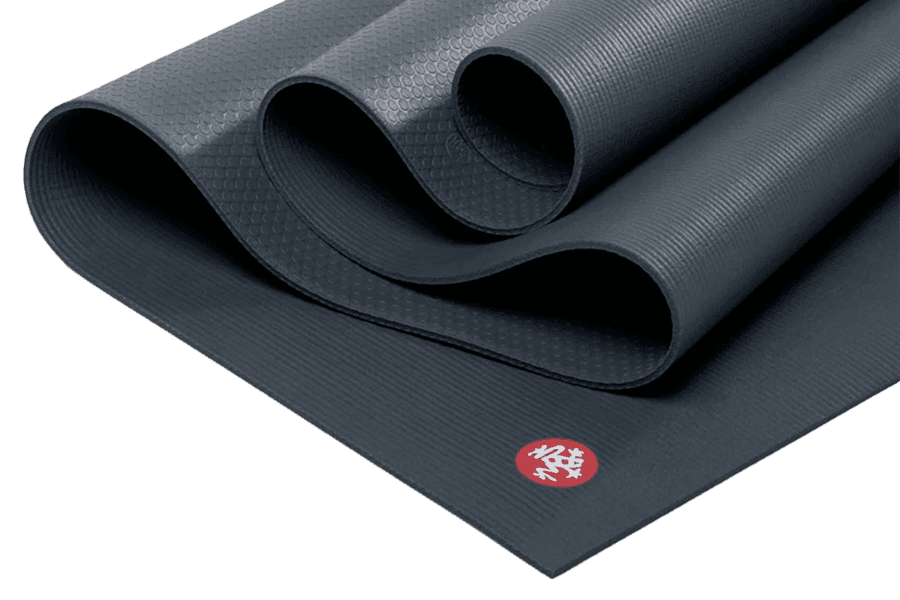
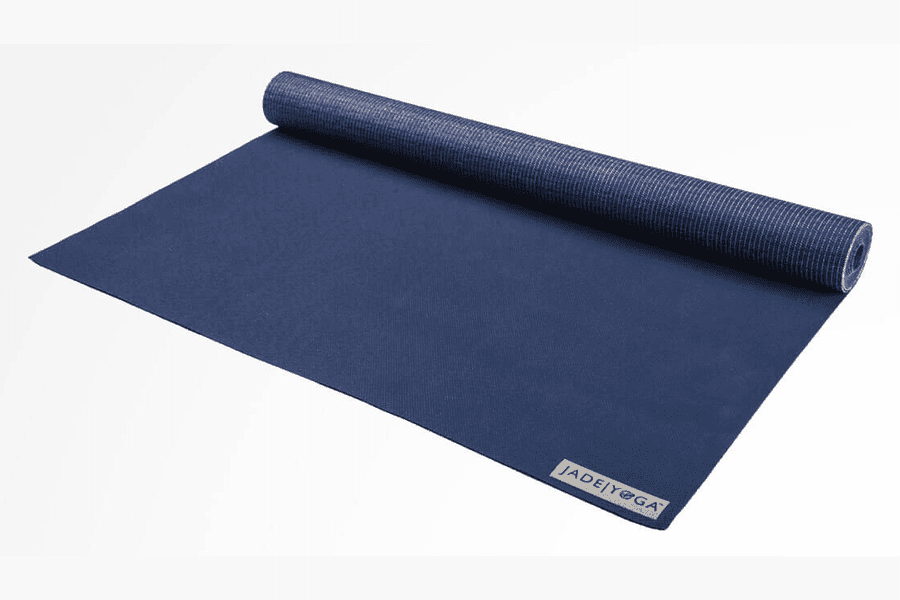
The PROlite is 4.7 mm of dense closed-cell PVC made in Germany, certified to OEKO-TEX Standard 100 and covered by Manduka's lifetime guarantee, which in the fine print means roughly ten years of regular use. The Voyager is 1.6 mm of Jade rubber that folds into a carry-on, grips from the first minute, and OutdoorGearLab scored it 2 of 10 for comfort.
Buy the PROlite if this is your mat for the next decade. Buy the Voyager if you already have a mat and need something for flights and hotel rooms.
Get the Manduka PROlite if...
- You want one mat that lasts, backed by a lifetime guarantee
- You want dense cushioning rather than a bare surface
- You want an OEKO-TEX certified mat made in Germany
- You want a choice of four sizes and thirteen colorways
Get the Jade Voyager if...
- The mat needs to fold flat into a suitcase at 1.5 pounds
- You want grip on day one, with no break-in period
- You already own a main mat for daily practice
- You'd rather keep about $62
Side by side
Price
The Voyager lists for about $62 less.
$112
List price · check price at Amazon
$49.95
List price · check price at jadeyoga.com
Thickness
The PROlite is 194% thicker.
4.7 mm0.19″
1.6 mm0.06″
Weight
The Voyager is 3.1 lbs lighter.
4.6 lbs2.1 kg
1.5 lbs0.68 kg
Size
The PROlite is 3″ longer; same width.
Same on both
- Both are 24 inches wide
- Both lie flat once settled
- Neither ships with a carry strap
- Neither absorbs odor the way a cheap foam mat can
Full specs
Dimensions
Materials & build
Buying
A lifetime mat against a mat for luggage
The Manduka PROlite is $112 for 4.7 mm of dense closed-cell PVC made in Germany, certified to OEKO-TEX Standard 100 and covered by Manduka’s lifetime guarantee. The Jade Voyager is $49.95 for 1.6 mm of natural rubber that folds down to about the size of a yoga block.
These are not competitors so much as two answers to two different problems, and plenty of people who own a PROlite also own a Voyager. If you have to pick one, the question is whether the mat needs to travel further than a studio down the road.
Cushioning: 4.7 mm of dense PVC against 1.6 mm of rubber
OutdoorGearLab scored the Voyager 2 of 10 for comfort and support, the joint lowest of nineteen mats in its 2026 roundup, and described mats this thin as working better over a studio mat than under you alone. That is what 1.6 mm is, and Jade does not pretend otherwise.
The PROlite is dense rather than thick, which is the Manduka approach: the material pushes back rather than squashing, so 4.7 mm supports more than a softer mat of the same depth would. GearLab gave the thicker PRO a perfect 10 for comfort using that same construction.
Grip: the Voyager wins the first month outright
The Voyager scored 8 of 10 for grip and 9 dry, 7 wet in GearLab’s separate wet and dry testing. Jade’s open-cell rubber is tacky the moment you unroll it, with no break-in period at all.
The PROlite’s closed-cell surface is famously slick when new. Manduka has retired the salt-scrub advice it used to give and now says the slickness resolves with use, which matches what owners report: several weeks of regular practice and the grip arrives. GearLab listed a break-in period among the PRO line’s downsides and rated the PRO 9 dry, 7 wet once broken in. If you want grip on day one, the $50 mat is the better mat.
Durability: the widest gap of all
The PROlite carries Manduka’s lifetime guarantee, which in the fine print means roughly ten years of regular use, one replacement, with proof of purchase from an authorized seller. Amazon qualifies only when the mat is sold and shipped by Amazon itself. Dense PVC does not compress, and one GearLab tester has been using the same PRO for twenty years.
GearLab listed “not very durable” and “creases easily” against the Voyager. Folding a thin rubber mat repeatedly leaves permanent lines, and natural rubber degrades in sunlight. Jade covers it for one year, excluding sun damage and harsh cleaners. Expect to replace a Voyager. Expect to keep a PROlite.
Portability: the Voyager is the entire point
The Voyager is 1.5 pounds and folds flat, so it lies in a suitcase rather than strapping to the outside of a bag. GearLab weighed theirs at 1.8 pounds, the lightest mat in the lineup.
The PROlite is 4.6 pounds and exists because the full PRO is 7.5. It carries fine to a studio a few blocks away and it is not going in a carry-on.
Size and sizes
The PROlite is 71″ × 24″ and the Voyager is 68″ × 24″. Same narrow width, three inches of length in the PROlite’s favor.
Manduka sells the PROlite in four sizes, including a 79″ Long and a 79″ × 30″ Long & Wide, and in thirteen colorways. Jade sells the Voyager in one size and five colors, and to its credit the footprint is a full 68 by 24 rather than the shrunken shape some travel mats use.
Cleaning and upkeep
The PROlite is closed-cell, so nothing soaks in and a wipe after class is the whole routine. It does show marks on light colorways and it benefits from an occasional proper clean, but it never develops the odor an absorbent mat can.
The Voyager is open-cell, so it takes on sweat, which is part of why it grips. It dries quickly because there is so little of it, and GearLab scored it 8 of 10 for care. Jade’s warranty excludes harsh cleaners, so water and a cloth is the approved routine.
PVC against natural rubber
The PROlite is PVC certified to OEKO-TEX Standard 100, made in Germany in a factory Manduka names, and manufactured in an emissions controlled process the brand publicises. It is latex free. PVC is not recyclable in any practical way, which is the honest mark against it.
The Voyager is sustainably farmed natural rubber made in the USA, with no PVC, and Jade plants a tree for every mat sold. It is 99 percent latex free rather than latex free, so an allergy rules it out.
Price and where to buy
$112 against $49.95. Manduka discounts PROlite colorways on its own store and the mat is widely stocked, so compare that against the current Manduka PROlite price at Amazon. Buying from Manduka or from Amazon direct keeps the lifetime guarantee valid; a third-party seller does not.
The Voyager sells through jadeyoga.com rather than Amazon, at a price that rarely moves.
Bottom line
Buy the PROlite if this is your mat for the next decade. It is dense, certified, guaranteed for life, and it will still be flat and supportive long after most mats have gone soft. Give it a few weeks to grip.
Buy the Voyager if you already have a mat and need something for flights and hotel rooms. It grips better than the PROlite does out of the box and it weighs nothing, and it is not a mat to practice on daily. If you want a Manduka that packs, the eKO Superlite against the Voyager compares the two obvious travel options.
Manduka PROlite
List price $112
Jade Voyager
List price $49.95
Frequently Asked Questions
- Is the Manduka PROlite slippery at first?
- Yes, and Manduka is fairly open about it. The brand has retired the salt-scrub break-in advice it used to give and now says the slickness resolves with use, which matches owner reports of a few weeks of regular practice before the grip arrives. GearLab listed a break-in period among the PRO line's downsides and rated the PRO 9 dry and 7 wet once broken in.
- What does the lifetime guarantee actually cover?
- In the fine print, roughly ten years of regular use, one replacement, with proof of purchase from an authorized seller. Amazon qualifies only when the mat is sold and shipped by Amazon itself rather than a marketplace seller, which is worth checking before you buy. Jade covers the Voyager for one year, excluding sun damage and harsh cleaners.
- Can the Voyager replace a studio mat?
- For most people, no. GearLab scored it 2 of 10 for comfort and support, the joint lowest of nineteen mats, and described mats this thin as working better as a topper over a studio mat. It grips beautifully, at 9 dry and 7 wet, but there is nothing between you and the floor.
- Which grips better out of the box?
- The Voyager, comfortably. Jade's open-cell rubber is tacky the moment you unroll it with no break-in at all, and GearLab scored it 8 of 10 for grip. The PROlite needs weeks of use before its surface comes good. Once broken in, the PROlite holds well dry and is not a hot yoga surface either way.
- Which sizes are available?
- Manduka sells the PROlite in four, including a 68 inch Short, a 79 inch Long, and a 79 by 30 inch Long & Wide, across thirteen colorways. Jade sells the Voyager in one size and five colors, and to its credit the footprint is a full 68 by 24 rather than the shrunken shape some travel mats use.
- Is either safe for a latex allergy?
- The PROlite is: it is PVC and latex free. Jade describes its mats as 99 percent latex free, which is not the same thing, so the Voyager is out if you react to latex.
Related comparisons
- Manduka PROlite vs JadeYoga Harmony 74"
- Manduka eKO Superlite vs JadeYoga Voyager
- Manduka PROlite vs Lululemon The Mat 5mm
- Manduka PROlite vs JadeYoga Harmony 68"
- Manduka eKO Superlite Long vs JadeYoga Voyager
- Manduka PROlite vs b, halfmoon B Mat Everyday 4mm
- Manduka PROlite vs Suga SugaMat
- Manduka PROlite vs Yoga Design Lab Combo 3.5mm
- Manduka PROlite vs Lululemon The (Big) Mat 5mm