Manduka PROlite vs Gruper TPE 6mm: Which One Should You Buy?
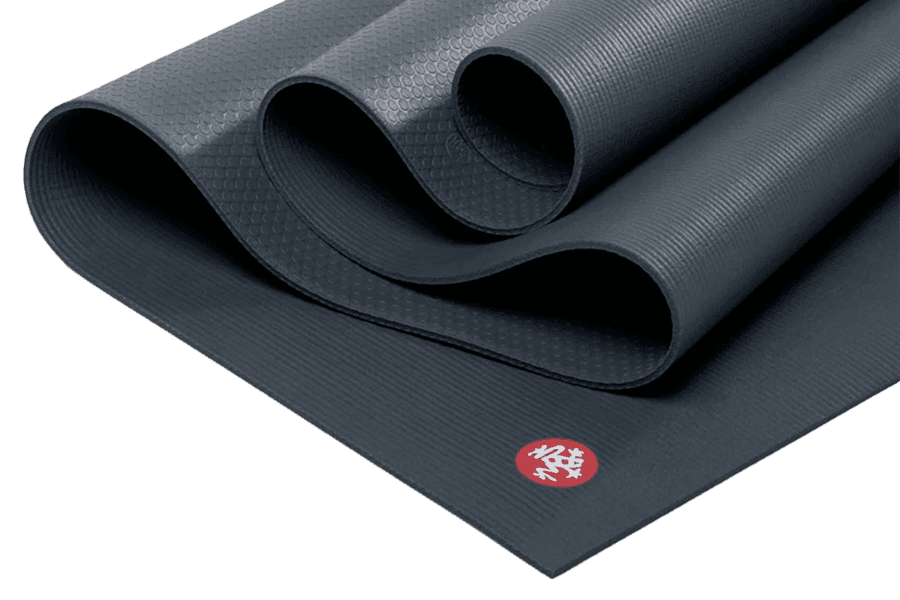
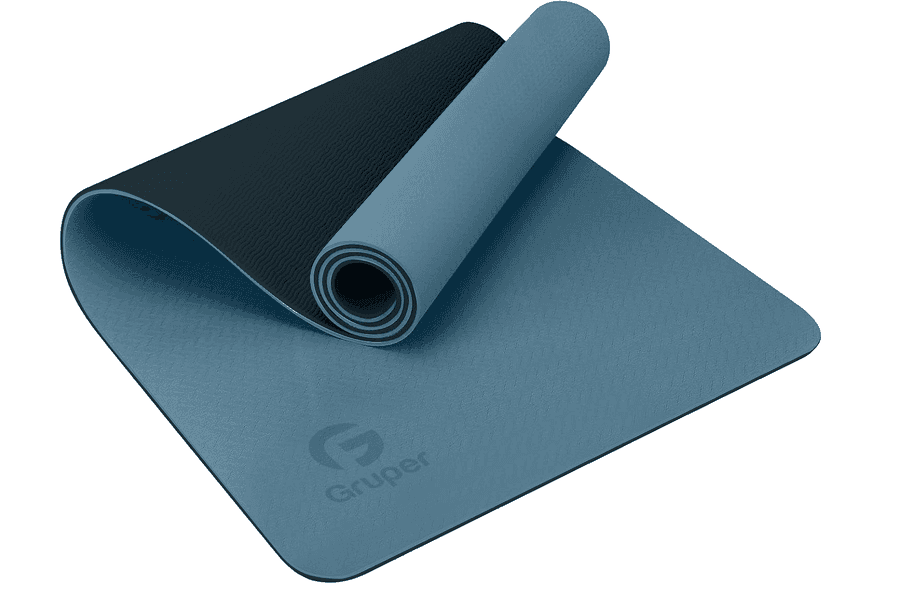
Both of these are pitched at the person who carries a mat somewhere. The Gruper is 2.6 pounds of TPE with a strap and a storage bag for under $30; the PROlite is 4.6 pounds of Manduka's dense PVC for $112. Same width, similar length, and about $84 of difference that comes down almost entirely to how long the mat survives.
As an Amazon Associate, we earn from qualifying purchases made through links on this page. How this works
The quick answer
The PROlite is closed-cell PVC made in Germany, OEKO-TEX certified, backed by Manduka's lifetime guarantee, and firm enough that nothing sinks under a standing foot. The Gruper is a two-layer TPE mat with a fine texture on top, a corrugated grip underneath, a strap and bag in the box, and 4.4 stars across roughly 10,500 Amazon ratings.
The Gruper is a good first mat and a reasonable travel mat. It is softer, lighter, and cheap enough that replacing it is not painful. The PROlite is what you buy when you already practice regularly, want firm footing, and would rather not think about mats again for a decade.
Get the Manduka PROlite if...
- You practice several times a week and want one mat for years
- You want firm support rather than soft foam underfoot
- You want a lifetime guarantee behind the purchase
- You want Manduka density without the PRO's 7.5 pounds
Get the Gruper TPE if...
- You're new to yoga and don't want to spend $112 yet
- You want 2.6 pounds instead of 4.6 on your shoulder
- You want 6 mm of cushion, a strap and a bag included
- You'd rather keep about $84
Side by side
Price
The Gruper lists for about $84 less.
$112
List price · check price at Amazon
$27.99
List price · check price at Amazon
Thickness
The Gruper is 28% thicker.
4.7 mm0.19″
6 mm0.24″
Weight
The Gruper is 2 lbs lighter.
4.6 lbs2.1 kg
2.6 lbs1.18 kg
Size
The Gruper is 1″ longer; same width.
Same on both
- 24 inches wide, about 72 inches long
- Latex-free
- Non-absorbent surfaces, so sweat sits on top
- Light enough to carry without thinking about it
Full specs
Dimensions
Materials & build
Buying
Both of these are built to be carried
The PROlite exists because the PRO is 7.5 pounds and most people will not haul that to a studio twice a week. It is the same PVC in a lighter cut: 4.7 mm, 4.6 pounds, $112. The Gruper takes the same brief from the other direction, at 2.6 pounds and about $27.99, with a strap and a storage bag included.
Both are 24 inches wide and around 72 inches long, so this is a fairly clean comparison of materials rather than shapes. TPE against dense PVC, with $84 between them.
TPE and PVC pull in opposite directions
TPE is lighter, softer, contains no PVC or latex, and is recyclable in principle. Gruper builds this one in two bonded layers with a fine S-pattern texture up top and a corrugated grip underneath, which is a thoughtful design at the price. What it cannot do is resist wear: TPE compresses and tears sooner than PVC or rubber, especially where hands and feet keep landing.
Manduka’s PVC is the opposite trade. Heavy for its thickness, not recyclable in any practical sense, certified to OEKO-TEX Standard 100, and close to indestructible. GearLab has testers still using the same PRO after two decades, and the PROlite is the same material from the same factory.
Feel: 6 mm of give against 4.7 mm that does not
The Gruper is thicker and much softer, which makes kneeling more comfortable and standing less certain. Soft foam compresses unevenly under one foot, so your ankle spends a balance pose managing the surface as well as your body.
The PROlite is thinner and does not deflect at all. Once you are flowing, most people prefer that: nothing sinks, nothing tips, and the mat stops being something you think about. Where you notice the missing millimetres is on your knees over tile.
Grip: one arrives slick, the other goes slick
The PROlite has a well-known break-in period. New Manduka closed-cell mats are slippery on top for the first few weeks, and at $112 that surprises people. Manduka dropped its old salt-scrub advice and now says regular use resolves it, which matches owner reports. After that, grip is good dry and moderate when damp.
The Gruper grips from day one and stops gripping when you sweat, because closed-cell TPE leaves the moisture on the surface. Neither mat suits a heated room without a towel. For that, natural rubber or an absorbent top is the answer; see our PROlite vs Jade Harmony comparison.
Two pounds, a strap and a bag
At 2.6 pounds the Gruper is the easier mat to move, and the included strap and storage bag are things Manduka charges extra for. Two pounds does not sound like much until the walk to the studio is twenty minutes.
The PROlite at 4.6 pounds is still perfectly carryable, which is the entire reason it exists. If weight is the deciding factor and you want a real yoga mat, the PROlite is about as light as dense PVC gets before you start losing the properties you were paying for.
Sizes and thickness options
Gruper offers the same mat at 8 mm and 3.1 pounds if you want more cushion, in the same 72″ × 24″ footprint. That is a reasonable option for restorative practice, with the usual caveat that softer costs you stability.
The PROlite comes in a 68″ Short, this 71″ standard, a 79″ Long and a 79″ × 30″ Long & Wide. Step up to the PRO for 6 mm and 26 inches of width.
One warranty, one return window
Manduka’s lifetime guarantee reads in the fine print as roughly ten years of regular use, one replacement, and proof of purchase from an authorized seller, with Amazon counting only when the mat is sold and shipped by Amazon itself. It is a real programme that people claim on.
Gruper publishes no warranty at all. What you have is Amazon’s return window and then whatever happens. At $28 that is a reasonable deal; it just tells you what kind of purchase this is.
Price and value
List prices are $112 and $27.99, with the Gruper’s street price moving by colorway. Check the current price on the PROlite and the Gruper at Amazon, where the Gruper carries 4.4 stars across roughly 10,500 ratings.
One PROlite that runs a decade costs less than replacing a Gruper every eighteen months over the same period. That is only relevant if you keep practicing, and buying cheap first to find out is a perfectly sound plan.
Bottom line
Buy the Gruper if you are early in this and want something light and adequate for under $30. It is a competent home mat with the strap and bag thrown in, and nobody should feel bad about starting there.
Buy the Manduka PROlite if you already practice regularly and want a mat that stays firm and stays in one piece. It is the mat most people who commute to a studio should be looking at, and the break in period is the one thing to be ready for.
Manduka PROlite
List price $112
Gruper TPE 6mm
List price $27.99
Frequently Asked Questions
- Is TPE better or worse than PVC?
- It depends what you care about. TPE is lighter, softer, free of PVC and plasticizers, and easier to recycle in principle. PVC is heavier, firmer, and far more durable. Manduka's version of PVC is unusually dense, which is why a 4.7 mm PROlite weighs nearly twice what a 6 mm Gruper weighs. If you want a mat to last, PVC wins; if you want a mat that is light and made of something other than vinyl, TPE has the argument.
- The Gruper is thicker. Doesn't that make it more comfortable?
- On your knees, yes. Standing, no. Soft foam compresses unevenly under one foot, so balance poses feel less secure on the Gruper even though there is more material under you. The PROlite's dense 4.7 mm does not move at all. Most people find they prefer the firmer mat once they are flowing and the softer one for restorative work.
- Does the PROlite slip when it's new?
- It does, and it is worth knowing before you spend $112. New Manduka closed-cell mats have a slick top surface for the first few weeks. Manduka dropped its old salt-scrub recommendation and now says the slickness resolves with regular use, which matches what owners report. The Gruper has no break-in but it is not grippier once you sweat; both are closed-cell and both need a towel in a hot room.
- How long will the Gruper last?
- TPE is the softest of the common mat materials and it compresses and tears sooner than PVC or rubber, especially under hands and feet. In daily use, expect visible wear within a year or two. Gruper publishes no warranty, so the Amazon return window is all you have. Manduka's lifetime guarantee amounts to roughly ten years of regular use, one replacement, and proof of purchase from an authorized seller.
- Which one travels better?
- The Gruper, on weight alone, and it comes with a storage bag. For real travel neither is ideal; a folding travel mat around 1.5 mm packs into a suitcase in a way a 6 mm mat cannot. If you mean carrying a mat to a studio a few times a week, 2.6 pounds against 4.6 is noticeable but not decisive.
- Is the PROlite worth four times the price?
- If you practice regularly, yes. One $112 mat that runs a decade costs less than replacing a $28 mat every eighteen months, and it is a better surface throughout. If you are three classes into your first month, buy the Gruper, find out whether this sticks, and upgrade later with a much clearer idea of what you want.
Related comparisons
- Manduka PROlite vs JadeYoga Harmony 2.0 68"
- Amazon Basics 1/4 Inch Thick TPE vs Gruper TPE 6mm
- Gaiam Premium 6mm vs Gruper TPE 6mm
- Manduka PROlite vs JadeYoga Harmony 74"
- Gruper TPE 6mm vs Gaiam Essentials 6mm
- Manduka PROlite vs Lululemon The Mat 5mm
- Manduka PROlite vs JadeYoga Harmony 68"
- YogaAccessories Extra Thick Deluxe 1/4" vs Gruper TPE 6mm
- Gaiam Premium Reversible 6mm vs Gruper TPE 6mm