Manduka PROlite vs Gaiam Premium Reversible: Which One Should You Buy?
Both of these are PVC, which makes this a useful comparison: the material argument is off the table and what is left is how the material was made. The Gaiam is thicker on paper and the PROlite is the more supportive mat, and that gap is most of what the extra $72 buys.
As an Amazon Associate, we earn from qualifying purchases made through links on this page. How this works
The quick answer
The Gaiam Premium Reversible is 6 mm of soft printed foam, 3.3 pounds, and OutdoorGearLab scored it 54 of 100 with 6 of 10 for comfort and 4 for grip. The PROlite is 4.7 mm of dense PVC made in Germany, certified to OEKO-TEX Standard 100, and covered by Manduka's lifetime guarantee.
If you practice regularly and want to stop buying mats, get the PROlite and give it a few weeks to break in. If forty dollars is the budget or you want the prints, the Gaiam does the job for slow flows.
Get the Manduka PROlite if...
- You practice regularly and want a mat that lasts a decade
- You want dense support rather than soft foam
- You want an OEKO-TEX certified mat made in Germany
- You want longer or wider sizes, which the Gaiam doesn't offer
Get the Gaiam Premium Reversible if...
- Forty dollars is the budget
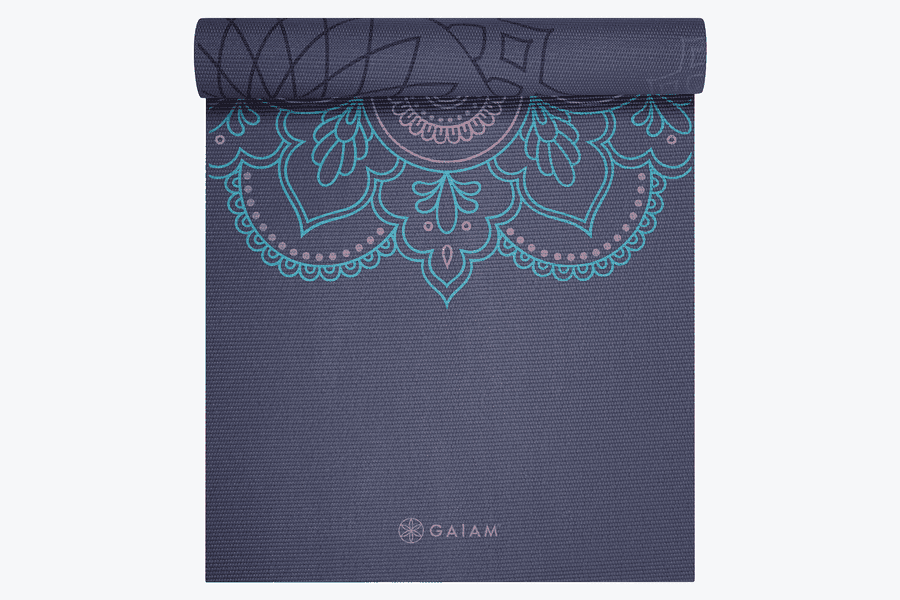
- You want a printed design on both faces
- You want a lighter mat to carry, at 3.3 pounds against 4.6
- You practice slower styles on a wood or carpeted floor
Side by side
Price
The Gaiam Reversible lists for about $72 less.
$112
List price · check price at Amazon
$39.98
List price · check price at Amazon
Thickness
The Gaiam Reversible is 28% thicker.
4.7 mm0.19″
6 mm0.24″
Weight
The Gaiam Reversible is 1.3 lbs lighter.
4.6 lbs2.1 kg
3.3 lbs1.5 kg
Size
The PROlite is 3″ longer; same width.
Same on both
- Both are latex-free PVC
- Both are closed-cell, so sweat stays on the surface
- Both are 24 inches wide
- Neither is recyclable in any practical way
Full specs
Dimensions
Materials & build
Buying
Two PVC mats, $72 apart
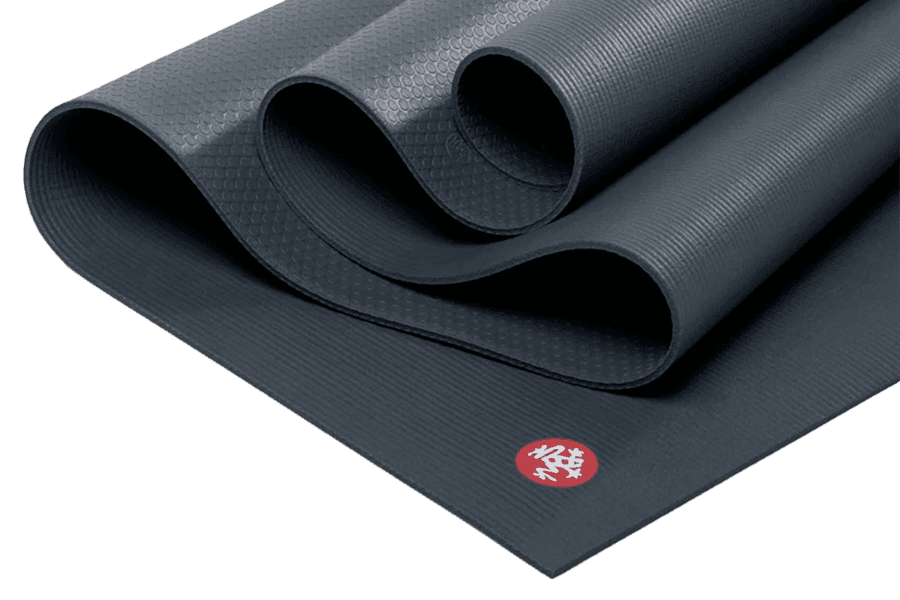
Both of these are PVC, which makes this a useful comparison: the material argument is off the table and what is left is how the material was made. The Gaiam Premium Reversible is $39.98 for 6 mm of soft printed foam with a different design on each face. The Manduka PROlite is $112 for 4.7 mm of dense PVC made in Germany, certified to OEKO-TEX Standard 100 and covered by a lifetime guarantee.
The Gaiam is thicker on paper and the PROlite is the more supportive mat. That is density doing the work, and it is most of what the extra $72 buys.
Thicker is not the same as more supportive
OutdoorGearLab scored the Gaiam Reversible 6 of 10 for comfort and support in its 2026 roundup and put “poor cushion” first on its list of cons, which sounds contradictory for a 6 mm mat until you kneel on one. Soft foam compresses out of the way instead of holding you up, and the same testers noted that a pressed handprint stays visible for a moment.
Manduka’s PVC is dense enough to push back. GearLab gave the thicker PRO, which uses the same construction, a perfect 10 for comfort and called its cushion firm and joint friendly. The PROlite is the same material at 4.7 mm, so it trades a little of that depth for weight while keeping the density.
Grip: neither is grippy on day one
GearLab rated the Gaiam Reversible 4 of 10 for grip, and 5 dry and 5 wet in its separate testing. “Slippery when wet” is on its list of downsides. Foam gets its traction from surface texture, and texture stops working once there is moisture on it.
The PROlite is slick when new too, and Manduka is fairly open about it: the brand has retired the old salt-scrub break-in advice and now says the slickness resolves with use. Owners report a few weeks of regular practice before it comes good. Once broken in it holds well dry, and GearLab rated the PRO 9 dry and 7 wet using the same surface. So the PROlite ends up much grippier, it just asks you to wait.
Durability: this is where the money goes
The Gaiam compresses. GearLab noted it in testing, and the failure mode is familiar: flattened patches where hands and feet land, then a mat that no longer cushions. Gaiam does back it with a lifetime guarantee, which is unusual at $40, though a mat that has quietly gone flat is rarely the kind of failure people claim on.
The PROlite carries Manduka’s lifetime guarantee, and the fine print is worth knowing: roughly ten years of regular use, one replacement, proof of purchase from an authorized seller, with Amazon qualifying only when the mat is sold and shipped by Amazon itself. One GearLab tester has been practicing on the same PRO for twenty years. Dense PVC simply does not give up.
Weight and carrying
The Gaiam is 3.3 pounds and GearLab weighed theirs at 3.2, which makes it easy to carry to a class. That is a real advantage for a mat aimed at beginners.
The PROlite is 4.6 pounds, which is the whole reason it exists: the full PRO is 7.5 and Manduka wanted a version people would actually take out of the house. Neither mat ships with a strap.
Size and sizes
The PROlite is 71″ × 24″; the Gaiam is 68″ × 24″. Same narrow 24 inch width, three inches of length in Manduka’s favor.
Manduka sells the PROlite in four sizes, including a 79″ Long and a 79″ × 30″ Long & Wide. Gaiam sells the Reversible in one size, with around ten printed designs, which is more visual choice than Manduka gives you.
Cleaning, and the ink problem
Both are closed-cell, so nothing soaks in and a wipe handles most classes. GearLab scored the Gaiam 7 of 10 for care.
One specific warning on the Gaiam: GearLab listed “can stain clothing” among its cons, and printed Gaiam mats have a reputation for transferring ink onto light leggings in the first few weeks. Buffing the surface with a damp cloth before first use helps. The PROlite shows marks on pale colorways but does not transfer anything.
Same plastic, different manufacturing
Both are latex-free PVC, so both are safe if you have a latex allergy and neither is recyclable in any practical way. That is where the similarity ends.
Manduka makes the PROlite in Germany, certifies it to OEKO-TEX Standard 100, and publicises an emissions controlled manufacturing process. Gaiam does not state where the Reversible is made and it carries no certification; GearLab scored its materials 5 of 10.
Price and where to buy
$112 against $39.98. The Gaiam is on Amazon constantly and discounts often, so check the current Gaiam Premium Reversible price at Amazon before paying list anywhere.
The PROlite discounts by colorway through Manduka’s own store, so compare that with the current Manduka PROlite price at Amazon. Buy from Manduka or from Amazon direct to keep the lifetime guarantee valid; a third-party marketplace seller does not qualify.
Bottom line
Buy the PROlite if you practice regularly and want to stop buying mats. Denser cushion, a certified German-made surface, and a guarantee that means something. Give it a few weeks to break in, and do not expect it to save you in a hot room.
Buy the Gaiam Reversible if forty dollars is the budget or the prints are what you want. It is a reasonable mat for stretching and slow flows on carpet, and it will not hold up to daily practice. If you want a cheap Gaiam that cushions better, the plain Premium 6mm against this one is worth reading.
Manduka PROlite
List price $112
Gaiam Premium Reversible 6mm
List price $39.98
Frequently Asked Questions
- The Gaiam is thicker. Why is the PROlite more supportive?
- Density. GearLab scored the Gaiam 6 of 10 for comfort and put poor cushion first on its list of cons even at 6 mm, because soft foam compresses out of the way instead of holding you up. Manduka's PVC pushes back, which is why GearLab gave the thicker PRO, built the same way, a perfect 10 for comfort.
- Do either of them grip well?
- Not on day one. GearLab rated the Gaiam 4 of 10 for grip, and 5 dry and 5 wet in its separate testing, with slippery when wet on its list of downsides. The PROlite is slick when new too, and Manduka now says that slickness resolves with use rather than recommending a salt scrub. Once broken in, the PROlite is much grippier than the Gaiam ever gets.
- Does the Gaiam transfer ink onto clothing?
- It can. GearLab listed can stain clothing among its cons, and printed Gaiam mats have a reputation for marking light leggings in the first few weeks. Buffing the surface with a damp cloth before first use helps. The PROlite shows marks on pale colorways but does not transfer anything.
- Is Manduka's lifetime guarantee worth anything?
- It is real, with conditions: roughly ten years of regular use, one replacement, proof of purchase from an authorized seller, and Amazon counts only when the mat is sold and shipped by Amazon itself. Gaiam also offers a lifetime guarantee on the Reversible, which is unusual at $40, though a mat that has quietly gone flat is rarely the kind of failure people claim on.
- Which is better for hot yoga?
- Neither, honestly. Both are closed-cell, so sweat has nowhere to go, and the Gaiam scored 5 of 10 wet while the PRO line is described by GearLab as more slippery when wet. If you practice hot, look at a polyurethane mat like the Manduka GRP Adapt 2.0, which took GearLab's hot yoga award with 9.5 dry and 8.5 wet.
- What sizes do they come in?
- Manduka sells the PROlite in four: a 68 inch Short, the standard 71 inch, a 79 inch Long, and a 79 by 30 inch Long & Wide, across thirteen colorways. Gaiam sells the Reversible in one size, 68 by 24, with around ten printed designs.
Related comparisons
- Manduka PROlite vs JadeYoga Harmony 74"
- Manduka PROlite vs Lululemon The Mat 5mm
- Manduka PROlite vs JadeYoga Harmony 68"
- Gaiam Premium Reversible 6mm vs Gruper TPE 6mm
- Manduka PROlite vs b, halfmoon B Mat Everyday 4mm
- Manduka PROlite vs Suga SugaMat
- Manduka PROlite vs Yoga Design Lab Combo 3.5mm
- Amazon Basics 1/4 Inch Thick TPE vs Gaiam Premium Reversible 6mm
- Gaiam Premium Reversible 6mm vs YogaAccessories Extra Thick Deluxe 1/4"