Manduka PROlite vs Amazon Basics 1 Inch: Which One Should You Buy?
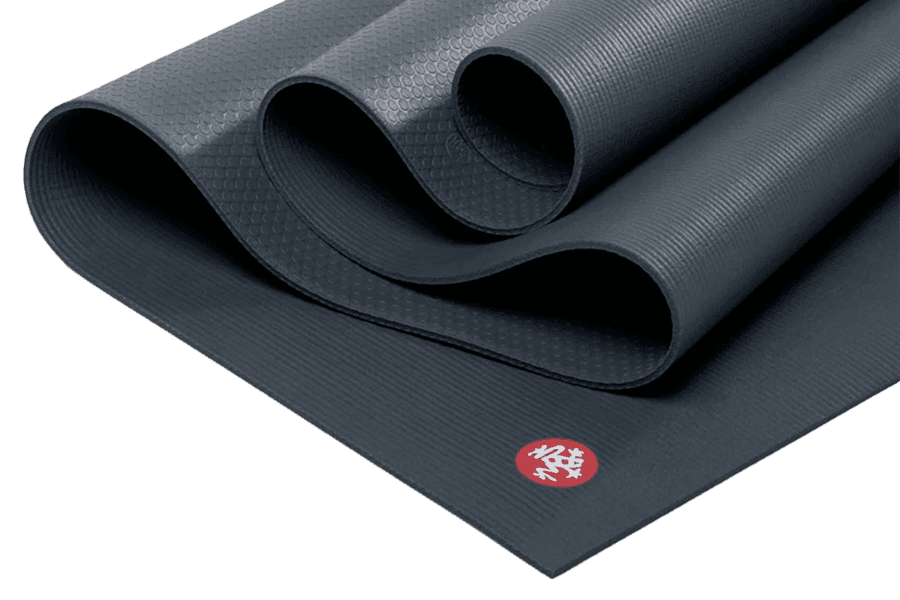
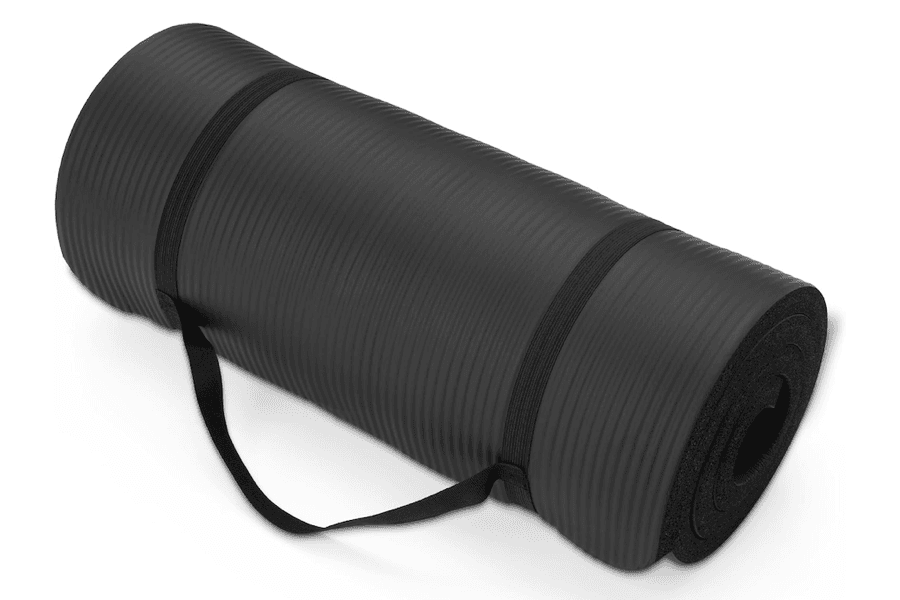
A full inch of foam sounds luxurious until you try to balance on it. The Amazon Basics 1 inch is a plush NBR exercise mat: wonderful under a back or a knee, hopeless under a standing foot, about $38 with a strap. The PROlite is a firm 4.7 mm yoga mat that costs three times as much and does the actual job. They weigh the same 4.6 pounds, and that's roughly where the similarities end.
As an Amazon Associate, we earn from qualifying purchases made through links on this page. How this works
The quick answer
For yoga the comparison is short: standing and balance poses need a stable base, the PROlite provides one, and an inch of soft foam does not; feet sink, ankles wobble, and wrists sit in a trough. The Amazon Basics earns its keep elsewhere, as padding for floor exercise, physical therapy movements, and stretching on hard floors, where its softness is the entire appeal and its roughly $38 price is easy to justify.
Buy the PROlite, or any firm mat, if yoga is the plan. Buy the Amazon Basics if what you actually need is a comfortable padded rectangle, and don't ask it to hold a warrior pose.
Get the PROlite if...
- You practice yoga with standing or balance poses
- You want firm, stable support for wrists and ankles
- You want a decades-long mat with the guarantee
- You want grip that improves with years of use
Get the Amazon Basics if...
- You need cushioning for floor exercise or PT work
- Maximum padding under knees and back is the point
- You're spending about $38, not $112
- You want the carry strap and easy gym portability
Side by side
Price
The Amazon Basics lists for about $74 less.
$112
List price · check price at Amazon
$38.40
List price · check price at Amazon
Thickness
The Amazon Basics is 440% thicker.
4.7 mm0.19″
25.4 mm1″
Weight
Identical weight.
4.6 lbs2.1 kg
4.6 lbs2.1 kg
Size
The Amazon Basics is 3″ longer; same width.
Same on both
- Same 4.6 pound weight
- About the same 24" width
- Fine for stretching and floor work
Full specs
Dimensions
Materials & build
Buying
Two 4.6 pound mats with nothing else in common
Here’s a coincidence to build a comparison on: the Manduka PROlite and the Amazon Basics 1 inch weigh exactly the same 4.6 pounds. One packs that weight into 4.7 mm of dense German PVC that costs $112 and holds a standing body rock steady. The other spreads it through a full inch of soft NBR foam for about $38.40, making one of the plushest surfaces you can put on a floor and one of the least stable to stand on.
Density is the entire story of this page. Everything each mat does well and badly follows from where its 4.6 pounds went.
For yoga, an inch of foam is a hazard
We’ll say this more bluntly than usual: nobody should do standing yoga on an inch of soft foam. Feet sink until the surrounding foam swallows the base of support, balance poses become guesswork, and lunges load ankles at angles the pose never intended. Wrists fare no better; a plank on this much compression is a wrist in a trench. Floor-only and restorative work escape the problem, but that’s a fraction of most practices.
The PROlite’s firm 4.7 mm exists precisely to prevent all of the above. It reads hard for the first week and then reads like what it is, a stable platform that happens to protect your joints too.
Where the inch of foam is exactly right
Physical therapy movements, mat Pilates done gently, sit-up and core circuits, stretching on concrete or tile, kneeling gardening for that matter: anywhere the body stays low and the floor is the enemy, the Amazon Basics is a genuinely pleasant product. It ships with a carry strap, rolls up fat but light, and costs about $38.40, a price at which its 1 year warranty is honestly generous.
Owner reviews split along exactly this line: contented stretchers and floor exercisers on one side, frustrated yoga buyers and reports of ripped or flattened foam on the other.
Grip: neither is a star, one improves
The foam grips acceptably dry and slides when damp, and it never gets better than it was on day one. The PROlite starts worse, famously slick until a few weeks of practice break in the surface, then spends years getting grippier. Both are non-absorbent, so sweat means a towel on either. If sweat is a defining feature of your practice, neither mat is the answer; that’s absorbent-surface territory like Manduka’s GRP line.
Durability and the two warranties
The Amazon Basics’ 1 year warranty and the PROlite’s lifetime guarantee are both accurate product descriptions. Soft NBR foam compresses permanently where it’s used most, and mixed owner reports of tearing and surface shedding put its regular-use lifespan around a year or two. The PROlite’s dense PVC is the construction GearLab keeps finding in service after five to twenty years, and Manduka’s guarantee, roughly 10 years of regular use with one replacement, prices that confidence in.
Sizes, carrying, and practicalities
The Amazon Basics is slightly longer, 74″ to 71″, in 3 colors, one thickness down from its 1/2 inch sibling. The PROlite runs four sizes up to a 79″ × 30″ and about 13 colorways. Same weight, different bulk: the inch-thick roll is a duffel-sized cylinder that needs its strap, while the PROlite rolls slim enough for any mat bag. Storage under a couch favors the Manduka by a wide margin.
Price and value
List prices are $112 for the PROlite and about $38.40 for the Amazon Basics, the latter drifting with Amazon’s pricing. Check current prices on the PROlite and the Amazon Basics 1 inch.
Bought for the right jobs, both are fairly priced: $38 is reasonable for a big soft pad with a strap, and $112 amortized over a guaranteed decade is cheap for a daily practice surface. Bought for the wrong job, the foam mat is $38 toward a second purchase, because a standing practice will send you mat shopping again within the month.
Bottom line
If yoga with standing poses is the plan, this isn’t a close call; get the PROlite, or at minimum a firm mat at any price. Stability is the non-negotiable, and soft thickness works against it.
If you need comfort for floor work, the Amazon Basics 1 inch delivers more plushness per dollar than anything in the yoga aisle, and its flaws simply don’t apply to a body lying down. Match the mat to the activity and both purchases make sense; swap them and neither does.
Manduka PROlite
List price $112
Amazon Basics 1 Inch Extra Thick
List price $38.40
Frequently Asked Questions
- Is the Amazon Basics 1 inch mat good for yoga?
- No, and this isn't mat snobbery. An inch of soft NBR foam compresses unpredictably under standing feet, which turns balance poses into ankle work and plank into a wrist trough. Floor-only practice survives on it; anything upright doesn't. If your budget is Amazon Basics money, their firm 1/4 inch TPE mat does yoga far better for less.
- Isn't an inch of foam better for bad knees than 4.7 mm?
- For kneeling in isolation, it's plusher. For a practice, no: what knees on hard floors need is dense support, and what balance poses need is a stable base, and thick soft foam provides neither. The PROlite's firm 4.7 mm protects joints while staying stable. If you want more, dense 6 mm mats and a folded blanket both beat soft foam.
- How durable is the Amazon Basics 1 inch mat?
- Owner reports are mixed: some mats serve years of gentle stretching, others compress flat, rip at the seams, or turn slippery within months of heavier use. The 1 year warranty is the honest tell on expectations. The PROlite's lifetime guarantee, backed by a construction GearLab finds serving five to twenty years, is the opposite tell.
- Which is easier to carry?
- They weigh the same 4.6 pounds, which surprises people. The difference is bulk: the inch-thick foam rolls into a fat cylinder that needs its included strap, while the PROlite rolls slim enough for any mat bag. Neither is a burden; the PROlite is just tidier about it.
- What's the difference between the 1 inch and 1/2 inch Amazon Basics mats?
- Thickness and about $16. Both are the same soft NBR foam at 74" × 24" with a strap; the half-inch is 2.2 pounds and around $22, the 1 inch is 4.6 pounds and around $38. For floor exercise the half-inch is usually enough, and it's slightly less unstable if you ever stand on it. Neither is a yoga mat in more than name.
- Does the Amazon Basics mat smell out of the box?
- NBR foam usually ships with a noticeable rubbery-chemical smell that fades over days to weeks of airing out; owner reviews mention it regularly. The PROlite's PVC has little to no out-of-box odor, and its OEKO-TEX Standard 100 certification covers harmful substances in manufacturing. Neither smell is dangerous; one is just more annoying.
Related comparisons
- Amazon Basics 1 Inch Extra Thick vs Retrospec Solana 1"
- Manduka PROlite vs JadeYoga Harmony 2.0 68"
- Manduka PROlite vs JadeYoga Harmony 74"
- Manduka PROlite vs Lululemon The Mat 5mm
- Manduka PROlite vs JadeYoga Harmony 68"
- Manduka PROlite vs b, halfmoon B Mat Everyday 4mm
- Manduka PROlite vs Suga SugaMat
- Manduka PROlite vs Yoga Design Lab Combo 3.5mm
- Manduka PROlite vs Lululemon The (Big) Mat 5mm