Manduka PROlite vs Amazon Basics 1/2 Inch: Which One Should You Buy?
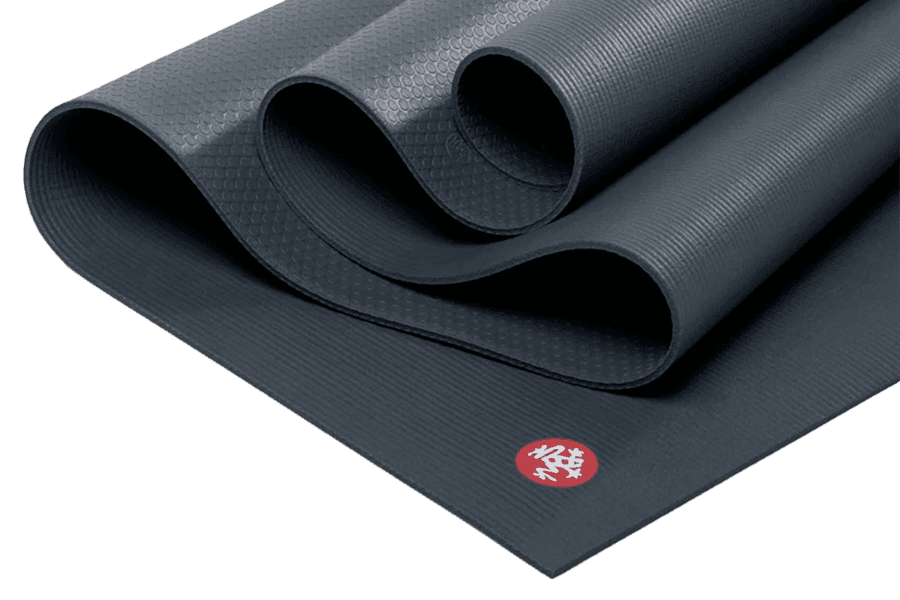
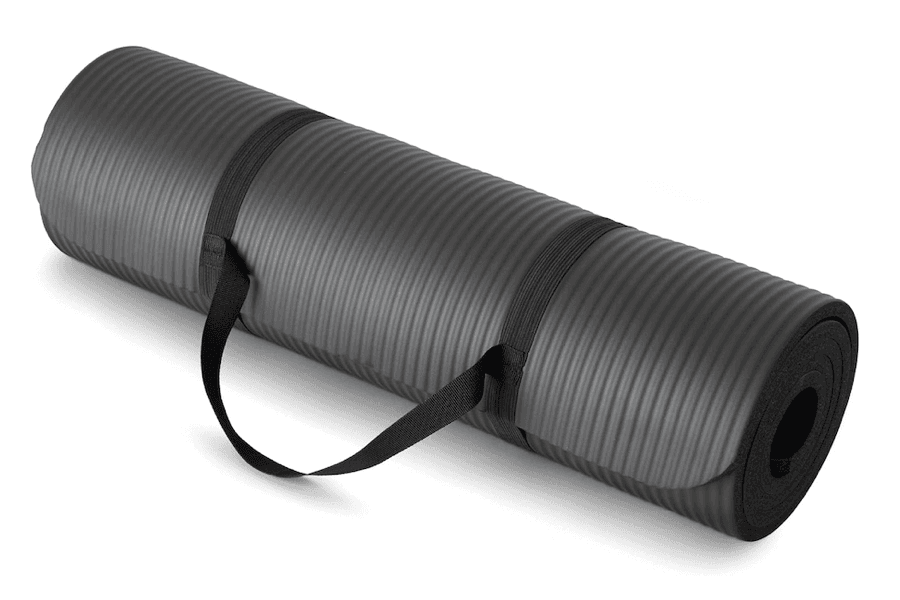
These two get cross-shopped because both are called yoga mats, and only one of them is. The PROlite is 4.7 mm of firm German PVC designed to hold you steady through standing poses for a decade or more. The Amazon Basics 1/2 inch is 12.7 mm of soft NBR foam, a padded exercise mat that's lovely under a stretching routine and unstable under a warrior pose. The $90 price gap is real, but the category gap matters more.
As an Amazon Associate, we earn from qualifying purchases made through links on this page. How this works
The quick answer
For yoga, the PROlite wins by category, not degree: its firm surface keeps ankles and wrists stable where the Amazon Basics foam sinks and wobbles, its grip improves with use where the foam gets slick when damp, and it lasts decades where compressed foam is a couple of years from replacement. The Amazon Basics answers back only on price and plushness: about $22, genuinely comfortable for floor work, strap included, and even a 1 year warranty.
If you're buying a mat to practice yoga on, buy a firm mat; the PROlite if the budget allows, or a cheap firm mat if it doesn't. Buy the Amazon Basics for what it's actually for: stretching, core work, and putting padding between a hard floor and your spine.
Get the PROlite if...
- You're actually practicing yoga, especially standing poses
- You want a mat that lasts decades, with the guarantee
- You want grip that improves instead of foam that compresses
- You want a surface that stays stable under balance work
Get the Amazon Basics if...
- You mostly stretch and do floor exercises
- You want maximum padding under your back and knees
- You're spending about $22, not $112
- You want the included carry strap for the gym
Side by side
Price
The Amazon Basics lists for about $90 less.
$112
List price · check price at Amazon
$22.48
List price · check price at Amazon
Thickness
The Amazon Basics is 170% thicker.
4.7 mm0.19″
12.7 mm0.5″
Weight
The Amazon Basics is 2.4 lbs lighter.
4.6 lbs2.1 kg
2.2 lbs1 kg
Size
The Amazon Basics is 3″ longer; same width.
Same on both
- About the same 24" width
- Light enough to carry anywhere
- Fine for stretching and floor work
Full specs
Dimensions
Materials & build
Buying
Two products wearing one label
Amazon lists both of these as yoga mats, which is how a $112 German PVC mat ends up cross-shopped against roughly $22 of NBR foam. The PROlite is a yoga mat in the strict sense: firm, stable, built to hold a standing body steady. The Amazon Basics 1/2 inch is an exercise mat: half an inch of soft foam whose entire purpose is padding between you and a hard floor.
Neither is a bad product. They’re different products, and most of the disappointment in the Amazon Basics’ one-star reviews comes from people who bought it for the activity in its product title.
The standing-pose problem
Here’s the mechanical issue with practicing yoga on thick soft foam. A standing pose concentrates your weight on a small patch of mat, the foam under it compresses to nearly nothing while the foam around it doesn’t, and your base is suddenly a shifting depression. Balance poses wobble, ankles work overtime, and wrists in down dog sit in a trough. More padding, in the soft sense, makes this worse, not better.
The PROlite’s 4.7 mm of dense PVC is the opposite design: barely any compression, so the surface under a planted foot stays flat and predictable. That’s the property that makes it a yoga mat, and it’s the one no amount of foam thickness can substitute for.
Where the foam genuinely wins
Take standing poses out of the picture and the Amazon Basics has a real life. For stretching routines, core circuits, physical therapy movements, and anything on your back or knees, half an inch of soft NBR is more comfortable than any proper yoga mat, the PROlite included. It’s 74″ long, comes with a carry strap, weighs 2.2 pounds, and costs about as much as two studio class fees.
It even carries a 1 year warranty, which is more paper coverage than Manduka gives its own eKO line. The warranty is honest about scale, though: it’s covering a $22 mat for the couple of years the foam is expected to last.
Grip and sweat
Dry, the foam’s textured surface holds fine and the new PROlite, notoriously, doesn’t; Manduka’s mat ships slick and needs a few weeks of practice to break in. Once palms sweat, both surfaces struggle, the foam arguably worse; damp NBR gets slippery and owners say so in reviews. Neither absorbs moisture, so heated practice means a towel on either. A broken-in PROlite in dry conditions is the clear long-term grip winner; nothing about the foam improves with time.
Durability: mismatched clocks
The Amazon Basics runs on a one-to-two-year clock under regular use: foam stays compressed where you kneel, surfaces shed, seams tear, and the 1 year warranty quietly agrees. The PROlite runs on a decade clock, formalized by Manduka’s lifetime guarantee, roughly 10 years of regular use with one replacement, and demonstrated by the five-to-twenty-year-old specimens GearLab keeps finding in studios.
Per year of use, the $90 gap shrinks a lot. Per year of yoga specifically, it inverts; a mat that can’t hold a balance pose isn’t cheap at any price.
If the budget is genuinely $25
Buy firm, not thick. Amazon’s own Basics 1/4 inch TPE mat costs about $26 and is a legitimately workable yoga mat: stable underfoot, light, decently grippy. It gives up the PROlite’s density and lifespan, not its category. The half-inch foam mat at the same price is the wrong aisle, however similar the product photos look.
Price and value
List prices are $112 for the PROlite and about $22.48 for the Amazon Basics, which floats with Amazon’s pricing. Check current numbers on the PROlite and the Amazon Basics 1/2 inch.
The right way to spend here depends on the activity, not the wallet. For floor exercise, $22 of foam is exactly the right amount of money, and buying the PROlite for that job would be overspending on density you’d never use. For yoga, the spectrum runs from $26 firm budget mats to the PROlite’s guaranteed decade, and the soft foam mat isn’t on it.
Bottom line
For a yoga practice, buy the PROlite if the budget allows, or a cheap firm mat if it doesn’t. Its stability under standing work is the entire job description, and the guarantee makes the price a one-time event.
For stretching, core work, and padding a hard floor, buy the Amazon Basics without embarrassment; it’s comfortable, cheap, and comes with a strap and a warranty. Owning both for their separate jobs is common and sensible. Just don’t ask either one to moonlight as the other.
Manduka PROlite
List price $112
Amazon Basics 1/2 Inch Extra Thick
List price $22.48
Frequently Asked Questions
- Is the Amazon Basics 1/2 inch mat good for yoga?
- For floor-based, gentle, or restorative practice, it's fine. For anything with standing poses, it isn't; half an inch of soft NBR foam compresses unevenly under your feet, which makes balance poses wobbly and can strain ankles and wrists. It's a well-priced exercise mat that gets marketed as a yoga mat, and buyers who practice standing sequences on it tend to find out why that distinction exists.
- Isn't thicker better for sensitive knees?
- Up to a point, and that point is well short of half an inch. Kneeling comfort comes from density as much as depth: the PROlite's 4.7 mm of firm PVC supports the joint, while soft foam bottoms out under concentrated weight. If your knees need more than the PROlite offers, a 6 mm dense mat or a folded blanket under the knee beats thick soft foam for yoga.
- How long does the Amazon Basics mat last?
- A year or two of regular use is typical before the foam stays compressed, tears at stress points, or sheds its surface. The 1 year warranty matches that expectation. The PROlite plays a different game entirely: a lifetime guarantee, roughly 10 years of regular use in the fine print, on a surface GearLab keeps finding in service after five to twenty years.
- What's the size difference between them?
- The Amazon Basics is actually longer: 74" against the PROlite's 71", both 24" wide. It's also less than half the weight at 2.2 pounds, because it's mostly air. The PROlite offers what the Amazon Basics doesn't: other sizes, including a 79" Long and a 79" × 30" Long & Wide, and around 13 colorways against 3.
- If my budget is $25, what should I buy for yoga?
- A firm cheap mat, not a thick soft one. The Amazon Basics 1/4 inch TPE mat costs about $26, holds stable underfoot, and is a legitimately workable first yoga mat. The half-inch foam mat at the same price point is a different product for a different activity. Spend the same money on the right category and upgrade to something like the PROlite if the practice sticks.
- Does the PROlite need a break-in the Amazon Basics doesn't?
- Yes. A new PROlite is slick for its first few weeks until regular practice wears in the surface; the Amazon Basics foam is grippy dry from day one, though it gets slippery once palms sweat. It's a fair point for the cheap mat in the short term. Over months the PROlite's broken-in grip is in a different class, and it holds that class for years.
Related comparisons
- Manduka PROlite vs JadeYoga Harmony 74"
- Amazon Basics 1/2 Inch Extra Thick vs Retrospec Solana 1/2"
- Manduka PROlite vs Lululemon The Mat 5mm
- Manduka PROlite vs JadeYoga Harmony 68"
- Manduka PROlite vs b, halfmoon B Mat Everyday 4mm
- Manduka PROlite vs Suga SugaMat
- Manduka PROlite vs Yoga Design Lab Combo 3.5mm
- Manduka PROlite vs Lululemon The (Big) Mat 5mm
- Manduka PROlite vs 42 Birds The Robin