Manduka PROlite vs Alo Warrior: Which One Should You Buy?
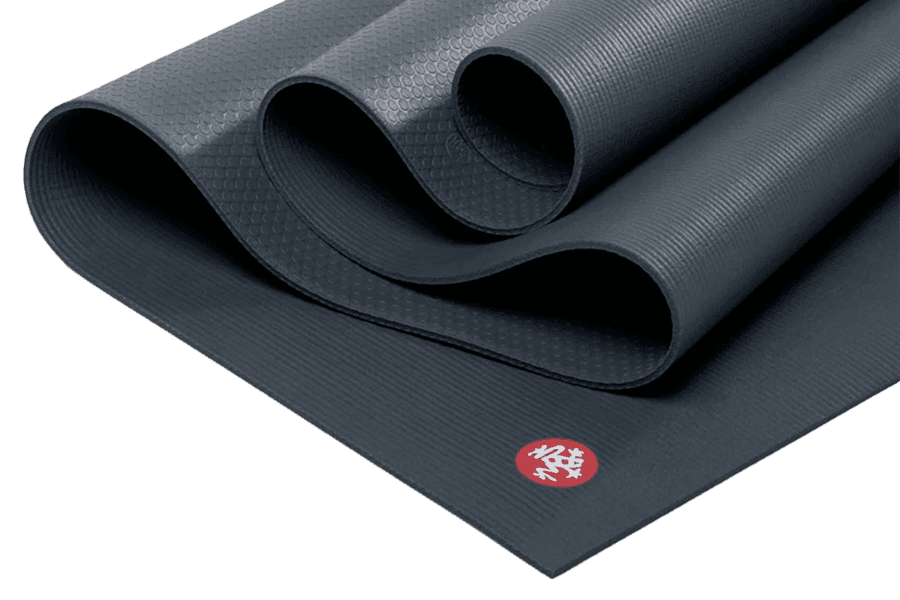
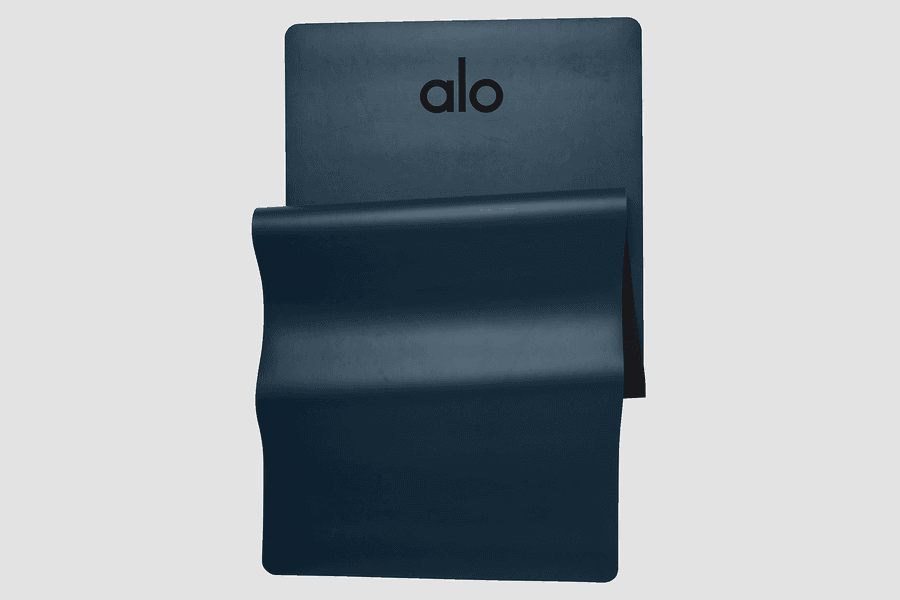
One of these mats is studio equipment and the other is a studio statement. The Manduka PROlite is dense German PVC that serves for a decade and carries at 4.6 pounds. The Alo Warrior is a plush polyurethane-topped mat that grips the moment you unroll it and weighs roughly 8 pounds by Alo's own spec. They cost $36 apart and suit very different owners.
As an Amazon Associate, we earn from qualifying purchases made through links on this page. How this works
The quick answer
The PROlite wins on ownership: a lifetime guarantee, closed-cell PVC that shrugs off years of practice, easy care, and 4.6 pounds on a shoulder strap against the Warrior's roughly 8. The Warrior wins the first class: its polyurethane top grips immediately and absorbs sweat rather than letting it pool (with a mixed record on how well that holds in a drenched room), it's 3.4 inches longer and a couple of inches wider, and it's far plusher under knees. That top also collects dirt and shows wear sooner, and Alo backs it for 30 days.
Get the PROlite if you carry your mat and plan to keep it for years. Get the Warrior if day-one grip and a plush feel matter more, and the mat mostly lives at home or rides in a car.
Get the PROlite if...
- You carry your mat to class (4.6 pounds vs roughly 8)
- You want the decade lifespan and the lifetime guarantee
- You'd rather keep the $36
- You need a latex-free mat (the Warrior has a rubber base)
Get the Warrior if...
- You want grip from the first unroll, with no break-in
- You want the plusher, softer feel under knees and hands
- You want the bigger surface (74.4 by 26.4 inches vs 71 by 24)
- Your classes get sweaty and you want a top that absorbs it
Side by side
Price
The PROlite lists for $36 less.
$112
List price · check price at Amazon
$148
List price · check price at aloyoga.com
Thickness
The Warrior is 6% thicker.
4.7 mm0.19″
5 mm0.2″
Weight
The PROlite is 3.4 lbs lighter.
4.6 lbs2.1 kg
8 lbs3.6 kg
Size
The Warrior is 3.4″ longer; the Warrior is 2.4″ wider.
Same on both
- Lies flat without curling
- Grip that works without a towel in unheated classes
- Longer versions available from both brands
- Wipe-down cleaning only
Full specs
Dimensions
Materials & build
Buying
Studio equipment against a studio statement
These two mats come from brands with opposite ideas of what a yoga mat is for. Manduka builds the PROlite like gym equipment: dense German PVC, a lifetime guarantee, and a design that hasn’t needed to change in years. Alo builds the Warrior like a product launch: a plush polyurethane leather top, muted colorways, and a look that made it the default mat of studio Instagram.
The gap is $36 on paper, but the real differences are weight, grip timing, and how each mat ages. Those are worth walking through, because they point in opposite directions.
Grip: the Warrior works today, the PROlite works in a month
Unroll the Warrior and it grips. Its polyurethane top holds hands and feet from the first class, and it absorbs sweat rather than letting it pool. T3’s reviewer found it stayed planted through sweaty flows and gave it a T3 Recommends award, though GearLab’s standardized wet-grip test rated it mediocre, so the record in a truly dripping room is mixed.
The PROlite starts from behind. Its closed-cell surface ships slick and needs a few weeks of regular practice before the grip arrives; Manduka has retired its old salt-scrub advice and now says the slickness resolves with use. Broken in and dry, it’s dependable. Sweaty, it never gets there: moisture sits on the sealed surface, and heated classes mean a towel.
Feel: plush against planted
The Warrior is 5 mm with a soft, spongy give that flatters kneeling work, floor poses, and long slow sessions. It’s the more comfortable mat the moment you sit on it, and that comfort is a large part of why people love it.
The PROlite is 4.7 mm of much denser material, closer to a firm floor than a pad. Balance poses read more precisely on it, and nothing about it squishes underfoot. Neither answer is wrong; they’re different preferences, and you likely already know which way yours runs.
Size and weight: the deciding section for commuters
The Warrior is the bigger mat, 74.4″ × 26.4″ against the PROlite’s 71″ × 24″. If you’re near six feet tall or want extra width for wide stances, that’s meaningful acreage the PROlite can’t match at its standard size (though the PROlite Long and Long & Wide exist for exactly this).
Weight is where this comparison turns. The PROlite is 4.6 pounds; Alo lists the Warrior at approximately 8, heavier than even Manduka’s 7.5 pound PRO. Carried across town a few times a week, that difference will decide your happiness with either mat more than any surface property. If your mat commutes, the PROlite is the answer here. If it lives at home, ignore this section.
Durability: a decade against a couple of good years
The PROlite’s dense PVC barely wears. Decade-old PRO-series mats are common enough that GearLab’s testers kept meeting them in studios, and Manduka backs the mat with a lifetime guarantee, defined in the fine print as roughly ten years of regular use with one replacement, bought from an authorized seller. Care is a wipe-down.
The Warrior’s polyurethane top is its weak point over time. T3 noted it picks up dirt and lint easily, and absorbent tops like this scuff and stain with heavy practice on a timescale of a few years, not decades. Alo’s coverage is a 30 day return window. The Warrior also carries rubber rules the PROlite doesn’t: keep it out of direct sun and hot cars, and clean it gently.
One clear-cut difference: latex allergies
The PROlite is PVC with no rubber anywhere in it, certified to OEKO-TEX Standard 100. The Warrior sits on a natural rubber base, and natural rubber can carry trace latex proteins. If you or someone in your household has a genuine latex allergy, this section outranks everything above it: get the PROlite.
Price and where to buy
List prices are $112 for the PROlite and $148 for the Warrior. The PROlite sells on Amazon, where colorway prices move around, so check the current PROlite price at Amazon before paying list; note Manduka’s guarantee applies only when the mat is sold and shipped by Amazon itself. The Warrior sells through Alo’s site and Alo stores only, so any Amazon listing you find is a third-party reseller.
On pure value the PROlite wins: it costs less and lasts several times longer. What the Warrior’s extra $36 buys is immediacy and comfort, which for plenty of people is exactly the right purchase.
Bottom line
Get the PROlite if you carry your mat, practice mostly dry, and want to buy once. It’s lighter by more than 3 pounds, backed for a decade in practice, and cheaper both today and per year of service. The break-in weeks are a real annoyance you’ll forget by spring.
Get the Warrior if you want a mat that feels great immediately and mostly stays put at home or the studio. Its plush surface and day-one grip are genuine, just paired with an 8 pound carry and a top that shows its mileage. Taller readers weighing the Warrior against Manduka’s heavier flagship should read our Manduka PRO vs Alo Warrior comparison next.
Manduka PROlite
List price $112
Alo Warrior
List price $148
Frequently Asked Questions
- Which is better for hot yoga, the PROlite or the Alo Warrior?
- The Warrior. Its polyurethane top absorbs sweat, and T3's reviewer found it stayed grippy through sweaty sessions, though GearLab's standardized wet-grip test rated it mediocre. The PROlite's closed-cell PVC is the wrong tool for heat: sweat sits on the surface and wet palms slide, so heated classes mean a towel. If hot yoga is your main practice, a purpose-built mat like Manduka's GRP Adapt or the Liforme beats both.
- Does the PROlite really start out slippery?
- Yes. Like every PRO-series mat, the PROlite ships slick and needs a few weeks of regular practice before the surface grips properly. Manduka used to recommend a salt scrub to speed this up and has since retired that advice; the slickness resolves with use. The Warrior has no break-in period, which is a genuine advantage for the first month and irrelevant after it.
- How big is the weight difference really?
- Bigger than the specs pages make it look. The PROlite is 4.6 pounds and rolls compact; the Warrior is approximately 8 pounds by Alo's own listing, which makes it heavier than even Manduka's famously heavy 7.5 pound PRO. Carried daily, that difference decides the matchup by itself. If the mat stays home, it barely matters.
- Which mat lasts longer?
- The PROlite, comfortably. Its dense PVC wears so slowly that a decade of service is normal, and Manduka's lifetime guarantee (about ten years of regular use in the fine print, one replacement, authorized sellers only) stands behind it. The Warrior's polyurethane top is the wear point: T3 noted it picks up dirt and lint easily, owners report scuffs and stains with heavy use, and Alo's coverage is a 30 day return window.
- Can I buy these mats on Amazon?
- Only the PROlite. It sells on Amazon, and Manduka's guarantee applies when the mat is sold and shipped by Amazon itself, not a marketplace reseller. Alo doesn't sell the Warrior through Amazon at all; listings you find there are third-party resellers, so buy it from aloyoga.com or an Alo store.
- Which is safer for a latex allergy?
- The PROlite. It's PVC through and through, with an OEKO-TEX Standard 100 certification and no rubber content. The Warrior is built on a natural rubber base, and natural rubber can carry trace latex proteins. With a genuine latex allergy, go with the PROlite or another PVC or TPE mat.
Related comparisons
- Manduka PROlite vs JadeYoga Harmony 74"
- JadeYoga Harmony XW vs Alo Warrior
- Manduka PROlite vs Lululemon The Mat 5mm
- Manduka PROlite Long & Wide vs Alo Warrior
- Manduka PROlite vs JadeYoga Harmony 68"
- Manduka PROlite vs b, halfmoon B Mat Everyday 4mm
- Manduka PRO vs Alo Warrior
- Manduka PROlite vs Suga SugaMat
- Manduka PROlite vs Yoga Design Lab Combo 3.5mm