Manduka PRO vs Hugger Mugger Earth Elements: Which One Should You Buy?
Two respected yoga brands, two completely different ideas of what a mat should be. The Manduka PRO is 7.5 pounds of dense German-made PVC, famous for outliving practices and backed by a lifetime guarantee. The Hugger Mugger Earth Elements is 2.4 pounds of foamy TPE, soft where the PRO is firm and light where it is heavy, at about half the price. OutdoorGearLab scored both in its current 19-mat test, and the gap tells the story: 91 for the PRO, its top score, against a solid 70 for the Earth Elements.
As an Amazon Associate, we earn from qualifying purchases made through links on this page. How this works
The quick answer
The PRO is the better mat by the numbers and the harder mat to live with. It took GearLab's Editors' Choice award for a daily practice with a perfect comfort-and-support score and top marks for materials, but it opens slick and needs weeks of break-in, weighs 7.5 pounds, and costs $144. The Earth Elements scored 70, ninth of nineteen, with testers calling its foamy cushion deliciously comfortable for seated postures, yin classes, and sound baths, and rating it one of the easiest mats in the test to clean.
Get the PRO for a firm, stable platform under a serious standing practice, bought once and kept for a decade. Get the Earth Elements for gentle, restorative, or seated practice, a light carry, and $61 kept; just don't ask its soft foam to anchor one-legged balances.
Get the Manduka PRO if...
- You practice most days and want the top-scored mat in the current test
- A firm, planted surface under standing poses matters to you
- You'd rather buy once: dense PVC plus a lifetime guarantee
- The 71″ × 26″ cut and 7.5 pound heft suit a mat that stays put
Get the Earth Elements if...
- Your practice leans restorative, yin, or seated and soft foam is a feature
- You want a 2.4 pound mat that carries anywhere
- You'd rather keep $61 for a mat GearLab still ranked ninth of nineteen
- You want comfort out of the box, with no break-in period
Side by side
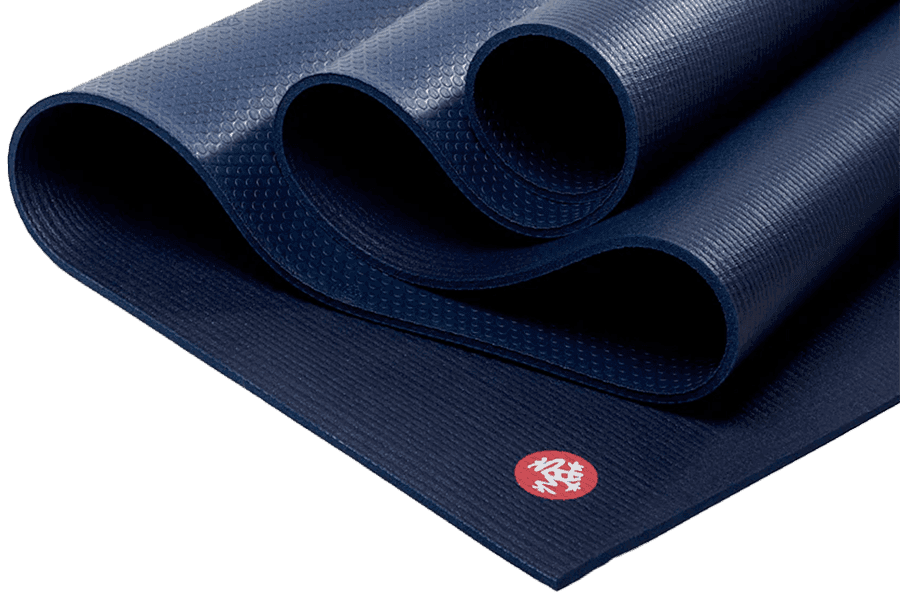
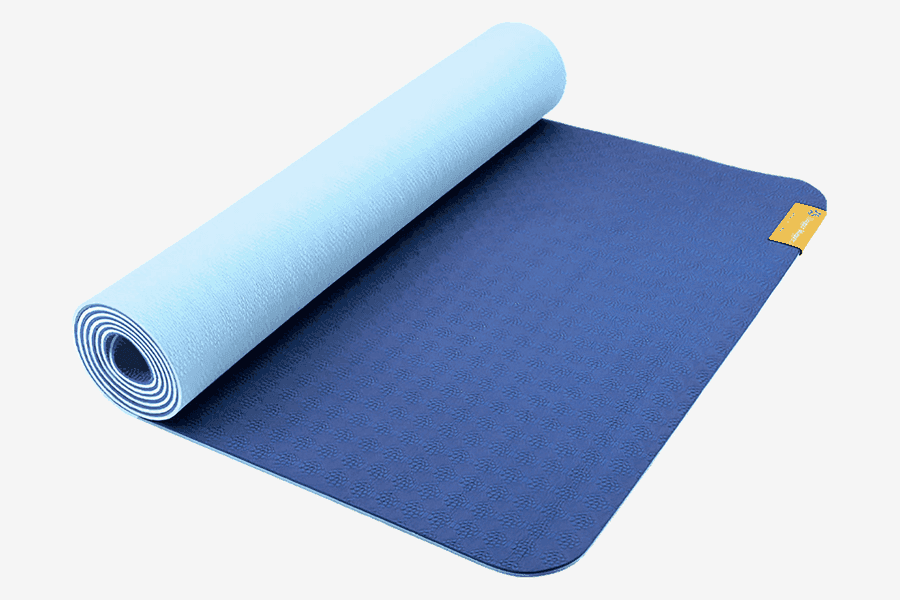
Price
The Earth Elements lists for $61 less.
$144
List price · check price at Amazon
$83
List price · check price at Amazon
Thickness
The PRO is 20% thicker.
6 mm0.24″
5 mm0.2″
Weight
The Earth Elements is 5.1 lbs lighter.
7.5 lbs3.4 kg
2.4 lbs1.09 kg
Size
The Earth Elements is 1″ longer; the PRO is 2″ wider.
Same on both
- Closed-cell surfaces that wipe clean easily
- Latex-free, safe for latex allergies
- Neither absorbs sweat; both want a towel in hot classes
- 72″-class lengths that fit most practitioners
Full specs
Dimensions
Materials & build
Buying
A slab of granite against a memory-foam pillow
Manduka and Hugger Mugger are two of the oldest names in yoga gear, and their mats here disagree about everything. The PRO is 7.5 pounds of dense German-made PVC, the firm platform that studios keep for a decade. The Earth Elements is 2.4 pounds of foamy TPE, softer underfoot than rubber or PVC, at about half the price: $83 against $144.
OutdoorGearLab tested both in its current 19-mat lineup. The PRO took the top score, 91 of 100, and the Editors’ Choice award for a daily practice; the Earth Elements landed a respectable ninth at 70. The gap is real, and so is the price gap, and neither number tells you which mat your practice actually wants.
Feel: the whole decision in one section
Almost nobody who has touched both mats stays torn. The PRO is firm and unyielding, with a fabric-like finish your hands sit on top of; it earned a perfect 10 for comfort and support by cushioning joints without ever going soft under a standing leg. The Earth Elements is the opposite sensation, a foamy cushion GearLab’s testers called deliciously comfortable for seated postures, yin classes, and sound baths, with the moderate balance stability that softness implies.
Match the mat to the practice and both are excellent. A vinyasa practice full of standing work belongs on the PRO. A restorative, yin, or meditation-heavy practice is genuinely nicer on the Earth Elements, and the PRO’s firmness buys nothing there.
Grip and the break-in asterisk
GearLab scored the PRO’s grip 8 of 10 and the Earth Elements’ 6. The asterisk belongs to the Manduka: a new PRO is famously slick, and its traction arrives over weeks of practice as the surface wears in. Manduka used to recommend a salt-scrub break-in and now simply says the slickness resolves with use. The Earth Elements grips like itself from day one, adequately with dry hands.
Neither absorbs sweat; both are closed-cell, so damp palms eventually mean a towel on either mat. A hot-yoga practitioner reading this page is on the wrong page, and the PRO vs GRP Adapt 2.0 comparison explains where that budget should go instead.
Weight: 2.4 pounds against 7.5
This is the Earth Elements’ clearest win. At 2.4 pounds it is one of the lightest standard-size mats sold, an over-the-shoulder afterthought at 72″ × 24″. The PRO is one of the heaviest, a mat you place in a practice space and visit. If your mat rides to class daily, this section may simply be the verdict.
The PRO’s weight is not waste, to be fair: the mass is the density, and the density is the stability and the decade of service. Manduka’s own answer to the weight complaint is the thinner PROlite, which halves the carry without leaving the family.
Care: two of the easiest mats in the test
Here the mats agree for once. Both are closed-cell, so sweat and grime stay on the surface, and both wipe clean in seconds; GearLab scored the Earth Elements a 9 for care and cleaning, one of the best results in its lineup, and noted it stays an easy wipe-down even after outdoor practice. The PRO scored 8 with the same easy-surface logic.
Neither demands the fussy routines rubber mats do. The Earth Elements is also latex-free TPE and marketed as recyclable, and the PRO carries an OEKO-TEX Standard 100 certification on its PVC, which is the rare third-party cert in this category.
Longevity: a decade against a few good years
The PRO’s dense PVC is the most durable construction in yoga, routinely outlasting the practices it hosts, and Manduka backs it with a lifetime guarantee whose fine print works out to roughly ten years of regular use and one replacement, with proof of purchase from an authorized seller. TPE foam is a different material class: expect the Earth Elements to compress and wear over several years of regular practice, with no warranty behind it, just 30 day returns on unused mats bought direct.
Folded into the prices, the gap narrows honestly: one $144 mat per decade against perhaps two or three $83 mats over the same span for a daily practitioner. For a weekly practitioner, the Earth Elements may last close to forever and the math never bites.
Price and where to buy
Check current prices on the PRO and the Earth Elements at Amazon; both also sell direct from their brands. One Manduka note: the lifetime guarantee requires an authorized seller, and an Amazon purchase qualifies only when sold and shipped by Amazon itself. The Earth Elements comes in four colorways at last count, the PRO in Black plus 13 more.
Bottom line
Get the PRO if you practice most days, your practice stands up as much as it sits down, and you want the buy-once mat with the top score in the current test. Accept the break-in, the weight, and the price; they are the cost of the decade.
Get the Earth Elements if your practice is gentle, restorative, or seated, if the mat travels, or if $83 is the budget. It is not a lesser PRO; it is a different tool that beat far more expensive mats in the same test, and for the practice it suits, the PRO’s virtues would mostly go unused. For Manduka’s own soft-and-light option, our PRO vs Begin page covers that corner of the catalog.
Manduka PRO
List price $144
Frequently Asked Questions
- Is the Hugger Mugger Earth Elements a good mat, or just a cheaper one?
- Genuinely good. It scored 70 of 100 in OutdoorGearLab's 19-mat test, ninth overall and ahead of far more famous mats like the Yoloha, the Alo Warrior, and every Gaiam. Its comfort scored 7, its care-and-cleaning score of 9 was among the best in the lineup, and testers singled out the foamy cushion as ideal for seated postures, yin classes, and sound baths. Its limits are a middling grip score of 6 and soft foam that offers only moderate stability in balances.
- How different do these mats feel?
- About as different as two yoga mats get. The PRO is dense and unyielding, a firm platform with a fabric-like finish that your hands and feet sit on top of. The Earth Elements is foamy TPE that you sink into slightly, softer underfoot than rubber or PVC mats. Firmness helps standing balances and quick transitions; softness helps knees, seated work, and long holds. Neither feel is wrong, but almost nobody is torn between them once they've felt both.
- Which is better for sweaty or heated practice?
- Neither is built for it. Both are closed-cell, so sweat sits on the surface rather than absorbing, and the PRO in particular is famously slick until its surface breaks in over weeks of practice. GearLab scored the PRO's grip 8 to the Earth Elements' 6, so the Manduka is the better of the two once worn in, but a hot-yoga practitioner should really be looking at absorbent-top mats like Manduka's own GRP Adapt 2.0 instead.
- What about weight and portability?
- This is the Earth Elements' clearest win: 2.4 pounds against 7.5, one of the lightest standard mats sold against one of the heaviest. The Hugger Mugger goes over a shoulder, into a tote, and onto a bike rack without a thought. The PRO is a mat you place somewhere and visit. If your practice commutes daily, that difference alone can settle this comparison.
- How do the warranties compare?
- The PRO carries Manduka's lifetime guarantee, whose fine print works out to roughly ten years of regular use, one replacement, with proof of purchase from an authorized seller. Hugger Mugger offers no warranty on the Earth Elements, just 30 day returns on unused items bought directly from the company. That matches the mats' natures: dense PVC genuinely lasts decades, while TPE foam is a several-year surface under regular practice at any brand.
- Is there a middle option between these two?
- The most common compromise is Manduka's own X at $72, a denser TPE that trades the Earth Elements' plushness for durability and cross-training toughness, or the Jade Harmony at about $100 for natural rubber grip at a middling weight. If the PRO's firmness appeals but the weight doesn't, the Manduka PROlite runs the same construction at 4 pounds. All three are covered elsewhere on this site in comparisons against these brands' mats.
Related comparisons
- 42 Birds The Robin vs Hugger Mugger Earth Elements 5mm
- Manduka PRO vs b, halfmoon B Mat Strong 6mm
- Manduka PRO vs Alo Warrior
- Manduka X vs Hugger Mugger Earth Elements 5mm
- IUGA Eco Friendly Non Slip PU vs Hugger Mugger Earth Elements 5mm
- Manduka PRO vs Yoloha Unity Pro Cork
- Manduka Begin vs Hugger Mugger Earth Elements 5mm
- Manduka PRO vs JadeYoga Harmony XW
- Hugger Mugger Earth Elements 5mm vs Gaiam Performance Dry-Grip Long & Wide