Manduka PRO Squared vs Amazon Basics 1/4 Inch TPE: Which One Should You Buy?
These two share a thickness, 6 mm, and almost nothing else. The Amazon Basics TPE is a real yoga mat at about $26: light, textured, firm enough to stand on, carry strap included. The PRO Squared stretches the same 6 mm into a 78 inch square of far denser PVC and sells it as a permanent home practice floor. One is a first mat; the other is a room-scale commitment. The useful work is figuring out which side of that gap your practice actually sits on.
As an Amazon Associate, we earn from qualifying purchases made through links on this page. How this works
The quick answer
The Amazon Basics TPE is a legitimately workable mat: 2 pounds, gripped well by owners from the first use, about $26 at list. Its limits are density and lifespan; budget TPE compresses under regular practice, tends to soften within a couple of years, and the 24 inch width is the standard minimum. The Squared is about three and a half times the surface area at several times the density, stable under anything, and guaranteed for about a decade, but it costs $350, weighs 26 pounds, and only makes sense installed in a room it can keep.
If you're starting out, or your mat travels anywhere, get the Amazon Basics; nothing about a 26 pound square suits a beginner or a commuter. Get the Squared only if you already practice seriously at home and want a floor rather than a mat. Most people comparing these two are best served by neither: a standard PRO sits between them at $144.
Get the PRO Squared if...
- You practice at home most days and want a dedicated space
- You want room to flow without stepping off the mat
- You want density that actually supports knees and wrists
- The decade-scale durability and guarantee matter to you
Get the Amazon Basics TPE if...
- You're new to yoga and don't want to overspend
- Your mat rides to class, and 2 pounds beats 26
- You want grip that works on day one, no break-in
- You'd rather keep about $324
Side by side
Price
The Amazon Basics lists for about $324 less.
$350
List price · check price at Amazon
$26.36
List price · check price at Amazon
Thickness
Identical thickness.
6 mm0.24″
6 mm0.24″
Weight
The Amazon Basics is 24 lbs lighter.
26 lbs11.8 kg
2 lbs0.9 kg
Size
The Squared is 4.4″ longer; the Squared is 54″ wider.
Same on both
- About 6 mm thick
- Firm enough for standing poses
- Textured surfaces that wipe clean
- Neither absorbs sweat
Full specs
Dimensions
Materials & build
Buying
Same 6 mm, about $324 apart
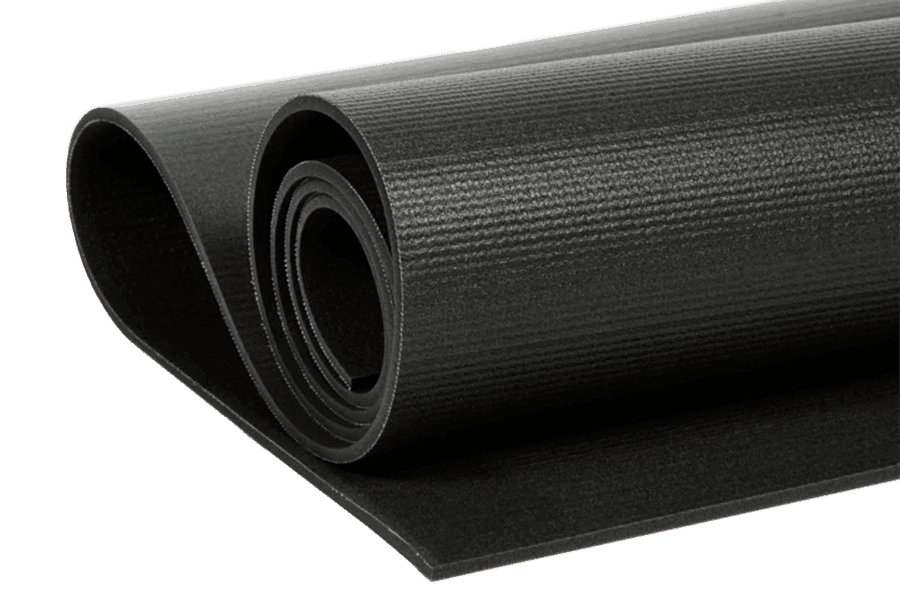
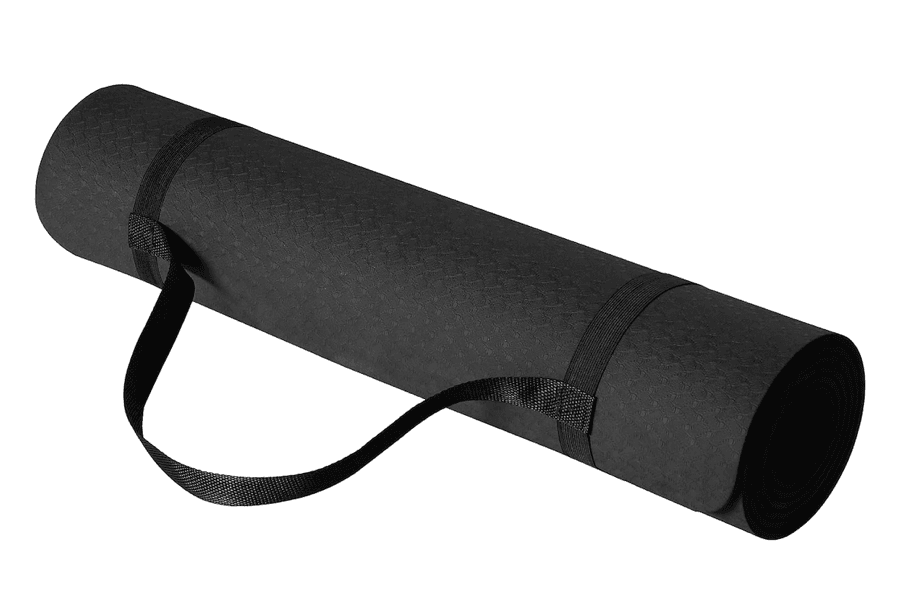
For once the thickness row of the spec table agrees: both of these are 6 mm mats. From there they diverge completely. The Amazon Basics TPE is a 73.6″ × 24″, 2 pound budget mat that costs about $26 with a carry strap included, and unlike Amazon’s soft foam exercise pads, it is a real yoga mat, textured and firm enough to stand on. The PRO Squared is a 78 inch square of much denser PVC, 26 pounds, sold as a permanent home practice floor for $350.
So this is not a fair fight and was never going to be one. It is two reasonable purchases aimed at opposite ends of a yoga life: the mat you buy to find out whether you like to practice, and the floor you buy once you know you do.
Where the 24 pounds went
The whole Amazon Basics mat weighs 2 pounds. The Squared weighs 26, and its bigger footprint explains only part of that; square inch for square inch, the Squared still packs several times more material into the same 6 mm. That density is what a mat actually trades on. The Squared’s PVC barely gives, so knees stay suspended off hard floors and balance poses sit on a planted, unmoving base; it is the construction that took a perfect comfort and support score at OutdoorGearLab.
Light TPE foam gives more underfoot, and testers of comparable budget TPE mats note the cushion reads squishy and costs some steadiness in balance work. It is entirely usable, especially for beginners who are not yet loading wrists in arm balances, but the two mats feel nothing alike despite the shared number on the box.
Grip: the $26 mat wins the first month
Straight out of the packaging, the Amazon Basics has the better surface. Its textured TPE grips acceptably from the first practice, and owners consistently describe it as non-slip at everyday effort levels. The Squared ships slick, like every mat in the PRO family, and needs a few weeks of regular practice before the surface breaks in; Manduka’s current position is that the slickness simply resolves with use. After break-in the Squared grips well dry and keeps improving for years.
Neither surface absorbs sweat, so a dripping hot practice beats both without a towel. For the sweaty-hands case you would want a different product entirely, not either of these.
A mat you carry vs a floor you keep
The Amazon Basics does everything a portable mat should: 2 pounds over a shoulder, strap included, fits studio racks, car trunks, and closets. It is the obvious choice for classes, travel, and any home where the practice space doubles as living space.
The Squared covers about three and a half times the area of the Basics and cannot leave the house. That sounds like a limitation, and it is, but for an established home practice it is also the entire point: wide stances, flowing sequences, and floor work all happen without ever repositioning or stepping off an edge, and the mat is always down, flat, and ready. You need a clear 78 by 78 inch patch of floor that can stay claimed, which in most homes means a spare room.
Two years vs twenty
Budget TPE wears by compressing and losing its surface texture, and with regular practice that arrives in a couple of years, sooner if it is daily. Amazon’s 1 year warranty prices the expectation honestly. At about $26, treating the mat as a consumable is a perfectly good deal; it just is a consumable.
The Squared’s dense PVC is the most durable construction in yoga. GearLab keeps finding PRO-family mats still in service after five to twenty years, and Manduka’s lifetime guarantee stands behind it: roughly ten years of regular use in the fine print, one replacement per purchase, proof of purchase from an authorized seller required. Whatever else separates these mats, their timelines are different products.
The sensible ladder between them
Almost nobody should jump from no mat to a $350 floor. The path that works: start on the Amazon Basics, practice until it compresses or the grip wears, and then upgrade knowing exactly what you want. For most people that upgrade is the standard Manduka PRO at $144, the same construction as the Squared in a size that travels and fits studio rows; our PRO vs Amazon Basics TPE comparison walks that exact decision. The Squared is the step after that, for the minority whose home practice outgrows a mat-sized mat. A cheaper middle rung is the Manduka X at $72.
Price and value
List prices are $350 for the Squared and about $26 for the Amazon Basics, which routinely sells below list the way Amazon prices do. Check the current price on the PRO Squared and the Amazon Basics TPE mat before deciding.
Value depends on which purchase you are actually making. As a first mat, the Basics is close to unbeatable; the entire cost is one studio class. As a permanent practice surface, the Squared spread over a guaranteed decade works out to ordinary mat money per year. The only bad buy on this page is the mismatch: a beginner sinking $350 into a floor for a practice that may not stick, or a committed daily practitioner replacing $26 mats every couple of years instead of buying once.
Bottom line
Get the Amazon Basics TPE if you are anywhere near the start of a practice, or if your mat needs to go places. It is light, grippy on day one, and cheap enough to retire without regret when it wears out, which it will in a couple of years.
Get the PRO Squared only if a serious, mostly daily home practice has a dedicated room waiting for it. It is the most committed version of a yoga purchase we cover, and for the right household it replaces every future mat decision at once. Everyone in between those two readers should be looking at a standard PRO instead.
Amazon Basics 1/4 Inch Thick TPE
List price $26.36
Frequently Asked Questions
- Is the Amazon Basics TPE mat good enough for real practice?
- For a beginner or an occasional practitioner, yes. It's a standard 6 mm thickness, light enough to carry anywhere, grips acceptably from the first use, and costs about $26 with a strap included. What it lacks shows up with mileage: budget TPE compresses and softens under frequent practice, and the foam doesn't support joints the way dense PVC does. It's a genuinely good first mat, not a forever mat.
- If both mats are 6 mm, why do they feel so different?
- Density. The whole Amazon Basics mat weighs 2 pounds; the Squared weighs 26, and most of that difference is how much material is packed into the same thickness. The TPE gives noticeably underfoot and gets squishier as it ages, while the Squared's PVC barely compresses, which is why it keeps knees off the floor and holds balance poses steady. Thickness tells you how far the floor is; density decides whether you reach it.
- Who actually needs a 78 by 78 inch mat?
- People with an established home practice and a room to dedicate to it. The Squared covers about three and a half times the area of a standard mat, so flowing sequences, wide stances, and floor work all happen without repositioning, and there's no edge to step off. If your practice happens in a studio, a living room that needs its floor back, or anywhere the mat must be put away, the Squared is the wrong shape for your life.
- How long will the Amazon Basics TPE last?
- Expect a couple of years of regular practice, less if it's daily. Budget TPE wears by compressing and shedding grip texture, and the 1 year warranty is a fair statement of the design life. At about $26 that's a reasonable deal. The Squared plays a different game entirely: GearLab keeps finding PRO-family PVC in service after five to twenty years, and Manduka's lifetime guarantee backs roughly ten years of regular use.
- Which mat grips better?
- Out of the box, the Amazon Basics: its textured TPE works from the first practice, while the Squared ships slick and needs a few weeks of regular use to break in, the PRO family's best-known flaw. Once broken in, the Squared's grip is excellent dry and keeps improving. Neither surface absorbs sweat, so a genuinely sweaty session needs a towel on either one.
- Should I start with the cheap mat and upgrade later?
- That's the path we'd recommend to almost everyone reading this page. Start on the Amazon Basics, and if you're still practicing when it compresses or the grip wears, upgrade with confidence. Just note the natural upgrade is the standard $144 PRO, same construction as the Squared in a size that fits normal rooms and studio classes. The Squared enters the picture only when a home practice outgrows a mat-sized mat.
Related comparisons
- Amazon Basics 1/4 Inch Thick TPE vs Gruper TPE 6mm
- Amazon Basics 1/4 Inch Thick TPE vs Gaiam Premium 6mm
- Amazon Basics 1/4 Inch Thick TPE vs Gaiam Essentials 6mm
- Amazon Basics 1/4 Inch Thick TPE vs YogaAccessories Extra Thick Deluxe 1/4"
- Amazon Basics 1/4 Inch Thick TPE vs Gaiam Premium Reversible 6mm
- Amazon Basics 1/4 Inch Thick TPE vs Gaiam Classic Print 4mm
- Amazon Basics 1/4 Inch Thick TPE vs Gaiam Essentials Fitness Mat 10mm
- Manduka Begin vs Amazon Basics 1/4 Inch Thick TPE
- Amazon Basics 1/4 Inch Thick TPE vs IUGA Eco Friendly Non Slip PU