Manduka PRO Long & Wide vs Manduka X: Which One Should You Buy?
The PRO Long & Wide is a 79" × 52" slab of dense PVC that weighs 22 pounds and is guaranteed for life. The Manduka X, now sold as the X Hybrid Fitness Mat, is a 71" × 24" TPE mat that weighs 3.4 pounds and costs $216 less. One is a room you practice in, the other is a mat you throw in the car. Almost nobody is genuinely torn between them, so this page is mostly about working out which buyer you are.
As an Amazon Associate, we earn from qualifying purchases made through links on this page. How this works
The quick answer
The Long & Wide is the better yoga surface on every line that matters: more than twice the area, denser 6 mm cushion, decades of service, a lifetime guarantee. The X is the better mat for a life that includes yoga rather than revolves around it: light, grippy on day one, tough enough for shoes and cross-training, and $216 cheaper. TPE is the shortest-lived material Manduka uses, and the X carries no warranty.
Buy the Long & Wide only if you have a room to give it and a practice that stays home. If your mat travels, doubles as a gym mat, or gets used a few times a week, the X does that job for a fraction of the money and the PRO would just be an expensive piece of furniture.
Get the PRO Long & Wide if...
- Yoga is the main event and it happens in one room
- You want to stop aiming your limbs at a 26 inch strip
- You kneel a lot and want dense, not springy, support
- You want a mat that outlasts the decade
Get the Manduka X if...
- Your mat has to do yoga, HIIT, pilates, and floor work
- You carry it, and 3.4 pounds is the whole point
- You want usable grip on day one with no break-in
- You'd rather keep $216
Side by side
Price
The X lists for $216 less.
$288
List price · check price at Amazon
$72
List price · check price at Amazon
Thickness
The Long & Wide is 20% thicker.
6 mm0.24″
5 mm0.2″
Weight
The X is 18.6 lbs lighter.
22 lbs10 kg
3.4 lbs1.5 kg
Size
The Long & Wide is 8″ longer; the Long & Wide is 28″ wider.
Same on both
- Made by Manduka
- Closed-cell surface (sweat can't soak in)
- Firm enough for balance poses
- Lies flat without curling
Full specs
Dimensions
Materials & build
A room versus a mat you throw in the car
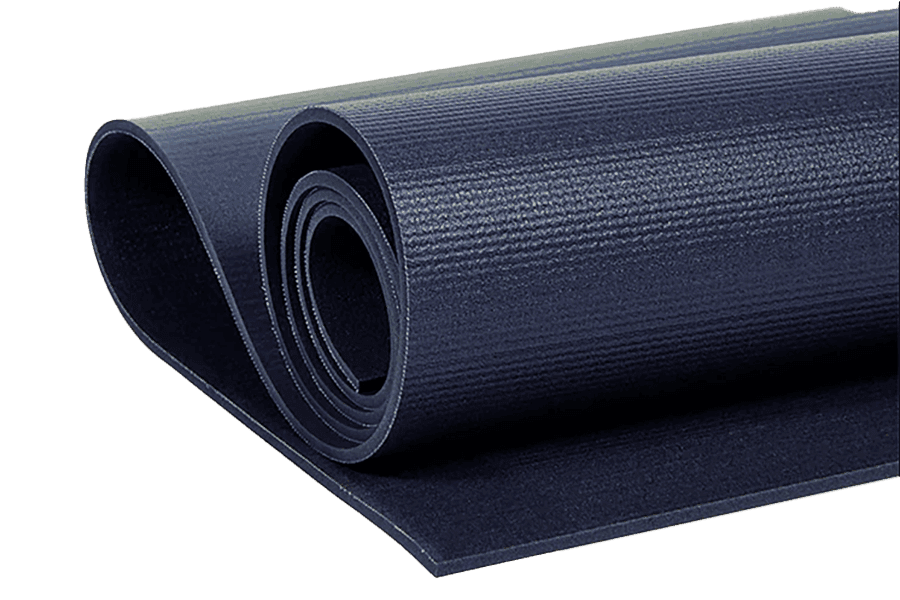
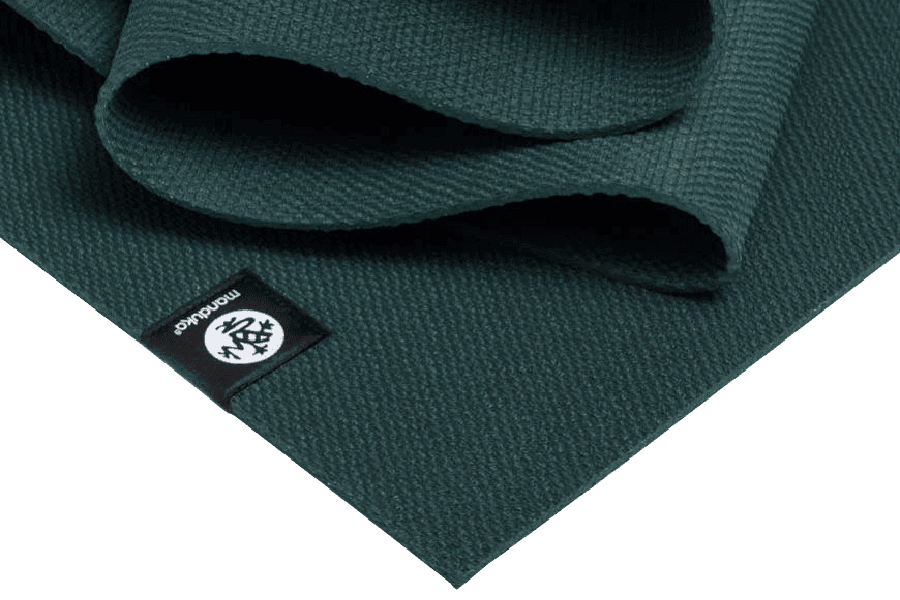
The PRO Long & Wide is 79″ × 52″ of dense German PVC, 22 pounds, $288, guaranteed for life. Manduka sells it to people who have decided where they practice and want to stop negotiating with the edges of a mat. The Manduka X, now listed as the X Hybrid Fitness Mat, is 71″ × 24″ of TPE, 3.4 pounds, $72, and sold to people whose mat has to survive yoga on Monday and burpees on Wednesday.
Very few people are honestly torn between them, so most of the work on this page is figuring out which buyer you are. If your mat needs to leave the house, the $288 one is not a candidate no matter how good it is.
Size: 4,108 square inches against 1,704
The X is a standard mat. At 71″ × 24″ it fits practitioners up to about five foot eleven, and it gives you the usual narrow lane to work in. There is no long version and no wide version; the X comes one way.
The Long & Wide is roughly two and a half times the surface, and nearly all of the difference is sideways. Fifty-two inches is two standard mats side by side, which is enough that wide-legged poses, sprawled floor sequences, and a pair of blocks all stay on the mat. It runs 79 inches too, so tall practitioners stop hanging off the ends.
What it asks for in return is a permanent stretch of floor about 6 feet 7 inches by 4 feet 4 inches. That is the part people underestimate. Tape it out on your floor for a day before you spend $288.
Weight: 3.4 pounds against 22
The X weighs less than a full water bottle and rolls small. You can hang it off a backpack, leave it in a car boot, take it to a park. That portability is most of its personality.
The Long & Wide weighs 22 pounds and rolls into a bundle you carry with both arms. It is not going to a class, and it is not going on holiday. Manduka builds it to be unrolled once and left alone, which is a perfectly good design goal, just an unusually demanding one.
Cushioning: same ballpark, different materials
The X is 5 mm and the Long & Wide is 6 mm, which sounds close. The material does the real work. TPE is a light springy foam, which is how a whole mat weighs 3.4 pounds, and it compresses under a planted palm or a kneeling knee. Dense PVC barely gives at all, which is why the PRO construction earned a perfect comfort and support score from OutdoorGearLab.
On a carpeted floor this hardly matters. On tile or concrete, over an hour, it matters a lot: the X starts feeling thin under joints in a way the PRO does not.
Grip: the X wins the first month
The X’s textured TPE has usable traction from the first session, and it is double-sided, so either face works. A new PRO surface is slick, and it stays that way for a few weeks of regular practice. Manduka has dropped the old salt-scrub advice and now simply says the slickness resolves with use, which it does, but expect careful Down Dogs until then.
Once broken in, the PRO grips better and keeps getting better for years. Both mats are closed-cell, though, so neither absorbs sweat: once your palms are wet, both get slippery. If that is your normal experience of a class, the mat you actually want is a GRP Adapt 2.0, which is built to grip when wet.
The X takes abuse the PRO should not
Manduka repositioned the X around cross-training for a reason. It is fine under trainers, tolerant of weights and outdoor use, and it does not much care if you drop something on it. If your sessions mix yoga with HIIT, pilates, kettlebells, and stretching, that tolerance is worth more than any spec on the PRO’s sheet.
Do not do the same things to a PRO. Dense PVC survives most things, but shoe grit and heel pressure are exactly how you scar a mat you intended to keep for a decade. A mat you are protecting is a different object from a mat you are using.
Durability: a couple of years against a couple of decades
TPE is the shortest-lived material Manduka uses. Under frequent practice the surface wears, and it can dent or start flaking inside a couple of years, faster if the mat lives outside in the sun. At $72 that is a fair deal, not a scandal, but it is worth knowing what you are buying.
The Long & Wide is the other end of the category. GearLab’s testers keep finding instructors’ PRO mats still in service after five to twenty years, and Manduka’s lifetime guarantee (roughly ten years of regular use, one replacement, proof of purchase from an authorized seller) backs it. The X gets a 30 day return window and no warranty at all, and the coverage matches the materials.
Price and value
List prices are $288 for the Long & Wide and $72 for the X, a gap of $216. Both fluctuate, so check the current price on the PRO Long & Wide and the Manduka X before you buy.
Judged inside their own categories, both are priced fairly. The waste is in the mismatch. Paying $288 for a mat that ends up leaning in a closet because you actually go to classes is a bad outcome, and so is buying a $72 TPE mat for a daily home practice that will chew through it in two years.
The mat most people in this matchup should buy
If you want Manduka durability in something you can carry, the answer is neither of these. The PROlite is $112 and 4.6 pounds: the same German PVC, the same lifetime guarantee, 4.7 mm instead of 6, in a 71″ × 24″ cut that fits a mat bag. It costs more than the X and it will not take a session in trainers, but as a yoga mat you travel with it is the smarter buy.
And if it is width you want without 22 pounds of it, the PROlite Long & Wide is 79″ × 30″ at $144 and still rolls up.
Bottom line
Buy the Manduka X if your mat has more than one job, or if it has to travel. It grips on day one, weighs 3.4 pounds, handles shoes, and costs $216 less. Replace it in a couple of years and you will still be ahead.
Buy the PRO Long & Wide if yoga is the main event, it happens in one room, and you have the floor to give it. It is the widest mat Manduka makes, it supports joints better than anything in this price range, and it should outlive several X’s. Just be honest about whether the mat is ever going to move.
Manduka X
List price $72
Frequently Asked Questions
- Is the Manduka X a real yoga mat?
- Yes, and a decent one for dry, flowing practice: 5 mm of cushioning, a double-sided textured TPE surface with usable grip from day one, and very little weight to carry. Manduka has repositioned it as the X Hybrid Fitness Mat 5mm, aimed at cross-training as much as yoga, but the mat underneath is the same 71" × 24" TPE mat it has always been. What it lacks is the PRO construction's density under kneeling poses and any real length or width.
- How much bigger is the PRO Long & Wide?
- It is 79" × 52" against the X at 71" × 24", which works out to 4,108 square inches against 1,704, or roughly two and a half times the practice surface. Almost all of that is width. You need to clear a space about 6 feet 7 inches by 4 feet 4 inches and be happy to leave 22 pounds of mat lying there, which is the part most people underestimate.
- Which one grips better?
- Out of the box, the X. Its textured TPE has real traction immediately, while a new PRO surface is slick for its first few weeks. Manduka has retired the old salt-scrub advice and now says the slickness resolves with regular use, and it does. After break-in the PRO grips better and keeps improving for years. Both are closed-cell, so sweat sits on top of either and heavy sweaters will want a towel or a mat like the GRP Adapt that's built to absorb it.
- How long does the Manduka X last?
- TPE is the shortest-lived of the common mat materials. Under frequent practice the surface wears and can dent or start to flake within a couple of years, faster if the mat lives outdoors in the sun. The PRO Long & Wide's dense PVC routinely serves a decade or more, and the warranty terms line up with the materials: a lifetime guarantee on the PRO, a 30 day return window on the X.
- Can you use the Manduka X with shoes?
- That is a large part of why it exists. The X is built to take cross-training, weights, and outdoor use, so trainers on the mat are not a problem. Do not do that to a PRO. Dense PVC survives most things, but shoe grit and heel pressure are how you scar a mat you were planning to keep for ten years.
- If I want a light Manduka with the lifetime guarantee, what should I buy?
- The PROlite, at $112 and 4.6 pounds. It is the same German PVC and the same guarantee as the PRO in a 4.7 mm, 71" × 24" cut, so you keep the durability while ending up close to the X in weight. It costs more than the X and it will not take a HIIT session in trainers, but for a yoga mat you actually carry it is the smarter buy.
Related comparisons
- Manduka X vs Gaiam Performance Dry-Grip 5mm
- Manduka X vs Gaiam Performance Dry-Grip Long & Wide
- Manduka X vs IUGA Eco Friendly Non Slip PU
- Manduka X vs Hugger Mugger Earth Elements 5mm
- Manduka X vs JadeYoga Level One
- Manduka X vs 42 Birds The Robin
- Manduka X vs JadeYoga Travel 68"
- Manduka X vs Suga SugaMat
- JadeYoga Harmony 68" vs Manduka X