Manduka PRO Long & Wide vs Manduka Begin: Which One Should You Buy?
Manduka sells both of these, and they sit at opposite ends of the catalog. The PRO Long & Wide is 79" × 52", 22 pounds, $288, and guaranteed for life; it is a home practice surface you install rather than a mat you own. The Begin is 68" × 24", 2.5 pounds, $62, and comes with a center alignment stripe to help you square up your poses. If you are genuinely comparing these two, you are probably trying to work out whether to buy once or start cheap.
As an Amazon Associate, we earn from qualifying purchases made through links on this page. How this works
The quick answer
The Begin is a good first mat: light, grippy enough, reversible, and cheap, with an alignment stripe that is genuinely useful when you are still learning where your feet go. It is also 68 inches long, which is short for anyone near six feet, and TPE that will wear out in a couple of years of steady use.
The Long & Wide is the mat you buy when yoga is already a habit, you have the floor space, and you want to stop replacing mats. Start with the Begin if you are new; nobody should spend $288 on a mat before they know whether they will still be practicing in March. Buy the Long & Wide when the practice is real and the room is yours.
Get the PRO Long & Wide if...
- You already practice regularly and it happens at home
- You want room to sprawl, and you have the floor for it
- You want dense support that does not compress under your knees
- You want to buy one mat and stop thinking about mats
Get the Begin if...
- You are new and want to spend $62 finding out if yoga sticks
- The alignment stripe would actually help you right now
- You need a mat you can carry to a class or a friend's place
- You are under about five foot eight, so 68 inches fits
Side by side
Price
The Begin lists for $226 less.
$288
List price · check price at Amazon
$62
List price · check price at Amazon
Thickness
The Long & Wide is 20% thicker.
6 mm0.24″
5 mm0.2″
Weight
The Begin is 19.5 lbs lighter.
22 lbs10 kg
2.5 lbs1.1 kg
Size
The Long & Wide is 11″ longer; the Long & Wide is 28″ wider.
Same on both
- Made by Manduka
- Closed-cell surface (sweat can't soak in)
- Wipes clean with a damp cloth
- Lies flat without curling
Full specs
Dimensions
Materials & build
The first mat and the last one
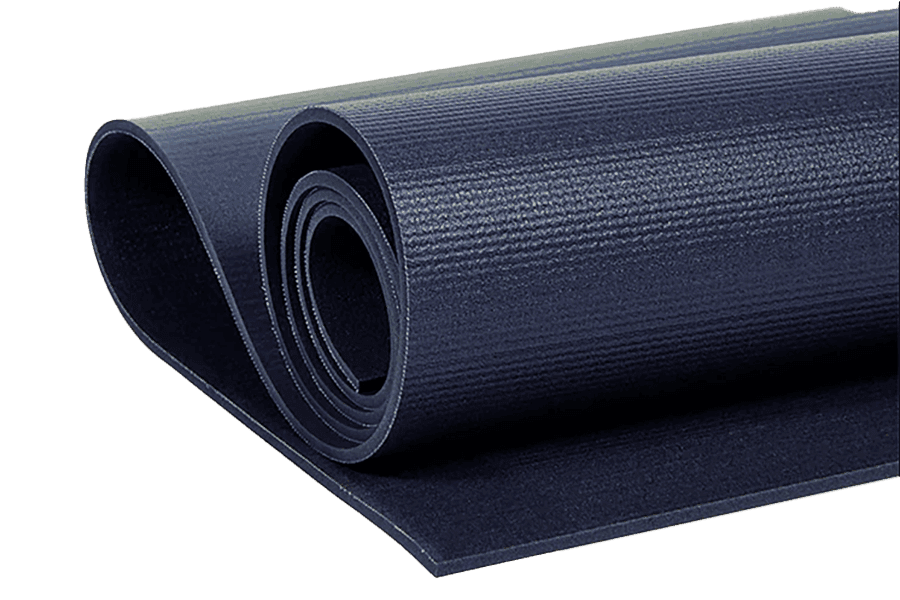
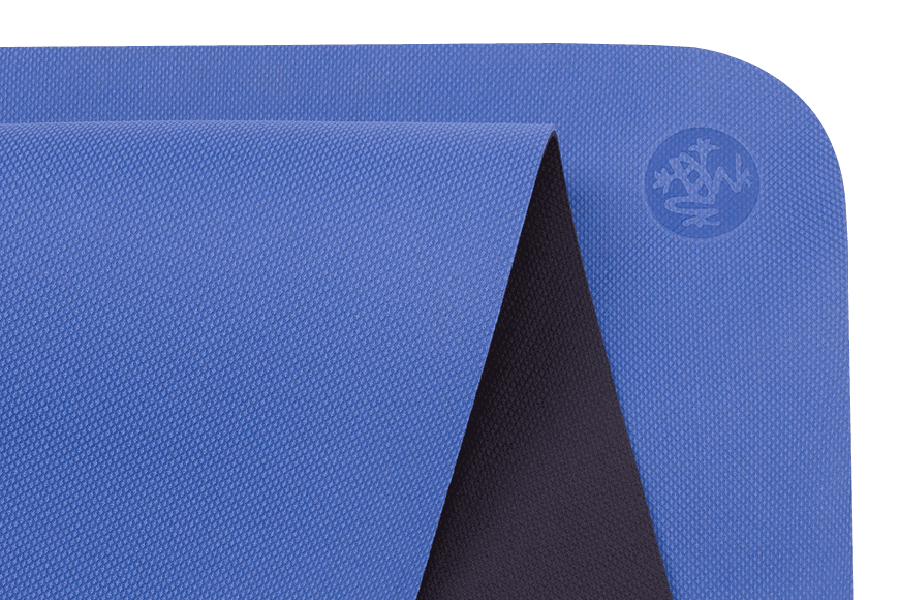
Manduka makes both of these, and they sit at opposite ends of the catalog. The Begin is $62: 68″ × 24″ of soft-touch TPE, 2.5 pounds, reversible, with a stripe down the middle to line your hands and feet up against. The PRO Long & Wide is $288: 79″ × 52″ of dense PVC, 22 pounds, and Manduka’s lifetime guarantee.
If you are comparing them, you are probably deciding whether to start cheap or buy once. We think that is the right way to frame it, and for most people the answer is start cheap, because a $288 mat rewards a practice you already have rather than one you are hoping to build.
What the Begin actually gets right
The alignment stripe is not a gimmick. In your first months the hardest part of a pose is often knowing where your feet are, and a center line gives you something to square against without craning at a mirror or a teacher. It is the sort of feature you outgrow, and you outgrow it because it worked.
The rest is sensible beginner design: 5 mm of cushioning, a soft-touch surface with usable grip on day one, two usable faces, and 2.5 pounds so carrying it to a class is nothing. At $62 it is a low-stakes way to find out whether yoga is going to stick.
Size: 68 inches is the Begin’s real limit
The Begin is 68″ × 24″, shorter than the standard 71 inch mat. Anyone around five foot ten or taller will find their head or heels drifting onto the floor in supine poses, and there is no longer version of it. That is the one spec on the Begin we would push back on: it is a mat for smaller frames, sold as a mat for everyone.
The Long & Wide runs 79″ × 52″, which is 4,108 square inches against the Begin’s 1,632. Length stops being a thought, width stops being a constraint, and two people can stretch on it side by side. The price is a permanent stretch of floor roughly 6 feet 7 inches by 4 feet 4 inches, plus room to walk around it.
Cushioning: 5 mm of springy foam against 6 mm of dense PVC
The millimeters look similar and the surfaces do not feel similar. The Begin’s TPE is light and springy, which is how the whole mat weighs 2.5 pounds, and it compresses under a knee or a planted palm. The PRO construction is dense enough that it barely gives, which is what earned it a perfect comfort and support score from OutdoorGearLab.
On carpet, the difference is minor. On a hard floor, kneeling for a few minutes, the Begin starts to feel thin and the PRO does not. That is the clearest thing your money buys here, along with the floor space.
Grip: the cheap mat is easier to love at first
The Begin grips reasonably from the first session. A new PRO does not: the closed-cell surface ships slick and takes a few weeks of regular practice to break in. Manduka has retired the salt-scrub ritual it used to recommend and now says the slickness simply resolves with use, which is true and also not much consolation in week one.
After break-in the PRO is the far better surface and stays that way for years. Neither mat absorbs sweat, though, so heated classes mean a towel on either. If you sweat heavily, the mat you want is a GRP Adapt 2.0, whose polyurethane top is designed to grip harder as it gets wet.
Durability: two years against ten
TPE is the shortest-lived material Manduka uses. Expect a couple of years of regular practice from the Begin before the surface starts to wear or dent, sooner if you are on it daily. It gets a 30 day return window and no warranty, which is an accurate description of what it is.
The Long & Wide is built to a completely different standard. GearLab’s testers keep finding instructors’ PRO mats still in service after five to twenty years, and Manduka’s lifetime guarantee (roughly ten years of regular use, one replacement, proof of purchase from an authorized seller) exists because the company can afford to offer it. Replacing a $62 mat every two years for a decade costs more than one PRO, though only if you are still practicing in a decade.
Should a beginner buy the PRO Long & Wide?
Usually not, and not because it is too good. It is $288, it weighs 22 pounds, it needs a dedicated patch of floor, and it ships slick, which means a beginner spends the first few weeks managing a surface instead of learning poses. None of that is fatal. It is just a lot to take on before you know the practice is sticking.
The exception is the person who already knows: you have practiced for years, you are setting up a home space, and you want the mat you will not have to think about again. Then the Long & Wide is the right buy and the Begin would be a waste of $62.
The mat in between
Most people who have outgrown a starter mat do not need a home studio floor next. They need the PROlite: $112, 4.6 pounds, the same German PVC and the same lifetime guarantee as the PRO, in a 71″ × 24″ cut you can carry to a class. It is the natural second mat, and it is the one we would point at before either of these.
If you are tall, the PROlite Long is 79 inches at $124 and fixes the Begin’s worst limitation for a fraction of the Long & Wide’s price.
Price and value
List prices are $288 for the Long & Wide and $62 for the Begin. Check the current price on the PRO Long & Wide and the Manduka Begin before deciding; both drift.
The Begin is honest value: a proper mat from a real brand for less than three studio classes. The Long & Wide is honest value too, measured in years and floor space rather than dollars. The only bad purchase is buying the expensive one for a practice that has not started yet.
Bottom line
Buy the Begin if you are new. It costs $62, it grips from day one, the alignment stripe genuinely helps, and if yoga does not stick you have lost very little. Just check your height against that 68 inch length first.
Buy the PRO Long & Wide if your practice is already a habit, it lives at home, and you want room to move on a surface that will outlast the decade. It is the widest mat Manduka sells and the least likely to ever need replacing. It is also the wrong first mat for almost everybody.

Manduka Begin
List price $62
Frequently Asked Questions
- Is the Manduka Begin good for beginners?
- That is exactly what it is for, and it does the job. It is 5 mm of soft-touch TPE, weighs 2.5 pounds, reverses to a second surface, and has a center stripe you can line your hands and feet up against, which is more useful in your first months than any premium feature. The catch is size and lifespan: 68" × 24" is small, and TPE gives you a couple of years of regular practice rather than a decade.
- Is 68 inches long enough?
- It depends on your height. At 68 inches the Begin is shorter than a standard 71 inch mat, so anyone around five foot ten or taller will find their head or heels off the mat in supine poses. The PRO Long & Wide runs 79 inches and 52 inches wide, so length stops being a consideration entirely. If you are tall and on a budget, look at a standard-length mat rather than the Begin.
- Is the PRO Long & Wide a sensible first mat?
- Usually not. It costs $288, weighs 22 pounds, needs a dedicated stretch of floor about 6 feet 7 inches by 4 feet 4 inches, and it ships slick, so a beginner gets a few weeks of careful Down Dogs before the surface breaks in. None of that is a reason to avoid it forever; it is a reason to start with something cheaper and buy it once you know the practice is sticking.
- Do either of these work for hot yoga?
- Neither, really. Both surfaces are closed-cell, so sweat sits on top instead of soaking in, and grip falls off once your palms are wet. The Begin's soft-touch TPE is more forgiving than a brand new PRO, but it is not a hot yoga mat. If you practice heated, look at the GRP Adapt line, where the polyurethane top is designed to absorb moisture and grip harder as it gets wet.
- How much cushioning does each one give you?
- The Begin is 5 mm and the Long & Wide is 6 mm, but the number is the least interesting part. The Begin's TPE is a light springy foam that compresses under a planted palm; the PRO construction is dense PVC that barely gives, which is why it earned a perfect comfort and support score from OutdoorGearLab. For kneeling and forearm work on a hard floor, the PRO is a meaningfully kinder surface.
- What is the sensible middle ground between them?
- The PROlite at $112. It is the same German PVC and the same lifetime guarantee as the PRO, in a 4.7 mm, 4.6 pound, 71" × 24" cut that you can actually carry to class. For most people who have outgrown a starter mat but are not building a home studio, that is the mat to buy rather than either of these.
Related comparisons
- Manduka Begin vs IUGA Eco Friendly Non Slip PU
- Manduka Begin vs Gaiam Performance Dry-Grip 5mm
- Manduka Begin vs Hugger Mugger Earth Elements 5mm
- Manduka Begin vs JadeYoga Level One
- Manduka Begin vs Gaiam Performance Dry-Grip Long & Wide
- Manduka Begin vs 42 Birds The Robin
- Manduka Begin vs Gaiam Premium Reversible 6mm
- Manduka Begin vs JadeYoga Travel 68"
- Manduka Begin vs Gruper TPE 6mm