Manduka GRP Adapt 2.0 vs Gaiam Dry-Grip: Which One Should You Buy?
Manduka sells the GRP Adapt 2.0 as its hot yoga flagship. Gaiam sells the Performance Dry-Grip as a no-slip mat ideal for hot yoga with a topcoat that wicks moisture as the room heats up. Both are 5 mm and both promise grip when you sweat. GearLab put both through the same 19 mat round, which makes this an unusually clean comparison, and the gap between them lands almost entirely in the category they are both marketed on.
As an Amazon Associate, we earn from qualifying purchases made through links on this page. How this works
The quick answer
For sweat there is no contest. The GRP Adapt 2.0 scored 9.5 out of 10 dry and 8.5 wet, the best wet result in the field, earned by testers pouring a liter of water onto the mat and running sun salutations. The Dry-Grip rated 6.5 dry and 3.5 wet, second from the bottom of the lineup and below Gaiam's own $29.98 Premium. It finished third overall against the Gaiam's twelfth.
The Dry-Grip has two genuine arguments: an 8 out of 10 comfort score that nearly matches the Manduka, and a rubber-free, latex-free build that puts it on a very short list for anyone with a latex allergy. Buy it for those reasons or for stretching. Buy the GRP if you are in a heated room.
Get the GRP Adapt 2.0 if...
- You are in a hot room and want to stop using a towel
- You want the best wet grip numbers published anywhere
- You want 26 inches of width and a 79 inch long option
- You want a mat built to take daily sweat for years
Get the Gaiam Dry-Grip if...
- You need a latex-free and rubber-free mat
- Your practice is stretching and ordinary unheated classes
- You want a lifetime guarantee rather than a 30 day return window
- You want to spend about half as much
Side by side
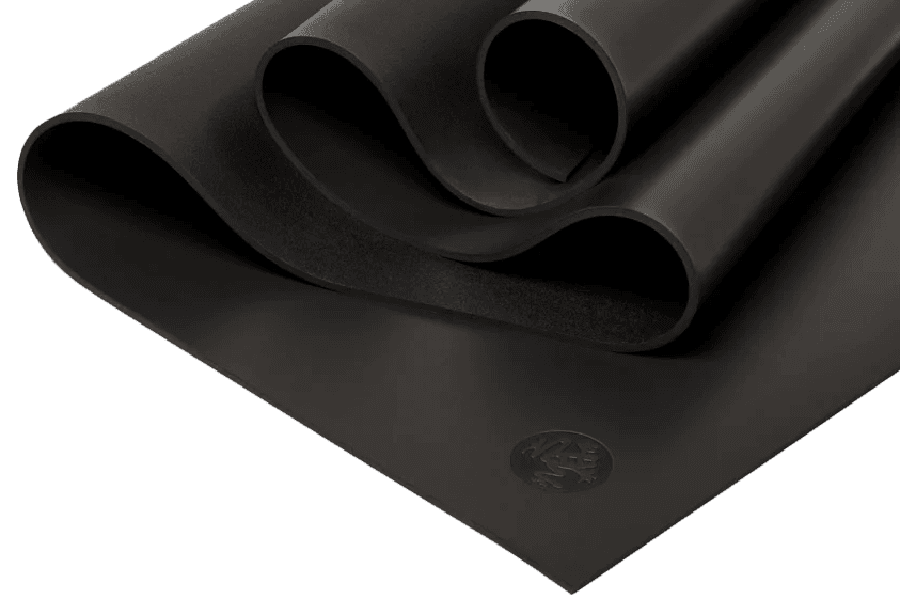
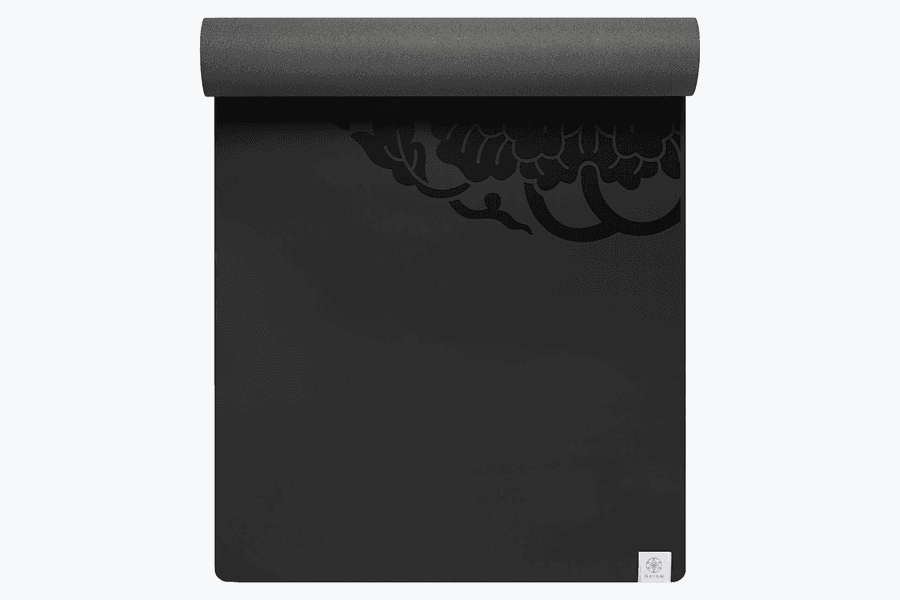
Price
The Dry-Grip lists for about $58 less.
$128
List price · check price at manduka.com
$69.98
List price · check price at Amazon
Thickness
Identical thickness.
5 mm0.2″
5 mm0.2″
Weight
The Dry-Grip is 1.5 lbs lighter.
5.8 lbs2.6 kg
4.25 lbs1.9 kg
Size
The GRP Adapt 2.0 is 3″ longer; the GRP Adapt 2.0 is 2″ wider.
Same on both
- 5 mm thick
- A smooth coated surface rather than textured foam
- Water or heavily diluted mild cleaner only
- Strong smell out of the packaging that clears with airing
Full specs
Dimensions
Materials & build
Buying
Two mats sold on the same promise
Manduka sells the GRP Adapt 2.0 at $128 as its hot yoga flagship. Gaiam sells the Performance Dry-Grip at $69.98 as a no-slip mat ideal for hot yoga, with a topcoat that wicks moisture as the room heats up. Both are 5 mm, both promise grip when you sweat, and one of them delivers it.
GearLab put both through the same 19 mat round, which makes this an unusually clean comparison. The GRP finished third overall. The Dry-Grip finished twelfth. The gap is almost entirely in the one category both mats are marketed on.
Wet grip: 8.5 against 3.5
GearLab scored the GRP Adapt 2.0 at 9.5 out of 10 for dry grip and 8.5 wet. The wet figure is the highest in the field, and its testers got there by pouring a liter of water onto the mat and running sun salutations. Manduka’s Satin Grip surface pulls moisture down through the mat, so the top stays tacky instead of beading.
The Dry-Grip rated 6.5 dry and 3.5 wet. That wet number is third from the bottom of the whole lineup, below Gaiam’s own thirty dollar Premium 6mm, which managed 4. A topcoat that repels moisture is not the same thing as a surface that grips through it, and this is what that distinction costs in practice.
GearLab’s prose was kinder than its numbers and still pointed the same way: not the grippiest sticky mat, but a lovely choice for a stretch practice.
Cushion: closer than you would expect
The Dry-Grip is genuinely good here. It scored 8 out of 10 for comfort and support against the GRP’s 8.5, and GearLab described its cushion as ideal: kind to the joints, firm enough for support, and steady on the floor. For a mat forty percent of the price, that is a real result.
Neither is plush. GearLab listed less cushion on the knees among the GRP’s downsides and noted it can feel sharp in deep lunges, trading depth for a lighter, more responsive feel. If kneeling is what hurts, five millimeters of firm mat is the wrong answer in both cases.
Materials and how each one ages
The GRP took 8 out of 10 on materials, one of the higher scores in the test. The Dry-Grip took 4, one of the two lowest in the field. Its surface dye can rub off, and GearLab recommends buffing the mat with a towel before first use so it does not mark your clothes. Amazon ratings run about 4.2 stars for the Dry-Grip against 4.5 or better for Gaiam’s cheaper mats, which is a meaningful gap at that volume.
The GRP has its own quirks and GearLab named them: sweat leaves visible watermarks, and the mat can squeak underfoot. Neither affects performance. Buy a dark colorway if marks would bother you. Polyurethane tops are a wear item on both mats, but the Manduka is built to take daily use in a way the Gaiam is not.
The one thing the Gaiam does that the Manduka cannot
The Dry-Grip is rubber free, latex free and free of the six worst phthalates. The GRP Adapt 2.0 is polyurethane over natural rubber, so it is not an option if you have a latex allergy. Nearly every mat that grips well when wet is rubber based, which leaves people with a latex sensitivity a short list.
If that is your situation, the Dry-Grip is a reasonable buy on its cushion and its stability, and you should plan on a towel for heated classes rather than expecting the mat to handle sweat. That is a narrow recommendation, and for the people it applies to it is the deciding factor.
Size, weight and the long version
The GRP is 71″ × 26″. The Dry-Grip is 68″ × 24″, three inches shorter and two inches narrower, and 24 inches puts your hands near the edge in a wide down dog. Manduka also offers a 79 inch Long; Gaiam sells one size.
Weight is muddier than the listings suggest. Manduka states 5.8 pounds and GearLab measured 5.5. Gaiam states 4.25 and GearLab measured 5.4, so treat these as two mats of about the same weight rather than believing the Gaiam is the lighter carry.
Coverage favors the cheaper mat
Gaiam backs the Dry-Grip with its lifetime guarantee. Manduka offers no warranty on the GRP Adapt 2.0, only a 30 day return window. On paper the seventy dollar mat is the protected one, which is worth noting even though the guarantee covers manufacturing defects rather than a topcoat that has worn through.
Care is similar on both: water or a heavily diluted mild cleaner, never alcohol, vinegar or oils, and dry flat out of the sun. Both come out of the packaging smelling, the Gaiam of PVC and the Manduka of rubber, and both clear with a week or two of airing.
Price and where to buy
The GRP Adapt 2.0 is a direct purchase from manduka.com at $128 and is not sold on Amazon, so listings there are resold stock. Manduka runs seasonal sales on it. The Dry-Grip lists at $69.98 but has been running well below that on Amazon, which is where the value case for it actually lives.
At full list the gap is fifty eight dollars for a mat that grips more than twice as well when wet. At a discounted Dry-Grip price the gap roughly doubles, and the question becomes whether you sweat enough to care. If you do, nothing about the cheaper mat solves it.
Bottom line
For hot yoga, buy the GRP Adapt 2.0 and stop thinking about it. It holds the best wet grip score anyone has published, it is built for daily sweat, and it is the mat that removes the towel from your kit bag. The costs are a missing warranty, watermarks and an occasional squeak.
Buy the Dry-Grip if you want a firm, stable, well-cushioned mat for ordinary classes and stretching, or if you need something latex free. Just do not buy it for the reason its name suggests. If you want the honest picture of where it sits in Gaiam’s own range, our Dry-Grip vs Gaiam Premium comparison covers it.
Manduka GRP Adapt 2.0
List price $128
Frequently Asked Questions
- How big is the grip difference really?
- Larger than any other gap on this page. GearLab rated the GRP Adapt 2.0 at 8.5 out of 10 for wet grip, the highest number in a 19 mat test, and the Dry-Grip at 3.5, which is second from the bottom. Its testers poured a liter of water on the Manduka and still felt secure through sun salutations. The Gaiam's topcoat repels moisture rather than gripping through it, and that is what the difference amounts to in practice.
- Is the Gaiam Dry-Grip a bad mat?
- No, it is a mis-marketed one. GearLab scored its cushion 8 out of 10, describing it as good on the joints, firm enough for support and steady on the floor, and summarised it as a lovely choice for a stretch practice. Its weak points are materials at 4 out of 10 and wet grip. Bought for firmness and comfort rather than sweat, it is a reasonable mat, particularly on sale.
- Which one works with a latex allergy?
- Only the Gaiam. The Dry-Grip is rubber free, latex free and free of the six worst phthalates. The GRP Adapt 2.0 is polyurethane over natural rubber, so it is out. This matters more than it sounds: almost every mat that grips well when wet is rubber based, which leaves people with a latex sensitivity a short list, and the Dry-Grip is on it.
- Which is more comfortable on knees?
- Neither is plush, and they are close. GearLab scored the GRP 8.5 for comfort and support and the Dry-Grip 8.0. It listed less cushion on the knees among the GRP's downsides and noted it can feel sharp in deep lunges, trading depth for a lighter, more responsive feel. If kneeling is the problem, 5 mm of firm mat is the wrong answer in both cases.
- Which one lasts longer?
- The Manduka, by its scores and by its build. It took 8 out of 10 on materials against the Dry-Grip's 4, one of the two lowest in the field. The Gaiam's surface dye can rub off, and GearLab recommends buffing it with a towel before first use so it does not mark your clothes. The GRP has its own quirks, visible sweat watermarks and an occasional squeak, but neither affects how it performs.
- Where do you buy them and what is covered?
- The GRP Adapt 2.0 is a direct purchase from manduka.com at $128 and is not sold on Amazon, so listings there are resold stock. It carries no warranty, only a 30 day return window. The Dry-Grip lists at $69.98, sells on Amazon well below that much of the time, and carries Gaiam's lifetime guarantee, which addresses manufacturing defects rather than a topcoat that has worn through.
Related comparisons
- Manduka X vs Gaiam Performance Dry-Grip 5mm
- Manduka GRP Adapt 2.0 vs Lululemon The (Big) Mat 5mm
- Lululemon The Mat 5mm vs Manduka GRP Adapt 2.0
- JadeYoga Level One vs Gaiam Performance Dry-Grip 5mm
- Gaiam Performance Dry-Grip 5mm vs IUGA Eco Friendly Non Slip PU
- Manduka Begin vs Gaiam Performance Dry-Grip 5mm
- JadeYoga Harmony 74" vs Manduka GRP Adapt 2.0
- Gaiam Performance Dry-Grip 5mm vs Hugger Mugger Earth Elements 5mm
- JadeYoga Harmony XW vs Manduka GRP Adapt 2.0