Manduka eKO vs YogaAccessories Extra Thick Deluxe: Which One Should You Buy?
Two mats from the same independent test, five times apart in price. The eKO came second of 19 at 87 out of 100 with the best dry grip in the field; the YogaAccessories Extra Thick Deluxe came 14th at 56. If you have ever practiced on a borrowed studio mat, the cheap one will feel familiar.
As an Amazon Associate, we earn from qualifying purchases made through links on this page. How this works
The quick answer
The eKO is closed-cell natural rubber, 7 pounds, made in Taiwan, with a perfect 10 for dry grip and 9 for comfort and support in GearLab's 2026 test. The YogaAccessories is 6.2 mm of soft PVC at about $22, 72 inches long, 36 colorways, and it scored 5.5 dry and 4 wet for grip with 5 out of 10 for materials.
As a studio mat, a guest mat or a first mat, the YogaAccessories is a sensible buy and its extra length is a genuine bonus. As the mat you use several times a week, the eKO is worth the difference, and the reason is traction rather than anything you can see in the spec table.
Get the Manduka eKO if...
- You want the grippiest dry surface in GearLab's 2026 test
- You want firm support instead of soft foam underfoot
- You want natural rubber and 26 inches of width
- You practice often enough to notice the difference
Get the YogaAccessories mat if...
- You need several mats for a studio, class or spare room
- You want more padding at 6.2 mm against 5
- You want 36 colors or custom studio printing
- You'd rather keep about $92
Side by side
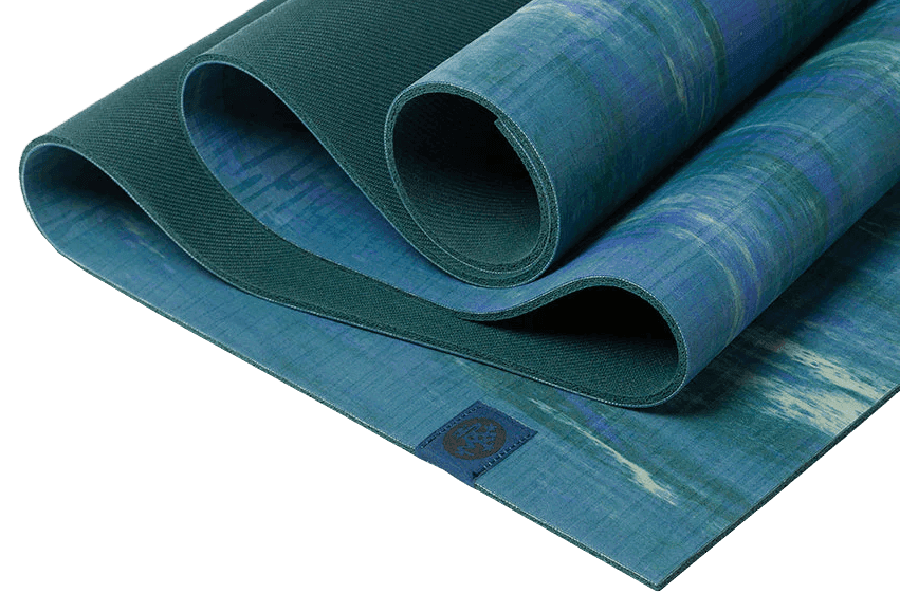
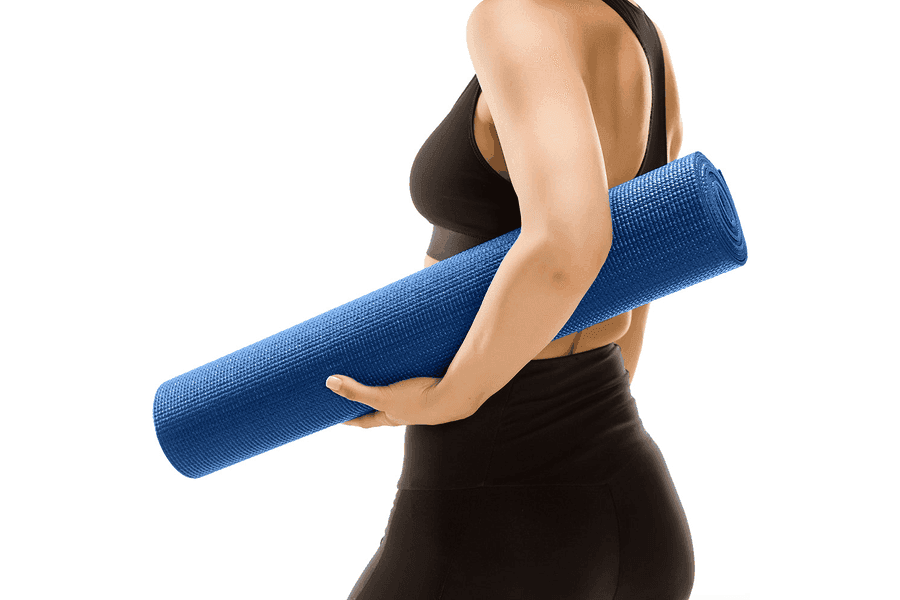
Price
The YogaAccessories lists for about $92 less.
$114
List price · check price at Amazon
$21.99
List price · check price at Amazon
Thickness
The YogaAccessories is 24% thicker.
5 mm0.2″
6.2 mm0.24″
Weight
The YogaAccessories is 3.4 lbs lighter.
7 lbs3.2 kg
3.6 lbs1.63 kg
Size
The YogaAccessories is 1″ longer; the eKO is 2″ wider.
Same on both
- Closed-cell, so sweat sits on the surface
- Both were tested by GearLab in its 2026 round-up
- Both smell out of the wrapper and want airing
- Both wipe clean without special products
Full specs
Dimensions
Materials & build
Buying
Second place against fourteenth
GearLab ran both of these through the same 2026 protocol. The eKO finished second of 19 at 87 out of 100. The YogaAccessories Extra Thick Deluxe finished 14th at 56. Having both numbers from one test is more useful than any amount of marketing copy.
The prices are $114 and about $21.99. The YogaAccessories is a wholesale studio mat, sold in 36 colorways with custom printing available, which tells you who it was designed for.
Grip: 10 out of 10 against 5.5
That dry grip gap is the largest single difference between these two mats. The eKO’s textured natural rubber took the top dry score of the whole field; the YogaAccessories’ sticky PVC finish managed 5.5. Wet, it is 7 against 4.
You feel that in the first sweaty class. YogaAccessories describes its surface as super sticky, which holds in a cool room with dry hands and stops holding the moment your palms are damp. The eKO keeps working until you are genuinely dripping, at which point closed-cell rubber reaches its own limit.
The cheap mat is thicker, which helps on knees only
At 6.2 mm against the eKO’s 5 mm, the YogaAccessories has more foam under you and it is much softer. Kneeling on tile is more comfortable, and for restorative practice that counts.
Standing is the reverse. Soft PVC compresses unevenly under one foot, which is why GearLab scored it 6.5 for comfort and support against the eKO’s 9. That category carries 35% of the total score, so it drives a lot of the gap.
Materials: 8 out of 10 against 5
The eKO is natural rubber made in Taiwan with over 30% recycled content in the current version. It is dense, well finished, and it holds up. GearLab’s 8 out of 10 puts it near the top of the field on construction.
Soft PVC foam flattens where hands and feet land and loses its texture, which is what a 5 out of 10 for materials describes. It is the expected outcome for a mat built to a $22 wholesale price, and it is why studios replace them on a schedule.
One of these smells more than the other
The eKO’s natural rubber odor is strong out of the wrapper and takes about two weeks of unrolled airing to settle. It is the mat’s most common complaint and the main reason its Amazon rating sits around 4.1 stars across roughly 700 ratings despite scoring 87 in an independent test.
The YogaAccessories has a milder PVC smell that fades faster, and GearLab gave it 6.5 for care and cleaning against the eKO’s 8. Plain PVC is genuinely easy to look after.
Length and width
The YogaAccessories is 72″ long against the eKO’s 71″, so the cheap mat is the longer one. The eKO takes back the width at 26″ against 24″, and width is what you notice in wide-legged stances.
If you need more length from Manduka, the eKO Long is 79″ × 26″ for about $10 more. YogaAccessories sells this mat in one size only.
Two warranties that do not amount to much
Manduka’s lifetime guarantee covers the PRO and PROlite lines, not the eKO, which gets a 30 day return window and nothing else. That catches people out who assume all Manduka mats are covered the same way.
YogaAccessories takes returns for 30 days on its own site. Its Amazon listing mentions a limited lifetime warranty that the company does not publish anywhere on yogaaccessories.com, so we would plan around the 30 days.
The latex question
The eKO is natural rubber and is not suitable for anyone with a latex allergy. No amount of test score changes that, and it is the one scenario where the cheap mat is straightforwardly the right answer.
The YogaAccessories is PVC and is listed as free of latex, phthalates and heavy metals. If you need to avoid rubber, our eKO vs Gaiam Premium comparison covers another PVC option with an independent score behind it.
Who each one is actually for
The YogaAccessories is built for buyers who need quantity. Studio loaner mats get used by strangers, cleaned constantly and swapped out on a schedule, so cheap and replaceable is the right call, and the custom printing option exists because studios want their name on them. As a spare, a guest mat or a first month of classes, it works fine too.
The eKO is for someone who already practices and has a specific complaint about traction. If you have never slid in down dog, much of what you would be paying for goes unused.
Price and value
List prices are $114 and $21.99. Check the current price on the eKO and the YogaAccessories at Amazon, where the cheap mat holds about 4.5 stars across roughly 2,700 ratings.
Five YogaAccessories mats cost about one eKO. If you need five mats for a studio, that is the correct purchase. If you need one mat for yourself and you sweat, it is not.
Bottom line
Buy the YogaAccessories Extra Thick Deluxe if you need mats in quantity, want the extra length and padding, or are buying a first mat to see whether yoga sticks. Fifty-six out of 100 is a fair grade at this price.
Buy the Manduka eKO if grip is what you want. It scored 87 out of 100 and took the best dry grip in GearLab’s field, and the costs are weight, a rubber smell for a fortnight, and no warranty to speak of.
Manduka eKO
List price $114

Frequently Asked Questions
- What do the GearLab scores actually say?
- The eKO finished second of 19 with 87 out of 100: 9 for comfort and support, 8 for materials, 8 for care and cleaning, and grip of 10 dry and 7 wet. The YogaAccessories finished 14th with 56: 6.5 for comfort and support, 5 for materials, 6.5 for care and cleaning, and 5.5 dry and 4 wet. The dry grip gap is the largest single difference between them.
- The cheap mat is thicker. Doesn't that count for something?
- On your knees, yes. At 6.2 mm the YogaAccessories has more foam under you than the eKO's 5 mm of rubber, and it is much softer, so kneeling on tile is more comfortable. Standing is the reverse, because soft foam compresses unevenly under a single foot. Thickness tells you how much material is there, not how it behaves under load.
- Is the eKO's rubber smell a dealbreaker?
- For some people it has been. Natural rubber comes out of the wrapper smelling strongly and takes a couple of weeks of airing to settle. The eKO holds about 4.1 stars across roughly 700 Amazon ratings, which is modest for a mat that tests this well, and odor is a recurring theme in the reviews. The YogaAccessories has a milder PVC smell that fades faster.
- Which one wears out first?
- The YogaAccessories, comfortably. Soft PVC foam flattens where hands and feet land and loses its texture, which is what GearLab's 5 out of 10 for materials describes. The eKO's rubber loses tack slowly and hates sunlight, but it earned 8 out of 10 for materials. Neither has a real warranty: Manduka's lifetime guarantee does not cover the eKO line, and YogaAccessories offers 30 day returns.
- Is the eKO safe with a latex allergy?
- No. It is natural rubber, so anyone with a latex allergy should avoid it entirely. The YogaAccessories is PVC and is listed as free of latex, phthalates and heavy metals, which makes it the safer choice in that situation regardless of how the two mats score.
- Which is better for hot yoga?
- The eKO, though neither is ideal. Both are closed-cell, so sweat sits on the surface. GearLab gave the eKO 7 out of 10 wet and the YogaAccessories 4. If heated classes are your normal practice, put a towel down or look at an absorbent-top mat instead.
Related comparisons
- YogaAccessories Extra Thick Deluxe 1/4" vs Gaiam Essentials 6mm
- Gaiam Premium 6mm vs YogaAccessories Extra Thick Deluxe 1/4"
- YogaAccessories Extra Thick Deluxe 1/4" vs Gruper TPE 6mm
- Manduka eKO vs Lululemon The (Big) Mat 5mm
- Lululemon The Mat 5mm vs Manduka eKO
- Amazon Basics 1/4 Inch Thick TPE vs YogaAccessories Extra Thick Deluxe 1/4"
- JadeYoga Harmony 74" vs Manduka eKO
- Gaiam Premium Reversible 6mm vs YogaAccessories Extra Thick Deluxe 1/4"
- Manduka eKO vs Suga SugaMat