Manduka eKO vs B Mat Everyday: Which One Should You Buy?
The Manduka eKO is $114 and the B Mat Everyday is $118, both natural rubber, both exactly 71 by 26 inches. Price and footprint won't separate them. What will is weight and thickness: the eKO packs 5 mm into 7 pounds, and the B Mat spreads 4 mm across 4.1. Almost three pounds is the difference between a mat that travels and one that stays in a room.
As an Amazon Associate, we earn from qualifying purchases made through links on this page. How this works
The quick answer
Both mats grip from the first class with no break-in, and independent testers rate both highly: GearLab scored the eKO 87 of 100 and second of 19 mats, with the best dry grip in the test, and gave the B Mat Everyday 78 in its own review while naming it a favorite for hot yoga. The eKO is denser, thicker and more planted underfoot. The B Mat is nearly three pounds lighter, holds better with wet palms, and carries a one-year warranty where Manduka offers only 30-day returns.
If the mat lives in one room and you want the grounded, substantial feel, get the eKO. If you carry it to class or you sweat, get the B Mat Everyday.
Get the Manduka eKO if...
- You want the denser, more planted feel under standing work
- Your knees want 5 mm rather than 4
- You buy on Amazon, where the eKO discounts fairly often
- Your practice is dry; GearLab rated the eKO's dry grip a perfect 10
Get the B Mat Everyday if...
- You carry your mat; 4.1 pounds against 7 is the whole argument
- You sweat, and want traction that survives puddles
- You want a written warranty and a certification: one year, OEKO-TEX
- You want a mat that's grippy on both sides, not just the top
Side by side
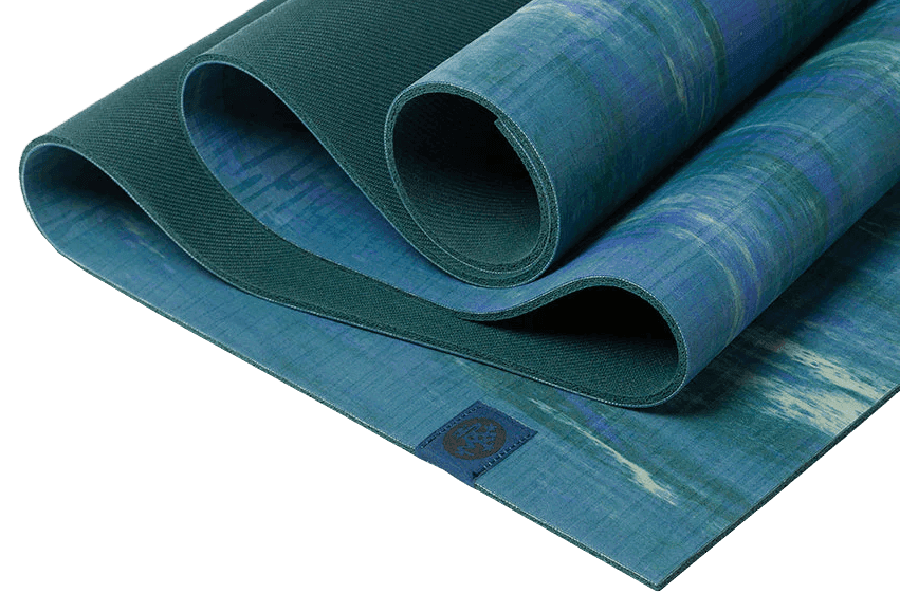
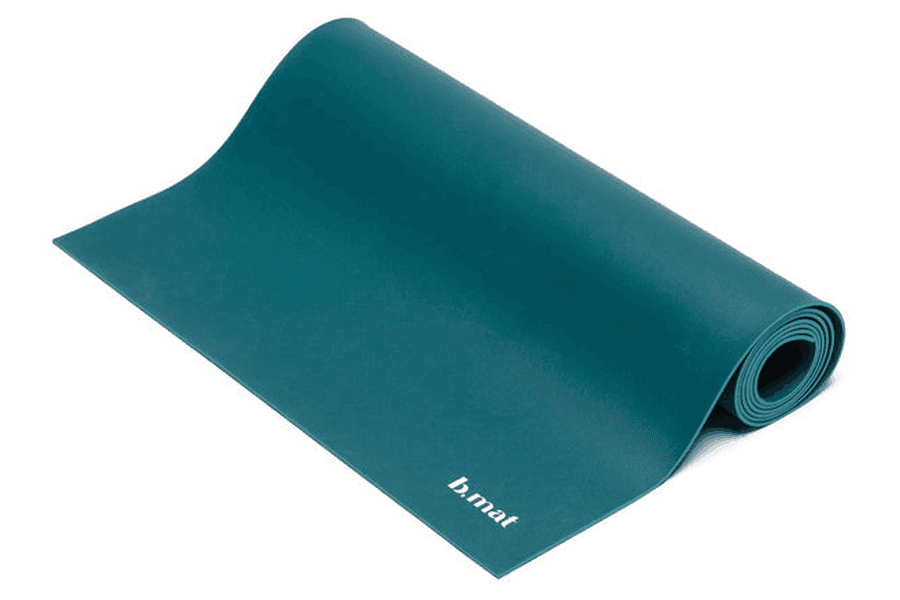
Price
The eKO lists for $4 less.
$114
List price · check price at Amazon
$118
List price · check price at bhalfmoon.com
Thickness
The eKO is 25% thicker.
5 mm0.2″
4 mm0.2″
Weight
The B Mat Everyday is 2.9 lbs lighter.
7 lbs3.2 kg
4.1 lbs1.86 kg
Size
Same length; same width.
Same on both
- Identical 71″ × 26″ footprint
- Natural rubber grip with no break-in period
- Not safe for a latex allergy
- A strong rubber smell for the first week or two
- Must stay out of direct sun and hot cars
Full specs
Dimensions
Materials & build
Buying
Four dollars apart on an identical footprint
The Manduka eKO is $114 and the B Mat Everyday is $118. Both are natural rubber, both measure 71″ × 26″, both grip from the first class with no break-in, and both are well regarded by people who test mats for a living. Price and size won’t settle this one.
Two numbers will. The eKO packs 5 mm of dense rubber into 7 pounds. The B Mat spreads 4 mm across 4.1. Almost three pounds separates a mat that travels from a mat that stays in a room.
Weight is the whole decision for a lot of people
Seven pounds puts the eKO in Manduka PRO territory, and it’s the reason plenty of owners quietly stop carrying theirs anywhere. It’s not unliftable, it’s just enough that a fifteen-minute walk to the studio several times a week becomes something you think about. GearLab lists heft first among the mat’s drawbacks.
The B Mat Everyday at 4.1 pounds behaves like a normal mat: over a shoulder, out the door, no negotiation. If your mat commutes, this is the page’s answer and nothing further down changes it.
Grip: both excellent, one better when soaked
GearLab rated the eKO’s dry grip a perfect 10, the best of the 19 mats in its 2026 lineup, and 7 wet. Its verdict called the eKO a mat with great dry grip for a less sweaty practice, which is a precise piece of praise: the surface is superb until moisture starts beading on it, and “more slippery when wet” is one of only three cons the testers listed.
The B Mat Everyday got its own review rather than a slot in the roundup, scoring 78 overall with grip at 9 of 10, and GearLab named it a favorite for hot yoga: non-slip rubber that performed under sprinkles, puddles and waves of sweat, with no break-in needed. For a genuinely wet practice, that’s the mat.
One trade-off comes with it. That much tack grabs a foot when you slide it forward, and it collects dirt, hair and lint constantly; GearLab suggests storing the B Mat in a bag rather than a trunk. The eKO’s textured rubber is easier to keep clean and wipes down without fuss.
Feel: dense and planted against springy and thin
The eKO’s 5 mm of dense rubber reads as substantial and grounded, the kind of surface that feels like it belongs to the floor rather than sitting on it. GearLab scored its comfort and support 9 of 10 and praised it on hard and soft ground alike.
The B Mat’s 4 mm is springier, and GearLab described it as a hard-to-find amount of cushion for that thickness, rating comfort 8 of 10. Bare skin is the one complaint that shows up: the tacky surface isn’t the softest thing to lie on. On a wood floor both are comfortable. On concrete, neither is generous, and 6 mm is what you’d actually want.
Durability and coverage
Plan on a few years from either, because rubber grips by being soft and soft wears. eKO owners report surface flaking after a few years of heavy practice, and GearLab lists creasing among its drawbacks. For the B Mat, the same testers noticed water staining after their test period and found that owners commonly report the top layer peeling where hands and feet land, with grip diminishing over time.
The paperwork favors b, halfmoon. It writes down a one-year warranty and carries an OEKO-TEX Standard 100 certification. Manduka offers a 30-day return window on the eKO and no warranty at all, which is a strange gap for a brand whose reputation was built on the lifetime guarantee attached to its PVC mats.
If you want a mat measured in decades rather than years, neither of these is it; that argument belongs to dense PVC like the Manduka PRO.
Care, smell, and living with rubber
Both arrive smelling like fresh rubber, because that’s what fresh rubber does. The B Mat’s odor is strong for a couple of days and clears with airing; the eKO’s fades over the first week or two. Unroll either in a ventilated room rather than a closet and the problem solves itself. It’s a sign of the material, not a defect.
After that the rules are the same for both: no direct sun, no hot cars, gentle cleaners, no machine washing, and roll them with the grippy side facing out to protect the surface. Neither is safe with a latex allergy, since natural rubber carries trace latex proteins no matter how little the surface feels like a glove.
Sizes and colors
Both lines go longer. Manduka sells a 79″ eKO Long plus thinner eKO Lite and SuperLite versions for travel; b, halfmoon sells an 85″ Everyday Long. Neither goes wider than 26 inches, so if width is your problem you’re shopping elsewhere.
On color, the B Mat had seven colorways at last count and the eKO five. Both are simple, solid finishes rather than prints.
Where you buy, and how easily you can send it back
The eKO sells through manduka.com and Amazon, discounts fairly often, and returns painlessly through Prime. The B Mat is a direct purchase in practice, since the marketplace listings under its name are resold stock with no coverage attached. Order it from b, halfmoon.
That matters more than it sounds when the two mats cost within $4 of each other. If the eKO is on sale the day you shop, the price argument tilts, and the ability to send back a mat you dislike without a conversation has real value.
Bottom line
Get the B Mat Everyday if you carry your mat or you sweat. Three pounds lighter, grippier when wet, covered by a written year, and grippy on both sides. Accept that it attracts every hair in the building and that you’ll replace it in a few years.
Get the eKO if the mat lives in one room and you want the denser, more grounded surface, an extra millimeter under your knees, and the best dry grip anyone has measured. If you like the B Mat idea but want more cushion, the thicker B Mat Strong is the version to look at.
Manduka eKO
List price $114
B Mat Everyday 4mm
List price $118
Frequently Asked Questions
- Which mat is better for hot yoga?
- The B Mat Everyday. GearLab reviewed it separately from its main roundup, scored its grip 9 out of 10, and wrote that the non-slip rubber performs well under sprinkles, puddles and waves of sweat with no break-in needed. The eKO is no slouch, with a perfect 10 for dry grip and a 7 wet, but its sealed surface lets moisture bead on top and 'more slippery when wet' is one of the three cons GearLab lists against it. In a dripping room, the B Mat holds longer.
- Is three pounds really that noticeable?
- Yes, more than any other spec on this page. The eKO weighs 7 pounds, which puts it in Manduka PRO territory, and it's the reason plenty of owners stop carrying theirs anywhere. The B Mat Everyday is 4.1 pounds and behaves like a normal mat on a shoulder. If your mat rides to a studio several times a week, that difference will shape how you feel about the purchase more than grip or cushion will.
- Which one is more comfortable?
- The eKO, but by less than a millimeter of difference suggests. Its 5 mm of dense rubber feels planted and substantial, and GearLab rated its comfort 9 of 10 against 8 for the B Mat. The B Mat's 4 mm is springier, which some people prefer and which GearLab described as a hard-to-find amount of cushion for its thickness. On a wood floor both are fine; on concrete, neither is generous, and you'd want 6 mm.
- How long does each mat last?
- Plan on a few years either way. Rubber grips because it's soft, and soft wears out. eKO owners report surface flaking after a few years of heavy practice, and GearLab lists creasing among its drawbacks. For the B Mat, GearLab noticed water staining after its test period and found that owners commonly report the top layer peeling where hands and feet land, with grip diminishing after prolonged use. Coverage differs: b, halfmoon writes down one year, Manduka offers a 30-day return window and no warranty.
- Does either mat collect lint and pet hair?
- Both do, and the B Mat is worse. GearLab called out that its grip picks up dirt, hair and lint constantly and recommended storing it in a bag rather than tossing it in a trunk. That's the tax on a genuinely tacky surface. The eKO's textured rubber is easier to keep clean and GearLab noted it wipes down easily. If you have a shedding dog and a wood floor, factor that in.
- Where should I buy each one?
- The eKO sells through manduka.com and Amazon, goes on sale regularly, and is painless to return if it isn't for you. The B Mat is direct-only in practice; its old Amazon listings have gone dead and what's left is third-party sellers who don't carry the brand's warranty, so buy it from b, halfmoon. Convenience of purchase is a real, if unglamorous, point in the eKO's favor.
Related comparisons
- Yoga Design Lab Combo 3.5mm vs b, halfmoon B Mat Everyday 4mm
- b, halfmoon B Mat Everyday 4mm vs Manduka GRP Adapt Lite 2.1 4mm
- Manduka eKO vs Lululemon The (Big) Mat 5mm
- Lululemon The Mat 5mm vs Manduka eKO
- Manduka PROlite vs b, halfmoon B Mat Everyday 4mm
- JadeYoga Harmony 74" vs Manduka eKO
- Lululemon The Mat 5mm vs b, halfmoon B Mat Everyday 4mm
- Manduka PROlite Long vs b, halfmoon B Mat Everyday 4mm
- Manduka eKO vs JadeYoga Harmony 2.0 68"