Manduka eKO Superlite vs Amazon Basics 1/2 Inch: Which One Should You Buy?
The eKO Superlite and the Amazon Basics 1/2 Inch both weigh about 2.2 pounds and share little else. The Superlite is a thin sheet of natural rubber made to fold into a bag; the foam pad is half an inch thick and stays on the living room floor. They serve different needs, and neither makes a great only mat.
As an Amazon Associate, we earn from qualifying purchases made through links on this page. How this works
The quick answer
The Superlite is a travel mat. It folds, it grips dry hands well, and GearLab gave it a 2 for comfort because there is almost nothing to it. The Amazon Basics is the opposite: more than eight times as thick and very comfortable for kneeling and floor work, but soft enough to shift under a standing foot and little help once your hands sweat.
If you need a second mat for trips or for laying over a studio loaner, get the Superlite. If you want padding at home for stretching, core work or rehab, get the Amazon Basics. If you need one mat to practice on every day, look at something in the 3 to 5 mm range instead.
Get the eKO Superlite if...
- You need something that packs flat in hand luggage
- You'll lay it over a studio mat, hotel carpet or rental mat
- You want better dry grip than textured foam gives
- You want plenty of color choice, 19 colorways at last count
Get the Amazon Basics 1/2 Inch if...
- The mat stays home and its job is padding
- You want it for stretching, core work or rehab
- You're tall and want 74 inches of length
- You'd rather spend $31.52 less and get a 1 year warranty
Side by side
Price
The Amazon Basics lists for about $32 less.
$54
List price · check price at Amazon
$22.48
List price · check price at Amazon
Thickness
The Amazon Basics is 747% thicker.
1.5 mm0.06″
12.7 mm0.5″
Weight
Identical weight.
2.2 lbs1 kg
2.2 lbs1 kg
Size
The Amazon Basics is 3″ longer; same width.
Same on both
- About 2.2 pounds on paper
- 24 inches wide
- Not built for hot yoga
Full specs
Dimensions
Materials & build
A mat for the suitcase and a pad for the floor
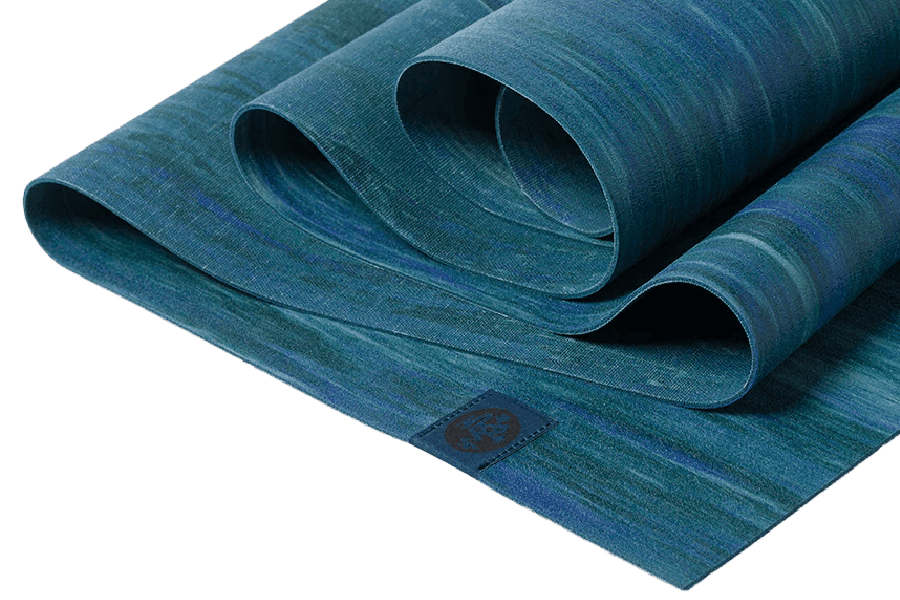
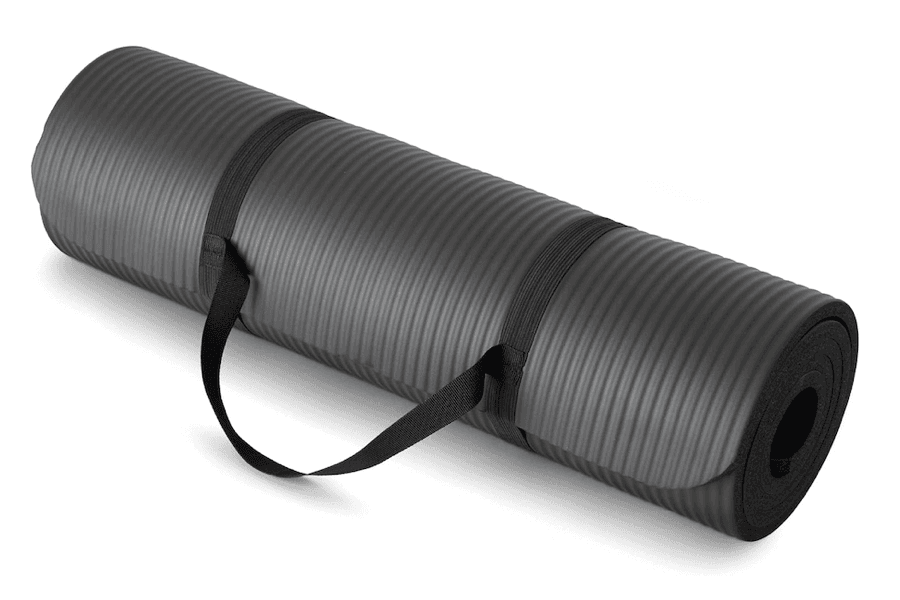
The eKO Superlite is 1.5 mm of natural rubber that folds, 71″ × 24″, for $54. Amazon Basics’ half inch mat is 12.7 mm of NBR foam that rolls, 74″ × 24″, for $22.48, more than eight times as thick. Our specs list both at 2.2 pounds (GearLab weighed its Superlite at 2.3), and weight is the only number where they meet.
They are not substitutes. If you already own a practice mat and want one for trips, the Superlite is the candidate. If you want padding at home for stretching and floor exercise, the foam is. A shopper after a single mat for everything is better served by something in between.
Where each sits on the GearLab thickness scale
GearLab’s buying guide sorts mats into three bands. One to two millimeters is travel territory: light, often foldable, hard on joints, and GearLab suggests folding the mat over or adding a folded blanket when you need padding. Three to five millimeters is where most mats sit and where GearLab recommends staying. Six and up is for joint support, with a reminder that extra thickness means more give under a balancing foot.
The Superlite sits in the first band. The foam is more than double the starting point of the third. Neither is in the three to five millimeter middle GearLab recommends, which matters if you are choosing your only mat.
Kneeling with 1.5 mm or 12.7 mm under you
GearLab gave the Superlite a 2 for comfort and support, tied for last in its 19-mat roundup, and sums it up as closer to a topper than a yoga mat. Over carpet or a studio rental mat that is fine. On tile, a kneecap finds the floor almost at once.
Half an inch of NBR is the reverse. Amazon’s pooled review summary for the two Amazon Basics thicknesses praises the depth far more than it criticizes it, and owners write about hard floors and sore joints. For physio exercises or a slow stretch lying down, the foam is far more comfortable.
Standing work and the wrinkle problem
Standing is where neither mat does well on a bare floor. The foam gives way unevenly under one foot, so balance poses become a series of small corrections. The Superlite doesn’t sink, but GearLab says paper-thin travel mats used alone tend to wrinkle on smoother floors, and Amazon owners split on its stability, about 40 positive mentions to 46 negative.
The Superlite works best the way Manduka pitches it, layered over a studio mat or a hotel carpet that holds it flat. If standing flows are most of your practice, look at the 3 to 5 mm range instead, such as Manduka’s 4 mm eKO Lite, which our eKO Lite and half inch foam comparison covers.
Dry hands favor the Superlite
The Superlite carries the eKO’s textured rubber surface. In GearLab’s wet and dry grip table it earned 7.5 when dry and 5 when wet, and its cons list is two items long: no cushion, and slippery when wet. Amazon owners lean positive on grip, about 210 mentions to 98.
The Amazon Basics listing says its textured surface adds traction, and the pooled review summary splits on that, 263 positive to 296 negative. Neither is a hot yoga mat, since the Superlite’s closed-cell rubber lets sweat sit on top, but for dry practice the thin rubber holds a hand better.
Carry-on or car trunk
The Superlite folds into a square, which GearLab counts among its pros, and Amazon owners are close to unanimous on portability: 314 positive mentions to 8 negative. It slips into a carry-on with room to spare.
The Amazon Basics only rolls, and at 12.7 mm the roll comes out roughly seven inches across by our estimate. It ships with a carrying strap for that reason, although strap mentions in the pooled summary run 324 negative to 220 positive. It won’t go in a suitcase.
What each set of owners complains about
Read the two review summaries together and each mat’s weak spots line up with the other’s strengths. Superlite owners are negative on thickness (97 to 69), cushioning (45 to 36) and above all smell (95 negative to 19 positive). Amazon Basics owners are negative on grip, the strap and durability, where about 498 of 968 mentions are unhappy and rips come up.
Durability is mixed on the Superlite too. Its summary splits 32 to 30, with some owners reporting peeling, and GearLab’s materials score for it was a 6. The foam fails differently, by taking a permanent dent where you kneel.
Natural rubber, nitrile foam and allergies
The Superlite is tree rubber made in Taiwan, with a closed-cell surface Manduka says keeps moisture out. Manduka’s Amazon copy says 99% latex-free, and 99% is not 100%, so skip it if anyone in the house reacts. The same listing warns against soap, soaking and sun, and wants Manduka’s own rubber cleaner.
NBR is a synthetic rubber. The half inch listing makes no latex claim either way (Amazon does list the 1 inch version of the foam as latex-free), but it does say the mat wipes clean easily. Give the Superlite a few days unfolded at home before the first trip so the smell has time to fade.
Prices, colors and who covers what
List prices are $54 and $22.48. Manduka sells the Superlite in 19 colorways at last count; most are $54, a few special finishes run $58 to $60, and a handful were marked down to $40 when we checked. The Amazon Basics comes in three colors, each priced separately. Check the Superlite at Amazon (4.4 stars, about 2,520 ratings) and the Amazon Basics 1/2 Inch (4.6 stars; its roughly 70,700 ratings are shared with the 1 inch).
Amazon Basics covers its foam for one year. The Superlite has no warranty, and manduka.com refunds only unused mats within 30 days. Manduka’s Superlite Long runs 79″ for $58, and Amazon sells a full inch of the same foam.
Bottom line
Choose the Superlite when you own a mat you like and need a second one that folds into luggage and grips dry hands over a hotel carpet or a studio loaner. Expect no cushion, and air it out before you pack it.
Choose the Amazon Basics 1/2 Inch when the mat stays home and its job is padding for stretching, core work or rehab. It is under half the price and far kinder to knees. For one mat to practice on every day, look between the two, at something like the 4 mm eKO Lite.
Amazon Basics 1/2 Inch Extra Thick
List price $22.48
Frequently Asked Questions
- Can the eKO Superlite be your only yoga mat?
- GearLab wouldn't recommend it. Its comfort and support score for the Superlite was a 2, tied for last of 19 mats, and it sums the mat up as closer to a topper than a yoga mat. GearLab doesn't recommend relying on any travel mat for daily practice. It works well over carpet or a studio mat, but on a hard floor you will want a real mat underneath or a folded blanket for kneeling poses.
- Can you do standing yoga on the Amazon Basics 1/2 inch?
- You can, but it isn't pleasant. Half an inch of soft NBR gives way unevenly when one foot takes your weight, so balance poses need constant small corrections, and GearLab's buying guide notes that thicker mats leave more give to balance on. The foam is excellent for stretching, core work and rehab; for standing flows, a firmer 3 to 5 mm mat works better.
- Which one is better for travel?
- The Superlite, easily. It folds into a square that fits in a carry-on, and Amazon owners rate its portability almost unanimously positive. The Amazon Basics weighs about the same but only rolls, into a tube roughly seven inches across by our estimate, and it travels on a carrying strap rather than in a suitcase.
- Does the eKO Superlite smell?
- Yes, and it is the most criticized thing about it. Odor mentions in Amazon's review summary run about 95 negative to 19 positive. Leave it unfolded at home for a few days before the first trip rather than packing it straight from the box.
- Does either mat contain latex?
- The Superlite does. It is made from tree rubber, and Manduka's Amazon copy describes it as 99% latex-free, which still makes it a poor choice for anyone with a latex allergy. The foam pad is nitrile (NBR), a synthetic, but its half inch listing makes no latex claim either way; Amazon lists only the 1 inch version of the same foam as latex-free.
- Is the Superlite good for hot yoga?
- No. In GearLab's wet and dry table it scored 7.5 dry and 5 wet, and slippery when wet is one of its two listed cons. Its closed-cell rubber lets sweat sit on the surface. The Amazon Basics is no better, with owners about evenly divided on its grip in ordinary conditions. For heated classes, either mat needs a towel on top.
Related comparisons
- Amazon Basics 1/2 Inch Extra Thick vs Retrospec Solana 1/2"
- Manduka eKO Superlite vs JadeYoga Voyager
- Amazon Basics 1/2 Inch Extra Thick vs Gaiam Essentials Fitness Mat 10mm
- Manduka eKO Superlite vs JadeYoga Travel 68"
- Manduka eKO Superlite vs JadeYoga Level One
- Manduka eKO Superlite vs IUGA Eco Friendly Non Slip PU
- Manduka eKO Superlite vs Gaiam Classic Print 4mm
- Manduka eKO Superlite vs Gaiam Performance Dry-Grip 5mm
- Manduka eKO Superlite vs Hugger Mugger Earth Elements 5mm