Manduka eKO vs PRO Travel: Which One Should You Buy?
Both of these are Manduka, and that is about where the similarity ends. The eKO is 5 mm of natural rubber that GearLab ranked second out of 19 mats, at 7 pounds and $114. The PRO Travel is 2 mm of German PVC that folds into a bag at 2.9 pounds and $74. The strange part is that the thin cheap one is the only one with a guarantee.
As an Amazon Associate, we earn from qualifying purchases made through links on this page. How this works
The quick answer
The eKO is the mat to practice on. GearLab scored its dry grip a perfect 10, the highest of any mat it tested, gave it 9 for comfort and support, and placed it second overall with 87 points. It grips from the first unroll with no break-in. What it does not have is a warranty, since Manduka gives the rubber line 30 days of returns, and it weighs seven pounds. The PRO Travel is thin, narrow and slick until broken in, and it folds flat at 2.9 pounds with the PRO series lifetime guarantee attached.
Buy the eKO for the mat you unroll at home or at the studio. Buy the PRO Travel for the one that goes in a suitcase, or if latex is a problem in your house.
Get the eKO if...
- You want the best dry grip in independent testing
- You want grip on day one with no break-in
- You want 5 mm of cushioning and the full 26 inch width
- You prefer natural rubber to PVC
Get the PRO Travel if...
- You need a mat that folds flat into a carry-on
- You want a lifetime guarantee rather than 30-day returns
- A latex allergy rules out natural rubber
- You'd rather keep $40 and already own a mat
Side by side
Price
The PRO Travel lists for $40 less.
$114
List price · check price at Amazon
$74
List price · check price at Amazon
Thickness
The eKO is 150% thicker.
5 mm0.2″
2 mm0.08″
Weight
The PRO Travel is 4.1 lbs lighter.
7 lbs3.2 kg
2.9 lbs1.3 kg
Size
Same length; the eKO is 2″ wider.
Same on both
- Made by Manduka
- 71 inches long
- Closed-cell: sweat can't soak in
- Wipe clean in seconds
- Sold on manduka.com and Amazon
Full specs
Dimensions
Materials & build
Buying
Two Manduka mats with almost nothing in common
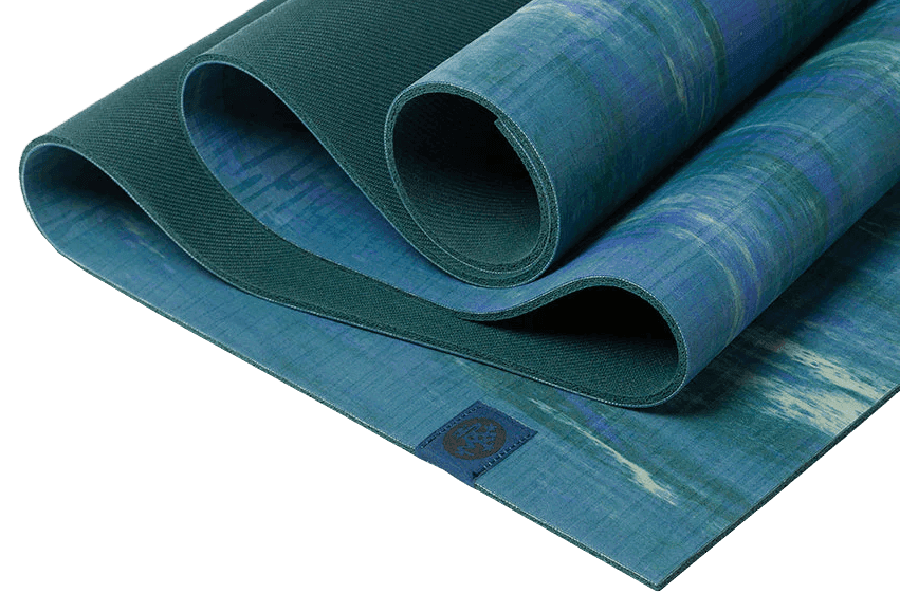
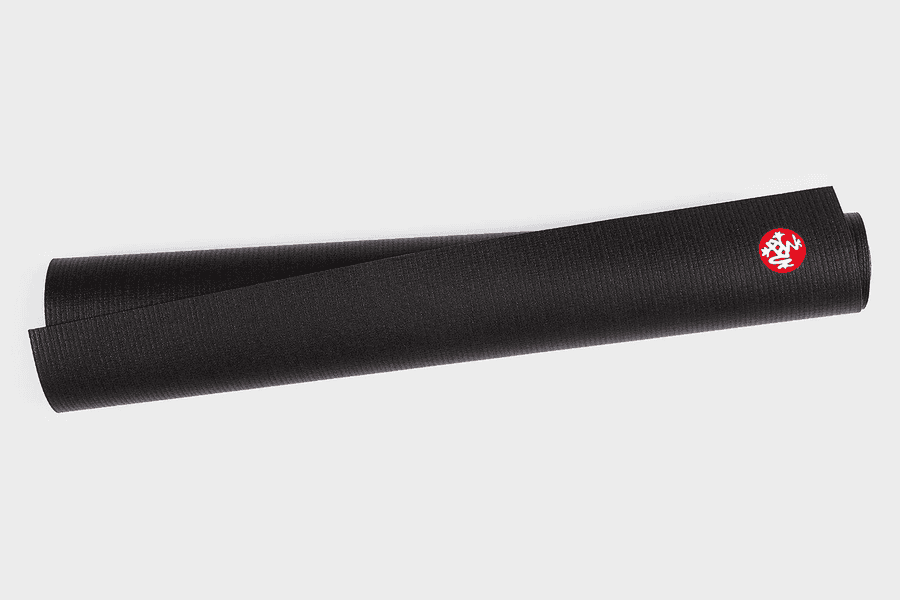
The eKO is Manduka’s natural rubber flagship: $114, 5 mm, 7 pounds, made in Taiwan, and the mat GearLab ranked second of 19 with a score of 87. The PRO Travel is $74 of the dense German PVC from the PRO line, cut to 2 mm and folded rather than rolled, at 2.9 pounds.
Same brand, opposite ends of the catalog. The eKO is the mat you practice on; the PRO Travel is the mat you pack. Where it gets interesting is that the cheaper, thinner one is the only one of the two with a guarantee behind it.
Grip: the eKO tested best in its field
GearLab scored the eKO 10 out of 10 for dry grip, the highest in a 19-mat lineup, and 7 for wet. The textured rubber surface holds from the first practice with no break-in at all, and that is the main reason the mat sits near the top of the rankings despite costing less than several mats below it.
The PRO Travel inherits the PRO surface, which arrives slick and needs a few weeks of regular practice before the grip comes up. Manduka has retired its old salt-scrub instruction and now says the slickness resolves with use. It does, but it is a real wait, and it is worth doing at home rather than in a hotel room.
Both are closed-cell, so neither drinks sweat
This surprises people who expect a rubber mat to behave like the open-cell Jade Harmony. The eKO is closed-cell: moisture stays on the surface rather than soaking in, which keeps the mat hygienic and easy to wipe down, and GearLab scored its care and cleaning 8 out of 10. What saves it in a warm room is texture, since a patterned rubber face sheds water better than a smooth one.
The PRO Travel is closed-cell PVC with a smooth, fabric-like finish, so sweat pools and wet palms slide. For heated practice neither of these is the right Manduka; the GRP Adapt 2.0 is the one built to absorb.
Five millimeters against two
The eKO scored 9 out of 10 for comfort and support at GearLab, just behind the full PRO. Five millimeters of rubber is dense underfoot and forgiving under a knee, and it lies flat from new because the mat is heavy enough to hold itself down.
The PRO Travel is 2 mm, which Manduka describes as high-density support with light joint protection. That is accurate: it is firm, stable and completely fine for standing sequences, and it puts your kneecap close to whatever floor you are on. Over carpet or a borrowed studio mat it works well. As a daily mat on hardwood it does not.
Seven pounds rolled against under three folded
Manduka lists the eKO at 7 pounds and GearLab weighed one at 6.3. Either way it is a studio mat, portable in the sense that you can carry it a few blocks, not in the sense that it goes in a suitcase. It also rolls; rubber resents being folded.
The PRO Travel folds flat at 2.9 pounds, which is the only reason it exists. It sits against the back of a carry-on or in the bottom of a tote, and the fold creases that show early settle out with use.
Twenty-six inches against twenty-four
Both are 71 inches long, and the eKO is 26 inches wide against the Travel’s 24. Twenty-four is the old standard and it shows in a wide stance, with a hand or a foot finding the edge.
Both come long: the 79″ eKO Long at $124 and a 79″ PRO Travel Long at $84. Nothing in the travel line goes wider than 24 inches.
The odd part: the thin mat is the one under guarantee
Manduka gives the eKO 30 days of returns and nothing after, which is its standard position on the rubber line, since the material is meant to break down eventually. Rubber wears at the contact points, dislikes direct sun, and smells strongly for the first week or two. It is also natural rubber, so it is out if anyone in the house has a latex allergy.
The PRO Travel carries the PRO series lifetime guarantee: roughly ten years of regular use in the fine print, one replacement, and proof of purchase from an authorized seller, which on Amazon means sold and shipped by Amazon itself. It is PVC and OEKO-TEX Standard 100 certified, which says what is not in the mat rather than what becomes of it, and it is latex-free. The warranty terms line up with how the two materials actually wear.
Price, colors and where to buy
$114 against $74, $40 apart, with the Long versions at $124 and $84. Both sell on manduka.com and Amazon, where colorway pricing moves around: check the eKO at Amazon and the PRO Travel at Amazon. If the lifetime guarantee is part of what you are paying for, buy the listing sold and shipped by Amazon.
The eKO runs 5 colorways at last count, several of them marbled. The travel mat sticks to three dark options.
Bottom line
Buy the eKO if this is the mat you unroll most days. It grips better than anything else in its price range, it is comfortable enough for long practices, and it finished second out of 19 in independent testing. You are accepting rubber smell, no warranty, and seven pounds.
Buy the PRO Travel if the mat has to fit in luggage, or if latex is an issue. It is thin, narrow and slick until it breaks in, and it is the only travel mat we cover with a lifetime guarantee. If you want Manduka’s other packable option, our eKO Superlite vs PRO Travel page compares the two directly.
Manduka eKO
List price $114
Frequently Asked Questions
- Is the Manduka eKO good for hot yoga?
- It handles a warm room better than most rubber mats, but it is closed-cell, so sweat sits on the surface rather than soaking in. GearLab measured 10 out of 10 dry grip and 7 wet, which is strong but not the best available: the Manduka GRP Adapt 2.0 scored 8.5 wet because its polyurethane top absorbs. For a genuinely hot class, the GRP is the Manduka to buy.
- Why does the cheaper PRO Travel have a better warranty?
- Because coverage follows the material, not the price. The PRO series lifetime guarantee applies to Manduka's dense PVC mats, and the PRO Travel is made from the same material in the same German factory. The rubber eKO line gets 30 days of returns, since natural rubber is meant to wear and eventually biodegrade. The fine print on the guarantee reads as roughly ten years of regular use, one replacement, and proof of purchase from an authorized seller.
- Does the eKO smell?
- Yes, strongly of rubber for the first week or two, fading with airing and use. It is also natural rubber, so it is not suitable if anyone in the house has a latex allergy. The PRO Travel is PVC and latex-free, with only a mild plastic smell when new.
- Can the PRO Travel be a daily mat?
- Only over carpet or on top of another mat. Two millimeters is a grip layer with what Manduka calls light joint protection, so kneeling on hardwood or tile is close to unpadded. It is firm and stable enough for standing balances and inversions, but as an only mat on a hard floor it is a compromise most people tire of.
- How much do they weigh?
- Manduka lists the eKO at 7 pounds and GearLab weighed one at 6.3, against 2.9 pounds for the PRO Travel. The eKO rolls, since rubber does not like being folded; the PRO Travel folds flat, which is what lets it lie against the back of a carry-on. Fold creases show on the Manduka for the first few sessions and settle with use.
- What sizes do they come in?
- The eKO is 71 by 26 inches with a 79 inch Long version at $124. The PRO Travel is 71 by 24 inches with a 79 inch Long at $84. Twenty-four inches is the older narrow standard, and nothing in Manduka's travel line is wider, so the eKO is the roomier mat in every configuration.
Related comparisons
- Manduka eKO vs Lululemon The (Big) Mat 5mm
- Lululemon The Mat 5mm vs Manduka eKO
- JadeYoga Travel 68" vs Manduka PRO Travel
- JadeYoga Harmony 74" vs Manduka eKO
- Manduka eKO vs Suga SugaMat
- JadeYoga Harmony 68" vs Manduka eKO
- Manduka eKO vs Yoga Design Lab Combo 3.5mm
- Manduka eKO vs b, halfmoon B Mat Everyday 4mm
- JadeYoga Level One vs Manduka PRO Travel