Manduka eKO Lite vs Gruper TPE 6mm: Which One Should You Buy?
The Gruper is a $27.99 TPE mat with more than ten thousand Amazon ratings, a strap and a bag in the box, and no obvious flaw for a beginner in a cool room. The eKO Lite is $96 of natural rubber, thinner and heavier. Almost the whole gap is what happens to grip as a class goes on.
As an Amazon Associate, we earn from qualifying purchases made through links on this page. How this works
The quick answer
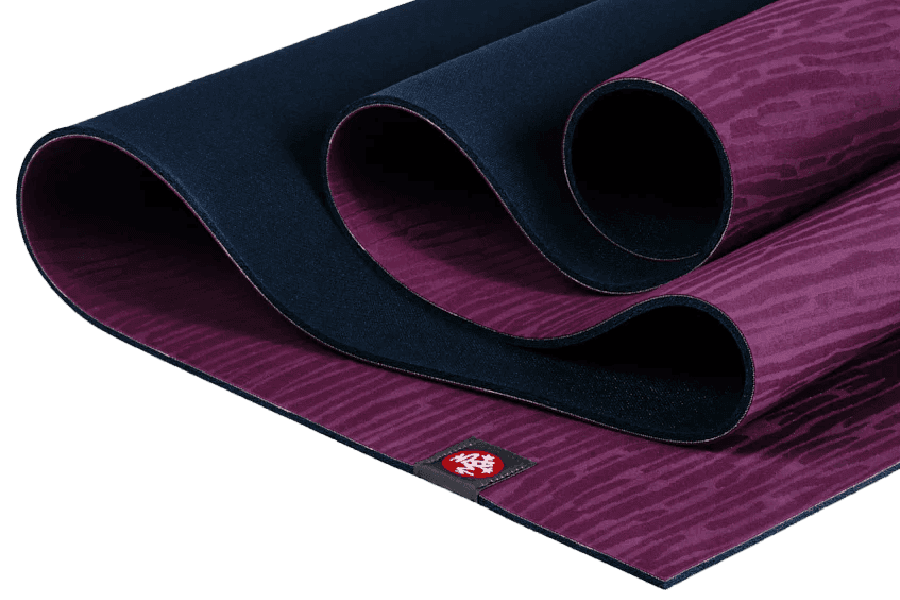
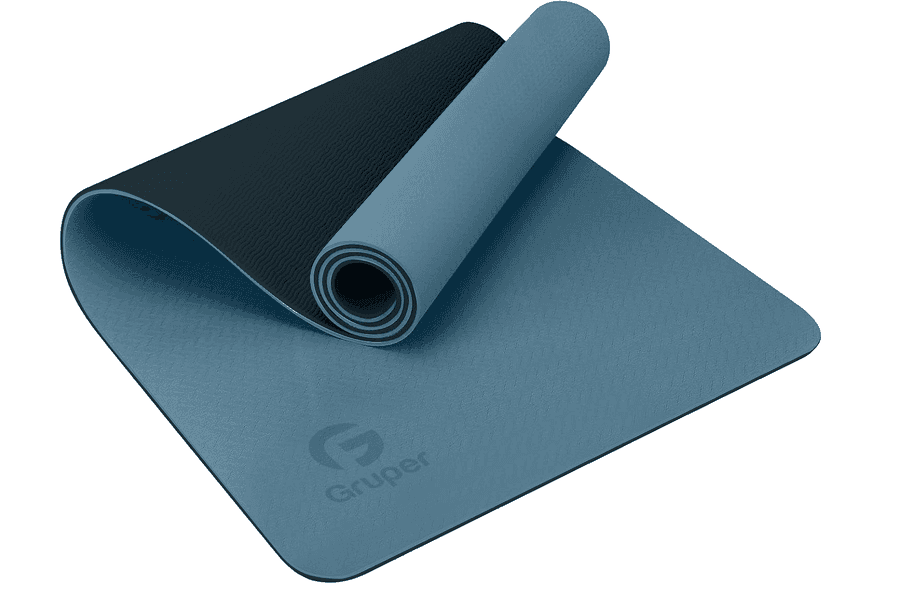
The eKO Lite is 71 by 24 inches, 4 mm of natural rubber, 5 pounds, made in Taiwan, in eight colorways. The Gruper is 72 by 24, 6 mm of two-layer TPE, 2.6 pounds, in eight colorways, with a carry strap and storage bag included. GearLab has tested neither, though the 5 mm eKO sharing the Lite's surface scored 87 out of 100 with the best dry grip of 19 mats.
Get the Gruper if you are early in this and want something light, cheap and adequate. Get the eKO Lite if grip is what sends you shopping, because closed-cell TPE has nothing to offer once your palms are damp and rubber does.
Get the Manduka eKO Lite if...
- You want rubber tack rather than moulded texture
- You want a firmer surface for balance poses
- You want a mat that lasts years rather than a season
- You want natural rubber instead of thermoplastic foam
Get the Gruper TPE if...
- You're new and don't want to spend $96 yet
- You want 2.6 pounds to carry instead of 5
- You want the extra 2 mm of cushioning
- You want a strap and storage bag included
Side by side
Price
The Gruper lists for about $68 less.
$96
List price · check price at Amazon
$27.99
List price · check price at Amazon
Thickness
The Gruper is 50% thicker.
4 mm0.16″
6 mm0.24″
Weight
The Gruper is 2.4 lbs lighter.
5 lbs2.2 kg
2.6 lbs1.18 kg
Size
The Gruper is 1″ longer; same width.
Same on both
- Around 71 to 72 inches long and 24 wide
- Textured on both faces
- Usable from the first session, no break-in
- Neither likes direct sunlight
Full specs
Dimensions
Materials & build
Buying
Natural rubber against thermoplastic foam
The Gruper is 6 mm of TPE at 2.6 pounds for $27.99, with a strap and a storage bag in the box and 4.4 stars across roughly 10,543 Amazon ratings. As a first mat it is genuinely hard to fault.
The eKO Lite is 4 mm of natural rubber for $96: thinner, heavier, and with nothing else in the box. What it has is a surface the cheap mat cannot match once things get damp.
Grip is most of the $68
Rubber has tack you can feel with a dry palm before you start. GearLab measured the 5 mm eKO sharing this compound at 10 out of 10 for dry grip, the best of 19 mats it tested in 2026. The Lite is the same surface, thinner.
The Gruper does what it can with texture, a fine S-pattern on top and a corrugated grip underneath, and dry in a cool room it works perfectly well. Once your palms are damp the texture stops mattering, which is true of every closed-cell foam mat rather than a specific failing of this one.
Four millimeters of rubber against six of foam
The Gruper is thicker and softer, so kneeling on it is more comfortable. That is a real advantage and a big part of why budget mats go to 6 mm in the first place.
Standing up the order reverses. Soft foam compresses unevenly under one foot and your ankle spends the balance pose correcting for it, while dense rubber does not move at all. Most people prefer the firmer surface once they are flowing, and prefer the softer one for floor work.
Years against a season or two
TPE is the least durable of the common mat materials: light and cheap, but it compresses, dents and tears where hands and feet land, usually inside one to two years of daily use and faster in sunlight.
Rubber thins slowly and keeps working while it does. Neither mat has real coverage: Gruper publishes no warranty at all, and Manduka gives the eKO Lite 30 day returns because its lifetime guarantee covers the PRO and PROlite lines only. You are relying on the materials rather than the paperwork.
Size, weight and what comes in the box
The Gruper is 72″ × 24″ and the eKO Lite is 71″ × 24″, so the cheap mat is an inch longer. Same width, and 24 inches is narrow on both.
The Gruper is also lighter at 2.6 pounds against 5, and it includes a carry strap and a storage bag that Manduka sells separately. Add those up and the real price gap is a little wider than $68.
Neither is built for a heated room
The eKO Lite’s rubber is closed-cell, so sweat sits on top of it too. The 5 mm eKO measured 7 out of 10 wet, which is well ahead of anything a TPE mat manages and well behind the 8.5 GearLab measured on Manduka’s GRP Adapt 2.0.
The Gruper has no mechanism for moisture at all. For heated classes a towel over either is the practical fix, and a polyurethane-topped mat is the real one.
Latex, PVC and what is in each mat
TPE contains no latex and no PVC, and it is recyclable in principle if anyone actually collects it. That makes the Gruper the safe choice for a latex-sensitive household.
The eKO Lite is natural rubber made in Taiwan, so it is not suitable for a latex allergy. It is also the more natural material of the two, which is part of what people are buying when they move up from foam.
The rubber smell is real
Natural rubber has a strong odor out of the box, and it is the most common complaint about the entire eKO line. The 5 mm version carries 4.1 stars across roughly 694 Amazon ratings largely because of it, despite scoring 87 out of 100 with GearLab.
Unroll it somewhere ventilated for a few days before you judge it. It fades over several weeks and never quite disappears. TPE is milder from the start, which is worth something in a small flat.
Price and colors
The eKO Lite comes in eight colorways at $96 and gets discounted by colorway. The Gruper comes in eight colorways too, most of them two-tone, and hovers around $27.99 with an 8 mm version at 3.1 pounds also available.
If you want rubber cheaper than the eKO Lite, Jade’s Level One is $66.50 with an open-cell surface that grips even better when damp, though it is 68 inches and sold only on the brand’s own site.
Bottom line
Get the Gruper if you are early in this and want something light, cheap and adequate with the accessories included. For a home practice a couple of times a week in a cool room, it does the job and nobody should feel underequipped on it.
Get the eKO Lite if your hands slide or a foam mat has already worn out on you. Rubber is what fixes grip and it is what lasts, and those two things are the entire reason to pay four times as much for a thinner mat.
Gruper TPE 6mm
List price $27.99
Frequently Asked Questions
- What does $68 buy here?
- Grip and lifespan, mostly. Natural rubber has tack that TPE cannot reproduce, and the 5 mm eKO sharing this surface measured 10 out of 10 dry with GearLab. Rubber also wears for years where TPE dents and flakes within one or two. You give up 2 mm of cushioning, two and a half pounds, and the accessories.
- What is TPE and how does it hold up?
- Thermoplastic elastomer, a foam between plastic and rubber. It is light, soft, free of PVC and latex, and cheap to make. It also compresses and tears sooner than rubber, particularly where hands and feet land, so daily use shows within a year or two. Gruper publishes no warranty, which leaves you with the Amazon return window.
- Which is more comfortable?
- The Gruper, at 6 mm of soft TPE against 4 mm of dense rubber. It is the kinder mat to kneel on. Standing up the order reverses, because soft foam compresses unevenly under one foot while the eKO Lite does not move. Most people prefer the firmer surface once they are flowing.
- Does the eKO Lite smell?
- Yes, for the first weeks, and it is the most common complaint about the eKO line. Unroll it somewhere ventilated and it fades over several weeks. That is natural rubber behaving normally rather than a defect. TPE is milder from the start, which is worth something in a small flat.
- Can either handle hot yoga?
- Not really. The eKO Lite's rubber is closed-cell, so sweat sits on top, though its tack still beats the Gruper's texture by a wide margin when things get damp. For heated classes the mat to look at is a polyurethane-topped one like Manduka's GRP Adapt 2.0, which measured 8.5 out of 10 wet.
- Is the eKO Lite covered by a warranty?
- No. Manduka's lifetime guarantee covers the PRO and PROlite lines only, so the eKO Lite gets a 30 day return window. The Gruper has no published warranty at all. At these prices you are relying on the materials rather than the paperwork, which is another reason the rubber matters.
Related comparisons
- Amazon Basics 1/4 Inch Thick TPE vs Gruper TPE 6mm
- Gaiam Premium 6mm vs Gruper TPE 6mm
- Gruper TPE 6mm vs Gaiam Essentials 6mm
- JadeYoga Harmony 68" vs Manduka eKO Lite
- Manduka eKO Lite vs Suga SugaMat
- YogaAccessories Extra Thick Deluxe 1/4" vs Gruper TPE 6mm
- Gaiam Premium Reversible 6mm vs Gruper TPE 6mm
- Manduka eKO Lite vs Lululemon The Mat 3mm
- Manduka eKO Lite vs JadeYoga Harmony 2.0 68"