Manduka eKO Lite vs GRP Adapt 2.0 Long: Which One Should You Buy?
Both come from Manduka and both start with natural rubber, but they are built for different rooms. The eKO Lite is thin, plain rubber at $96. The GRP Adapt 2.0 Long adds a polyurethane top tuned for heated practice, eight inches of length, two inches of width, and $42.
As an Amazon Associate, we earn from qualifying purchases made through links on this page. How this works
The quick answer
GearLab scored the GRP Adapt 2.0 82 out of 100 with 9.5 dry grip and 8.5 wet, the best wet result of the 19 mats in its 2026 test, and gave it the award for grip in hot yoga. It has not tested the eKO Lite; the 5 mm eKO in the same line scored 87 with a perfect 10 dry and 7 wet, which is the closest reading available for that rubber surface.
Get the eKO Lite if you practice in a normal room, want the lighter mat, and $42 is worth keeping. Get the GRP Adapt 2.0 Long if you sweat, take heated classes, or need 79 inches, and accept that its coating will wear out before plain rubber would.
Get the Manduka eKO Lite if...
- You practice in a cool or normal room
- You want 5 pounds to carry instead of 6.5
- You want eight colorways rather than one
- You'd rather keep about $42
Get the Manduka GRP Adapt 2.0 Long if...
- Your hands slide once you start sweating
- You are tall enough to need 79 inches
- You want 26 inches of width instead of 24
- You want the extra millimeter of cushioning
Side by side
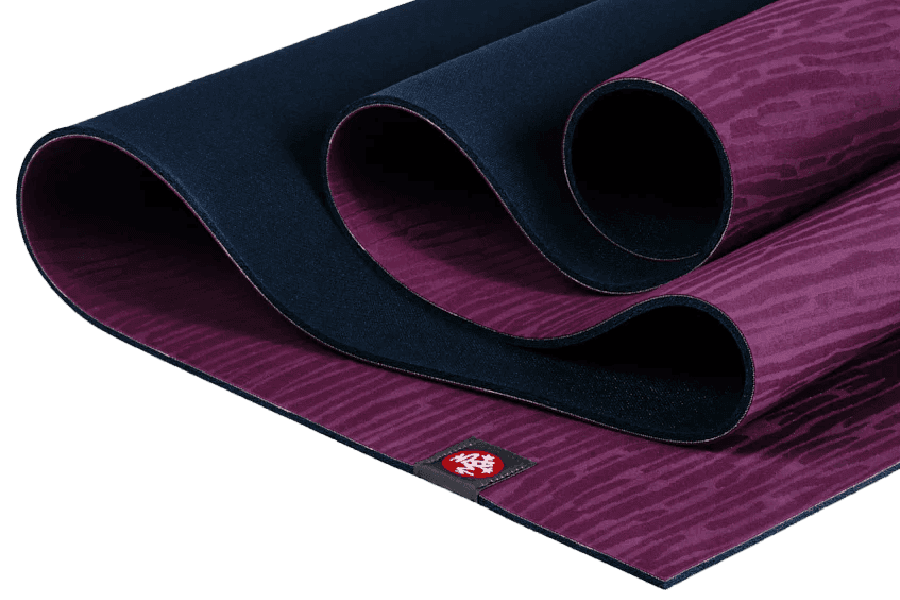
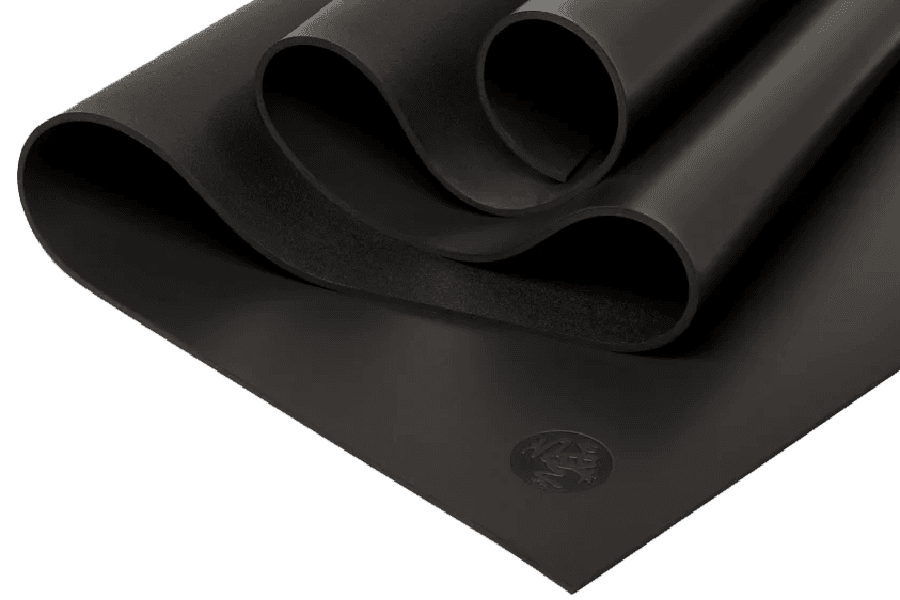
Price
The eKO Lite lists for $42 less.
$96
List price · check price at Amazon
$138
List price · check price at manduka.com
Thickness
The GRP 2.0 Long is 25% thicker.
4 mm0.16″
5 mm0.2″
Weight
The eKO Lite is 1.5 lbs lighter.
5 lbs2.2 kg
6.5 lbs2.9 kg
Size
The GRP 2.0 Long is 8″ longer; the GRP 2.0 Long is 2″ wider.
Same on both
- Natural rubber content, so neither suits a latex allergy
- Grippy from the first session, no break-in
- 30 day returns and no warranty after that
- Both degrade if left in direct sunlight
Full specs
Dimensions
Materials & build
Same brand, two different rooms
Both start with natural rubber and both come from Manduka, but they are aimed at different practices. The eKO Lite is 4 mm of plain rubber at $96, thin and firm. The GRP Adapt 2.0 Long puts a polyurethane layer on top, tuned for heated classes, in a 79 inch cut at $138.
Forty-two dollars, eight inches of length, two inches of width and a millimeter of thickness separate them, and one of those differences matters far more than the rest.
Sweat is what this page turns on
GearLab measured the GRP Adapt 2.0 at 8.5 out of 10 for wet grip, the best result of the 19 mats in its 2026 test, and gave it the award for grip in hot yoga. Its Satin Grip polyurethane takes moisture into the top layer rather than leaving a film on it.
The eKO Lite is closed-cell, so sweat sits on the surface. GearLab has not tested it, but the 5 mm eKO sharing its rubber compound measured 7 wet, which is respectable and not in the GRP’s league.
In a cool room you will never reach the limit of either. In a heated class the gap is the difference between finishing the sequence and spending it wiping your palms.
Dry, the plain rubber holds its own
The GRP measured 9.5 dry. The 5 mm eKO measured a perfect 10, the highest in the field. Rubber tack is genuinely hard to beat with a dry palm, and the eKO Lite uses the same compound.
Both are ready from the first unroll with no break-in, which separates them from Manduka’s own PRO, where the first few weeks are famously slick.
Eight inches longer and two wider
The eKO Lite is 71″ × 24″. The GRP Adapt 2.0 Long is 79″ × 26″. It is the bigger mat in both directions.
The width shows in wide-legged forward folds and side angle work, where 24 inches puts a palm on the floorboards. The length matters above about five foot ten. If neither applies, you are paying $42 for grip you may not need.
If the length is not what you are after, the standard GRP Adapt 2.0 is 71 by 26 inches at $128 in around five colorways. That narrows the decision to $32 and the coating, which is the more common version of this question and the cheaper way into the grip.
Weight and cushioning
5 pounds against 6.5. The Lite is the easier mat to carry, which is the whole reason the Lite line exists, though a pound and a half is not the difference between commuting and not.
On cushioning the GRP has a millimeter over it. Both are dense enough that they feel connected to the floor rather than soft, and both run short in long kneeling holds on a hard surface.
Rolled, the GRP Long is the bigger cylinder by a clear margin, being eight inches longer and two wider. Check the mat bag you own before ordering it; plenty of bags are cut for 71 inch mats and will not take a 79 inch one.
Plain rubber ages better than a coating
The eKO Lite wears the way rubber does: thinning slowly and staying usable while it happens. There is no layer to lose.
The GRP’s polyurethane top is a coating, and once it starts to flake the grip goes with it, typically after a couple of years of heavy heated practice. Neither mat is covered past 30 day returns, since Manduka’s lifetime guarantee applies to the PRO and PROlite lines only, so this is about materials rather than paperwork.
One of these is fussier to clean
The GRP wants a damp cloth and a mild mat spray, dried flat, out of the sun. Harsh cleaners and soaking are how people take years off a polyurethane surface, and heated practice means cleaning it often.
The eKO Lite is plain rubber and more forgiving, though it degrades in sunlight faster than PVC does. A hot car in August is the worst place either of these can live.
Smell, and unrolling a mat indoors
The eKO Lite smells of rubber for the first weeks. It is the most common complaint about the whole eKO line, and the 5 mm version carries 4.1 stars across roughly 694 Amazon ratings largely because of it.
The GRP’s polyurethane layer mutes that considerably, so it is the easier mat to unroll in a small flat. Both contain natural rubber, so neither suits a latex allergy.
Where to buy, and which GRP
The eKO Lite is on Amazon at $96 in eight colorways and gets discounted by colorway. Check the current price there before ordering.
The GRP Adapt 2.0 Long sells direct from manduka.com at $138, in Carbon Black only. Watch for the older GRP Adapt 1.0 still circulating on Amazon as runout stock near $94; it is a different mat from the Spanish-made 2.0 GearLab tested.
Bottom line
Get the eKO Lite if you practice in a normal room. It has the same rubber tack that took the top dry-grip score in GearLab’s field, it is lighter, it comes in eight colors, and it will outlast the coated mat. You keep $42.
Get the GRP Adapt 2.0 Long if you sweat, take heated classes, or need the length and width. It is the best wet-grip mat GearLab has measured, and its coating wearing out in a few years is the price of that.
Manduka GRP Adapt 2.0 Long
List price $138
Frequently Asked Questions
- How much better is the GRP when I sweat?
- Substantially. GearLab measured it 8.5 out of 10 wet, the best of 19 mats, against 7 for the 5 mm eKO that shares the Lite's rubber surface. The GRP's Satin Grip layer takes moisture into the top rather than leaving a film on it. In a cool room the gap barely shows; in a heated class it decides whether you finish the sequence.
- Is 4 mm too thin?
- For standing practice, no. Dense rubber protects a joint far better than the same thickness of soft foam, and 4 mm feels connected to the floor in a way most people want. Long kneeling holds on a hard surface are where the GRP's extra millimeter shows, and a folded towel under the knee closes that on either mat.
- Which lasts longer?
- The eKO Lite, most likely. Plain rubber thins slowly and keeps working while it does. The GRP's polyurethane top is a coating, and once it starts to flake the grip goes with it, usually after a couple of years of heavy heated practice. Neither is covered past 30 day returns, so this is about materials rather than warranties.
- Does the eKO Lite smell?
- Yes, strongly, for the first weeks. It is the most common complaint about the whole eKO line, and the 5 mm version carries 4.1 stars across roughly 694 Amazon ratings largely because of it. The GRP's polyurethane surface mutes the rubber smell considerably, which matters if you unroll a mat in a small flat.
- Do I actually need the Long GRP?
- Only if you are tall. The standard GRP Adapt 2.0 is 71 by 26 inches at $128, 5.8 pounds, in around five colorways. The Long is 79 inches, $138, and Carbon Black only. Under roughly five foot ten the extra length is weight and roll size you will not use.
- Where do I buy each one?
- The eKO Lite is on Amazon at $96 in eight colorways and gets discounted by colorway. The GRP Adapt 2.0 Long sells direct from manduka.com at $138 and is not a stable Amazon listing. Watch for the older GRP Adapt 1.0 still circulating as runout stock near $94; it is a different mat from the Spanish-made 2.0 GearLab tested.
Related comparisons
- Manduka GRP Adapt 2.0 Long vs Hugger Mugger Para Rubber 5mm
- Manduka GRP Adapt 2.0 Long vs Yoga Design Lab Infinity 5mm
- JadeYoga Harmony 68" vs Manduka eKO Lite
- Manduka eKO Lite vs Suga SugaMat
- Manduka GRP Adapt 2.0 Long vs Lululemon The (Big) Mat 5mm
- JadeYoga Harmony XW vs Manduka GRP Adapt 2.0 Long
- Manduka eKO Lite vs Lululemon The Mat 3mm
- Manduka GRP Adapt 2.0 Long vs Alo Warrior
- Manduka eKO Lite vs JadeYoga Harmony 2.0 68"