Manduka Begin vs Alo Warrior: Which One Should You Buy?
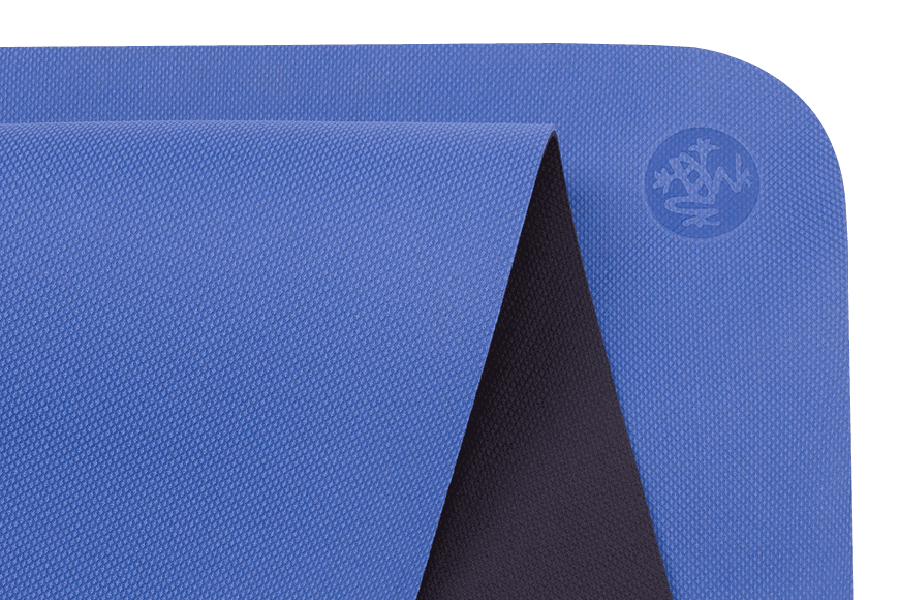
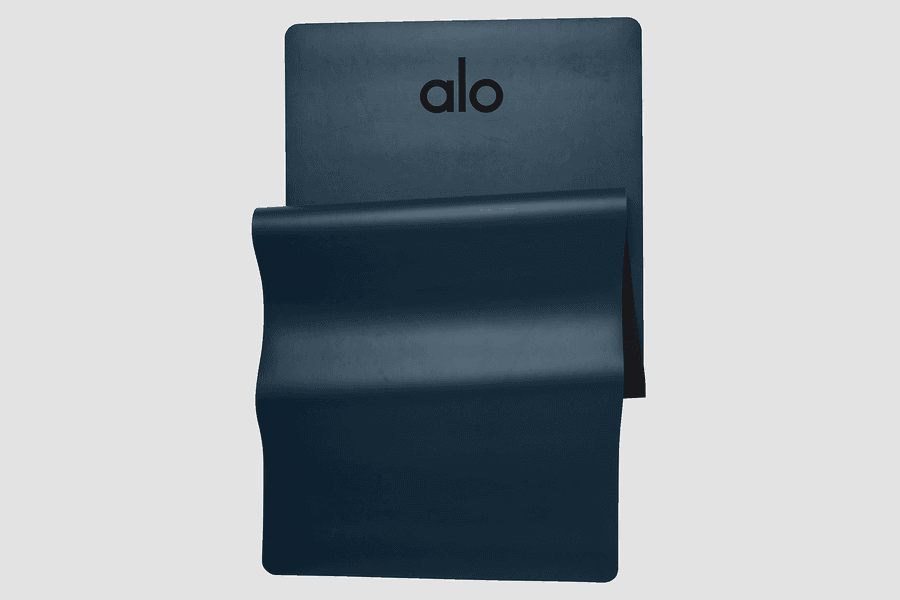
An $86 gap between a mat designed to teach you yoga and a mat designed to feel expensive. The Manduka Begin is 2.5 pounds of soft-touch TPE with an alignment stripe printed down the middle, at 68 by 24 inches. The Alo Warrior is about 8 pounds of polyurethane leather over natural rubber, at 74.4 by 26.4. Both are aimed at people practicing at home, and they solve completely different problems.
As an Amazon Associate, we earn from qualifying purchases made through links on this page. How this works
The quick answer
The Warrior is the nicer object by a distance: bigger, plusher, better looking, and a surface that genuinely feels premium under bare hands. What it is not is high-scoring. GearLab put it at 62 of 100, thirteenth of 19 mats, level with a $30 Gaiam, with grip at 5 of 10 and staining, weight and durability among its listed drawbacks.
The Begin costs $86 less, weighs 5.5 pounds less, and carries the best teaching feature on any budget mat. Neither handles sweat. Buy the Begin if you are learning; buy the Warrior if you want a beautiful mat and the weight will never leave your living room.
Get the Manduka Begin if...
- You are learning, and want a center line to square yourself against
- You carry your mat; 2.5 pounds against about 8
- You have a latex allergy, which rules the Warrior out
- You would rather spend $62 and see whether the habit sticks
Get the Alo Warrior if...
- You want the plushest, best-looking surface in the room
- You want a bigger mat: 74.4″ × 26.4″ against 68″ × 24″
- The mat lives at home and never has to be carried
- You already practice regularly and know what you want
Side by side
Price
The Begin lists for $86 less.
$62
List price · check price at Amazon
$148
List price · check price at aloyoga.com
Thickness
Identical thickness.
5 mm0.2″
5 mm0.2″
Weight
The Begin is 5.5 lbs lighter.
2.5 lbs1.1 kg
8 lbs3.6 kg
Size
The Warrior is 6.4″ longer; the Warrior is 2.4″ wider.
Same on both
- Neither handles sweat well; both slide once palms are damp
- Grippy dry from the first session with no break-in
- 30-day returns and no warranty from either brand
- Both should stay out of direct sun
Full specs
Dimensions
Materials & build
Buying
- Long84" × 26"
A mat that teaches, and a mat that impresses
The Manduka Begin is 2.5 pounds of soft-touch TPE with an alignment stripe printed down the middle, at $62. The Alo Warrior is about 8 pounds of polyurethane leather over natural rubber, at $148. Both live in living rooms; they’re solving different problems entirely.
The $86 between them doesn’t buy better grip or a longer life. It buys a bigger, plusher, better-looking mat, which is a legitimate thing to want as long as you know that’s what you’re buying.
What the Warrior actually scored
GearLab put the Alo Warrior at 62 of 100, thirteenth of 19 mats, level with a $29.98 Gaiam Premium. Grip came in at 5 of 10, comfort at 7, materials at 6, care at 7. Its listed cons read: super-slippery when wet, stains easily, heavy, durability concerns. Its pros are fair too, including non-slip dry grip, extra width, a soft surface, and the fact that it doesn’t budge on the floor.
The Begin wasn’t in that lineup, being a budget TPE mat rather than a performance one. What matters here is that the Warrior’s price is not buying test scores, so the comparison has to be made on everything else.
The Begin’s alignment stripe
A printed center line gives you something to square hands, feet and spine against, which is the kind of feedback that otherwise requires a teacher standing over you. For a new practitioner working from videos, it earns its place every session, and it’s the best teaching feature on any mat at this price.
Two caveats. It’s printed rather than etched, so expect fading over years of heavy use. And people with a settled practice tend to stop seeing it, at which point the Warrior’s unmarked surface costs nothing.
Feel: the Warrior is the nicer surface
This is what the money buys and it isn’t imaginary. The Warrior’s matte polyurethane leather is smooth and noticeably cushioned in a way TPE isn’t, and it’s the mat people describe as luxurious. It’s also 6.4 inches longer and 2.4 wider than the Begin, which matters if you’re tall or broad shouldered.
The Begin is a competent, friendly 5 mm surface: soft-touch, reversible for a second color, and firm enough to hold a balance pose without foam wobble. It isn’t trying to feel expensive and it doesn’t.
Grip: neither handles sweat
The Begin is closed-cell TPE, so sweat sits on top with nowhere to go. That’s true of every TPE mat regardless of brand, and it’s the most common reason beginners conclude they’re bad at yoga when the mat is the problem.
The Warrior doesn’t fix it. GearLab rated it 7 out of 10 dry and 4.5 wet, with super-slippery when wet listed first among its drawbacks. If heated classes are where you’re heading, both of these are the wrong shelf. The mats worth your money are natural rubber or absorbent polyurethane tops built for heat, and our Begin vs Jade Level One comparison covers the cheapest way into the first of those.
Weight: 2.5 pounds against 8
GearLab weighed the Warrior at 8.1 pounds, higher than anything else in its 19-mat field, including the Manduka PRO. At home that works in its favor and the testers liked how firmly it stayed put. Carried to a studio twice a week, it becomes the thing you resent about the mat.
The Begin is the lightest mat Manduka makes and goes anywhere without thought. For anyone taking a mat to classes, that gap is larger than any other difference on this page.
Durability and coverage
Neither brand promises much: both offer a 30-day return window and no warranty, which is about right at $62 and thin at $148.
TPE compresses and wears on its own schedule, so expect a couple of years from the Begin under regular barefoot practice, and considerably less if it sees shoes or equipment. The Warrior stains where hands and feet land and drew durability concerns from GearLab, which is harder to accept when the mat costs more than twice as much.
Materials and allergies
The Begin is TPE made in Taiwan, with no natural rubber in it, which makes it the safe choice with a latex allergy. The Warrior sits on natural rubber, so it isn’t, and Alo describes the mat as formaldehyde-free, non-toxic and PVC-free rather than latex-free.
Care is simple on both: a cloth with a mild cleaner, air dry, no machine washing, no hot cars or direct sun. The Warrior asks for more of it, since its absorbent top marks over time and picks up dirt and lint easily.
Bottom line
Get the Begin if you’re learning, if you carry your mat, or if a latex allergy decides it. The stripe does real teaching work, 2.5 pounds goes anywhere, and $62 is the right amount to spend while you find out whether the habit sticks.
Get the Warrior if you already practise regularly, the mat stays at home, and you want the plushest, best-looking surface in the room. Just go in knowing the testing doesn’t reward the extra $86. If you want a Manduka that’s tougher rather than prettier, our X vs Warrior comparison covers that, and both mats here sell easily: the Begin on Amazon, the Warrior direct from Alo.
Manduka Begin
List price $62
Alo Warrior
List price $148
Frequently Asked Questions
- Is the Warrior worth more than twice the Begin?
- For the feel and the size, it can be. For anything measurable, the case is thin. GearLab scored it 62 of 100, identical to the $29.98 Gaiam Premium, with grip at 5 out of 10 and cons that read: super-slippery when wet, stains easily, heavy, durability concerns. What you are buying is a genuinely lovely surface and a mat that looks like it cost $148. That is a legitimate purchase; it is just not a performance one.
- How useful is the Begin's alignment stripe?
- For a new practitioner, genuinely useful. A printed center line gives you something to square hands, feet and spine against, which is the feedback that otherwise requires a teacher watching you. It is printed rather than etched, so expect fading over years of heavy use, and people with a settled practice tend to stop noticing it. The Warrior's surface is unmarked, which plenty of practitioners prefer.
- Which is better for hot yoga?
- Neither, and it is not close to a judgment call. The Begin is closed-cell TPE, so sweat sits on top with nowhere to go. GearLab rated the Warrior 7 out of 10 dry and 4.5 wet, listing super-slippery when wet among its drawbacks. If heated classes are your practice, the mats worth your money are natural rubber or absorbent polyurethane tops built for heat, and neither of these qualifies.
- How heavy is the Warrior, really?
- GearLab weighed it at 8.1 pounds, higher than anything else in its 19-mat field, including the Manduka PRO. At home that works in its favor and the testers liked how firmly it stayed put. Carried to a studio twice a week it becomes the mat's biggest flaw. The Begin is 2.5 pounds, the lightest mat Manduka makes, and goes anywhere without thought.
- Which one lasts longer?
- Neither promises much, and both brands offer 30-day returns with no warranty. TPE compresses and wears on its own schedule, so expect a couple of years from the Begin under regular barefoot practice, and less if it sees anything rougher. The Warrior stains where hands and feet land and drew durability concerns from GearLab, which is harder to accept at $148 than at $62.
- Which should a complete beginner buy?
- The Begin, comfortably. It is designed for exactly that person, it costs $86 less while you find out whether yoga sticks, and the stripe does real teaching work. Spending $148 on a mat before your first month is the version of this that seems unwise. If you later want a mat that grips when you sweat, that upgrade costs less than the Warrior does anyway.
Related comparisons
- Manduka Begin vs IUGA Eco Friendly Non Slip PU
- JadeYoga Harmony XW vs Alo Warrior
- Manduka PROlite Long & Wide vs Alo Warrior
- Manduka PRO vs Alo Warrior
- Manduka Begin vs Gaiam Performance Dry-Grip 5mm
- Manduka GRP Adapt 2.0 Long vs Alo Warrior
- Manduka Begin vs Hugger Mugger Earth Elements 5mm
- Manduka Begin vs JadeYoga Level One
- Manduka eKO Long vs Alo Warrior