Lululemon The Mat vs Gaiam Dry-Grip: Which One Should You Buy?
The Gaiam Performance Dry-Grip is the mat people find when they balk at Lululemon's price: both are 5 mm, both have smooth moisture-wicking tops, and the Gaiam costs $69.98 to The Mat's $118. On paper it's a bargain version of the same idea. The testing record says the two mats keep that promise very differently, and that's really what this page is about.
As an Amazon Associate, we earn from qualifying purchases made through links on this page. How this works
The quick answer
The Mat delivers what both mats advertise. Its polyurethane-over-rubber top absorbs sweat and held its grip in GearLab's test classes run at 90 to 105 degrees, earning a top pick in their 19-mat lineup. The Dry-Grip is a comfortable, decent mat when your hands are dry, but GearLab rated its wet grip near the bottom of the same test and recommends it for stretch practice and slower flows, not hot yoga. It counters with a $48 lower price, a lighter build, and, surprisingly, a lifetime guarantee.
If sweat is part of your practice, pay up for The Mat; the Dry-Grip's name promises something testing says it doesn't deliver. If your practice is dry and gentle, the Gaiam is a comfortable mat at a fair price.
Get The Mat if...
- Your palms sweat or you take heated classes, ever
- You want the bigger surface (71 by 26 inches vs 68 by 24)
- You want the mat GearLab made a top pick
- You like the reversible rubber side as a second surface
Get the Dry-Grip if...
- You'd rather keep about $48
- Your practice is dry: stretching, slow flows, no heat
- You want a lifetime guarantee (The Mat has no set-term coverage)
- You want the lighter mat (4.25 pounds vs 5.24)
Side by side
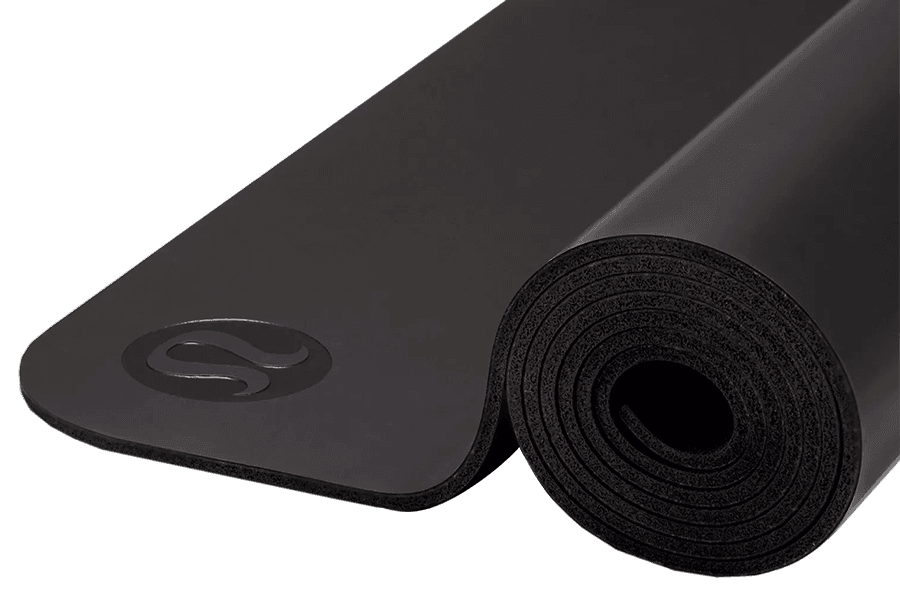
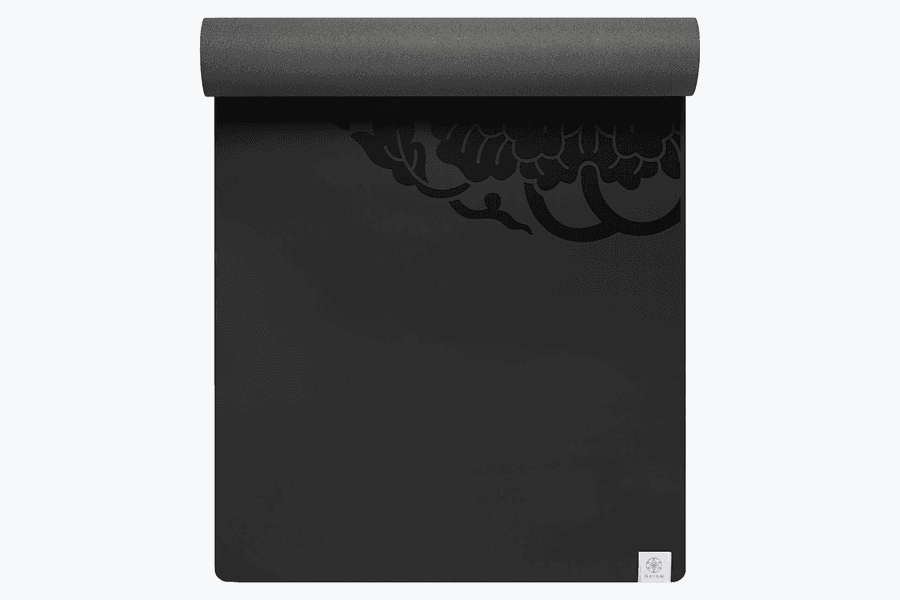
Price
The Dry-Grip lists for about $48 less.
$118
List price · check price at lululemon.com
$69.98
List price · check price at Amazon
Thickness
Identical thickness.
5 mm0.2″
5 mm0.2″
Weight
The Dry-Grip is 1 lbs lighter.
5.2 lbs2.4 kg
4.25 lbs1.9 kg
Size
The Mat is 3″ longer; the Mat is 2″ wider.
Same on both
- 5 mm thick
- Smooth, non-textured top feel
- Wipe-down cleaning only
Full specs
Dimensions
Materials & build
Buying
The budget-alternative question, tested
This comparison exists because of a specific shopping moment: you like Lululemon’s The Mat, you see the $118 price, and you go looking for the same thing cheaper. The Gaiam Performance Dry-Grip is what you find: also 5 mm, also a smooth top with a moisture-wicking promise, at $69.98. The names even rhyme conceptually.
The two mats are less alike than they look. The Mat is natural rubber under a sweat-absorbing polyurethane skin. The Dry-Grip is a PVC mat with a coated surface. That construction difference is invisible in product photos and very visible the first time your palms sweat, which is why testing, not marketing, should settle this one.
Grip: fine when dry, one-sided when wet
Dry, both surfaces feel pleasant and secure: smooth, slightly silky, with none of the stickiness of a classic rubber mat. GearLab found the Dry-Grip’s dry traction perfectly adequate for slower practice, and plenty of owners are happy with it in unheated classes.
Sweat ends the resemblance. The Mat’s polyurethane top absorbs moisture as it lands, and GearLab’s testers found it kept traction in classes run at 90 to 105 degrees, part of why they made it a top pick in a 19-mat lineup. The same test put the Dry-Grip’s wet grip near the bottom: traction fell apart in sweaty sessions, and GearLab explicitly steers the mat away from hot yoga and dynamic vinyasa. Despite the name, the Dry-Grip’s coating handles light moisture at best.
So the practical rule is simple. If your palms never get more than faintly damp, the two mats grip about the same. If sweat is part of your practice, they aren’t comparable products.
Cushion and feel: closer to even
Both are 5 mm, and this is the section where the Dry-Grip earns its keep. GearLab rated its comfort highly, testers liked the forgiving cushion for joints, and its smooth surface suits the stretch-and-restorative practice it’s honestly best at. The Mat’s rubber base gives it a denser, more planted feel with a firmer read on the floor for balance work.
The Mat also has a party trick the Gaiam can’t match: flip it over and the textured rubber side becomes the practice surface, cushier and a little warmer-feeling, which some people prefer for slow sessions. The Dry-Grip is one-sided.
Size and weight
The Mat is bigger: 71″ × 26″ against the Dry-Grip’s 68″ × 24″. Three inches of length and two of width are the difference between a standard footprint and a roomy one, and if you’re much over five foot eight the extra length is worth having. Lululemon also sells an 84″ version if you need more.
The Dry-Grip answers with weight: 4.25 pounds against The Mat’s 5.24 listed. Neither is heavy, and both roll to a normal size, so carrying shouldn’t decide this comparison for anyone.
Durability and the strange warranty inversion
Neither mat is built for decades. The Mat’s polyurethane top stains and scuffs with heavy use, a wear pattern every mat with this surface shares. The Dry-Grip’s weak spots are its coating and its dye: GearLab flagged limited long-term durability, and its testers found the surface dye transferred onto clothing when the mat was new, suggesting a towel buff before first use. Gaiam’s own care sheet adds a two-to-three-day airing-out period for the new-mat smell.
Here’s the odd part: the cheap mat has the better coverage. Gaiam backs the Dry-Grip with a lifetime guarantee, while Lululemon offers its Quality Promise with no defined term. Guarantees at every price cover defects rather than normal wear, so temper expectations, but on paper the $69.98 mat is the one standing behind itself for life.
Materials, allergies, and cleaning
The Dry-Grip is PVC, which cuts both ways: less lovely as a material story, but latex-free and marketed as free of six common phthalates, making it the safe pick for anyone with a latex allergy. The Mat is built on FSC-certified natural rubber, better environmentally but a trace-latex caution for allergic practitioners.
Cleaning is wipe-down only for both: damp cloth, mild soap, no machine washing. The Dry-Grip tolerates casual ownership a little better; the coated PVC doesn’t care about sunlight the way The Mat’s rubber base does.
Price and where to buy
List prices are $118 and $69.98, and the gap usually widens: the Dry-Grip sells through Amazon and big-box stores where street prices drift below list, while The Mat sells only through Lululemon at Lululemon’s price. Check the current price on the Dry-Grip at Amazon and The Mat at Lululemon.
Whether the $48 gap is worth it depends entirely on the sweat question. For dry, gentle practice the Dry-Grip delivers most of the experience for a lot less money. For sweaty practice the comparison isn’t close, and the cheaper mat becomes the expensive mistake.
Bottom line
Get the Dry-Grip if your practice is dry: stretching, restorative work, slow unheated flows. It’s comfortable, light, latex-free, cheap to buy, and covered for life. Just ignore the name; it’s a fair-weather surface, and testing backs that up.
Get The Mat if you sweat, ever. Its top layer is the real version of what the Dry-Grip’s coating imitates, and GearLab’s hot-class results make it the only one of these two we’d take into a heated room. If $118 is past budget but sweat grip matters, the Jade Harmony splits the difference at $99.95 with classic rubber traction, and our The Mat vs Alo Warrior page covers the premium end of this same decision.
Lululemon The Mat 5mm
List price $118
Frequently Asked Questions
- Is the Gaiam Dry-Grip actually good for hot yoga?
- Testing says no, despite the name. GearLab rated the Dry-Grip's wet grip among the lowest in its 19-mat test, found traction fell apart in sweaty sessions, and recommends the mat for stretch practices and slower flows rather than hot or dynamic classes. Gaiam's topcoat handles light moisture, but it's a PVC mat under a coating, not an absorbent surface. The Mat is the one with a documented hot-class record: GearLab found it kept traction at 90 to 105 degrees.
- Is the Dry-Grip a good cheap alternative to the Lululemon mat?
- For dry practice, yes. It's 5 mm like The Mat, comfortable, with a similar smooth feel under the hands, and it saves you $48. The similarity ends when your palms get damp: The Mat's polyurethane top absorbs sweat and the Dry-Grip's coated PVC doesn't. Think of the Gaiam as a comfortable dry-conditions mat that resembles The Mat, not as the same mat at a lower price.
- Which mat has the better warranty?
- The cheaper one, oddly. Gaiam backs the Dry-Grip with a lifetime guarantee, while Lululemon offers its Quality Promise with no defined term. As with most guarantees, Gaiam's covers defects rather than normal wear, and GearLab flagged the Dry-Grip's long-term durability as a weak point. Still, on paper the $69.98 mat carries the stronger coverage, which says something about how confident each brand is in different things.
- Does the Gaiam Dry-Grip stain clothes?
- It can when new. GearLab's testers found the surface dye transferred onto clothing at first and suggested buffing the mat with a towel before first use. Gaiam's own care instructions also say to air the mat out for two to three days before practicing to release the new-mat smell. Both issues fade with use; they're worth knowing about before your first class in light-colored leggings.
- Which is safer for a latex allergy?
- The Gaiam, clearly. The Dry-Grip is PVC, marketed as latex-free and free of six common phthalates. The Mat is built on a natural rubber base, and natural rubber can carry trace latex proteins. If you have a genuine latex allergy, the Gaiam is the safe choice of these two.
- Where can I buy each of these mats?
- The Dry-Grip is the easy one: Amazon, Gaiam's site, and big-box retailers carry it, and street prices drift below list. The Mat sells only through Lululemon, online or in stores, at Lululemon's price. If trying before buying matters, both brands have physical retail, but the Gaiam is the one you'll trip over at Target.
Related comparisons
- Manduka X vs Gaiam Performance Dry-Grip 5mm
- Manduka PROlite Long vs Lululemon The Mat 5mm
- JadeYoga Harmony 74" vs Lululemon The Mat 5mm
- Manduka PROlite vs Lululemon The Mat 5mm
- Lululemon The Mat 5mm vs Manduka GRP Adapt 2.0
- Lululemon The Mat 5mm vs Manduka eKO
- JadeYoga Level One vs Gaiam Performance Dry-Grip 5mm
- Gaiam Performance Dry-Grip 5mm vs IUGA Eco Friendly Non Slip PU
- Lululemon The Mat 5mm vs b, halfmoon B Mat Everyday 4mm