Liforme Classic vs Yoga Design Lab Combo: Which One Should You Buy?
These two get cross-shopped more than their spec sheets suggest, mostly because both promise traction in a hot room and both look like something. The Liforme spends its money on the surface itself: etched alignment guides, a grip that testers rate near the top of the category, and a carry bag in the box. The Combo spends less and hands you a washable microfiber towel bonded to rubber, in 19 printed designs.
As an Amazon Associate, we earn from qualifying purchases made through links on this page. How this works
The quick answer
On measured performance the Liforme is the better mat and it is not particularly close. GearLab scored it 76 of 100 with grip at 9 dry and 7 wet, against 52 and 4 out of 10 either way for the Combo, which it ranked 17th of 19. The Liforme is also wider, longer, thicker and better supported, and it comes with a bag.
The Combo is $48 less, machine washable, and the only one of the two you would call fun to look at. Buy it if laundering the mat solves a real problem for you. Otherwise the Liforme is where the money goes.
Get the Liforme Classic if...
- You want the grippier mat, wet or dry, by a clear margin
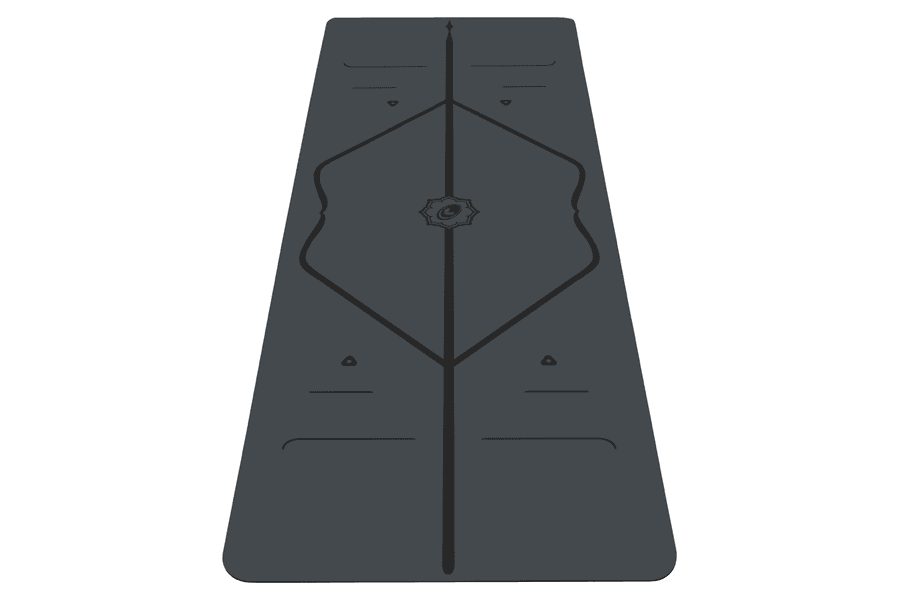
- You would use etched alignment guides to check placement and stance
- You want a bigger platform: 72.8″ × 26.8″ against 70″ × 24″
- You want a mat designed to biodegrade rather than sit in a landfill
Get the Combo if...
- You want a mat you can put through a gentle wash cycle
- You already practice on a towel and want one fewer thing to manage
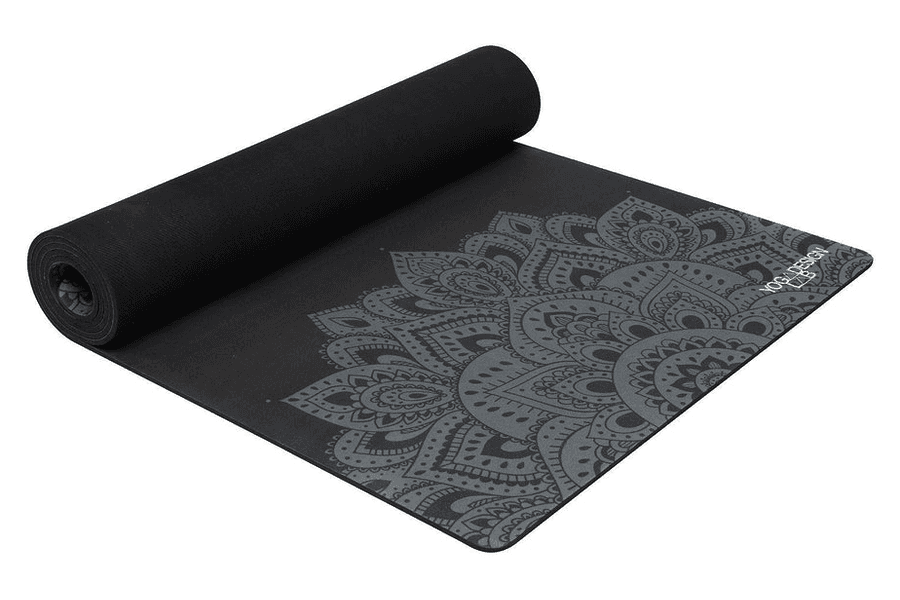
- You want a printed design rather than a solid surface
- You would rather keep $48
Side by side
Price
The Combo lists for $48 less.
$165
List price · check price at Amazon
$117
List price · check price at Amazon
Thickness
The Liforme is 20% thicker.
4.2 mm0.17″
3.5 mm0.14″
Weight
The Combo is 0.6 lbs lighter.
5.5 lbs2.5 kg
4.9 lbs2.2 kg
Size
The Liforme is 2.8″ longer; the Liforme is 2.8″ wider.
Same on both
- Natural rubber base under an absorbent top layer
- Grip from the first class with no break-in
- Not safe for a latex allergy
- No warranty; both brands offer 30-day returns
- Both include a way to carry them
Full specs
Dimensions
Materials & build
Buying
- Combo 5.5mm70" × 24"
- Combo Flow 1.5mm70" × 24"
Why these two end up on the same shortlist
On paper they have little in common. What puts them side by side is that both promise traction in a hot room and both are mats people choose partly because of how they look. The Liforme runs an eco-polyurethane top over natural rubber with an alignment system etched into the surface. The Combo bonds a recycled microfiber towel to natural rubber and prints it.
Forty-eight dollars separate them, and the gap buys more than the alignment guides people usually focus on.
Grip: the Liforme doesn’t need your sweat
GearLab rated the Liforme 9 out of 10 dry and 7 wet, level with the best natural rubber mats it has tested, and described the stickiness as gecko-like, with a moisture-wicking top and a waterproof middle layer protecting the base. The Combo scored 4 out of 10 both ways in the same lineup and finished 17th of 19.
Owner reviews of the Combo run far warmer than that, and they’re not imagining it: microfiber grips well once it’s damp. The difference is that the Combo’s traction is conditional on how much you sweat, while the Liforme grips the same way in a cool morning class and a heated evening one.
The alignment system, honestly assessed
The Liforme’s markings are etched into the material rather than printed on it, so they don’t wear off with use. They give fixed references for hand and foot placement, stance width, and whether you’re actually square, and GearLab gave the mat an award specifically for fine-tuning alignment.
Whether they earn their share of the $48 depends on your practice. Practitioners working at home without a teacher watching, and anyone rebuilding form after an injury, lean on them constantly. People with a settled practice often stop seeing them within a month. The Combo’s printed surface is decorative rather than instructional, and plenty of people prefer that.
Size and cushion: the Liforme is the bigger mat
The Liforme measures 72.8″ × 26.8″ against the Combo’s 70″ × 24″. Nearly three inches of extra width is the part you notice first, especially with broad shoulders, and GearLab listed narrowness among the Combo’s drawbacks.
On thickness it’s 4.2 mm against 3.5, and comfort scores came in at 7 and 6. Neither mat is plush, but the Liforme’s dense rubber base supports better than its number suggests; testers found it comfortable even on concrete and tile. If cushion is what is stopping you, the 5.5 mm version of the Combo costs about $14 more and is a cheaper answer than switching brands.
Care: only one of them goes in the wash
Yoga Design Lab prefers hand washing to extend the Combo’s life but permits a gentle machine cycle in a machine without a center agitator, using mild soap. That’s a real feature for anyone who currently launders a yoga towel weekly, and it’s the Combo’s strongest argument on this page.
The Liforme is a wipe-down mat: a cloth, a gentle cleaner, air dry, and nothing harsh. GearLab rated its care and cleaning 9 out of 10, among the best in the field, so it’s easy to look after even though you can’t launder it. Both surfaces mark over time where hands and feet land, which is true of every mat in this construction; our The Mat vs Liforme comparison covers the same issue on Lululemon’s version.
Weight and what is in the box
The Liforme is 5.5 pounds and ships with a fully enclosed carrying bag. The Combo is 4.9 listed, 4.6 on GearLab’s scale, and comes with a carry strap. Both are easy carries, and the extra half pound on the Liforme buys you a proper bag rather than a loop of webbing.
Durability: two consumables, two thin promises
The Liforme’s polyurethane top wears under heavy practice, and GearLab rated it less durable than the top performers in its lineup. Liforme offers no warranty at all, deliberately, because the mat is built to biodegrade in one to five years, with a 30-day money-back guarantee from its own site.
The Combo is a textile bonded to rubber, so expect pilling, fading and loss of loft with washing, plus the lint it collects along the way. Yoga Design Lab takes back unused mats within 30 days and offers nothing beyond that. Neither brand is promising you years.
Looks and materials
The Combo is the more decorative object. Yoga Design Lab prints recycled PET microfiber with water-based inks and bonds it to a natural rubber base, and there were 19 patterns to choose from in the 3.5 mm when we checked. The Liforme runs solid colors with the alignment system etched in, which reads clean and technical.
Both sit on natural rubber, so neither is safe with a genuine latex allergy. On environmental credentials the Liforme leads: PVC-free, eco-polyurethane, and designed to break down at end of life, a claim almost nothing else in the category makes.
Price and where to buy
List prices are $165 and $117. Both sell on Amazon as well as direct, and Liforme prices move around by colorway, so check the current Liforme price and the Combo price before paying list. Watch the currency on liforme.com as well: the site quotes whichever one matches the storefront it drops you into, which is easy to miss.
Bottom line
Get the Liforme if you want the mat that performs. It grips more than twice as well by GearLab’s scoring, gives you a bigger platform, cleans easily, and adds alignment guides that a self-directed practice can genuinely use.
Get the Combo if laundering the mat solves a real problem, or if you want a printed surface and $48 back. Just know that its grip depends on your sweat rather than replacing it. If you want the sweat problem solved outright, our GRP Adapt 2.0 vs Combo page covers the mat testers picked for hot rooms.
Liforme Classic
List price $165
Frequently Asked Questions
- Which one grips better in a hot room?
- The Liforme, on every number available. GearLab rated its traction 9 out of 10 dry and 7 wet, level with the best rubber mats in the field, and described the stickiness as gecko-like with a moisture-wicking top and a waterproof middle layer protecting the base. The Combo scored 4 both ways in the same test. Owner reviews of the Combo are far warmer than that, and a soaked microfiber towel genuinely does hold, but the Liforme does not need your sweat to work.
- Is $48 a lot for alignment lines?
- That is not all you are paying for, which is worth saying plainly. The gap also buys 0.7 mm more thickness, nearly 3 inches more width, a substantially better grip score, and a mat that does not need laundering. The lines themselves are etched rather than printed, so they do not wear off, and GearLab gave the Liforme its award for fine-tuning alignment. Whether you would use them depends on whether you practice with a teacher watching.
- Can either mat go in the washing machine?
- Only the Combo, and with conditions. The brand asks for hand washing where possible, since that is gentler on the mat, but allows a low-agitation machine cycle with mild soap in a drum that has no center post. The Liforme is a wipe-down product with a gentle cleaner, and harsh cleaners will damage the surface. For anyone currently laundering a yoga towel every week, that is the Combo's strongest argument.
- How thin does 3.5 mm feel?
- Thin. GearLab rated the Combo 6 out of 10 for comfort and support against 7 for the Liforme, and the Liforme's 4.2 mm of dense rubber supports better than its own number suggests; testers found it comfortable even on concrete and tile. If cushion is the issue, Yoga Design Lab sells the same Combo in 5.5 mm for about $14 more, which is a cheaper fix than switching brands.
- Which one lasts longer?
- Neither is built for the long haul. The Liforme's polyurethane top wears with heavy practice and GearLab rated it less durable than the top performers in its lineup, while Liforme offers no warranty at all because the mat is designed to biodegrade in one to five years. The Combo is a textile bonded to rubber, so it pills, fades and loses loft with washing, and it collects lint along the way. Both brands take returns within 30 days and neither promises more.
- Which looks better?
- Entirely a matter of taste, and a legitimate reason to choose. The Combo is the more expressive mat: printed designs are Yoga Design Lab's whole identity, applied with water-based inks, with 19 patterns available in the 3.5 mm at last check. The Liforme runs solid colors with the alignment system etched into the surface, which reads as clean and technical rather than decorative.
Related comparisons
- Yoga Design Lab Combo 3.5mm vs b, halfmoon B Mat Everyday 4mm
- Lululemon The Mat 5mm vs Yoga Design Lab Combo 3.5mm
- Manduka PROlite vs Yoga Design Lab Combo 3.5mm
- Manduka PROlite Long vs Yoga Design Lab Combo 3.5mm
- Yoga Design Lab Combo 3.5mm vs JadeYoga Harmony 2.0 68"
- Yoga Design Lab Combo 3.5mm vs Manduka GRP Adapt Lite 2.1 4mm
- JadeYoga Harmony 74" vs Yoga Design Lab Combo 3.5mm
- Manduka eKO Lite Long vs Yoga Design Lab Combo 3.5mm
- Yoga Design Lab Combo 3.5mm vs Manduka PRO Lite Terra 4.7mm