Manduka PROlite vs Gaiam Classic Print: Which One Should You Buy?
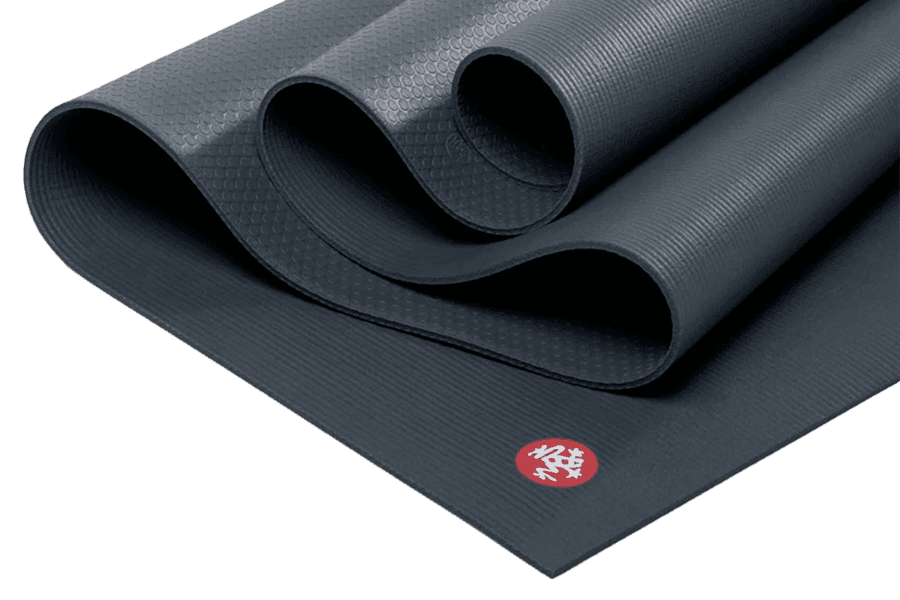
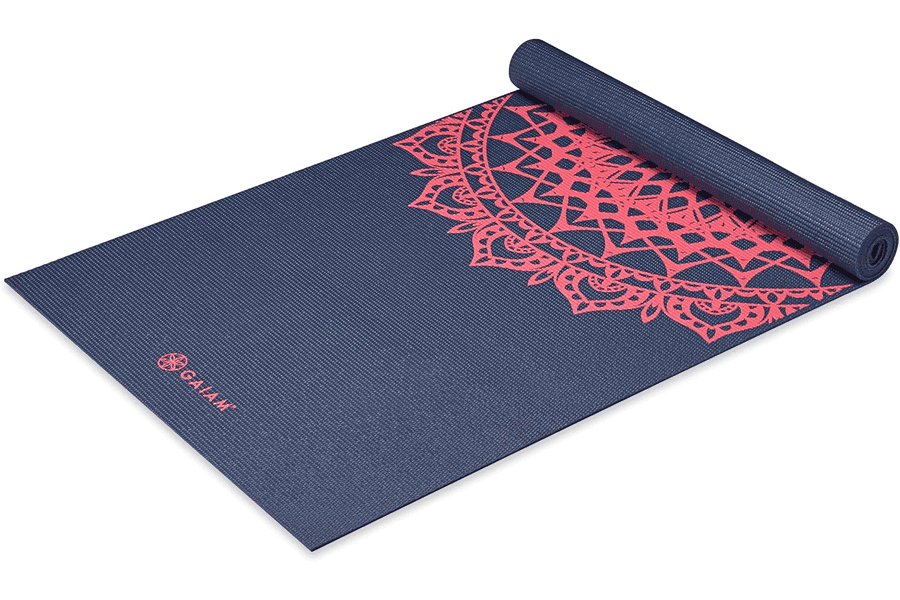
Both of these are PVC mats around 4 mm thick, and one costs four and a half times the other. The Manduka PROlite is made in Germany, carries an OEKO-TEX certification and a lifetime guarantee, and is the mat you see under half the teachers in a studio. The Gaiam Classic Print is the $25 printed sticky mat that has been the default first yoga mat for twenty years. The gap is real, but it is not where most people assume.
As an Amazon Associate, we earn from qualifying purchases made through links on this page. How this works
The quick answer
The PROlite is built to outlast the Gaiam by roughly a decade, and Manduka backs that with a guarantee it actually honors. It is also 3 inches longer, denser under the hands, and closed-cell so sweat never soaks into it. What it is not is grippier out of the box: a new PROlite is slick out of the wrapper and needs a few weeks of use before the surface comes good.
If you practice several times a week and intend to keep doing it, the PROlite is the cheaper mat over ten years and the better one throughout. If you are still finding out whether yoga sticks, or the mat lives under a bed between occasional sessions, the Gaiam does the job for $24.98 and owes you nothing.
Get the Manduka PROlite if...
- You practice regularly and want one mat for the next decade
- You want a written lifetime guarantee rather than a hopeful one
- You are tall enough to want 71″ rather than 68″
- You want a dense, closed-cell surface that sweat cannot soak into
Get the Gaiam Classic Print if...
- You want grip that works from day one with no break-in
- You are not sure yet how much you will practice
- You want the lightest carry at 2.1 pounds against 4.6
- You would rather spend $24.98 and replace it than spend $112 once
Side by side
Price
The Classic Print lists for about $87 less.
$112
List price · check price at Amazon
$24.98
List price · check price at Amazon
Thickness
The PROlite is 18% thicker.
4.7 mm0.19″
4 mm0.16″
Weight
The Classic Print is 2.5 lbs lighter.
4.6 lbs2.1 kg
2.1 lbs0.95 kg
Size
The PROlite is 3″ longer; same width.
Same on both
- PVC construction, latex-free, safe with a rubber allergy
- Around 4 mm thick, so firm rather than plush
- 24″ wide
- Wipe-clean care and no machine washing
Full specs
Dimensions
Materials & build
Buying
Same material, four and a half times the price
Both of these are PVC. Both are around 4 mm thick, both are 24 inches wide, and neither contains a scrap of natural rubber. If you only read the spec sheet you would struggle to see where $87.02 goes.
It goes into density and manufacturing. The Manduka PROlite is made in Germany, certified to OEKO-TEX Standard 100, and built to a weight of 4.6 pounds in a 4.7 mm mat. The Gaiam Classic Print is 4 mm and 2.1 pounds, which tells you most of what you need to know: there is less material per square inch, and it is softer material.
The PROlite is a ten year mat and the Gaiam is not
This is the real difference and it is worth being specific about it. Manduka’s dense closed-cell PVC does not compress meaningfully under hands and heels, which is why studio teachers are still practicing on PROlites they bought in the last decade. The Gaiam’s lighter foam packs down where you load it, and once it thins in those two spots the mat is done, typically after a year or two of regular use.
Spelled out over a decade: one PROlite at $112 costs less than five or six replacement Classic Prints, and you spend those ten years on the better surface rather than on a series of progressively flatter cheap ones. That reasoning only holds if you actually practice for a decade, which is the genuine question here.
Grip: the cheap mat wins the first month
A brand new PROlite is slick. Manduka’s closed-cell surface arrives with a factory finish that takes weeks of regular use to wear through, and it is far and away the most common complaint from people who have just spent $112. Manduka has retired the salt-scrub break-in advice it used to publish and now says the slickness resolves with use, which matches what owners report.
The Gaiam grips from the moment you unroll it. Its textured sticky finish is what a beginner expects a yoga mat to feel like, and it never needs breaking in because there is nothing to break in.
Once the PROlite is worn in it is a confident dry surface with more useful slide for transitions than the Gaiam offers. Neither mat is good with genuinely wet hands. Closed-cell PVC keeps sweat sitting on top, and a sticky finish under a film of sweat is just a wet plastic sheet.
Firm and supportive against thin and soft
Neither of these is a plush mat. The PROlite is 4.7 mm of dense material, so it feels firm and supportive and gives almost nothing under a standing balance. The Gaiam is 4 mm of softer foam, which has a fraction more give on day one and progressively less as it compresses.
On hardwood, kneeling poses are slightly kinder on a new Gaiam and noticeably better on the PROlite two years later. If your knees are the problem you are trying to solve, both of these are the wrong thickness and a 6 mm mat is what you want.
Length, and why it matters more than you think
The PROlite is 71″ against the Gaiam’s 68″. Three inches sounds trivial until you are lying down with your heels off the end of the mat. Manduka also sells the PROlite in a 68″ Short, a 79″ Long, and a 79″ × 30″ Long & Wide, which covers taller practitioners properly.
Gaiam sells the Classic Print in one size, 68″ × 24″. Above about five foot eight that is a real constraint and no amount of saving money fixes it.
Weight, if you commute with your mat
The Gaiam is 2.1 pounds and the PROlite is 4.6. That is more than double, and it is the single strongest argument for the cheap mat if you walk or take transit to class several times a week. The PROlite is Manduka’s lighter mat and it is still a solid object on a shoulder.
If you want Manduka build quality at a carrying weight, the PROlite is already the answer within their line; the PRO is heavier again at 7.5 pounds.
What the guarantees really say
Both brands print the word lifetime, and they mean very different things by it. Manduka’s fine print works out to roughly ten years of regular use, one replacement, and proof of purchase from an authorized seller. Buying on Amazon qualifies only when the mat is sold and shipped by Amazon itself rather than a third-party seller, which is worth checking at checkout.
Gaiam also advertises a lifetime guarantee on the Classic Print. It is worth less, not because Gaiam is dishonest but because the way these mats end is compression and surface wear, which no guarantee treats as a defect. A claim on a flattened $24.98 mat is not a claim anyone wins.
Which one is the better buy right now
Check the current PROlite price at Amazon and the current Classic Print price at Amazon. Manduka discounts colorways it is retiring, and the PROlite turns up meaningfully below list often enough to be worth waiting a week for if you are not in a hurry.
If you want the Manduka surface but the price is too much, the cheaper way in is a used PROlite; they hold up well enough that second-hand ones are genuinely worth buying, which is not true of the Gaiam.
Bottom line
Buy the Gaiam Classic Print if you are new, unsure, on a budget, or carrying your mat every day. It grips on day one, weighs almost nothing, and costs $24.98. Nobody has ever regretted starting here.
Buy the Manduka PROlite if you already know you practice several times a week and want to stop buying mats. Expect a few weeks of slickness while it breaks in, expect to feel the weight on the way to class, and expect to still be using it in ten years. If you want the same build with more cushion and do not carry the mat, the full PRO is the other end of that decision.
Manduka PROlite
List price $112
Gaiam Classic Print 4mm
List price $24.98
Frequently Asked Questions
- Is the Manduka PROlite really worth $87 more?
- Over a long enough practice, yes, and the arithmetic is simple: one $112 mat that lasts a decade costs less than replacing a $24.98 mat every year or two, and every one of those years is spent on a better surface. Over a short practice, no. The PROlite makes no sense as a hedge on a hobby you might drop by March.
- Which one grips better?
- New out of the packaging, the Gaiam, and it is not close. Manduka's closed-cell surface arrives slick and takes weeks of regular use to develop its grip, which is the single most common complaint about a new PRO or PROlite. Manduka has retired its old salt-scrub advice and now says the slickness resolves with use, which matches what owners report. Once broken in the PROlite is a confident dry surface, though neither mat is good with genuinely wet hands.
- What does Manduka's lifetime guarantee actually cover?
- More than most and less than the word suggests. The fine print reads as roughly ten years of regular use, one replacement, and proof of purchase from an authorized seller. Bought on Amazon it qualifies only when the mat is sold and shipped by Amazon itself rather than a third-party seller. Gaiam also advertises a lifetime guarantee on the Classic Print, which is worth considerably less in practice because these mats fail by compressing and wearing thin rather than by a defect you can claim on.
- How much do the sizes differ?
- The PROlite is 71″ × 24″ against the Gaiam's 68″ × 24″, so three inches of length and no extra width. Manduka also sells the PROlite in a 68″ Short, a 79″ Long, and a 79″ × 30″ Long & Wide, which matters above about five foot eight. Gaiam sells the Classic Print in one size only.
- Which is more comfortable?
- Neither is plush. The PROlite is 4.7 mm of dense PVC and the Gaiam is 4 mm of softer, lighter foam, so the Gaiam has a little more give and the PROlite has more support. On hardwood, kneeling poses are slightly kinder on the Gaiam at first and get worse as its foam packs down. If your knees are the priority, both are the wrong thickness and a 6 mm mat is the answer.
- Which should I take to a class?
- The Gaiam, on weight alone: 2.1 pounds against 4.6. The PROlite is Manduka's lighter mat and it is still noticeably heavy on a shoulder after a few blocks. If daily commuting is the main use and you want the Manduka build, look at the PROlite before the PRO, and expect to feel it.
- Do these smell when new?
- Both do, mildly, and both fade. The PROlite has a faint plastic smell for the first week or two. The Gaiam's is stronger at first and gone within a few days of airing out. Neither is a rubber smell, since neither mat contains natural rubber.
Related comparisons
- Manduka PROlite vs JadeYoga Harmony 2.0 68"
- Manduka PROlite vs JadeYoga Harmony 74"
- Manduka PROlite vs Lululemon The Mat 5mm
- Manduka PROlite vs JadeYoga Harmony 68"
- Manduka PROlite vs b, halfmoon B Mat Everyday 4mm
- Manduka PROlite vs Suga SugaMat
- Manduka PROlite vs Yoga Design Lab Combo 3.5mm
- Amazon Basics 1/4 Inch Thick TPE vs Gaiam Classic Print 4mm
- Gruper TPE 6mm vs Gaiam Classic Print 4mm