Jade Voyager vs Liforme: Which One Should You Buy?
OutdoorGearLab gave these two mats the same grip scores: 9 of 10 dry, 7 of 10 wet. One costs $49.95 and folds into a backpack. The other costs $165, has an alignment system etched into its surface, and was named their pick for fine-tuning alignment. Identical traction, $115 apart, and almost nothing else in common.
As an Amazon Associate, we earn from qualifying purchases made through links on this page. How this works
The quick answer
The Liforme is the better mat by every measure except portability and price. It's 4.2 mm against 1.6, 72.8 by 26.8 inches against 68 by 24, and GearLab scored its comfort 7 of 10 to the Voyager's 2 and its care and cleaning 9 of 10, ranking it 6th of 19 overall at 76 of 100 against the Voyager's 18th at 51. The etched guides are a real feature if you use them. The Voyager's case is narrow and strong: 1.5 pounds, folds to roughly the size of a yoga block, and grips exactly as well as a mat costing more than three times as much.
Buy the Liforme if this is the mat you practice on. Buy the Voyager if this is the mat that travels while a different one stays home.
Get the Jade Voyager if...
- You need a mat that folds flat into a carry-on
- You want the same dry grip rating for about $115 less
- You already own a full-thickness mat and this is the second one
- You want natural rubber made in the USA with a tree planted for every mat
Get the Liforme if...
- This will be your only mat and it needs real cushion under your knees
- You want the etched alignment lines for hand and foot placement
- You want a wider, longer surface, 26.8 by 72.8 inches
- You want a carry bag included and a surface built to take sweat
Side by side
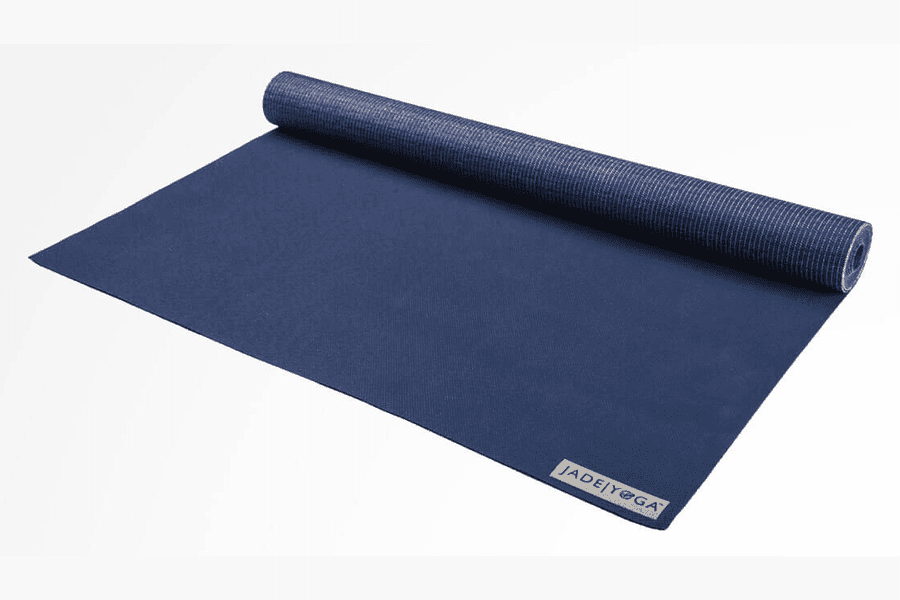
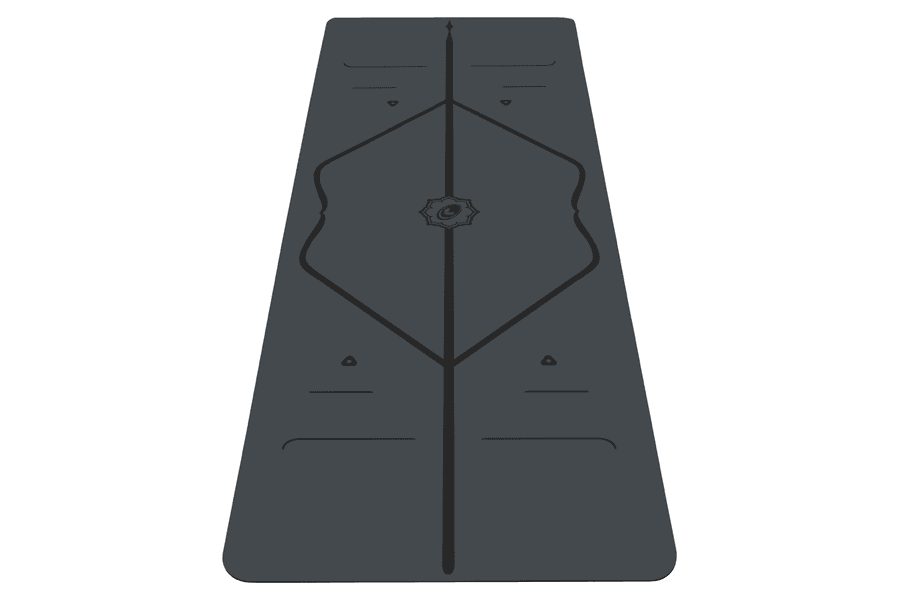
Price
The Voyager lists for about $115 less.
$49.95
List price · check price at jadeyoga.com
$165
List price · check price at Amazon
Thickness
The Liforme is 163% thicker.
1.6 mm0.06″
4.2 mm0.17″
Weight
The Voyager is 4 lbs lighter.
1.5 lbs0.68 kg
5.5 lbs2.5 kg
Size
The Liforme is 4.8″ longer; the Liforme is 2.8″ wider.
Same on both
- Natural rubber in the build, so neither suits a latex allergy
- GearLab rated both 9 of 10 for dry grip and 7 of 10 wet
- Grippy from the first practice with no break-in
- Materials designed to break down rather than sit in a landfill
Full specs
Dimensions
Materials & build
Buying
Identical grip scores, $115 apart
OutdoorGearLab tested both of these and gave them the same grip numbers: 9 of 10 dry, 7 of 10 wet. One is the $49.95 Jade Voyager, 1.6 mm of natural rubber that folds into a backpack. The other is the $165 Liforme, 4.2 mm of eco polyurethane over rubber with an alignment system etched into the surface.
Grip is the one thing these mats have in common, and it is the thing most people shop for, so it is worth explaining why the scores match and what the $115.05 actually pays for.
Why a travel mat grips like a premium one
Traction comes from the surface, not the thickness. Jade puts the same open-cell natural rubber on the Voyager that it puts on its full-size Harmony mats, so a thin sheet of it holds a palm exactly as well as a thick one. It is tacky immediately with no break-in period.
The Liforme gets there by a different route. Its polyurethane top is designed to move moisture down and away from your hands, which is why GearLab named it their pick for fine-tuning alignment and placed it 6th of 19 overall at 76 of 100. Same result, different mechanism, and the Liforme’s approach holds up better as a class gets long and wet even though the score is the same on paper.
The distinction shows up late in a class rather than early. On the Voyager, sweat sits in the rubber, so past a certain point the surface itself is wet and the next drop has nowhere to go. On the Liforme it keeps moving down and out of the contact area, so the patch under your hands on the tenth chaturanga is closer to what it was on the first. Both mats start at 9 of 10. Only one of them is still there forty minutes in.
Cushion: 7 of 10 against 2 of 10
This is where the money went. GearLab scored the Liforme 7 of 10 for comfort and support and the Voyager 2. At 4.2 mm the Liforme is not a plush mat, but its rubber base is dense enough that testers found it comfortable on hard floors, and the low profile gives standing balances a steady read on the ground.
At 1.6 mm the Voyager has nothing to give. On hardwood or tile you feel the floor within the first minute, and kneeling poses, forearm work, and seated work all need something folded under the contact point. On carpet, or as a clean layer over a studio’s rental mats, that stops mattering entirely.
Weight is part of why the cushion gap feels bigger than the millimeters suggest. The Liforme has enough mass to stay flat and stay put through a strong transition. The Voyager has almost none, so on deep pile carpet owners report it creeping and bunching under a planted foot, and it wants a hard floor or a rental mat underneath to behave properly.
The etched lines
The Liforme has a center line, placement markers, and angled guides pressed into the top rather than printed on. They give you fixed references for hand and foot position, stance width, and centering, which helps most when you practice at home with nobody correcting you. GearLab rated the implementation the best of any mat they tested.
The Voyager is a plain rubber field. If you would never look down at a mat, that costs you nothing and the Liforme’s headline feature is money spent on something you ignore. If you are learning spacing or teaching, it is the strongest single reason to pay the difference.
Size and weight
The Liforme is 72.8 by 26.8 inches, longer and nearly three inches wider than standard, which is enough that most people stop noticing the edges. The Voyager is 68 by 24, at the short end of standard, and tall practitioners will run out of mat in a long lunge.
Weight runs the other way and not by a little. Jade lists the Voyager at just over 1.5 pounds and GearLab measured 1.8. The Liforme is 5.5 pounds on paper and GearLab measured 6.2, though it does ship with a carry bag.
Packing, and the version most people miss
The Voyager folds flat rather than rolling, so it lies along the bottom of a suitcase, and Jade compares the folded size to a yoga block. Nothing at this price packs better. The cost is permanent creases along the fold lines over the years.
Worth knowing before you treat this as a travel decision: Liforme sells a Travel version of the Classic with the same grip surface and the full alignment system at roughly 3.5 pounds. If what you want is the Liforme experience in a bag, that is the mat to look at rather than choosing between these two.
Care, odor, and drying
Both take moisture in, so both have to dry fully before being put away. GearLab scored the Liforme 9 of 10 for care and cleaning, one of the highest marks in the test, and the Voyager 8. Diluted mild soap on a cloth suits both, no machine washing.
The practical difference is the folding. A Liforme that gets rolled slightly damp will dry out. A Voyager folded damp into a suitcase for a nine hour flight is how open-cell rubber starts to smell. Jade’s warranty also excludes sun damage and harsh cleaners, both of which genuinely degrade natural rubber.
Price, coverage, and where to buy
The Liforme lists at $165 in the US and sells on Amazon as well as its own site, where colorway pricing moves around, so check the current Liforme price at Amazon before paying list. The Voyager is $49.95 from jadeyoga.com and yoga retailers, and its price rarely moves.
Coverage favors the cheap mat, which is unusual. Jade gives the Voyager one year. Liforme gives no warranty at all, only a 30 day money-back guarantee on purchases from its own site, and states openly that its materials are designed to biodegrade and that lifespan depends on how hard you practice.
Colorways and buying traps
Jade sells the Voyager in five colorways at last count and prices it the same across all of them. Liforme runs more than a dozen on the Classic, and colorway pricing moves around on Amazon, so the two mats behave very differently at checkout.
One thing to watch on the Liforme: its site serves British pounds to some visitors, so a figure that looks like a large discount is often just a different currency. The US list price is $165. If a listing shows something far below that, check the currency before you assume it is a sale.
Bottom line
Buy the Liforme if this is the mat you practice on. It is bigger, it has real cushion, it has the alignment guides, and its surface is built to keep working when the room is warm. The thing to accept at $165 is that there is no warranty behind it.
Buy the Voyager if this is the mat that travels while a different one stays home. Its grip genuinely matches the Liforme’s in testing, it costs a third as much, and it packs like nothing else. Using it as a primary mat on a hard floor is the mistake that produces its bad reviews. If you want a full-size mat with the same Jade rubber, our Jade Level One vs Liforme comparison is the closer matchup.
Jade Voyager
List price $49.95
Liforme Classic
List price $165
Frequently Asked Questions
- How can a $50 travel mat grip as well as a $165 one?
- Because grip comes from the surface, not the thickness. Jade's open-cell natural rubber is tacky by nature and it's the same compound the brand uses on its full-size Harmony mats, so a thin sheet of it holds hands just as well as a thick one. GearLab's grip test measures traction, not comfort, and it rated both mats 9 of 10 dry and 7 wet. What $165 buys on the Liforme is everything around the grip: cushion, size, alignment guides, and a surface designed to keep working when it's wet.
- Can the Voyager work as an everyday mat?
- On carpet, yes. On hardwood, tile, or concrete, no. GearLab scored its comfort and support 2 of 10 and that number is honest: 1.6 mm puts your kneecap on the floor. It also works well laid over a studio's rental mats, where the cushion is already handled and you just want a clean, grippy surface of your own. As a primary mat on a hard floor, people regret it.
- Do the Liforme's alignment lines make a difference?
- For some practitioners, a real one. The center line, placement markers, and angled guides give you fixed references for hand and foot position, stance width, and centering, which helps most when you're practicing at home without a teacher watching. GearLab named it their best mat for fine-tuning alignment. If you know you never look down at your mat, it's a feature you'd be paying for and ignoring.
- Which is better for hot yoga?
- The Liforme, because of everything other than grip. Both scored 7 of 10 wet, but the Liforme has a top layer designed to move moisture down and away from your palms and 4.2 mm of cushion under you for a long heated class. The Voyager absorbs sweat too, but a mat that thin is uncomfortable in a heated room and open-cell rubber that gets rolled up damp will start to smell.
- What are the warranties?
- Jade covers the Voyager for one year, excluding sun damage and harsh cleaners. Liforme offers no warranty at all, just a 30 day money-back guarantee on purchases from its own site, which is thin coverage for a $165 mat and worth knowing before you buy. Liforme is also explicit that its materials are designed to biodegrade and that lifespan depends on how hard you practice.
- Which packs better for travel?
- The Voyager, and it isn't a contest. It folds rather than rolls, down to roughly the size of a yoga block, and weighs about 1.5 pounds by Jade's count, 1.8 by GearLab's measurement. The Liforme is 5.5 pounds and rolls thick, though it does come with a carry bag. Liforme sells a dedicated travel version if you want the alignment lines in a lighter package, and that's the fairer comparison for a suitcase.
Related comparisons
- Manduka eKO Superlite vs JadeYoga Voyager
- Manduka eKO Superlite Long vs JadeYoga Voyager
- JadeYoga Harmony XW vs Liforme Classic
- JadeYoga Voyager vs Manduka GRP Adapt Travel 1.5mm
- Liforme Classic vs Yoloha Unity Pro Cork
- Manduka PROlite Long & Wide vs Liforme Classic
- JadeYoga Voyager vs Manduka PRO Travel
- Alo Warrior vs Liforme Classic
- Manduka GRP Adapt 2.0 Long vs Liforme Classic