Jade Harmony vs Amazon Basics 1/2 Inch: Which One Should You Buy?
Amazon's search results put these two side by side, which is how a $99.95 studio-grade rubber mat ends up compared with a $22 foam pad. They aren't competing products. The Harmony is tacky open-cell rubber built for a standing, moving, sweating yoga practice. The Amazon Basics is half an inch of soft NBR foam built to make a hard floor comfortable to lie on. Sorting out which of those you actually need settles this page quickly.
As an Amazon Associate, we earn from qualifying purchases made through links on this page. How this works
The quick answer
For yoga, the Harmony wins every round that matters: a firm surface that keeps balance poses honest, tacky rubber grip that holds damp palms, the quality Wirecutter credits in sweaty sessions, and a build that serves a practice for years. The Amazon Basics wins its own event: for stretching, physical therapy, and floor workouts, its soft half inch of foam is more comfortable than any yoga mat, it's 74" long, and it costs about $22 with a carry strap in the box.
Buy the Harmony if you practice yoga. Buy the Amazon Basics if your floor time is horizontal comfort work. Buying across that line wastes money in either direction.
Get the Harmony if...
- You practice yoga, now or in your plans
- Standing and balance poses need a firm, honest base
- Your palms get damp and you need grip that survives it
- You want a mat that lasts years of real practice
Get the Amazon Basics if...
- Your floor time is stretching, PT, or core work
- Soft cushioning against a hard floor is the goal
- You want a 74" surface for about $22
- Yoga isn't actually the plan
Side by side
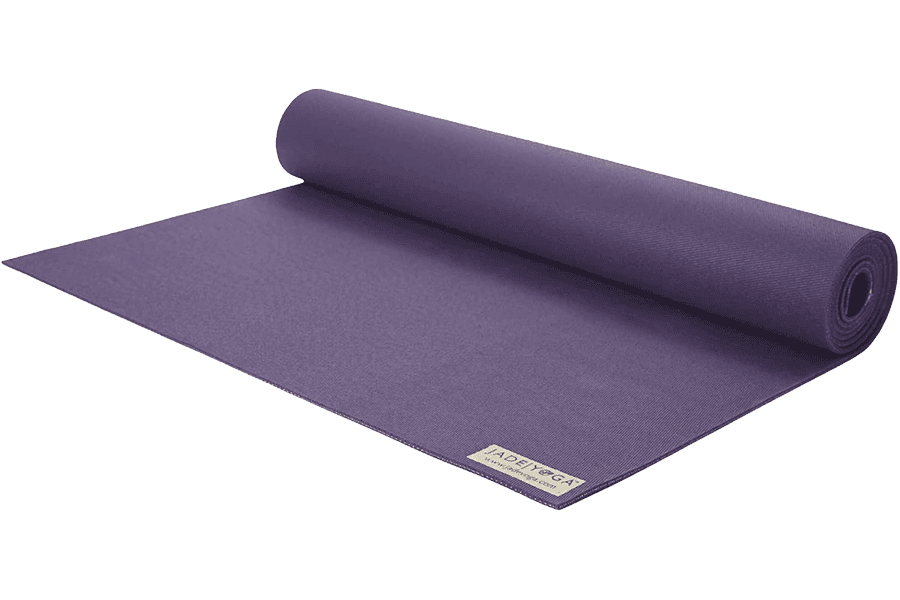
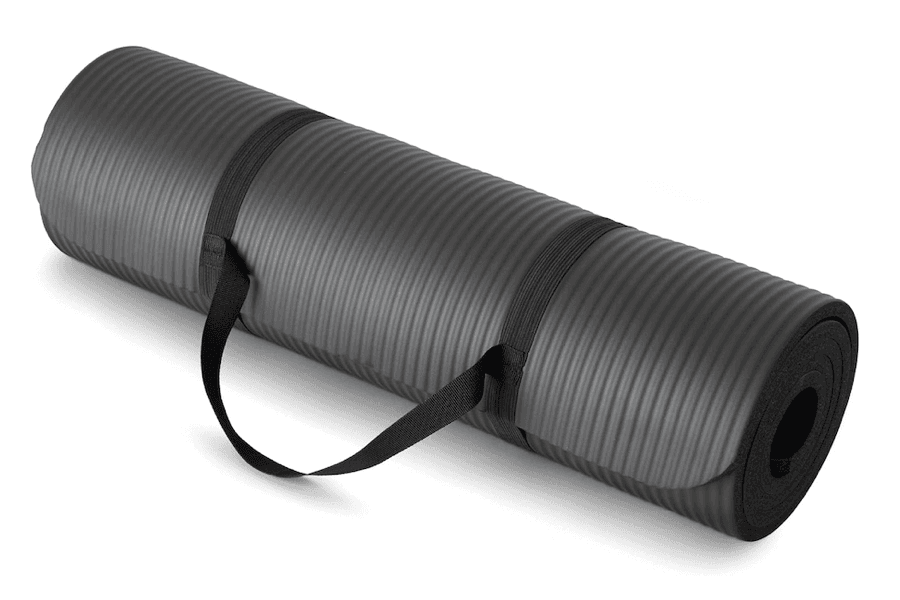
Price
The Amazon Basics lists for about $77 less.
$99.95
List price · check price at Amazon
$22.48
List price · check price at Amazon
Thickness
The Amazon Basics is 165% thicker.
4.8 mm0.19″
12.7 mm0.5″
Weight
The Amazon Basics is 2.6 lbs lighter.
4.8 lbs2.2 kg
2.2 lbs1 kg
Size
The Amazon Basics is 6″ longer; same width.
Same on both
- Sold on Amazon at first-party prices
- 1 year warranties, unusually for both price points
- Roll up and store easily
Full specs
Dimensions
Materials & build
Buying
A search-results collision, not a rivalry
These two meet in Amazon carts, not in studios. Search “yoga mat” and the Basics 1/2 inch sits near the top on volume; ask any long-time practitioner what they stand on and the Jade Harmony comes up within three answers. So shoppers reasonably wonder whether the $99.95 mat is four times better than the $22 one. It isn’t four times better. It’s a different machine: a firm, tacky rubber platform for a moving practice, where the Basics is a soft foam pad for a resting body.
Once that’s visible, most buyers already know which one they are. The sections below fill in the evidence.
Standing work: firmness is the feature
A standing practice needs the floor’s honesty delivered through the mat. The Harmony’s 3/16 inch of dense rubber compresses just enough to be kind and then pushes back, so warrior poses and single-leg balances get a stable report from the ground. Half an inch of soft NBR foam does the opposite: the foot sinks unevenly, the ankle hunts for level, and beginners blame themselves for wobble the surface is generating.
This isn’t a premium-versus-budget difference; a $25 firm mat beats the foam pad for standing work too. It’s the material’s job description, and standing yoga simply isn’t in the foam’s.
Grip: two decades of reputation vs none claimed
The Harmony’s tacky open-cell rubber grips from the first unroll, holds damp palms by absorbing light sweat, the quality Wirecutter credits in sweaty sessions, and carries the Yoga Journal grip award Jade still advertises. It’s the surface that made the mat a studio fixture for twenty years.
The Basics makes no such claims and earns none. Its textured foam keeps socks from sliding during a stretch, which is the job. Add sweat and palms skate, with soft foam wobbling underneath the slide. Amazon itself positions it as an exercise mat, and the listing is honest about that; it’s buyers who recast it as yoga equipment.
Floor comfort: the foam’s honest victory
Turn the comparison horizontal and the Basics wins big. Its 12.7 mm of soft foam outclasses every yoga mat we cover for lying-down comfort, the Harmony included, and its 74″ length gives tall bodies 6 more inches than the Harmony’s 68″. Stretching routines, physical therapy movements, planks and crunches on tile: this is the product working as designed, with a carry strap thrown in.
Jade’s own answer for maximum comfort is the 8 mm Fusion, which stays firm enough to practice on but costs $174.95. The gap between those two philosophies of cushioning is the gap between this whole page’s two products.
Durability: matching warranties, mismatched lifespans
Both carry 1 year warranties, a quiet oddity given the 4.5x price difference. Actual service diverges. The Harmony’s rubber softens and sheds over a few years of hard practice, with CNN Underscored putting the gentle-care ceiling around ten years. The Basics’ soft foam compresses flat where it’s loaded most, and owner reviews report tears and surface shedding within a year or two of steady use.
The care sheets differ in character too. The Harmony has rubber’s rules: no direct sun, no hot cars, gentle cleaners, and a new-mat rubber smell that fades. The foam wants nothing but an occasional wipe, tolerates a hot trunk, and carries no latex, which matters to allergic buyers the tree-rubber Harmony explicitly can’t serve.
Buying: same store, different aisles
Both sell first-party on Amazon, so there’s no checkout asymmetry to weigh. The Harmony comes in around 12 colorways at last count with a 74″ and an oversized 80″ × 28″ XW above it. The Basics comes in 3 colors with a 1 inch version for people who want maximum padding. Two catalogs, two different questions being answered.
Price and value
List prices are $99.95 for the Harmony and about $22.48 for the Basics, which drifts with Amazon’s pricing. Check current prices on the Harmony and the Basics 1/2 inch before buying.
Each is fairly priced for its own job, so the money question is really a category question. The expensive error runs one direction: foam bought for yoga gets replaced by a real mat within months, making the $22 a surcharge rather than a saving. Budget-minded yogis should aim between these two price points at a firm mat, the Amazon Basics TPE or Manduka Begin being the obvious candidates, rather than at soft foam.
Bottom line
Get the Harmony if yoga is the activity. It’s a firm, grippy, warrantied instrument that a practice can grow on for years, and the twenty years of studio loyalty behind it were earned on exactly the qualities the foam pad lacks.
Get the Basics if your floor time is stretching, rehab, or core work. It’s more comfortable for all of that than the Harmony, six inches longer, and $77 cheaper. Nothing about the cheap mat is a scam; it’s a good pad being asked, by search results, to impersonate a yoga mat. Don’t ask it to.
Jade Harmony
List price $99.95
Amazon Basics 1/2 Inch Extra Thick
List price $22.48
Frequently Asked Questions
- Can I do yoga on the Amazon Basics 1/2 inch mat instead of the Jade Harmony?
- Not a standing practice. Soft foam sinks unevenly under a loaded foot, so balance poses wobble for reasons that have nothing to do with your ability, and sweat turns the surface slick. Gentle seated and lying poses work fine on it. If yoga is the goal and $99.95 is too much, buy a cheaper firm mat rather than a soft pad; the firmness is the non-negotiable part.
- Is the Jade Harmony worth $77 more than the Amazon Basics?
- For a yoga practice, yes, because the foam pad can't run one. The Harmony's firm, tacky rubber holds standing poses and sweaty palms, and it's been the studio default for twenty years. For stretching and floor exercise, no; the foam is softer, longer, and better at that job for a fraction of the price. The $77 question is really a which-activity question.
- Which mat is more comfortable?
- Lying down, the Amazon Basics by a mile: 12.7 mm of soft foam against the Harmony's firm 4.8 mm of rubber. Standing up, comfort flips to the Harmony, because a stable surface underfoot is what makes standing work feel good. That reversal is the whole comparison in miniature: comfort for a body at rest and comfort for a body in motion are different products.
- Which lasts longer?
- The Harmony, in actual service. Its rubber surface wears over a few years of hard practice, with CNN Underscored putting the gentle-care ceiling around ten. The Basics' soft foam flattens under repeated load, and owner reviews report tears and shedding within a year or two of steady use. Both carry 1 year warranties, which makes the foam's coverage look generous and mean roughly the same thing in practice.
- Does either mat work for hot yoga?
- Only the Harmony, within limits. Its open-cell rubber absorbs light sweat and keeps traction as palms dampen, though a truly drenching class saturates it and wants a towel. Sweat on the Amazon Basics sits on top of soft foam and makes an unstable surface slippery too; heated classes on it are a genuinely bad idea rather than a thrifty one.
- Is there a good middle option between $22 and $99.95?
- Yes: firm budget yoga mats. Amazon's own 1/4 inch TPE mat stays firm enough for standing work at well under $30, and Manduka's $62 Begin adds an alignment stripe that genuinely helps beginners. The mistake to avoid isn't spending less than the Harmony costs; it's bringing soft exercise foam to a standing practice.
Related comparisons
- JadeYoga Harmony 68" vs Suga SugaMat
- Amazon Basics 1/2 Inch Extra Thick vs Retrospec Solana 1/2"
- JadeYoga Harmony 68" vs Manduka PRO Lite Terra 4.7mm
- JadeYoga Harmony 68" vs Manduka eKO Lite
- Manduka PROlite vs JadeYoga Harmony 68"
- JadeYoga Harmony 68" vs Manduka GRP Adapt 1.0
- JadeYoga Harmony 68" vs Manduka eKO Lite Long
- JadeYoga Harmony 68" vs Manduka GRP Adapt Lite 2.1 4mm
- JadeYoga Harmony 68" vs Lululemon The Mat 5mm