Jade Fusion vs Gaiam Essentials 6mm: Which One Should You Buy?
Both of these are bought for the same reason: knees. The Jade Fusion is 8 mm of open-cell natural rubber at $174.95, the thickest mat Jade makes. The Gaiam Essentials is 6 mm of soft PVC foam with a carrying sling at a $22.13 list price. The foam mat is softer and the rubber mat is more supportive, and that distinction is worth $152.82 to some people and nothing to others.
As an Amazon Associate, we earn from qualifying purchases made through links on this page. How this works
The quick answer
Soft and supportive are different things. The Gaiam compresses more, so it feels plusher under a knee; the Fusion has more material that barely compresses, so it protects joints without letting you sink and wobble. For a serious practice on a hard floor the Fusion is the better tool, and it also grips where foam gives up.
For a gentle home practice, the Gaiam does most of the same job for a fraction of the money, and there is no shame in that. It is lighter, it has a sling, and Gaiam puts a lifetime guarantee behind it. Its surface slides once your palms are damp, and its foam eventually dents where you kneel.
Get the Jade Fusion if...
- You practice regularly and need joint protection that lasts
- You do Pilates or a lot of floor-based work
- You want grip that holds when you sweat
- You want a mat made in the USA with a tree planted per sale
Get the Gaiam Essentials if...
- You are new to yoga or practice occasionally
- You want the softest surface for the least money
- You want a 3.5 pound mat rather than an 8 pound one
- A latex allergy rules natural rubber out
Side by side
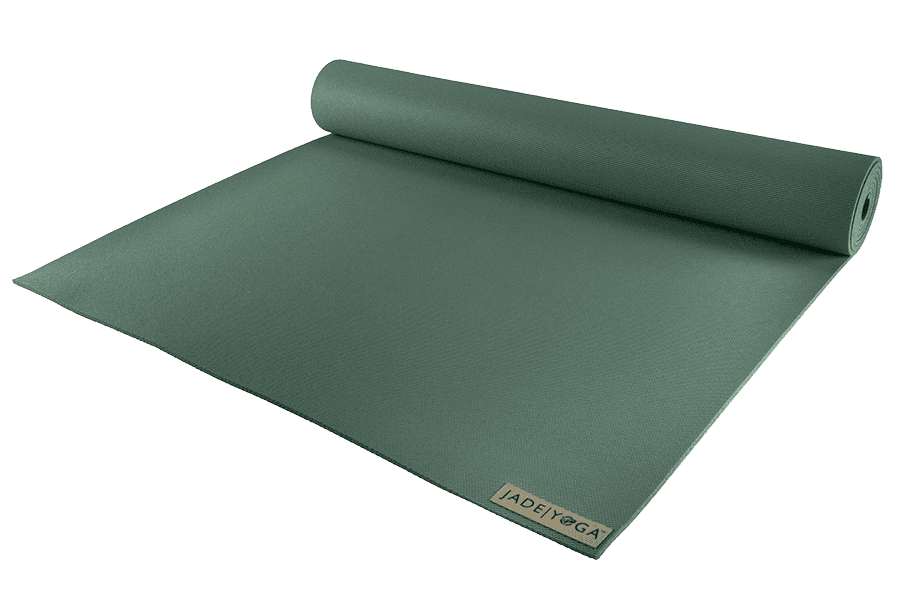
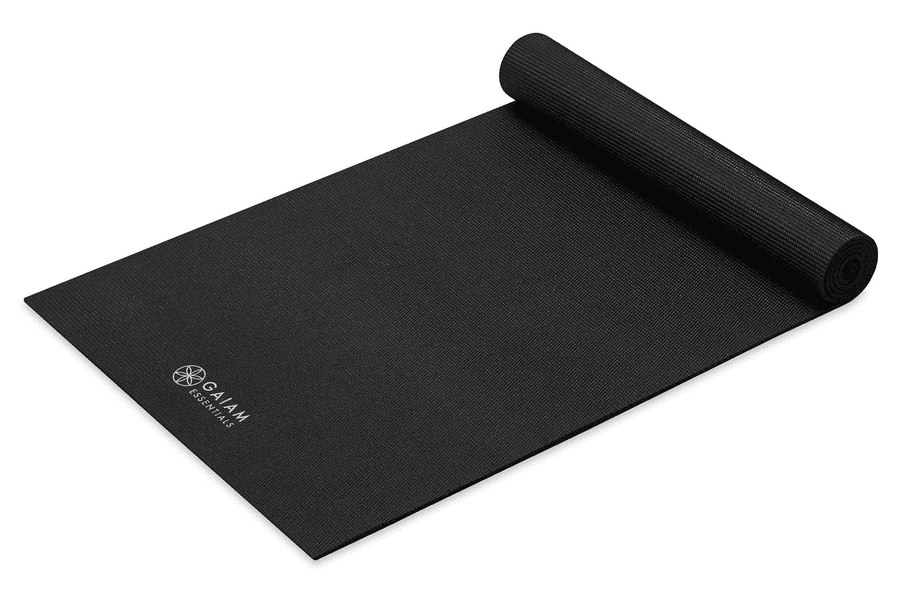
Price
The Gaiam Essentials lists for about $153 less.
$174.95
List price · check price at Amazon
$22.13
List price · check price at Amazon
Thickness
The Fusion is 33% thicker.
8 mm0.31″
6 mm0.24″
Weight
The Gaiam Essentials is 4.5 lbs lighter.
8 lbs3.6 kg
3.5 lbs1.59 kg
Size
The Gaiam Essentials is 4″ longer; same width.
Same on both
- Thicker than a standard 4 to 5 mm mat
- Bought mainly for comfort on knees and elbows
- Both roll rather than fold
- Neither needs breaking in
Full specs
Dimensions
Materials & build
Both bought for the same reason
People buy thick mats for their joints, and these are the expensive and cheap answers to that. The Jade Fusion is 8 mm of open-cell natural rubber at $174.95. The Gaiam Essentials is 6 mm of soft PVC foam, sling included, listed at $22.13.
The foam mat is softer and the rubber mat is more supportive, which sounds like a quibble and is the entire comparison.
Softer is not the same as better protected
Soft foam compresses a long way and then bottoms out. On a hard floor a bony knee can press through 6 mm of Gaiam and still reach the ground, which is exactly when you notice it.
The Fusion’s dense rubber compresses far less, but there is a lot more of it, so material stays between you and the floor throughout. For kneeling on tile it is the more reliable protection even though it feels firmer to the hand.
Grip is not close
Jade’s open-cell rubber absorbs moisture rather than letting it sit on the surface, which is why the Harmony family has been the reference point for traction for two decades. The Fusion uses the same material and grips from the first unroll.
The Gaiam has a textured sticky finish that holds while your hands are dry. GearLab measured Gaiam’s comparable 6 mm foam at 6 out of 10 dry and 4 wet, and that is about the ceiling. Soft foam also shifts under a standing foot once it is slippery, so you lose grip and stability together.
Eight pounds against three and a half
The Fusion is 8 pounds, level with the heaviest mats anyone sells, and a mat you unroll in a room and leave there. It is not something you take to a studio twice a week without thinking about it.
The Gaiam is 3.5 pounds and comes with a sling, so it slings over a shoulder easily. If the mat has to move at all, that gap matters more than anything else here.
Years against a year or two
Soft PVC foam takes compression set. Heels, knees and elbows leave dents that gradually stop springing back, and GearLab has found the same foam in Gaiam’s Premium mats showing compression over time. Gaiam advertises a lifetime guarantee, which is genuinely unusual at this price and covers manufacturing defects rather than that kind of wear.
The Fusion’s rubber wears slowly and gives you years with basic care. Jade backs it for one year and excludes sun damage and harsh cleaners, which is a fair summary of what actually kills a rubber mat. Absorbed sweat does mean more frequent cleaning.
Tree rubber against PVC
The Fusion is natural rubber made in the USA, and Jade plants a tree for every mat sold, a program past two million. It also means latex, and Jade describes its mats as 99% latex free rather than latex free, so it is off the list with a genuine allergy.
The Gaiam is PVC, listed as latex free and 6P-free, so it is the safe option there. PVC is a plastic with an unappealing end of life, and that is the honest cost of the price. Neither mat carries a third-party certification.
Length, and a thing to check before ordering
The Gaiam is 72″ and the Fusion 68″, both 24 inches wide. So the cheap mat is the longer one by four inches, which is worth knowing if you are tall.
Gaiam sells the Essentials in two lengths under one name: Amazon carries the 72″ with the sling, and gaiam.com lists a shorter 68″ for less. Jade’s bigger Fusions are a 74″ at $199.95 and a Fusion XW at 80″ × 28″.
Who should actually spend the extra $152
People with a specific problem: sore knees that a normal mat does not solve, a Pilates practice with a lot of spinal rolling, or floor-heavy work several times a week. For those, nothing cheaper does the same thing in natural rubber.
For a gentle home practice twice a week, the Gaiam does most of the same job and you would be paying for material you never use. There is no shame in the cheap mat being the right one.
Price and where to buy
$174.95 against a $22.13 list. Check the live Essentials price, where individual colors go on sale independently, and the Fusion, where Jade colorways move around.
You could buy the Gaiam seven times over for one Fusion. That is the right frame: this is not an upgrade path, it is two answers to different levels of the same problem.
Bottom line
Get the Fusion if you practice regularly and need joint protection that also grips and lasts. It is the most cushion available in natural rubber, it is made in the USA, and it is a genuine specialist tool.
Get the Gaiam Essentials if you are new, if you practice occasionally, if the mat has to be carried, or if latex is a problem. It is softer to the touch, four inches longer, less than half the weight, and a fraction of the money. Plan on a towel if you sweat.
Jade Fusion
List price $174.95
Gaiam Essentials 6mm
List price $22.13
Frequently Asked Questions
- Isn't the Gaiam softer, so better for knees?
- Softer, yes; better, not necessarily. Soft foam compresses a long way and then bottoms out, so on a hard floor a bony knee can still reach the ground through it. The Fusion's 8 mm of dense rubber compresses far less but there is much more of it, so it keeps material between you and the floor throughout. For kneeling on tile, the Fusion is the more reliable protection despite feeling firmer.
- How much heavier is the Fusion?
- Well over twice as much: about 8 pounds against 3.5. The Fusion is a mat you unroll in a room and leave there, and 8 pounds puts it level with the heaviest mats anyone sells. The Gaiam comes with a sling and carries easily. If the mat has to move, that gap matters more than anything else on this page.
- Is the Gaiam grippy enough?
- In a cool room for a gentle practice, yes. Its textured sticky finish holds while your hands are dry. GearLab measured Gaiam's comparable 6 mm foam at 6 out of 10 dry and 4 wet, and that is about the ceiling: once your palms are damp it starts to move, and soft foam also shifts under a standing foot. The Fusion's open-cell rubber is in a different category for traction.
- How long does each one last?
- The Fusion should give you years with basic care, and Jade backs it for one year while excluding sun damage and harsh cleaners. The Gaiam's foam takes compression set, so dents form where you kneel and the loft gradually disappears over a year or two of regular use. Gaiam advertises a lifetime guarantee, which is unusual at this price and covers manufacturing defects rather than that kind of wear.
- Is the Fusion worth nearly $175?
- Only if the thickness solves something for you. It is a specialist mat: people buy it for sore knees, for Pilates, and for floor-heavy practice, and for those jobs nothing else in natural rubber matches it. If you just want a comfortable mat for twice-weekly gentle classes, you are paying a lot for material you will not use, and the Gaiam is the sensible answer.
- Which size should I check before ordering the Gaiam?
- Gaiam sells the Essentials in two lengths under the same name. The Amazon listing is the 72-inch version and includes the carrying sling; gaiam.com lists a shorter 68-inch at a lower price. The Fusion is 68 inches as standard, with a 74-inch version at $199.95 and an 80 by 28 inch Fusion XW if you need more mat.
Related comparisons
- YogaAccessories Extra Thick Deluxe 1/4" vs Gaiam Essentials 6mm
- Gruper TPE 6mm vs Gaiam Essentials 6mm
- Amazon Basics 1/4 Inch Thick TPE vs Gaiam Essentials 6mm
- Manduka PRO Long vs JadeYoga Fusion 68"
- JadeYoga Fusion 68" vs Yoloha Unity Pro Cork
- Manduka PRO vs JadeYoga Fusion 68"
- JadeYoga Fusion 68" vs Manduka PRO Terra 6mm
- Manduka Begin vs Gaiam Essentials 6mm
- JadeYoga Fusion 68" vs Alo Warrior