Jade Fusion vs Alo Warrior: Which One Should You Buy?
The Fusion and the Warrior weigh the same and cost within thirty dollars of each other, so neither weight nor budget settles this. What does settle it is grip when you sweat, and cushioning. We'll go through what OutdoorGearLab measured and where each mat actually makes sense.
As an Amazon Associate, we earn from qualifying purchases made through links on this page. How this works
The quick answer
The Fusion is the better mat for practicing on. It has 8 mm of open-cell natural rubber against the Warrior's 5 mm of polyurethane leather over rubber, it grips immediately, and it is made in the USA. GearLab scored the Warrior 62 of 100, thirteenth of nineteen mats, rated it 7 dry and 4.5 wet, and listed super-slippery when wet first among its downsides.
If you want the biggest, best-looking mat and your practice is unheated, the Warrior is a pleasant surface. For everything else, buy the Fusion.
Get the Jade Fusion if...
- You sweat, or practice in a heated room
- Your joints need real cushioning on a hard floor
- You want natural rubber made in the USA
- You want grip from the first class rather than a break-in
Get the Alo Warrior if...
- You want the bigger surface, about 74" × 26" against 68" × 24"
- You prefer a smooth surface you can slide a foot across
- Your practice is unheated and your hands stay dry
- The look of the mat matters as much as the performance
Side by side
Price
The Warrior lists for about $27 less.
$174.95
List price · check price at Amazon
$148
List price · check price at aloyoga.com
Thickness
The Fusion is 60% thicker.
8 mm0.31″
5 mm0.2″
Weight
Identical weight.
8 lbs3.6 kg
8 lbs3.6 kg
Size
The Warrior is 6.4″ longer; the Warrior is 2.4″ wider.
Same on both
- Both weigh around eight pounds
- Neither ships with a carry strap
- Both use a natural rubber base
- Neither carries a third-party certification
Full specs
Dimensions
Materials & build
Two eight-pound mats with opposite priorities
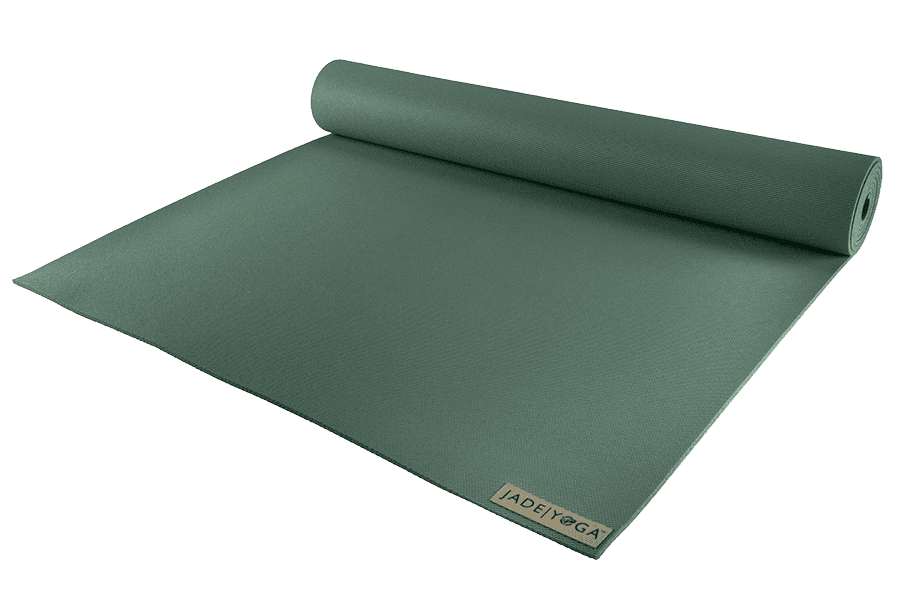
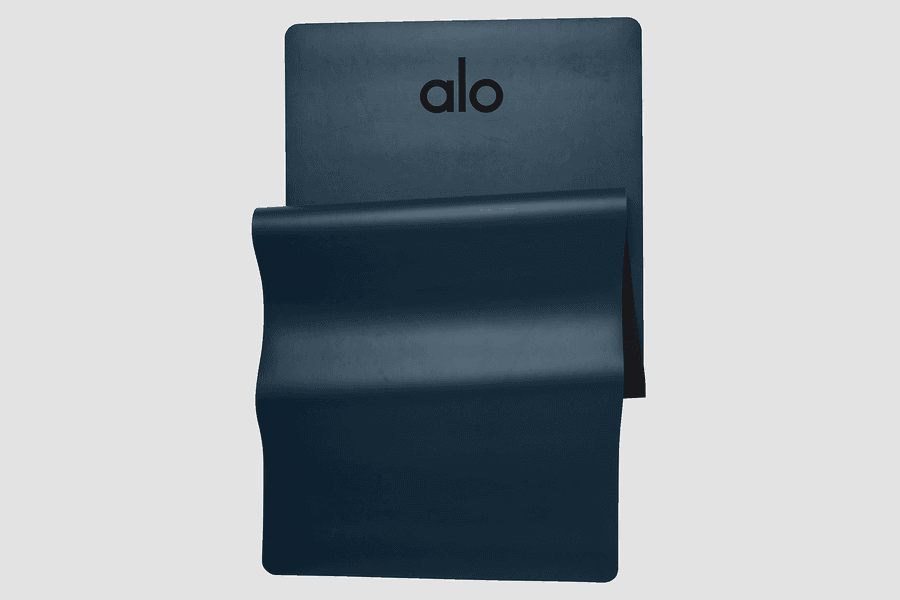
The Jade Fusion is $174.95 of 8 mm natural rubber made in the USA, built to put as much material as possible between your knees and the floor. The Alo Warrior is $148 of polyurethane leather over a rubber base, built to look like nothing else in the room and to give you a bigger surface to practice on.
They weigh the same, roughly eight pounds each, so neither is going anywhere on foot. Past that they agree on very little, and the wet grip numbers are where the gap gets wide.
Grip: the Warrior is the weaker mat when you sweat
OutdoorGearLab poured a liter of water on every mat in its 2026 lineup and scored dry and wet traction separately. The Warrior came back 7 of 10 dry and 4.5 wet, and its listed cons open with “super-slippery when wet.” Its overall grip score was 5 of 10, which puts it in the bottom third of the lineup.
The Fusion was not in that lineup, but GearLab’s older standalone review of it scored 9 for dry traction and 9 for wet, and described the open-cell rubber as absorbing sweat instead of letting it pool. That review is from 2013, so treat the number as dated, but the mechanism has not changed: Jade rubber is tacky on contact and gets tackier as it takes on moisture. In a heated room this is not a close comparison.
Cushioning: 8 mm against 5
The Fusion is the thickest mainstream rubber mat you can buy without crossing into foam. GearLab gave it a perfect comfort score in that old review and noted it levels out uneven ground, which is why it ends up in home practice rooms with tile floors and in Pilates settings where the spine is on the mat for long stretches.
The Warrior’s 5 mm is a normal amount of mat, and GearLab scored its comfort 7 of 10. The polyurethane leather surface reads soft to the hand, which flatters it in a shop, but soft-to-touch and cushioned-underneath are not the same thing. On a hard floor, kneeling on the Warrior feels like kneeling on a five millimeter mat, because that is what it is.
Size: the Warrior gives you more room
This is the Warrior’s clearest win. Alo builds it around 74″ × 26″, and GearLab measured their sample at 73.5 by 26. The Fusion is 68″ × 24″, which is standard-short and standard-narrow, and tall practitioners run off the end of it.
Jade’s answer is to sell bigger versions rather than build one big mat. The 74″ Fusion matches the Warrior for length at $199.95, and the Fusion XW goes to 80″ × 28″. Alo sells a Warrior Long at 84″ × 26″ if length is the whole problem.
How each one feels underhand
The Warrior’s surface is smooth and matte, closer to a handbag than a yoga mat, and that is the point. It lets you slide a foot forward in a transition rather than catching it, which some people strongly prefer. It also shows every mark: GearLab lists “stains easily” among its downsides, and light colorways pick up foot traffic quickly.
The Fusion is textured rubber that grabs. Sliding a toe across it feels rough rather than smooth, which is the standard complaint about Jade mats in fast vinyasa, and it attracts dust and lint the way all Jade rubber does. If you practice barefoot on a mat that lives on a carpeted floor, expect to wipe it before most sessions.
Weight: a tie neither mat should be proud of
Jade lists the Fusion at 8 pounds. Alo lists the Warrior at about the same, and GearLab weighed theirs at 8.1, the heaviest mat in a nineteen mat lineup. Both roll thick enough to be awkward under an arm.
If you carry a mat to class more than occasionally, neither of these is the right buy, and that is worth saying plainly before you spend $150 or more. A Jade Harmony at 5 mm or a lighter polyurethane mat solves the same practice problems at half the heft.
Durability and care
GearLab listed durability concerns against the Warrior, which is a real mark against a $148 mat. Polyurethane surfaces wear by going shiny and losing tack in the spots your hands land, and owner reports on Alo’s own site describe that happening inside a year for daily practitioners.
The Fusion’s failure mode is different. Natural rubber breaks down in sunlight, and Jade’s one year warranty excludes sun damage and harsh cleaners specifically. Kept indoors and wiped with water, owners get years out of one. Left in a hot car, it crumbles. Open-cell rubber also takes a long time to dry after a deep clean, which is why GearLab only gave the Fusion 4 of 10 for ease of care.
What each mat is made of
The Fusion is sustainably farmed natural rubber, manufactured in the USA, and Jade plants a tree for every mat it sells. It is 99 percent latex free rather than fully latex free, so it is not safe if you have a latex allergy.
The Warrior is polyurethane leather over natural rubber, made in China. GearLab scored its materials 6 of 10. There is no third-party certification on either mat, and Alo does not publish much detail about the top layer beyond calling it vegan leather.
Price and where to buy
$174.95 against $148, so the Fusion asks about $27 more. Jade sells through Amazon as well as its own site, so it is worth checking the current Jade Fusion price at Amazon against jadeyoga.com.
Alo does not sell the Warrior on Amazon; it comes from aloyoga.com, where the price holds steady and the colorway range is small and muted. Note that GearLab lists the Warrior at $128, which was an older price. Alo currently charges $148.
Bottom line
Buy the Fusion. For most people shopping this pair it is the better mat: far more cushion, far better grip when you sweat, natural materials, and made somewhere the brand will name. The costs are real, and we would not pretend otherwise: it is short at 68 inches, narrow at 24, and it needs to be kept out of the sun.
Buy the Warrior if you want the bigger footprint and the look, and your practice is unheated. It is a pleasant mat to be on with dry hands. It is not the one to take to a hot class, and GearLab ranked it thirteenth of nineteen for a reason. If the size is what draws you, the 74″ Fusion covers the same ground in rubber.
Jade Fusion
List price $174.95
Alo Warrior
List price $148
Frequently Asked Questions
- Is the Alo Warrior slippery?
- When you sweat, yes. OutdoorGearLab poured a liter of water on every mat in its 2026 lineup and the Warrior came back 7 of 10 dry and 4.5 wet, with super-slippery when wet listed first among its cons. Its overall grip score was 5 of 10, in the bottom third of the lineup. With dry hands it is fine and GearLab's testers described the dry grip as non-slip. It is not a hot yoga mat.
- Which one is more comfortable?
- The Fusion, and it is not close. It is 8 mm of dense rubber against the Warrior's 5 mm, and GearLab's standalone Fusion review gave it a perfect 10 for comfort while noting it flattens uneven ground. That review is from 2013 and the Fusion is not in the current lineup, so treat the score as dated evidence. The Warrior's polyurethane surface feels soft to the hand, which is not the same as cushioning underneath.
- How heavy are they really?
- Jade lists the Fusion at 8 pounds and Alo lists the Warrior at about the same. GearLab weighed the Warrior at 8.1 pounds, the heaviest mat in its nineteen mat lineup, and scored the Fusion 3 of 10 for portability. If you carry a mat to class regularly, neither of these is the right buy.
- Does the Alo Warrior stain?
- GearLab listed stains easily among its downsides, and light colorways pick up marks from foot traffic quickly. The polyurethane leather also wears by going shiny and losing tack where your hands land, and GearLab noted durability concerns generally. The Fusion's rubber does not stain, though it does attract dust and lint and needs wiping.
- Which size should I get?
- The Warrior is about 74 by 26 inches as standard, which suits taller practitioners, and Alo sells an 84 inch Warrior Long. The Fusion is 68 by 24, which runs short, but Jade sells a 74 inch version at $199.95 and an 80 by 28 inch Fusion XW. If length is your main problem, both brands have an answer.
- Is the Alo Warrior worth $148?
- For an unheated home practice where you want a large, good-looking mat, it is defensible. As a performance buy it is hard to justify: GearLab ranked it thirteenth of nineteen, scored its materials 6 of 10, and flagged durability concerns. Note also that GearLab lists the Warrior at $128, which is an older price. Alo currently charges $148.
Related comparisons
- JadeYoga Harmony XW vs Alo Warrior
- Manduka PROlite Long & Wide vs Alo Warrior
- Manduka PRO vs Alo Warrior
- Manduka GRP Adapt 2.0 Long vs Alo Warrior
- Manduka eKO Long vs Alo Warrior
- Alo Warrior vs Lululemon The (Big) Mat 5mm
- Alo Warrior vs Yoloha Unity Pro Cork
- Alo Warrior vs b, halfmoon B Mat Strong 6mm
- Manduka GRP Adapt 2.0 vs Alo Warrior