Gaiam Premium 6mm vs Yoga Design Lab Combo 3.5mm: Which One Should You Buy?
The expensive mat is not the better-tested one here, which makes this a more interesting comparison than the prices suggest. The Gaiam Premium 6mm is $29.98 and OutdoorGearLab's pick for a first yoga mat. The Yoga Design Lab Combo is $117 and bonds a recycled microfiber towel to a rubber base so the towel can't slide out from under you, then lets you machine wash the whole thing. Here's who each one actually suits.
As an Amazon Associate, we earn from qualifying purchases made through links on this page. How this works
The quick answer
GearLab scored the Gaiam 62 out of 100 with a Best Buy award and the Combo 17th of 19, rating the Combo 4 out of 10 for grip both wet and dry and calling it more slippery than they hoped. That is the case against paying nearly four times as much. The case for the Combo is narrower and real: dry microfiber slides while saturated microfiber grabs, so heavy sweaters in heated rooms rate it highly, it can go in a washing machine, its rubber base is steadier underfoot than soft foam, and it comes in 19 printed designs.
Get the Gaiam if you are starting out or practicing in a cool room. Get the Combo if you already lay a towel over your mat and want one washable object instead of two.
Get the Gaiam Premium if...
- You are new and want the mat testers recommend first
- You want padding for kneeling, seated and floor-heavy work
- You want a latex-free mat
- You'd rather keep $87 and replace it when it flattens
Get the Combo if...
- You already practice on a mat with a towel over it
- You sweat heavily and want to machine wash your mat
- You want a firmer base under standing poses
- You want one of 19 printed designs rather than a plain color
Side by side
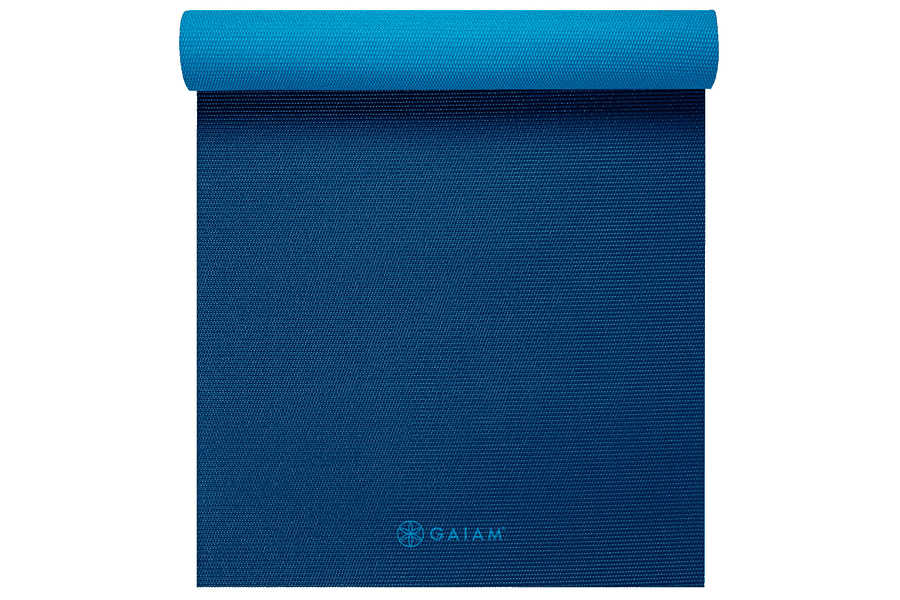
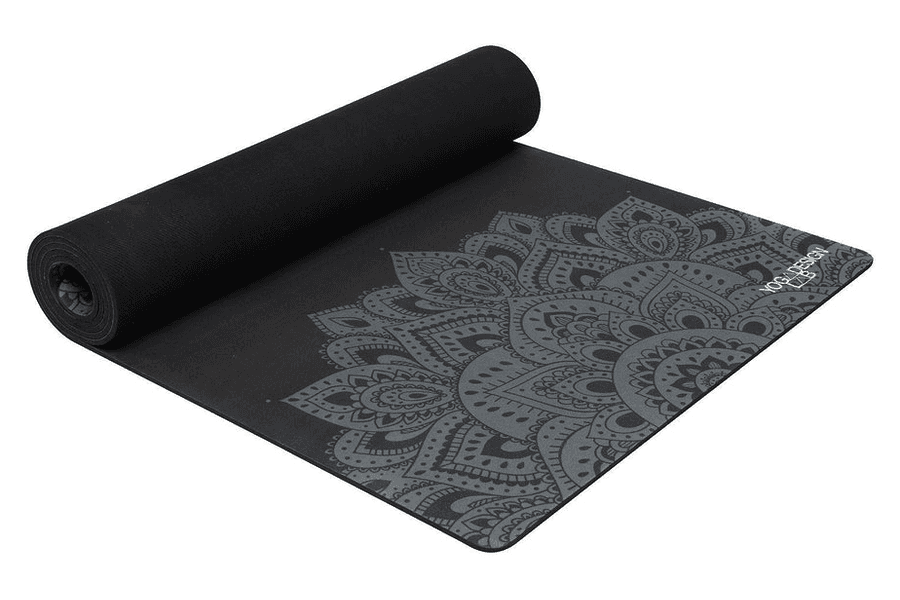
Price
The Gaiam Premium lists for about $87 less.
$29.98
List price · check price at Amazon
$117
List price · check price at Amazon
Thickness
The Gaiam Premium is 71% thicker.
6 mm0.24″
3.5 mm0.14″
Weight
The Gaiam Premium is 1.6 lbs lighter.
3.3 lbs1.5 kg
4.9 lbs2.2 kg
Size
The Combo is 2″ longer; same width.
Same on both
- Same 24 inch width, narrow by current standards
- Both under 71 inches long
- Both wear out within a few years of regular practice
- Neither is a firm, dense studio mat
Full specs
Dimensions
Materials & build
Buying
- Combo 5.5mm70" × 24"
- Combo Flow 1.5mm70" × 24"
Eighty-seven dollars between a starter mat and a towel mat
The Gaiam Premium 6mm is $29.98 of soft PVC foam and the mat OutdoorGearLab named the best first yoga mat in a 19-mat test. The Yoga Design Lab Combo is $117 and does something unusual: it bonds a recycled microfiber towel to a natural rubber base so the towel can never slide out from under you, prints it, and lets the whole thing go in the wash.
The Combo is aimed at people who already practice on a mat with a towel over it. Whether it is worth nearly four times the Gaiam depends almost entirely on whether that describes you, because the test scores do not make the case on their own.
What the testing actually found
GearLab scored the Gaiam Premium 62 out of 100, eleventh of 19, with a Best Buy award: comfort and support 6.5, materials 6, care and cleaning 8, dry grip 6, wet grip 4. That reads as a mat that does everything adequately and nothing well, which is a reasonable thing to be at thirty dollars.
The Combo landed 17th of 19 in the same field, with 4 out of 10 for grip both wet and dry, comfort 6 and materials 5, and the testers wrote that it was more slippery than they hoped during practice. Yoga Design Lab’s own listings carry thousands of reviews averaging close to five stars, many from hot yoga practitioners describing genuine experience. Both things are true; they describe different rooms.
Grip: one needs you dry, the other needs you wet
The Gaiam’s sticky PVC finish holds a dry palm well enough that you will not think about it. Add sweat and the moisture sits on a closed surface with nowhere to go, which is what its 4 out of 10 wet score reflects. One tester described the foam turning slippery as moisture built up, enough to lose confidence in a wide-legged forward fold.
The Combo works the other way around. Dry microfiber slides; saturated microfiber grabs. That is the design, and it is why practitioners in heated rooms rate it highly and why a lab testing it in a normal room did not. If you sweat lightly or practice unheated, the Combo is the surface more likely to disappoint you.
Six millimeters against three and a half
The Gaiam is the more forgiving mat for kneeling, seated stretches and long floor sequences, and GearLab praised exactly that padding. The cost is stability: soft foam compresses unevenly under a loaded foot, and the same testers found it goes squishy and gives up steadiness in balance poses.
The Combo is 3.5 mm, thin by any standard, so on tile or concrete you feel the floor through it and kneeling is uncomfortable. Its rubber base is firmer underfoot than the Gaiam’s foam, so standing work is steadier. Yoga Design Lab sells the same Combo in 5.5 mm at $131 if thickness is the sticking point.
One of these goes in the washing machine
Yoga Design Lab prefers hand washing to extend the mat’s life but allows a gentle machine cycle in a machine without a center agitator, using mild soap. For a heavy sweater that solves a real hygiene problem, and it is the Combo’s strongest argument on this page.
The Gaiam cannot be machine washed and does not need to be. GearLab gave it 8 out of 10 for care and cleaning, its best category, because a closed foam surface wipes down and dries immediately. Gaiam does ask you to unroll and air a new mat for two to three days before the first session.
Size, weight and what comes in the box
The Combo is two inches longer at 70″ against 68″, and both are 24 inches wide, which GearLab listed among the Combo’s drawbacks. Above about five foot eight, neither is generous, and neither model comes in a longer version.
The Gaiam is lighter at 3.3 pounds against 4.9, and GearLab called it one of the easiest mats to carry in its test. The Combo ships with a carry strap; the Gaiam does not.
How each one ends, and who covers it
The Gaiam wears by compression. GearLab found it showing scuffs and visible indentations under regular use and listed shorter lifespan among its downsides, so a year or two of steady practice flattens the spots under your hands and heels. Gaiam backs it with a lifetime guarantee anyway, which is unusual at this price and which addresses defects rather than foam that has gone soft.
The Combo is a textile bonded to rubber, so it pills, fades and loses loft with washing, and it collects lint along the way; GearLab rated its materials 5 out of 10. Yoga Design Lab takes back unused mats within 30 days and offers no warranty, so once you have practiced on it, it is yours.
Materials, latex and looks
The Gaiam is latex-free PVC, which makes it the safe choice for anyone who reacts to natural rubber, and PVC is also the material most environmental criticism of yoga mats is aimed at. The Combo prints recycled PET microfiber with water-based inks over a natural rubber base, a better materials story and not latex safe.
On looks the Combo wins easily, with 19 printed designs in the 3.5 mm at last check against four reversible color combinations from Gaiam. Plenty of Combo owners bought theirs for the print first and the towel top second, which is a legitimate reason at this price.
Bottom line
Buy the Gaiam Premium if you are starting out, practicing in a cool room, or want padding for gentle and floor-heavy sessions. Check the current price at Amazon; it frequently sits below list by colorway. It is the better value and the better-tested mat, and its limits are documented rather than hidden.
Buy the Combo if you already practice on a towel over a mat and want one object instead of two, or if being able to launder the thing solves a problem for you. Check the Combo at Amazon before paying list, and go in knowing testers found it slippery when dry. If sweat is the whole reason you are shopping, our GRP Adapt 2.0 vs Combo page covers the mat built specifically for heated rooms.
Gaiam Premium 6mm
List price $29.98
Frequently Asked Questions
- Why did the cheaper mat score higher?
- GearLab tests grip in standardized dry and wet conditions, and the Combo's microfiber top is designed to work once it is saturated, which is not the same thing as being wiped with water. It scored 4 out of 10 both wet and dry and ranked 17th of 19, while the Gaiam scored 62 out of 100 overall and 11th. Yoga Design Lab's listings carry thousands of reviews near five stars, many from hot yoga practitioners. The scores and the owners are describing different rooms.
- Can you machine wash the Yoga Design Lab Combo?
- Yes, with conditions. Yoga Design Lab prefers hand washing to extend the mat's life but allows a gentle cycle in a machine without a center agitator, using mild soap. That is the mat's strongest argument if hygiene is what bothers you about practicing on a sweaty surface. The Gaiam cannot be washed that way and does not need to be; GearLab rated its care and cleaning 8 out of 10, its best category.
- Which is better for a beginner?
- The Gaiam, for most people. It has the padding beginners want for kneeling and seated work, it costs $87 less while you are still finding out how much you will practice, and professional testers named it the best first mat. Its documented limits are softness under balance poses and poor wet grip. The Combo is thin, slippery when dry, and aimed at a practice you may not have yet.
- How thick is each mat, and does it matter?
- The Gaiam is 6 mm of soft foam and the Combo is 3.5 mm with a fabric top over rubber. On tile or concrete you will feel the floor through the Combo, and kneeling on it is uncomfortable; Yoga Design Lab sells the same Combo in 5.5 mm at $131 if that matters. The trade is that the Gaiam's softness costs stability when you stand on one leg, where the Combo's rubber base holds firmer.
- How long does each one last?
- A few years of regular practice from either. The Gaiam wears by compression, with GearLab finding scuffs and visible indentations under regular use and listing shorter lifespan among its downsides. The Combo pills, fades and loses loft with washing and collects lint; GearLab rated its materials 5 out of 10. Gaiam offers a lifetime guarantee and Yoga Design Lab takes back unused mats within 30 days with no warranty after that.
- Is either safe with a latex allergy?
- The Gaiam is, being latex-free PVC. The Combo has a natural rubber base under its microfiber top, so it is not safe if you react to latex. That single fact settles the comparison for some buyers before grip or price come into it.
Related comparisons
- Gaiam Premium 6mm vs Gruper TPE 6mm
- Yoga Design Lab Combo 3.5mm vs b, halfmoon B Mat Everyday 4mm
- Amazon Basics 1/4 Inch Thick TPE vs Gaiam Premium 6mm
- Gaiam Premium 6mm vs YogaAccessories Extra Thick Deluxe 1/4"
- Lululemon The Mat 5mm vs Yoga Design Lab Combo 3.5mm
- Manduka PROlite vs Yoga Design Lab Combo 3.5mm
- Manduka PROlite Long vs Yoga Design Lab Combo 3.5mm
- JadeYoga Harmony 74" vs Yoga Design Lab Combo 3.5mm
- Manduka eKO Lite Long vs Yoga Design Lab Combo 3.5mm