Amazon Basics 1/2 Inch Extra Thick vs IUGA Eco Friendly PU: Which One Should You Buy?
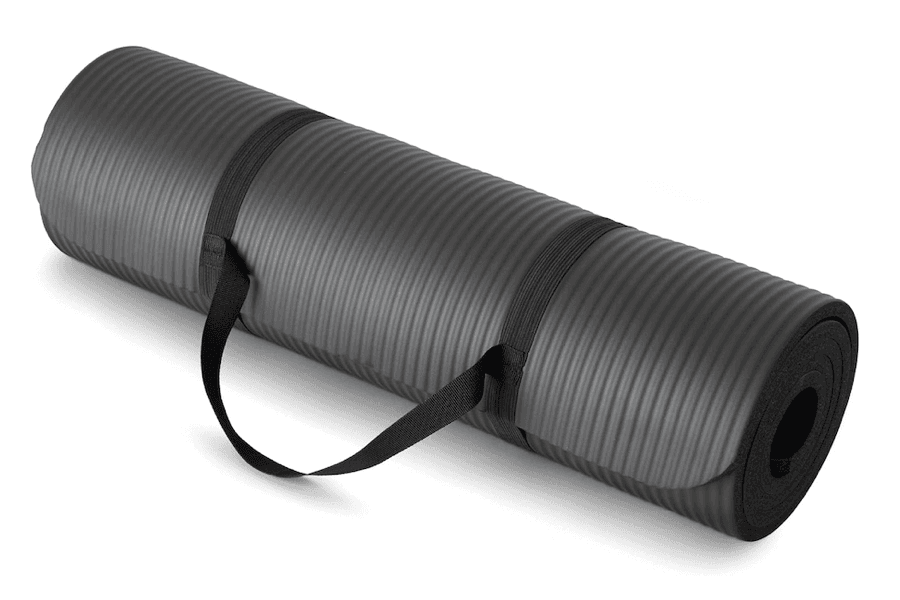
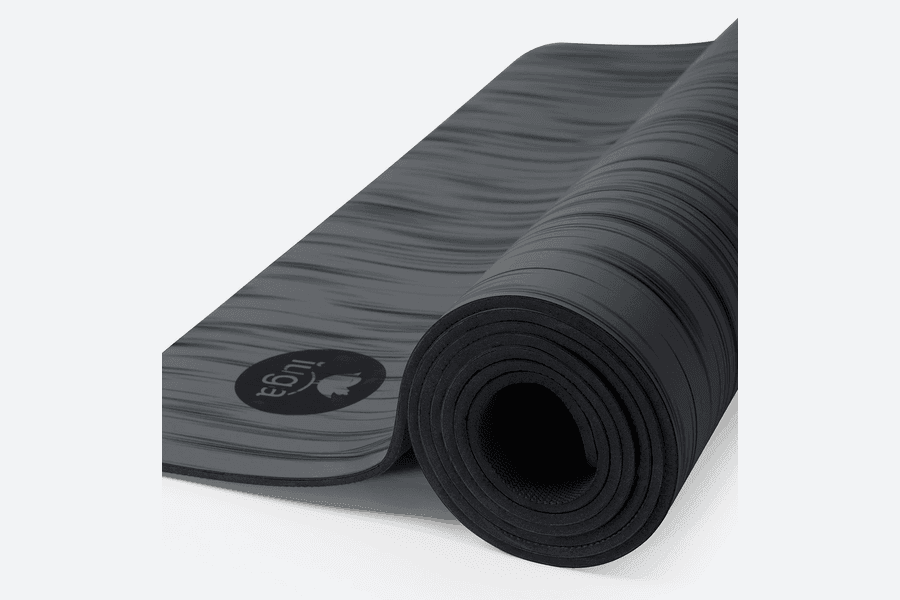
The IUGA is the mat OutdoorGearLab handed its Best Buy award to, calling it the best value upgrade in the category. The Amazon Basics costs a third as much and is twice as thick. What the extra $44.51 actually buys is grip, and whether you need it depends on whether you are doing yoga or just spending time on the floor.
As an Amazon Associate, we earn from qualifying purchases made through links on this page. How this works
The quick answer
If you practice yoga, the IUGA is the better mat by a distance. Its polyurethane top absorbs sweat and holds a damp palm, GearLab scored it 8 out of 10 dry and 7 wet and 75 out of 100 overall, and at 2.1 pounds it is one of the lightest full-size mats made. What it does not give you is padding: 5 mm of firm material against the Amazon Basics' half inch of foam.
If your floor time is stretching, core work or a physio program, the Amazon Basics is the sensible buy and the IUGA would be a waste of money. Half an inch of NBR foam is the friendliest surface here for knees, elbows and spine, and $22.48 is less than a drop-in class. Just do not expect it to keep your hands in place.
Get the Amazon Basics if...
- Padding for knees and elbows is your first priority
- You stretch and do floor exercise more than yoga
- You want a latex-free mat
- You'd rather spend $22 than $67
Get the IUGA if...
- You do yoga and need grip that survives sweat
- You carry your mat and 2.1 pounds changes the commute
- You want 26 inches of width instead of 24
- You want a mat that stays stable in standing poses
Side by side
Price
The Amazon Basics lists for about $45 less.
$22.48
List price · check price at Amazon
$66.99
List price · check price at Amazon
Thickness
The Amazon Basics is 154% thicker.
12.7 mm0.5″
5 mm0.2″
Weight
The IUGA is 0.1 lbs lighter.
2.2 lbs1 kg
2.1 lbs0.95 kg
Size
The Amazon Basics is 2″ longer; the IUGA is 2″ wider.
Same on both
- Both are light enough to carry easily
- Neither needs breaking in
- Both roll rather than fold
- Neither comes with a long-term warranty
Full specs
Dimensions
Materials & build
Buying
A budget exercise mat and a budget award winner
The IUGA took OutdoorGearLab’s Best Buy award and its label as the best value upgrade in the category, scoring 75 out of 100 at $66.99. The Amazon Basics costs $22.48 and is not in that conversation, because it is an exercise mat rather than a yoga mat.
The $44.51 between them buys grip and stability. Whether you need either depends entirely on whether you are doing yoga or just spending time on the floor.
Thicker is not more supportive
The Amazon Basics is 12.7 mm to the IUGA’s 5, and it is the less stable mat by a wide margin. Soft NBR foam compresses unevenly under a single foot, so balances wobble and a deep lunge feels like it is sinking. Thickness and support are separate properties and this pair demonstrates it neatly.
The IUGA is firm and barely compresses, so you stay where you put yourself. GearLab still scored it 8 out of 10 for comfort and support, which is high for a 5 mm mat, because support is most of what that score measures.
Grip: this is what you are buying
The IUGA’s polyurethane top absorbs sweat, so traction holds or improves as your palms get damp. GearLab scored it 8 out of 10 dry and 7 wet, which puts it within reach of rubber mats at twice the price and makes it a genuine option for a warm room.
The Amazon Basics foam has no meaningful wet grip. It is fine while you are dry and slick soon after you are not, which is normal for NBR and irrelevant if you are stretching. For a flowing yoga practice it is the thing that will frustrate you.
Where the foam mat is genuinely better
Half an inch of soft foam is the kindest surface in this category for knees, elbows and spine. For physio exercises, core work, stretching or anything on your back, the Amazon Basics is more comfortable than the IUGA and more comfortable than most yoga mats full stop.
The IUGA is firm. On tile, a long kneeling sequence will find you, and a folded blanket under the knees is the usual fix. That fix works: you keep the grip and the stability everywhere else, which is not something you can do in the other direction.
They weigh the same, and that is the surprise
The IUGA is 2.1 pounds, confirmed on GearLab’s own scale, and the Amazon Basics is 2.2. A full-size 5 mm yoga mat that weighs what a half-inch foam mat weighs is unusual, and it is the IUGA’s most distinctive feature.
The practical difference is bulk. The foam mat rolls to a much fatter tube, so it takes more room in a closet or a car. The IUGA rolls small and slings over a shoulder without thinking about it.
Length and width
The Amazon Basics is 74″ × 24″ and the IUGA is 72″ × 26″. So the foam mat is two inches longer and the IUGA is two inches wider, and GearLab counted the IUGA’s dimensions among its pros.
Twenty-six inches is the more useful of the two for most people, because 24 puts a hand on the floor in a wide stance. Neither brand sells a larger version of these particular mats, though Amazon Basics does make a 1-inch version of the same shape.
Both wear out, and both fairly soon
The IUGA’s polyurethane top is the part that goes. Owners report it turning shiny and losing grip after a year or two of heavy sweaty use, and IUGA offers a 45-day return window rather than a warranty. GearLab scored its materials 7 out of 10, which is respectable, but this is not a decade mat.
The Amazon Basics foam takes compression set, so knees and elbows leave dents that stop springing back and the loft gradually disappears. Amazon covers it for a year. Neither of these is a long-term purchase, which is part of why both are priced the way they are.
Price and value
$22.48 against $66.99. Check the live numbers on the Amazon Basics and the IUGA; both are frequently below list and Amazon prices individual colors independently.
If you do any yoga at all, the IUGA is the more versatile mat and the better spend, because it handles stretching perfectly well while the foam mat cannot handle yoga. If you never stand up on it, the $44.51 is buying you nothing.
Bottom line
Get the IUGA if you practice yoga, if you sweat, or if you carry your mat. It grips, it is stable, it is 26 inches wide and it weighs 2.1 pounds, and independent testing rates it above mats at twice the money. Expect to replace it in a few years rather than keep it.
Get the Amazon Basics if padding is the whole point and your floor work is stretching, physio or core exercises. It is the softer mat by a distance, it is latex free where the IUGA has a rubber base, and it costs a third as much.
Amazon Basics 1/2 Inch Extra Thick
List price $22.48
Frequently Asked Questions
- Why is a thinner mat better for yoga?
- Because support and thickness are not the same thing. The Amazon Basics is soft foam, so it compresses a long way under a single foot and the mat moves while you are trying to balance. The IUGA is firm, so it barely compresses and you stay where you put yourself. Thick foam is excellent when you are lying or kneeling on it and unhelpful when you are standing on one leg.
- Is the IUGA really as good as expensive mats?
- For grip and comfort it is close. OutdoorGearLab gave it the Best Buy award and scored it 75 out of 100, with 8 for dry grip, 7 for wet and 8 for comfort, which puts it near mats at twice the price. Longevity is where it gives ground: the absorbent polyurethane top is the part that wears, owners report it going shiny with heavy sweaty use, and IUGA offers 45-day returns rather than a warranty.
- How much lighter is the IUGA?
- It is 2.1 pounds, which GearLab confirmed on its own scale, against 2.2 for the Amazon Basics. They are basically the same weight, which is the surprising part: the IUGA is a full-size 5 mm mat that weighs what a half-inch foam mat weighs. The real difference in carrying is bulk, since the foam mat rolls to a much fatter tube.
- Which is better for hot yoga?
- The IUGA, clearly. Its top layer soaks up sweat so traction holds as you heat up, which is why GearLab rated its wet grip 7 out of 10. The Amazon Basics foam has effectively no wet grip and gets slick almost immediately. If you practice in a heated room, the foam mat is not a candidate at any price.
- Does the IUGA have a rubber base?
- Yes, natural rubber under the polyurethane top, which is what keeps it from sliding on the floor. That also means it contains latex, so it is not the choice if you have an allergy. The Amazon Basics is NBR, a synthetic nitrile foam with no natural latex in it, and it is the safe option there.
- Can I use one mat for both jobs?
- Sort of. The IUGA works fine for stretching and core work, it is just firmer than a foam mat, and a folded blanket under your knees closes most of that gap. Going the other way does not work as well: no amount of technique makes soft foam grippy or stable. If you have to pick one mat and you do any yoga at all, the IUGA is the more versatile buy.
Related comparisons
- Amazon Basics 1/2 Inch Extra Thick vs Retrospec Solana 1/2"
- Manduka Begin vs IUGA Eco Friendly Non Slip PU
- Manduka X vs IUGA Eco Friendly Non Slip PU
- Gaiam Performance Dry-Grip 5mm vs IUGA Eco Friendly Non Slip PU
- IUGA Eco Friendly Non Slip PU vs Hugger Mugger Earth Elements 5mm
- JadeYoga Level One vs IUGA Eco Friendly Non Slip PU
- IUGA Eco Friendly Non Slip PU vs Gaiam Performance Dry-Grip Long & Wide
- 42 Birds The Robin vs IUGA Eco Friendly Non Slip PU
- JadeYoga Travel 68" vs IUGA Eco Friendly Non Slip PU