Amazon Basics 1/2 Inch Extra Thick vs Alo Warrior: Which One Should You Buy?
The Amazon Basics 1/2 Inch Extra Thick is 12.7 mm of NBR exercise foam at $22.48. The Alo Warrior is 5 mm of polyurethane leather over natural rubber at $148. These are not really competing for the same job: one is padding and the other is a surface. Which you need depends almost entirely on what you actually do on the floor.
As an Amazon Associate, we earn from qualifying purchases made through links on this page. How this works
The quick answer
Half an inch of soft foam is too much mat for standing yoga. Balance poses feel like standing on a cushion, because that is roughly what it is, and even a plank has your wrists sinking. What that thickness is genuinely good for is floor work: Pilates, core, stretching, mat based physio, and anything on your knees. The Alo is a proper yoga surface, just not a high scoring one, at 62 out of 100 in OutdoorGearLab's test.
Buy the Amazon Basics for padding and accept the instability. Buy the Alo for a large, good looking mat that stays in one room. If neither of those is you, the money is better spent between the two.
Get the Amazon Basics if...
- You want padding for Pilates, core work, stretching, or physio
- Your knees and elbows hurt on a normal 5 mm mat
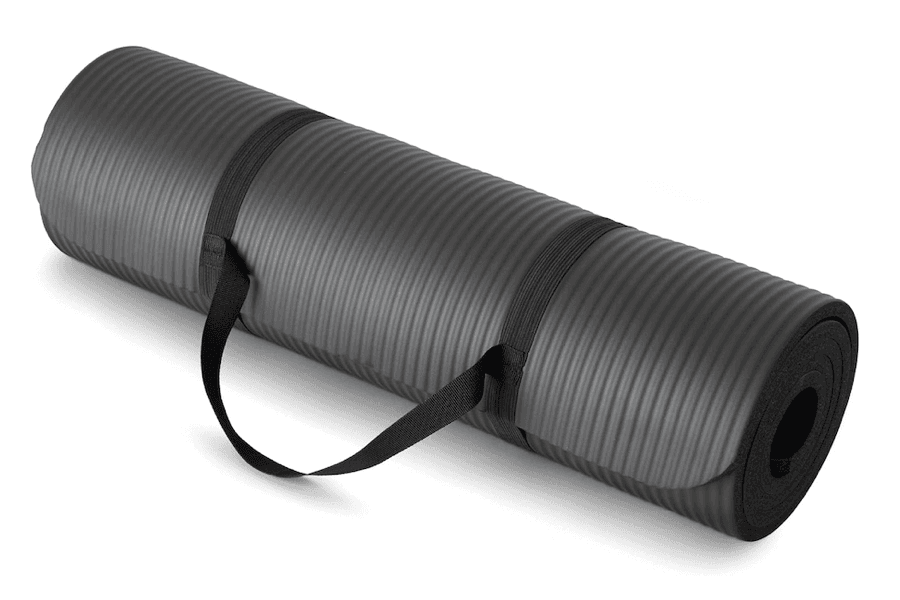
- You want a light 2.2 pound mat with a carry strap for $22.48
- You need latex free, since NBR is a synthetic rubber
Get the Alo Warrior if...
- You want an actual yoga surface rather than an exercise pad
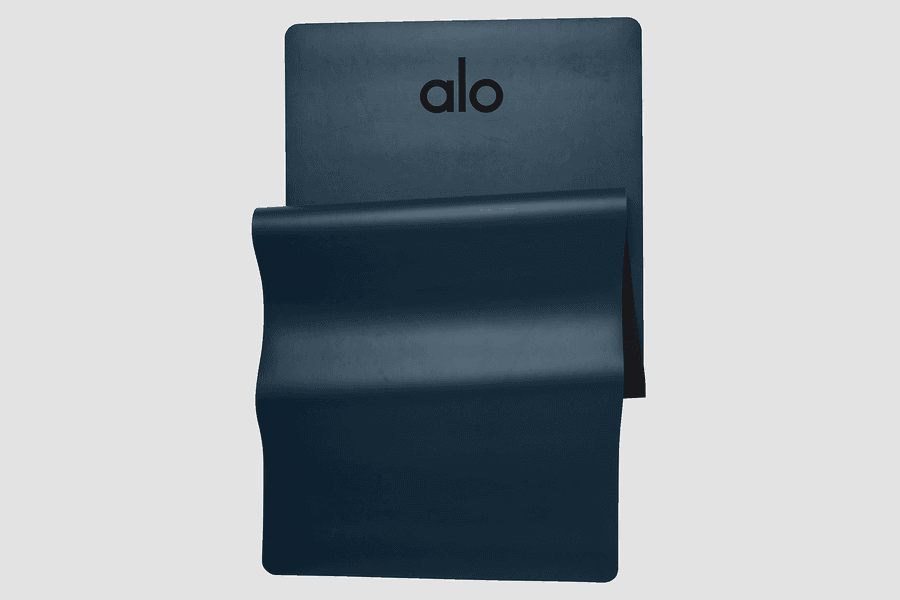
- You want a genuinely oversized mat at 74.4 by 26.4 inches
- The mat stays in one room and never gets carried
- You want a base that does not move at all on a wooden floor
Side by side
Price
The Amazon Basics lists for about $126 less.
$22.48
List price · check price at Amazon
$148
List price · check price at aloyoga.com
Thickness
The Amazon Basics is 154% thicker.
12.7 mm0.5″
5 mm0.2″
Weight
The Amazon Basics is 5.8 lbs lighter.
2.2 lbs1 kg
8 lbs3.6 kg
Size
The Warrior is 0.4″ longer; the Warrior is 2.4″ wider.
Same on both
- Both clear the 68 inch standard length by a good margin
- Neither grips once your hands are damp
- Neither carries a third party material certification
- Both are a couple of years of regular use rather than a decade
Full specs
Dimensions
Materials & build
Buying
Half an inch of foam against a designer rubber mat
The Amazon Basics 1/2 Inch Extra Thick is 12.7 mm of NBR exercise foam at $22.48. The Alo Warrior is 5 mm of polyurethane leather over natural rubber at $148.
The gap is $125.52 and the two mats are not really competing for the same job. One is padding. The other is a surface. Which you need depends almost entirely on what you do on the floor.
Half an inch is too much mat for standing yoga
This is the part people find out after buying. At 12.7 mm the Amazon Basics is more than twice the thickness of a normal yoga mat, and soft foam that deep moves under you. Standing on one leg on it feels like standing on a cushion, because that is roughly what it is.
Tree pose, warrior three, half moon, anything on one foot: all harder than they need to be, and not in a useful way. Even in plank the wrists sink.
What that thickness is genuinely good for is anything where your knees, spine, or elbows are on the floor. Pilates, core work, mat based physio, stretching, restorative yoga, and kneeling work of any kind are all more comfortable on it than on a 5 mm mat.
The Alo scored 62 out of 100
OutdoorGearLab tested the Warrior in its current nineteen mat lineup: 62 overall, thirteenth. Comfort and support 7, grip 5, materials 6, care and cleaning 7. Its pros were non slip dry grip, extra wide, soft surface, and doesn’t budge on the floor. Its cons were super slippery when wet, stains easily, heavy, and durability concerns.
The Amazon Basics has not been tested by GearLab, so there is no score to put beside it. Worth knowing for scale: the $29.98 Gaiam Premium also scored 62 in that test, so the Alo’s price is not buying measured performance.
Grip is bad on one and worse on the other
GearLab measured the Alo at 7 out of 10 dry and 4.5 wet. Decent barefoot in a cool room, and its own summary calls it a bit of a slip and slide once you sweat. Polyurethane leather looks like it belongs in a heated studio and does not act like it.
NBR foam is worse. It has moulded texture and no tack at all, and because the foam compresses your hand slides on a surface that is also moving. Damp palms make it dangerous rather than annoying.
If you sweat, neither of these works and no comparison between them fixes it. What you want is an absorbent top: the Manduka GRP Adapt 2.0 measured 8.5 wet, and the Liforme Classic at 7.
The Alo is wider and both are long
74″ × 24″ against 74.4″ × 26.4″. They are within half an inch on length and both comfortably clear the 68 inch standard, which is unusual at the Amazon Basics end of the market.
Width is where the Alo pulls ahead. Two and a half extra inches keeps your hands on the mat in a wide legged fold, and extra wide is in GearLab’s pros for it. Amazon sells a 1 inch version of the Basics if you want even more foam, which makes the stability problem worse rather than better.
Two pounds against eight
The Amazon Basics is 2.2 pounds. Alo lists the Warrior at 8 and GearLab weighed 8.1, more than any other mat in its nineteen mat lineup, with heavy in its cons.
The foam mat is bulky rolled up but genuinely light, and it comes with a carry strap. The Alo is compact and heavy. Neither is a travel mat, and if you carry a mat daily the answer is a different mat entirely.
Both wear out, and one of them costs $22
NBR foam tears at the edges, dents under point loads, and packs down permanently where you kneel. A year of regular use is a reasonable expectation and Amazon covers it for one year, which is more coverage than the Alo gets.
Durability concerns and stains easily are both in the Alo’s cons. Its absorbent top takes on sweat and body oils, the lighter colorways show it, and it needs wiping after every session and full drying before rolling. Alo offers 30 days to return and no warranty.
Losing a $22 mat after a year is a shrug. Losing a $148 one is not, and that is the strongest thing to be said against the Warrior.
Latex, smell, and what each one is made of
The Alo’s base is 100 percent natural rubber, so a latex allergy takes it off the table. NBR is nitrile rubber, a synthetic, and it is latex free, so the Amazon Basics is safe on that front.
NBR foam does smell strongly out of the packaging, and it takes a week or two of airing to settle. The Alo has a mild rubber smell that fades faster. Neither mat holds any third party certification.
What each price actually buys
The $22.48 buys cushioning and nothing else, which is fine, because cushioning is the whole reason to want a half inch mat. Nobody should expect a yoga surface from it and Amazon does not really claim one.
The $148 buys a large, good looking mat with a dense base that does not move on a floor, plus the Alo name. It does not buy grip in a hot room, longevity, or a light carry. If you want performance at that price, the Manduka PRO scored 91 and the eKO 87.
There is also a middle. Around $30 to $75 gets you a proper yoga surface at a sane thickness: the Gaiam Premium at $29.98 for a first mat, or the IUGA at $67, which took GearLab’s Best Value Upgrade award with 8 dry and 7 wet.
Bottom line
Buy the Amazon Basics if what you want is padding for floor work, stretching, Pilates, or knees that hurt on a thin mat, and you accept that standing balances will be unsteady. At $22.48 on Amazon it is good value for that job and poor value for anything else.
Buy the Alo Warrior if you want a large, attractive mat that stays in one room and you practise somewhere cool. It sells through aloyoga.com rather than Amazon and discounts often enough that paying full list is avoidable. If neither of those descriptions fits, the money is better spent between the two.
Amazon Basics 1/2 Inch Extra Thick
List price $22.48
Alo Warrior
List price $148
Frequently Asked Questions
- Is a half inch mat too thick for yoga?
- For standing yoga, yes. At 12.7 mm the Amazon Basics is more than twice the thickness of a normal yoga mat, and soft foam that deep moves under you. Tree pose, warrior three, and half moon are all harder than they need to be, and not usefully so. It is genuinely good for anything on your knees, spine, or elbows: Pilates, core work, stretching, mat based physio, and restorative yoga.
- Is the Alo Warrior worth $148?
- For size and looks it can be. For measured performance the answer is no. OutdoorGearLab put it thirteenth of nineteen on 62 points, tied with a $29.98 Gaiam. Grip scored 5 out of 10, materials 6, and the testers flagged staining and durability alongside the weight. Mats that cost the same or less and scored far higher include the Manduka eKO at 87 and Lululemon's The Mat at 81.
- Which grips better?
- The Alo, and neither is good. GearLab measured the Warrior at 7 out of 10 dry and 4.5 wet, which is decent barefoot in a cool room and a slip and slide once you sweat. NBR foam is worse: it has moulded texture and no tack at all, and because the foam also compresses under your hand, damp palms make it genuinely unsafe rather than just annoying.
- How much heavier is the Alo?
- Roughly four times over. GearLab weighed the Warrior at 8.1 pounds, more than any other mat in its nineteen mat lineup, and heavy sits in its cons list alongside the grip and staining complaints. The Amazon Basics is 2.2 pounds and comes with a carry strap, though it is bulky rolled up because of the thickness. Neither is really a travel mat.
- Can I use either with a latex allergy?
- The Amazon Basics, yes. NBR is nitrile rubber, a synthetic, and it is latex free. The Alo Warrior's base is 100% natural rubber, which is latex, so it is off the table. Worth knowing separately: NBR foam smells strongly out of the packaging and takes a week or two of airing to settle.
- Is there a better mat between these two prices?
- Yes, and it is where most people should be looking. Between about $30 and $75 you get a proper yoga surface at a sane thickness: the Gaiam Premium at $29.98 took GearLab's Best First Yoga Mat award, and the IUGA Eco Friendly Non Slip PU at $67 took Best Value Upgrade with 8 out of 10 dry and 7 wet, which is better grip than either mat on this page.
Related comparisons
- Amazon Basics 1/2 Inch Extra Thick vs Retrospec Solana 1/2"
- JadeYoga Harmony XW vs Alo Warrior
- Manduka PROlite Long & Wide vs Alo Warrior
- Manduka PRO vs Alo Warrior
- Manduka GRP Adapt 2.0 Long vs Alo Warrior
- Manduka eKO Long vs Alo Warrior
- Alo Warrior vs Lululemon The (Big) Mat 5mm
- Alo Warrior vs Yoloha Unity Pro Cork
- Alo Warrior vs b, halfmoon B Mat Strong 6mm