Amazon Basics 1 Inch vs 1/4 Inch TPE: Which One Should You Buy?
Within Amazon's own mat lineup, these two are the extremes: a full inch of soft NBR foam at about $38, and a quarter inch of firm TPE at about $26. The unusual part is that the cheaper mat is the better yoga mat, by a wide margin. The 1 inch exists for comfort on hard floors; the TPE exists for actual practice. Sorting out which you need takes about two questions.
As an Amazon Associate, we earn from qualifying purchases made through links on this page. How this works
The quick answer
Question one: will you stand on it? Standing and balance poses need a firm base, the TPE provides one, and an inch of plush foam absolutely does not; feet sink, ankles compensate, and wrists disappear into it during planks. Question two: is lying-down comfort the actual goal? Then the foam's plushness is the product, the TPE's firmness is beside the point, and the extra $12 buys real comfort for stretching, PT movements, and core work.
For yoga, buy the TPE and enjoy saving $12. For a padded rectangle that makes hard floors humane, buy the 1 inch. The mistake to avoid is buying thickness as if it were quality; here it's just a different product.
Get the 1 inch if...
- Floor exercise and stretching are the whole plan
- You want maximum padding under knees and spine
- You work out on concrete or the hardest floors
- The included strap and gym portability appeal
Get the 1/4 inch TPE if...
- You practice yoga with standing poses
- You want stability for balance and plank work
- You want 2 pounds to carry instead of 4.6
- You'd rather spend about $26 than $38
Side by side
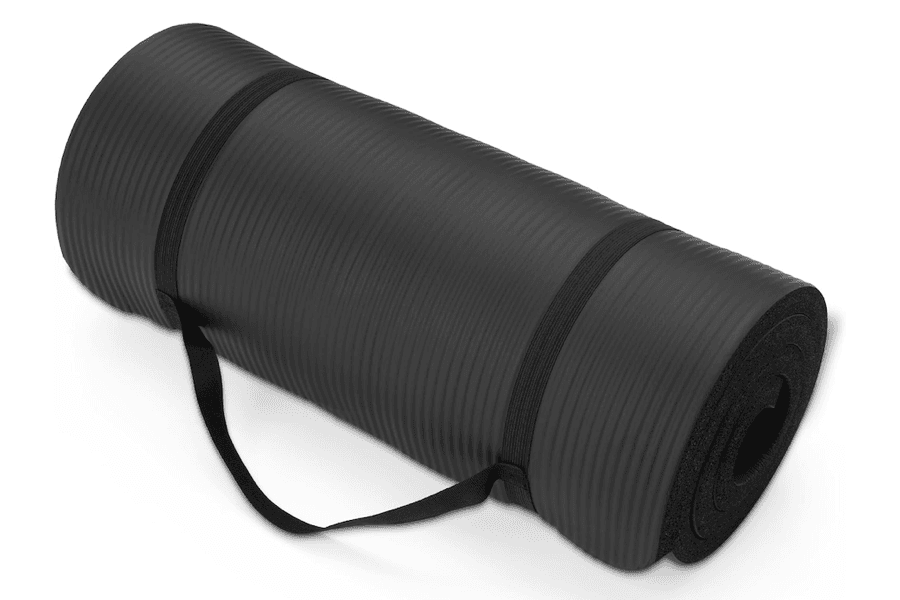
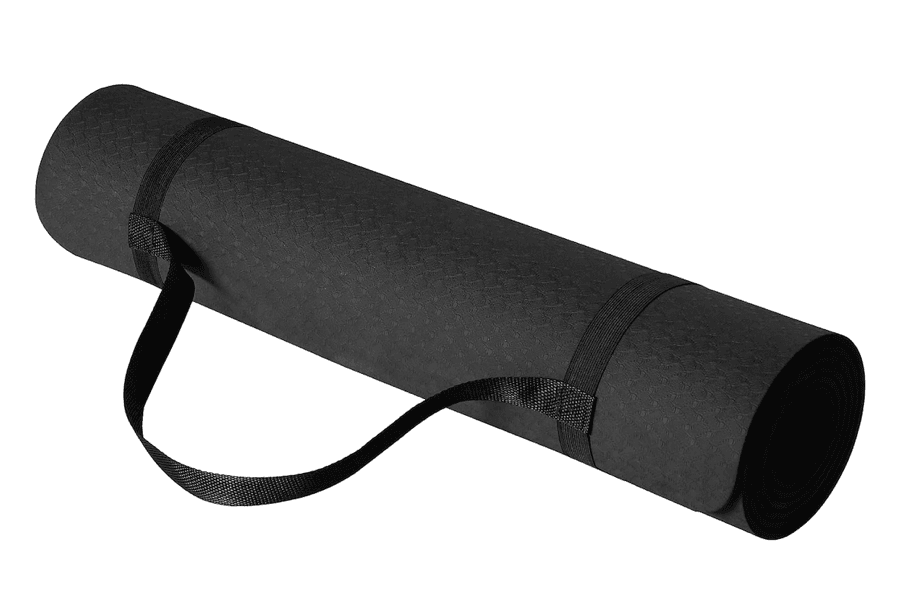
Price
The Amazon Basics lists for about $12 less.
$38.40
List price · check price at Amazon
$26.36
List price · check price at Amazon
Thickness
The Amazon Basics is 323% thicker.
25.4 mm1″
6 mm0.24″
Weight
The Amazon Basics is 2.6 lbs lighter.
4.6 lbs2.1 kg
2 lbs0.9 kg
Size
The Amazon Basics is 0.4″ longer; same width.
Same on both
- Same 24" width, about the same length
- Amazon Basics pricing and 1 year warranty
- Adequate dry grip, slippery when sweaty
Full specs
Dimensions
Materials & build
Buying
Amazon’s two extremes
Within one brand’s budget lineup, these mats sit at opposite ends: a full inch of the softest foam Amazon sells, and a quarter inch of its firmest TPE. The surprise for most shoppers is the direction of the prices. The plush 1 inch lists around $38; the actual yoga mat lists around $26. If you came here assuming more thickness means more mat, this page exists to talk you out of it before checkout.
Why the cheaper one does yoga better
Yoga asks a mat for a stable base before anything else. The TPE’s firm 6 mm compresses slightly and holds, so standing poses feel like they’re happening on a floor. The inch of soft NBR keeps compressing under a standing foot, and the body’s response is constant micro-correction: ankles work overtime, balance poses turn approximate, and confidence goes to the surface instead of the practice. Price tracks the amount of foam in the box, not suitability for the job, and this pairing is the proof.
What the inch of foam is for
Judged as what it is, a floor-comfort pad, the 1 inch is genuinely good. Stretching sessions, physical therapy movements, sit-up circuits, and anything else spent on your back or knees feel better on it than on any yoga mat we cover. It’s 74″ long, ships with a carry strap, and turns concrete into a tolerable workout floor. Owner complaints cluster almost entirely around asking it to be something else, or around foam that flattened under hard use.
Hands, wrists, and the plank problem
The clearest everyday demonstration of the difference is a plank. On the TPE, palms sit level and wrists stack the way the pose intends. On the inch of foam, hands sink until wrists bend past comfortable angles, and push-ups wobble at the bottom. The same applies to any exercise loading a small contact area, which is most of a yoga class and a fair share of strength work. The foam is at its best only when weight spreads wide: torso, back, full body.
Bulk and portability
The TPE rolls slim and weighs about 2 pounds, an easy carry to any class without a strap or a thought. The 1 inch weighs 4.6 pounds and rolls into a fat cylinder that requires its included strap and a bit of trunk space. Around the house neither matters much; the moment a commute is involved, the TPE is the practical one by a wide margin.
Lifespan: consumables, both
Budget both mats a year or two of heavy regular use, considerably longer if duty is light. The foam flattens where it’s kneeled on and can tear at seams; the TPE scuffs and sheds surface texture with mileage. Matching 1 year warranties set expectations honestly. One difference worth knowing: the NBR foam arrives with a strong rubbery smell that takes days of airing to fade, a complaint that fills its reviews, while the TPE is nearly odor-free out of the wrapper.
Price and value
List prices are about $38.40 for the 1 inch and about $26.36 for the TPE, with Amazon adjusting both frequently. Check current prices on the 1 inch and the 1/4 inch TPE. If an inch feels like more foam than you need, there’s also a 1/2 inch version of this same decision at a lower price.
For yoga, the value question answers itself: the better mat is also $12 cheaper. For floor comfort, the $12 premium buys real plushness and is worth paying if horizontal work is the plan.
Bottom line
Buy the 1/4 inch TPE for yoga, mixed home workouts, or any routine that involves standing up. It’s the more capable mat and the cheaper one, a combination that should make this easy.
Buy the 1 inch only if your workout lives on the floor and plushness is the point. It’s very good at being padding, and that’s the whole job description.
Amazon Basics 1 Inch Extra Thick
List price $38.40
Amazon Basics 1/4 Inch Thick TPE
List price $26.36
Frequently Asked Questions
- Why is the cheaper mat better for yoga?
- Because yoga rewards stability, not padding. The TPE's firm quarter inch keeps a standing foot planted and a balance pose predictable. The 1 inch of soft foam does the opposite; it compresses unevenly under concentrated weight, which is precisely what standing poses apply. Price tracks material volume here, not suitability.
- What is the 1 inch mat actually good at?
- Being comfortable. Stretching routines, physical therapy movements, sit-up circuits, and any workout spent mostly on your back or knees feel genuinely better on an inch of foam than on any yoga mat. It ships with a carry strap and rolls up light for its bulk. As a floor-comfort product at about $38, it's easy to recommend; as a yoga mat, it isn't one.
- Can the TPE mat handle floor exercise too?
- Reasonably well. Its 6 mm reads cushioned by yoga standards and thin by exercise-pad standards; most people find it fine for core work and stretching, with a folded towel under bony contact points on hard floors. If your floor work is long and kneeling-heavy, that's the case where the foam earns its place.
- How do they compare to haul to a class or gym?
- The TPE is the commuter: about 2 pounds and a slim roll that fits any bag or shoulder. The 1 inch weighs 4.6 pounds and rolls into a fat cylinder that needs its strap and some patience. It's not heavy so much as bulky, and daily transport gets old.
- How long should either last?
- Treat both as short-timers. The foam flattens and can tear at stress points within a year or two of steady use; the TPE scuffs and wears its surface on a similar clock. Both carry 1 year warranties that price in those expectations. At these prices replacement is the maintenance plan.
- Which one for a beginner who might try a bit of everything?
- The TPE. It's the one that can pass between yoga, core work, and stretching without failing at any of them, and it's the cheaper mat besides. Add the foam pad later if your routine turns out to live mostly on the floor. Starting with the foam locks you out of half of what you might try.
Related comparisons
- Amazon Basics 1 Inch Extra Thick vs Retrospec Solana 1"
- Amazon Basics 1/4 Inch Thick TPE vs Gruper TPE 6mm
- Amazon Basics 1/4 Inch Thick TPE vs Gaiam Premium 6mm
- Amazon Basics 1/4 Inch Thick TPE vs Gaiam Essentials 6mm
- Amazon Basics 1/4 Inch Thick TPE vs YogaAccessories Extra Thick Deluxe 1/4"
- Amazon Basics 1/4 Inch Thick TPE vs Gaiam Premium Reversible 6mm
- Amazon Basics 1/4 Inch Thick TPE vs Gaiam Classic Print 4mm
- Amazon Basics 1/4 Inch Thick TPE vs Gaiam Essentials Fitness Mat 10mm
- Manduka Begin vs Amazon Basics 1/4 Inch Thick TPE