Amazon Basics 1/4 Inch Thick TPE vs Alo Warrior: Which One Should You Buy?
Nobody cross-shops these on the specs, but plenty of people ask the question underneath: is a premium yoga mat worth it? The Warrior is a useful test case, because it is one of the few expensive mats an independent lab has put a number on. That number is lower than the price suggests.
As an Amazon Associate, we earn from qualifying purchases made through links on this page. How this works
The quick answer
GearLab placed the Alo Warrior at 62 out of 100 with comfort 7, materials 6, care 7, and grip of 7 dry and 4.5 wet, and gave it no award. That ties a $75 Gaiam and sits six points above a YogaAccessories mat costing about twenty two dollars. What the Warrior does give you is a much nicer surface, two and a half inches of extra width, and a build that should outlast a TPE mat several times over.
Get the Amazon Basics if you are starting out or the mat travels. Get the Warrior if you want the surface and the size and the mat is not going anywhere, but do not expect the price to buy test performance.
Get the Amazon Basics TPE if...
- You are not sure yoga is going to stick yet
- You carry your mat to class
- You want 6 mm of cushion rather than 5
- You would rather keep about $122
Get the Alo Warrior if...
- You want a genuinely nicer surface under your hands
- You want 26 inches of width instead of 24
- The mat stays in one room
- You want it to last years rather than a season or two
Side by side
Price
The Amazon Basics lists for about $122 less.
$26.36
List price · check price at Amazon
$148
List price · check price at aloyoga.com
Thickness
The Amazon Basics is 20% thicker.
6 mm0.24″
5 mm0.2″
Weight
The Amazon Basics is 6 lbs lighter.
2 lbs0.9 kg
8 lbs3.6 kg
Size
The Warrior is 0.8″ longer; the Warrior is 2.4″ wider.
Same on both
- Similar length, around 74 inches
- Grip that fades once you are properly sweating
- No third-party certifications
- Wipe-clean surfaces that dislike harsh sprays
Full specs
Dimensions
Materials & build
Buying
- Long84" × 26"
A hundred and twenty dollars apart
$26.36 against $148. One is 6 mm of TPE from Amazon’s house brand, the other is Alo’s polyurethane leather studio mat, and almost nobody cross-shops them on the specs.
People do cross-shop them on the question underneath, which is whether a premium yoga mat is worth it. The Warrior is a useful test case for that, because it is one of the few expensive mats an independent lab has actually put a number on.
What the Warrior scored, and against what
GearLab placed the Alo Warrior at 62 out of 100 in its 2026 test of 19 mats. Comfort and support 7, materials 6, care and cleaning 7, grip 7 dry and 4.5 wet. No award.
For reference, that ties the $75 Gaiam Performance Dry-Grip Long and Wide, and sits six points above a YogaAccessories mat that costs about twenty two dollars. The Manduka PRO took 91 for $144.
None of that makes the Warrior a bad mat. It does mean the price is not buying test performance, and anyone deciding between $26 and $148 deserves to know that before they choose.
The polyurethane top is the real difference
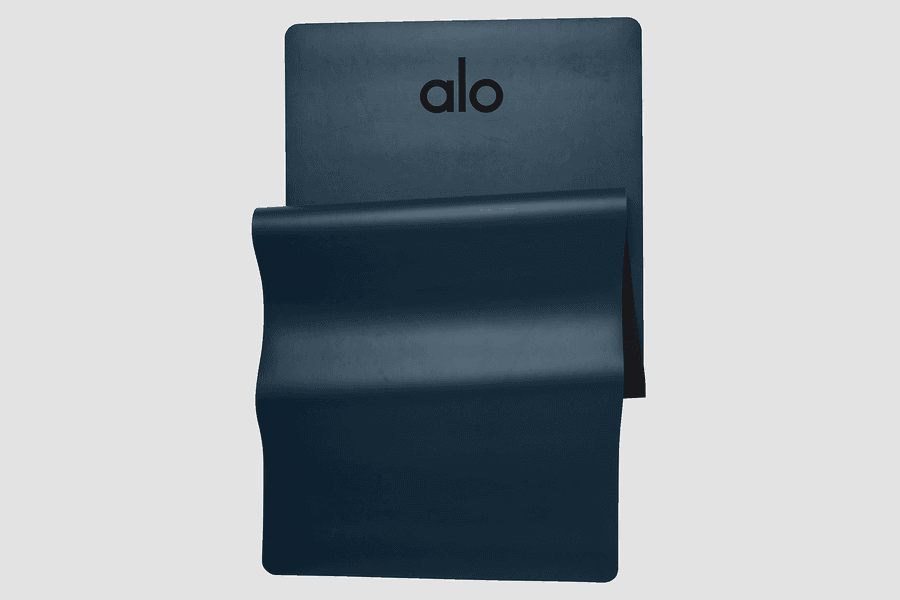
The Warrior’s surface is a soft matte polyurethane leather over a natural rubber base. It takes a little moisture into the top layer rather than leaving it sitting there, and it feels considerably nicer under a hand than any budget mat does.
Its wet score of 4.5 says that absorption runs out quickly. Alo does not market the Warrior for hot yoga and the test supports that restraint. In a cool room it grips well; in a heated one you will want a towel.
What the Amazon Basics gives you instead
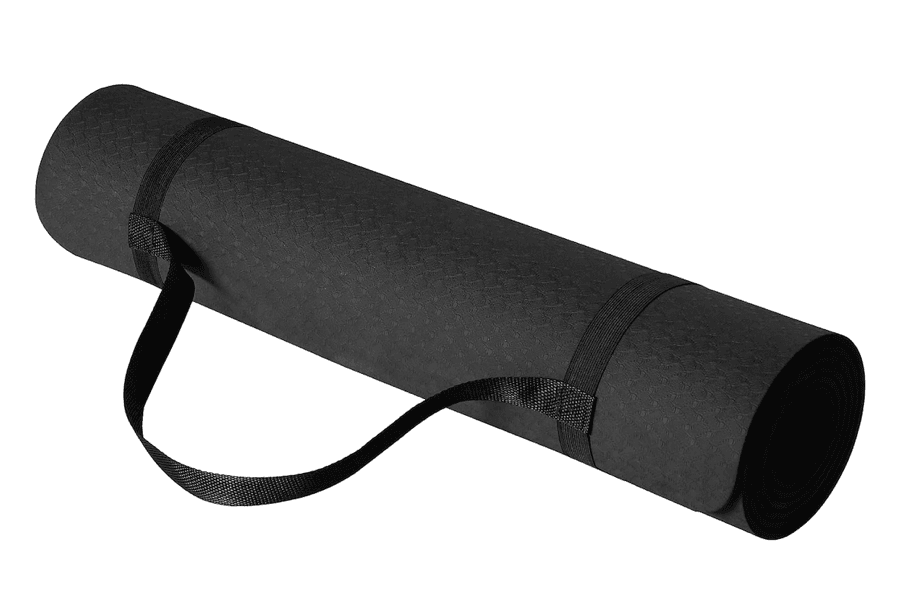
A pressed texture on closed-cell TPE. Sweat sits on top with nowhere to go, so it works with dry hands and fails when they are damp. No outlet we would cite has tested it, so that description comes from the material rather than from a lab.
It is not a bad surface for a cool room and a beginner. It is a different class of thing from a coated premium top and the reviews of both reflect that clearly.
The cheap mat is the thicker one
6 mm against 5. TPE at 6 mm is springier and gives more under a knee than the Warrior’s denser 5 mm build.
GearLab still rated the Warrior 7 out of 10 for comfort, which comes from the quality of the foam rather than the depth of it. Both are middling for kneeling on a hard floor, and neither is the answer if your knees are the problem.
Density is the part that does not show up in millimetres. The Warrior stays put under a standing foot where cheap TPE deflects a little and keeps deflecting, which is what makes a thinner mat feel steadier than a thicker one in balance work.
Two and a half inches of width
The Warrior is 26.4″ wide against 24″. Lengths are close, at 74.4″ and 73.6″.
Width is the spec people notice most when they upgrade. Twenty four inches feels tight in anything with the arms wide, and there is no wide version of the Amazon Basics mat to move up to.
Alo does sell the Warrior in an 84 inch length for people who want more floor again. Seven feet of a mat this heavy is only worth considering if it has a permanent home to live in.
Eight pounds against two
Alo lists the Warrior at about 8 pounds and GearLab weighed 8.1. That is more than a Manduka PRO. It is a mat that stays where you put it, in both senses.
2 pounds for the Amazon Basics is genuinely portable. If you carry your mat to a class, this line matters more than any of the test scores above it.
How each one ends
Polyurethane tops flake and stain with heavy use, and they cannot be scrubbed. The Warrior’s 7 out of 10 for care reflects a surface that wants a damp cloth and nothing stronger.
TPE dents where knees land and tears at the edges once it starts. One or two years of regular use is a fair expectation. The Warrior should outlast it several times over, which is part of what the money buys even if the scores are close.
Coverage and where to buy
Amazon Basics gives 1 year. Check its current price; the list price holds around $26.36 and individual colorways go lower.
Alo offers none (30-day returns), sells only through aloyoga.com and its own stores, and discounts the Warrior rarely. No warranty on a $148 mat is thin, and it is the sort of thing to know in advance rather than afterwards.
Bottom line
Buy the Amazon Basics TPE if you are starting out, if the mat travels, or if you are not sure yoga is going to stick. Twenty six dollars buys a perfectly usable surface for a cool room.
Buy the Alo Warrior if you want the nicer surface, the extra width and the look, and the mat is not going anywhere. If you want $148 of measured performance instead, the Manduka PRO scored 91 to the Warrior’s 62 for less money.
Amazon Basics 1/4 Inch Thick TPE
List price $26.36
Alo Warrior
List price $148
Frequently Asked Questions
- Did the Alo Warrior really score the same as a $75 mat?
- Yes. GearLab gave both the Warrior and the Gaiam Performance Dry-Grip Long and Wide 62 out of 100 in its 2026 field of 19, and the Warrior finished six points above a YogaAccessories mat that costs about twenty two dollars. The Manduka PRO took 91 for $144. None of that makes the Warrior bad, but the price is not buying test performance.
- Is the Warrior good for hot yoga?
- Not especially. Its wet grip scored 4.5 out of 10, so the polyurethane top absorbs a little moisture and then runs out. Alo does not market it for heated practice and the test supports that restraint. In a cool room it grips well; in a heated one you will want a towel.
- Which is thicker?
- The Amazon Basics, at 6 mm against the Warrior’s 5. TPE is also springier, so it gives more under a knee. GearLab still rated the Warrior 7 out of 10 for comfort, which comes from the quality of the foam rather than the depth. Neither is the answer if sore knees are your problem.
- How much heavier is the Warrior?
- Four times. Alo lists it at about 8 pounds and GearLab weighed 8.1, more than a Manduka PRO. The Amazon Basics is 2 pounds. If you carry your mat to a class, that difference matters more than any of the scores.
- How long does each one last?
- TPE dents where knees land and tears at the edges once it starts, so one or two years of regular use is fair. The Warrior’s polyurethane top can flake and stain but the mat should outlast a TPE one several times over. That durability is part of what the money buys even though the scores are close.
- What coverage do you get?
- Amazon Basics gives one year. Alo offers a 30 day return window and no warranty after it, which is thin on a $148 mat and worth knowing in advance. The Warrior also sells only through aloyoga.com and Alo’s own stores, so there is no third-party price to compare against.
Related comparisons
- Amazon Basics 1/4 Inch Thick TPE vs Gruper TPE 6mm
- Amazon Basics 1/4 Inch Thick TPE vs Gaiam Premium 6mm
- JadeYoga Harmony XW vs Alo Warrior
- Manduka PROlite Long & Wide vs Alo Warrior
- Amazon Basics 1/4 Inch Thick TPE vs Gaiam Essentials 6mm
- Amazon Basics 1/4 Inch Thick TPE vs YogaAccessories Extra Thick Deluxe 1/4"
- Manduka PRO vs Alo Warrior
- Manduka GRP Adapt 2.0 Long vs Alo Warrior
- Amazon Basics 1/4 Inch Thick TPE vs Gaiam Premium Reversible 6mm