Alo Warrior vs Yoga Design Lab Combo: Which One Should You Buy?
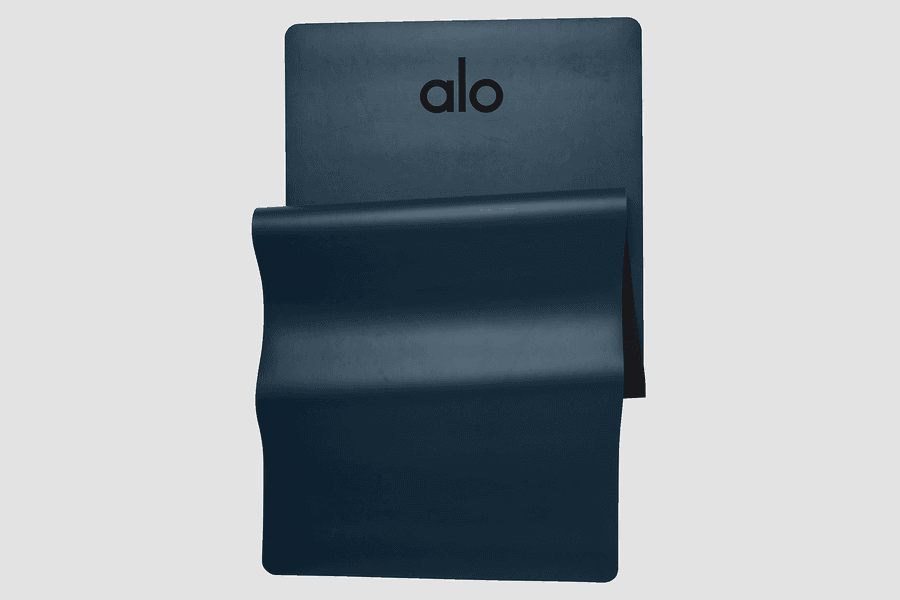
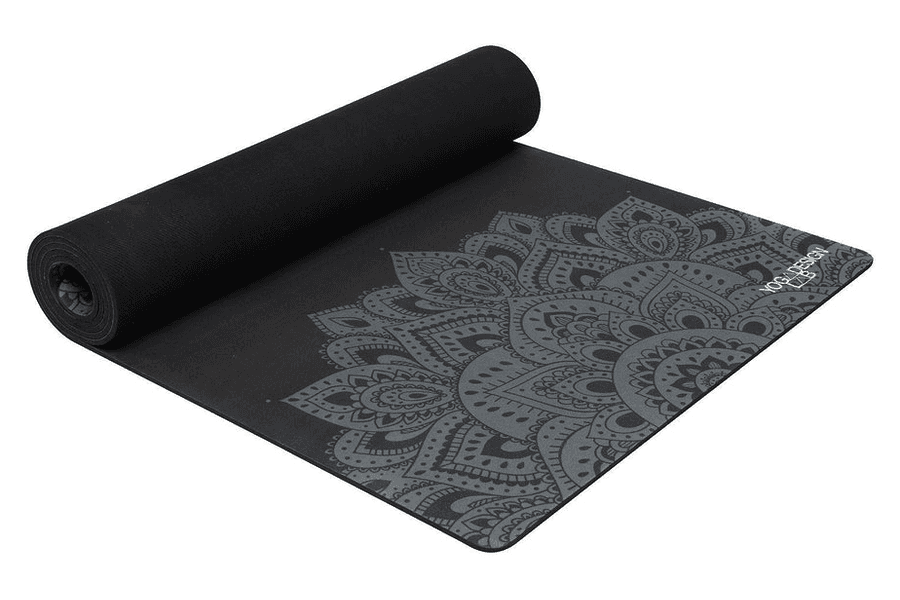
Plenty of people buy both of these mats partly for how they look, and there is nothing wrong with that. Beyond the aesthetics they are close to opposites: the Warrior is 8 pounds of plush polyurethane leather over rubber, the Combo is 4.9 pounds of printed microfiber towel bonded to rubber. What they share is a grip record that testers found underwhelming, so it is worth going in with clear expectations.
As an Amazon Associate, we earn from qualifying purchases made through links on this page. How this works
The quick answer
GearLab scored the Warrior 62 of 100 and the Combo 52, ranking them 13th and 17th of 19 mats. Neither posted good wet traction, at 4.5 and 4 out of 10, so if hot yoga is the point, look elsewhere. What separates them is feel and practicality: the Warrior is plusher, longer, wider and far heavier, while the Combo is thin, light, washable and printed.
Get the Warrior if you want a substantial mat that mostly stays put at home. Get the Combo if you sweat, want to launder the thing, or want your mat to look like something. Save $31 with the Combo.
Get the Alo Warrior if...
- You want the plush, cushioned surface; the Combo is a thin towel by comparison
- You want a bigger mat: 74.4″ × 26.4″ against 70″ × 24″
- The mat lives at home and 8 pounds never has to move
- You want an understated matte finish rather than a print
Get the Combo if...
- You carry your mat; 4.9 pounds against about 8 is not a close call
- You want to machine wash it on a gentle cycle
- You sweat enough that a microfiber surface earns its keep
- You want a printed design and $31 back
Side by side
Price
The Combo lists for $31 less.
$148
List price · check price at aloyoga.com
$117
List price · check price at Amazon
Thickness
The Warrior is 43% thicker.
5 mm0.2″
3.5 mm0.14″
Weight
The Combo is 3.1 lbs lighter.
8 lbs3.6 kg
4.9 lbs2.2 kg
Size
The Warrior is 4.4″ longer; the Warrior is 2.4″ wider.
Same on both
- Natural rubber base under a bonded top layer
- Grippy from the first class, no break-in
- Middling wet traction in independent testing
- Not safe for a latex allergy
- 30-day returns and no warranty from either brand
Full specs
Dimensions
Materials & build
Buying
- Long84" × 26"
- Combo 5.5mm70" × 24"
- Combo Flow 1.5mm70" × 24"
Two mats people buy partly for how they look
There’s no shame in it, and both brands know exactly what they’re selling. Alo makes the Warrior a slab of matte polyurethane leather that photographs beautifully and feels expensive underhand. Yoga Design Lab prints its Combo with designs that are the whole reason the brand exists.
Underneath the aesthetics they’re close to opposites: 8 pounds of plush against 4.9 pounds of thin washable towel, $148 against $117. What they share is a grip record that independent testing found underwhelming, which is worth knowing before either one arrives.
Grip: neither is the hot yoga answer
GearLab rated the Warrior 7 out of 10 dry and 4.5 wet, and listed super-slippery when wet among its drawbacks. It rated the Combo 4 out of 10 both ways and wrote that the mat was more slippery than they hoped for during practice. Overall scores landed at 62 and 52, placing them 13th and 17th of 19 mats.
The Combo’s owner reviews are much kinder, and there’s a real mechanism behind them: microfiber grips as it absorbs sweat, so a genuinely wet practice activates the surface. The Warrior has no such saving throw. It grips well enough dry and gives way once your palms are damp.
If a heated room is your regular practice, the mats worth your money are elsewhere. Our GRP Adapt 2.0 vs B Mat Strong comparison covers the two that actually hold.
Feel: plush leather against thin towel
The Warrior is the more comfortable mat and it isn’t particularly close. Its polyurethane leather has a soft, slightly cushioned give that people describe as luxurious, and GearLab scored it 7 of 10 for comfort against 6 for the Combo. Most of that’s the 5 mm against 3.5.
The Combo feels like practicing on a thin towel, because that’s what the top layer is. Microfiber has a fabric texture that some people take to immediately and others find bunches under a foot sliding forward. Neither surface is tacky in the way rubber is; these are smooth and soft rather than grabby.
Weight: the Warrior is the heaviest mat in the test
Alo lists the Warrior at about 8 pounds and GearLab weighed it at 8.1, with nothing else in its 19-mat field coming in higher, not even the Manduka PRO. Around the house that helps: the testers noted it doesn’t budge on the floor. On a shoulder several times a week it’s the mat’s biggest practical flaw.
The Combo lists at 4.9, weighed 4.6, and ships with a carry strap. That’s roughly three pounds of difference, which is more than most people expect between two mats of similar price.
Size
The Warrior is 74.4″ × 26.4″, already longer and wider than a standard mat, and Alo sells a Long version at 84″ × 26″ for more money; our Warrior vs Lululemon The Mat page compares it against the obvious rival at that size. The Combo is 70″ × 24″, a little short and noticeably narrow; GearLab listed narrowness among its cons.
Yoga Design Lab doesn’t offer a bigger footprint. Its other options are thicknesses: 1.5 mm for travel around $83 and 5.5 mm for about $131, both at the same 70 by 24 inches.
Care: one you wash, one you wipe
The Combo goes in a washing machine on a gentle cycle in a machine without a center agitator, though Yoga Design Lab recommends hand washing to extend its life. That resets a mat you sweat into heavily, which no polyurethane surface allows.
The Warrior gets a cloth with diluted mild soap and air drying, nothing more. Its top stains where hands and feet land, which GearLab lists among its cons, and it picks up dirt and lint easily. The Combo collects lint too, and being a textile it also pills and fades with washing. Both show their mileage; only one of them can be laundered.
Durability and coverage
GearLab flagged durability concerns against the Warrior alongside the staining and the weight, and rated the Combo’s materials 5 of 10. Neither brand offers a warranty: Alo takes returns within 30 days, Yoga Design Lab within 30 days on unused mats.
At $148 and $117 that’s thin coverage, and it’s worth setting expectations accordingly. These are mats you replace, not mats you keep.
Price and where to buy
The Warrior is a direct purchase from Alo, with no first-party Amazon listing, so there’s no discount to hunt. The Combo sells through yogadesignlab.com and Amazon, where it is easier to buy and easier to send back.
On value the Combo is closer to fair for what it does. The Warrior’s $31 premium buys feel, size and appearance, which are legitimate purchases, but it doesn’t buy grip, durability or coverage.
Bottom line
Get the Warrior if you want the plushest surface in the room and the mat mostly stays home. It’s the more comfortable, larger, more substantial object, and eight pounds is only a problem when you have to lift it.
Get the Combo if you carry your mat, sweat enough to wake the microfiber up, or want to wash the thing rather than wipe it. It’s $31 cheaper, three pounds lighter, and the only one of the two that will ever look brand new again. Neither is the mat to buy if grip is your actual problem.
Alo Warrior
List price $148
Frequently Asked Questions
- Which is better for hot yoga?
- Honestly, neither is a strong choice. GearLab rated the Warrior 7 out of 10 dry and 4.5 wet, listing super-slippery when wet among its drawbacks, and the Combo 4 out of 10 both ways. The Combo's microfiber does get grippier as it absorbs sweat, which is why its owner reviews run warmer than that score, but if a heated room is your regular practice the mats worth looking at are the Manduka GRP Adapt 2.0 or a b, halfmoon B Mat.
- How different do they feel underfoot?
- Completely. The Warrior's polyurethane leather is smooth, matte and noticeably cushioned, which is the thing people love about it; GearLab rated it 7 of 10 for comfort against 6 for the Combo, and the 1.5 mm thickness difference does most of that work. The Combo puts a fabric between you and the rubber, and it reads exactly like that: soft, textile, and thin. Some people take to it instantly; others find it rucks up when a foot slides forward.
- Is the Warrior worth $31 more?
- For the feel and the size, possibly. For anything measurable, no. It does not grip better wet, it does not last longer, and GearLab flagged staining and durability concerns against it as well as the weight. If what you want is the plushest surface in the studio and a mat that looks expensive, that is a real thing to buy. If you want performance per dollar, the Combo is closer to fair value and neither is the category's best.
- Do both mats stain?
- Both show their mileage. The Warrior's polyurethane top stains where hands and feet land, which GearLab lists among its cons, and it picks up dirt and lint easily. The Combo is a textile, so it fades and pills with washing and collects lint too. The difference is that you can put the Combo through a gentle machine cycle to reset it, while the Warrior gets a cloth, diluted mild soap and air drying, and nothing more.
- How heavy is the Warrior, really?
- Heavy enough to change how you use it. Alo lists it around 8 pounds and GearLab's scale read 8.1, the heaviest of the 19 mats it weighed. That is more than a Manduka PRO. Around the house it does not matter and the weight helps it stay planted, which testers liked. On a shoulder for a walk to the studio several times a week, it is the mat's biggest practical flaw, and the Combo weighs about 3 pounds less with a strap included.
- What sizes do they come in?
- The Warrior is 74.4 by 26.4 inches, already longer than a standard mat, and Alo sells a Long version at 84 by 26 for more money. The Combo is 70 by 24, a little short and noticeably narrow; GearLab listed narrowness among its cons. Yoga Design Lab sells the same mat in 1.5 mm for travel at about $83 and 5.5 mm for about $131, but the footprint does not change.
Related comparisons
- Yoga Design Lab Combo 3.5mm vs b, halfmoon B Mat Everyday 4mm
- JadeYoga Harmony XW vs Alo Warrior
- Manduka PROlite Long & Wide vs Alo Warrior
- Manduka PRO vs Alo Warrior
- Lululemon The Mat 5mm vs Yoga Design Lab Combo 3.5mm
- Manduka PROlite vs Yoga Design Lab Combo 3.5mm
- Manduka GRP Adapt 2.0 Long vs Alo Warrior
- Manduka PROlite Long vs Yoga Design Lab Combo 3.5mm
- JadeYoga Harmony 74" vs Yoga Design Lab Combo 3.5mm