Retrospec Solana 1" vs Gaiam Classic Print: Which One Should You Buy?
The Retrospec Solana 1" is a little over six times as thick as the Gaiam Classic Print, four inches longer, nearly twice the weight and about $15 more. Few popular budget mats sit further apart. The right pick hinges on how much of your practice happens standing up.
As an Amazon Associate, we earn from qualifying purchases made through links on this page. How this works
The quick answer
The Solana 1" puts a full inch of soft NBR foam under you, which makes kneeling, floor exercise and long stretches comfortable on any floor. That softness is also why it is hard to balance on, and at exactly a cubic foot of foam it rolls into a bundle you won't want to carry far. The Classic Print, at 4 mm of printed PVC, is light, steady under a standing foot and backed by a lifetime guarantee, but thin enough that your knees find the floor on hardwood.
For yoga with standing poses, buy the Classic Print. If the mat is for sore knees, physio or floor workouts at home, buy the Solana 1".
Get the Retrospec Solana 1" if...
- Kneeling on a thin mat hurts your knees or hips
- Your sessions are floor exercise, physio or restorative work
- You want the full 72 inches for lying flat
- The mat stays home, where its bulk doesn't matter
Get the Gaiam Classic Print if...
- Your practice includes standing poses and flow
- You carry your mat or pack it for travel, and 2.1 pounds helps
- You'd rather keep about $15
- A lifetime guarantee matters more to you than six months of cover
Side by side
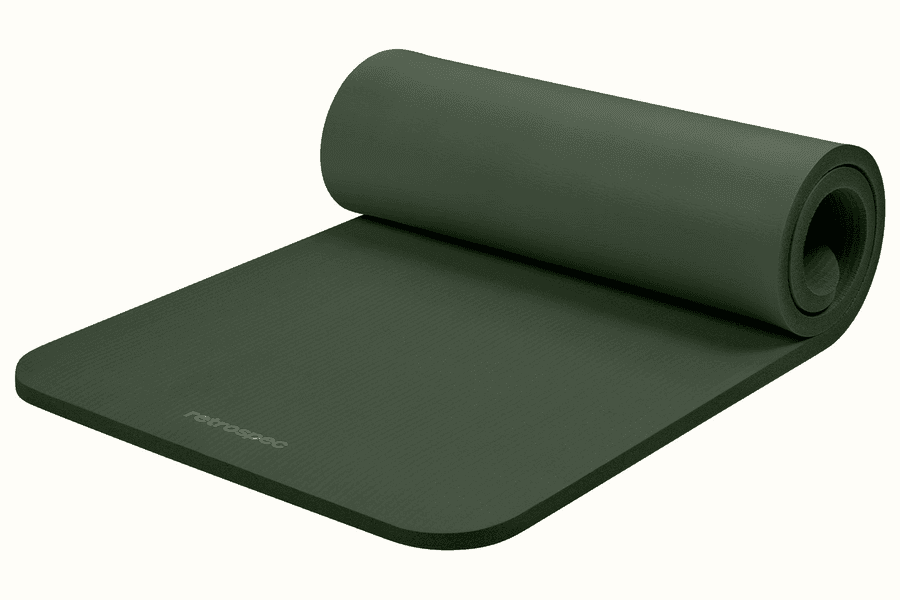
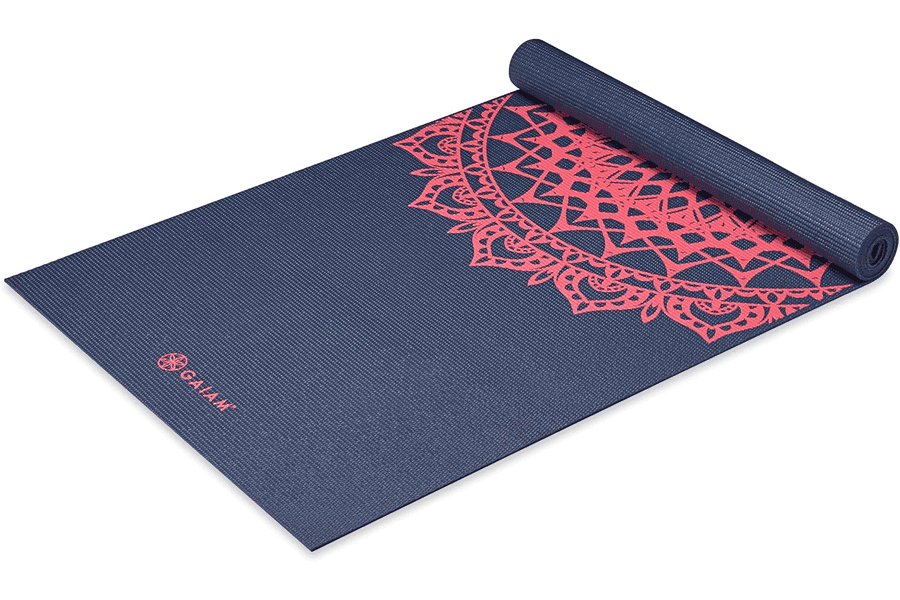
Price
The Classic Print lists for about $15 less.
$39.99
List price · check price at Amazon
$24.98
List price · check price at Amazon
Thickness
The Solana 1" is 535% thicker.
25.4 mm1″
4 mm0.16″
Weight
The Classic Print is 1.9 lbs lighter.
4 lbs1.81 kg
2.1 lbs0.95 kg
Size
The Solana 1" is 4″ longer; same width.
Same on both
- 24 inches wide
- Latex-free
- Sweat sits on the surface rather than soaking in
- Needs airing out for a day or more when new
- Sold on Amazon and on the brand's own site
Full specs
Dimensions
Materials & build
Buying
Opposite ends of the thickness range
The Retrospec Solana 1″ is 25.4 mm of NBR foam. The Gaiam Classic Print is 4 mm of printed PVC. That makes the Solana a little over six times as thick, and it is also four inches longer, nearly twice the weight and about $15 more. When we checked, the Solana ranked fourth in Amazon’s Yoga Mats category and the Classic Print 13th.
Most pairs of budget mats overlap somewhere in the middle. These two barely do, so the decision rests almost entirely on whether you spend your mat time standing up or lying down.
The footprint rule
GearLab didn’t include either mat in its 19 mat roundup, but its buying advice offers a rule that applies here: if standing on a mat leaves visible footprints, the cushion is compressing all the way to the floor and the mat is too soft for daily practice. GearLab also argues that density matters at least as much as thickness.
By that standard the Solana is too soft by design. An inch of soft NBR is meant to sink. Amazon’s summary of Solana 1″ reviews praises the knee support and, in the same breath, says balance is a struggle for some owners. The Classic Print passes almost by default, since 4 mm of PVC leaves little to compress. That keeps tree pose steady, but it also leaves very little padding under a kneecap.
Four millimeters under a kneecap
Laid over carpet, the Classic Print’s 4 mm does the job. Over hardwood, tile or a concrete basement floor, a low lunge or a long tabletop hold leaves your knee barely cushioned. One Classic Print reviewer says it is much thinner than the other Gaiam mats they own.
This is what the extra $15 buys. An inch of foam spreads the load from a knee or a tailbone across a wider patch, and Solana owners describe it as a relief for sore knees, with individual reviews mentioning arthritic hips. If floor work hurts on the mat you have now, a thinner mat won’t help, and the Solana will.
Where the thin mat pays off
A flowing class asks you to step your feet up to your hands, lower from plank and stand on one leg. The thin PVC barely moves under any of that. The inch of foam gives a little differently every time you load it, so your wrists and ankles keep adjusting through the whole sequence.
Retrospec’s Amazon listing imagines you carrying the Solana from your home practice to the studio. We would keep it at home for yin, restorative work and stretching, where the inch of foam is a genuine comfort rather than something to fight.
Neither grip has been measured
No outlet we trust has published a grip score for either mat. Gaiam gives the Classic Print a tacky textured finish, and Retrospec presses ribs into closed-cell foam. Neither absorbs sweat, so damp palms sit on a film of moisture and slide.
Classic Print owners are mixed on grip, and one who took it to an hour of heated yoga says it could not keep up. The Solana’s review summary doesn’t single out grip either way. If your hands sweat even in a cool room, you want a polyurethane top instead, and our IUGA vs Classic Print page covers one for about $67.
A cubic foot of foam
Multiply the Solana out and you get 72 × 24 × 1 inches, or 1,728 cubic inches, which is exactly one cubic foot of foam. The Classic Print comes to roughly 260 cubic inches, about a seventh of that. Rolled, the Solana works out to about the width of a basketball, and the Classic Print to roughly the girth of a paper towel roll.
Weight is less dramatic at 4 pounds against 2.1. One Solana reviewer still says it was far bigger than the photos suggested and too much to haul to a lunchtime class. Retrospec includes a nylon strap. Gaiam’s product page lists no strap, although the title of its Amazon listing now mentions one.
Two Amazon spec tables with errors
The Classic Print’s product details give its size as 72″ × 24″ and its cushion as 1/4 inch. The same listing’s title and Gaiam’s own page say 68″ × 24″ × 4 mm, and 4 mm is closer to 5/32 of an inch. If you want a 72 inch Gaiam, the Gaiam Essentials on Amazon really is that length.
The Solana’s table lists an item weight of 2.2 pounds and a warranty description of No. Retrospec’s own product data puts the mat at 4 pounds, and its warranty policy covers defects for 6 months, plus 30 days to return it unused. We go by the brand figures.
How long to expect from each
Amazon’s summary of Solana 1″ reviews calls durability mixed, with some owners reporting tears, and one says a fingernail was enough to gouge out a piece. Foam this soft also keeps its dents, and the hollows under your knees get deeper over the months. Classic Print owners are mixed too, and some report the printed plastic coming away.
The cover is lopsided. Retrospec’s six months is short. Gaiam offers a lifetime guarantee even at $24.98, but it hasn’t published what that covers; our reading is that it is meant for manufacturing faults, not a print that rubs away. Returns direct to Gaiam need the mat unopened and unused, within 30 days of a gaiam.com order. Neither mat is likely to see much past two years of regular practice.
Price, colors and where to buy
List prices are $39.99 and $24.98, and some colors sell for less than others, so compare the Retrospec Solana 1″ on Amazon with the Gaiam Classic Print on Amazon before buying. The Solana comes in 13 colorways at last count, all solid, from Graphite to Wild Spruce. Gaiam rotates the Classic Print’s designs, so one you like may not last.
If neither extreme suits you, our Solana 1/2″ vs Classic Print page halves the foam, and Gaiam Premium 6mm vs Solana 1″ sets the Gaiam that GearLab recommends for beginners against this inch of foam.
Bottom line
Buy the Gaiam Classic Print if your practice includes standing poses and flow, you carry your mat anywhere, and a 68 inch mat fits your height. It is cheaper, lighter and steadier underfoot. Keep a folded blanket handy for kneeling on tile or wood.
Buy the Solana 1″ if the mat’s job is protecting your knees, hips and back during floor exercise, physio or restorative work at home. It will be wobbly in standing poses, and a cubic foot of foam needs a closet shelf of its own.
Retrospec Solana 1"
List price $39.99
Gaiam Classic Print 4mm
List price $24.98
Frequently Asked Questions
- Is a 1 inch mat better than a 4mm yoga mat?
- Better for some things and worse for others. An inch of foam like the Solana 1" is far more comfortable for kneeling, core work and lying on a hard floor, but a standing foot sinks into it unevenly, and Amazon's review summary lists balance as a complaint from some owners. A 4 mm PVC mat like the Classic Print keeps you close to the floor, which helps standing poses and does little for your knees. For yoga with standing work, the thinner mat is the better tool.
- Is the Classic Print comfortable for kneeling on hardwood?
- Not for long holds. Over carpet 4 mm is usually enough, but on hardwood, tile or concrete a knee reaches the floor quickly in lunges and tabletop, and owners regularly mention how thin the mat is. A folded blanket under the knees helps. If knee pain is the main reason you are buying a mat, the Solana 1" will serve you better, though you give up stability in standing poses.
- Is the Gaiam Classic Print 68 or 72 inches long?
- 68 inches. Gaiam's product page and the Amazon listing title both say 68 by 24 inches by 4 mm, but the product details table on the same Amazon listing gives a size of 72 by 24 inches and a 1/4 inch cushion, both of which look like errors. If you want a 72 inch Gaiam, the Amazon version of the Gaiam Essentials is that length. The Solana 1" is 72 by 24 inches.
- How much does the Retrospec Solana 1" weigh?
- About 4 pounds, according to Retrospec's own product data. Its Amazon product details list 2.2 pounds, which doesn't match. Either way it is easy to lift. The bigger issue is bulk: the mat is exactly one cubic foot of foam, and rolled it is roughly the width of a basketball, so it won't fit most mat bags. A nylon strap comes in the box.
- Which mat is better for hot yoga?
- Neither. No independent tester has scored the grip on either mat, but both have closed surfaces that don't absorb sweat, so damp hands slide. One Classic Print owner who used it for an hour of heated yoga says it couldn't cope with the sweat. For hot yoga you want an absorbent polyurethane or natural rubber top, or a towel over the mat.
- What warranty do the Solana 1" and Classic Print come with?
- Retrospec's warranty policy gives the Solana six months of cover for defects, even though its Amazon listing says no warranty, and it takes returns within 30 days only if the mat is unused and in its packaging. Gaiam says the Classic Print has a lifetime guarantee but hasn't published what it covers; our reading is manufacturing faults rather than normal wear. Returns straight to Gaiam need an unopened, unused mat bought on gaiam.com, within 30 days.
Related comparisons
- Amazon Basics 1 Inch Extra Thick vs Retrospec Solana 1"
- Amazon Basics 1/4 Inch Thick TPE vs Gaiam Classic Print 4mm
- Gruper TPE 6mm vs Gaiam Classic Print 4mm
- YogaAccessories Extra Thick Deluxe 1/4" vs Gaiam Classic Print 4mm
- Manduka Begin vs Gaiam Classic Print 4mm
- IUGA Eco Friendly Non Slip PU vs Gaiam Classic Print 4mm
- JadeYoga Voyager vs Gaiam Classic Print 4mm
- JadeYoga Level One vs Gaiam Classic Print 4mm
- Manduka eKO Superlite vs Gaiam Classic Print 4mm