Manduka X vs B Mat Everyday: Which One Should You Buy?
Both are 71 inches long and neither is especially thick, so this is not a cushioning comparison. It comes down to grip, two inches of width, and $46. One of these is a yoga mat with a serious grip reputation; the other is a training mat that happens to do yoga.
As an Amazon Associate, we earn from qualifying purchases made through links on this page. How this works
The quick answer
The B Mat Everyday is 4 mm of dense rubber made in Spain, certified to OEKO-TEX Standard 100, tacky on both faces from the first class, two inches wider than the X, and warranted for a year. The X is 5 mm of closed-cell TPE, lighter, cheaper, latex free, and it wipes or hoses clean with no thought at all.
If yoga is the practice and grip has been the weak link, the B Mat is worth the extra $46. If the mat also has to put up with a garage floor and a hose, the X is the sensible buy.
Get the Manduka X if...
- Your mat sees strength work, cardio, or outdoor sessions
- You want a surface that never absorbs sweat and hoses clean
- You need a latex-free mat
- You'd rather keep about $46
Get the B Mat Everyday if...
- You want a surface that is tacky on both faces from the first class
- You want the wider mat, 26 inches against 24
- An OEKO-TEX certification and a one year warranty matter to you
- You practice yoga specifically rather than mixed training
Side by side
Price
The X lists for $46 less.
$72
List price · check price at Amazon
$118
List price · check price at bhalfmoon.com
Thickness
The X is 25% thicker.
5 mm0.2″
4 mm0.2″
Weight
The X is 0.4 lbs lighter.
3.7 lbs1.7 kg
4.1 lbs1.86 kg
Size
Same length; the B Mat Everyday is 2″ wider.
Same on both
- Both are 71 inches long
- Both are usable on either face
- Neither absorbs sweat into the mat
- Both are firm rather than plush
Full specs
Dimensions
Materials & build
Buying
- Everyday Long85" × 26"
Two firm mats built for opposite rooms
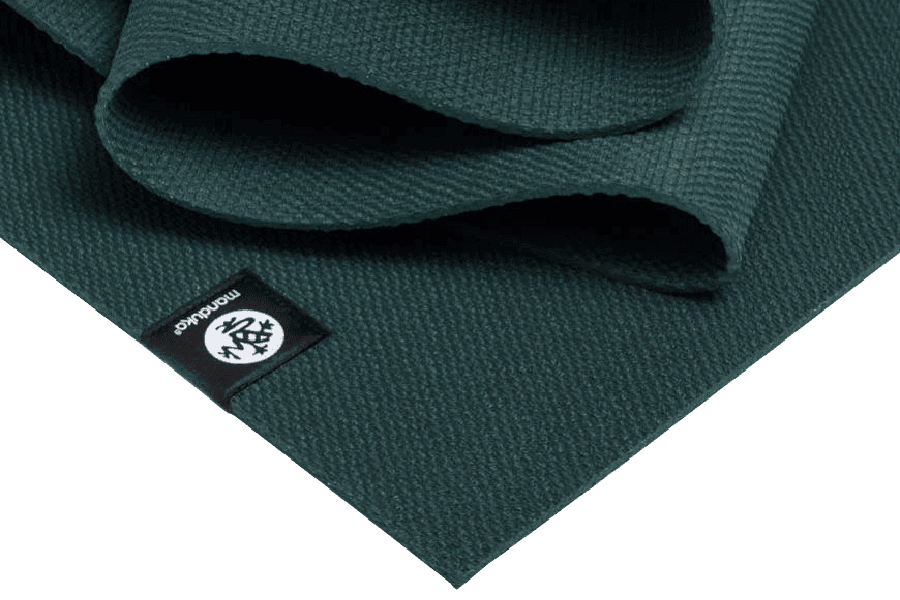
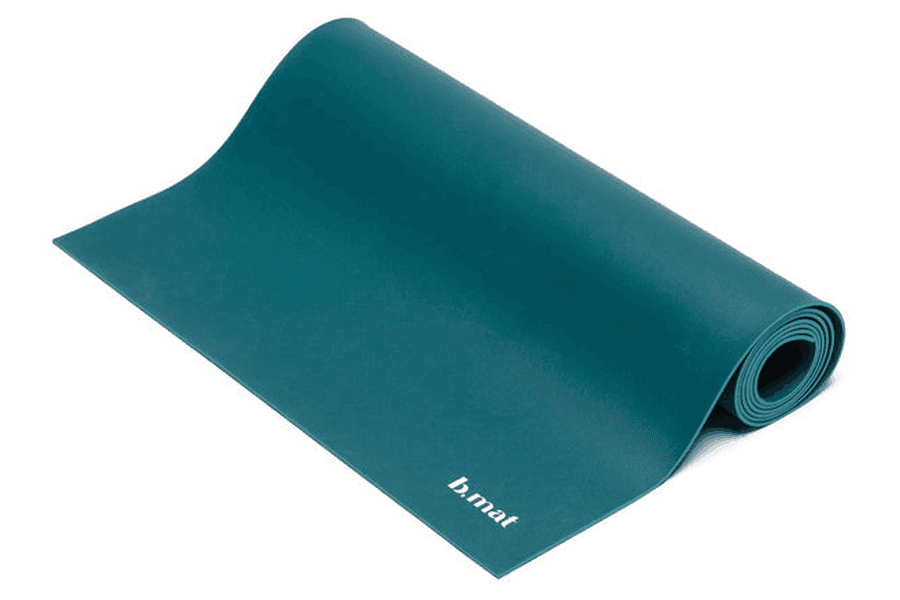
The Manduka X is $72 of closed-cell TPE that Manduka sells as a hybrid fitness mat. The b, halfmoon B Mat Everyday is $118 of 4 mm rubber made in Spain, certified to OEKO-TEX Standard 100, and it is the mat the brand’s grip reputation was built on.
Both are 71 inches long and neither is especially thick, so this is not a cushioning comparison. It is about grip, width, and $46.
Grip: the B Mat is the reason people buy B Mats
The B Mat’s rubber is tacky from the first class, on both faces, with no break-in period, and owners consistently describe it as among the grippiest surfaces they have practiced on. It is dense rather than open-cell, so sweat pools on top rather than soaking in, and heavy sweaters still reach for a towel in a genuinely hot room.
The X holds well with dry hands and its crosshatch texture is not slick. Sweat is where owner reviews split: some report no slipping at all, others describe it as very slippery in a heated class. Closed-cell TPE is the mechanism, since a wet patch stays where it lands until you wipe it. For an unheated practice this rarely comes up. For a hot one it comes up every session.
What tacky rubber does when you slide
Worth knowing before you spend $118. A very tacky mat grabs a foot rather than letting it slide, which is exactly what you want in a standing sequence and exactly what fights you in a style built on sliding transitions. People coming from foam or TPE mats often find the B Mat grabby for the first couple of weeks, especially when pivoting.
The X is smoother and lets a foot travel. If your practice includes a lot of stepping through or dragging a foot forward, that is a real preference and not a defect on either side.
Cushioning: the X is the thicker mat
The X is 5 mm against the B Mat Everyday’s 4. That is one millimeter, and it is TPE against dense rubber, so the two feel more similar underfoot than the numbers suggest. Both are firm rather than plush.
Neither is a mat for bad knees. If joint protection is the point, b, halfmoon’s own answer is the 6 mm B Mat Strong and Manduka’s is a thicker mat entirely.
Size: two inches of width
Both are 71 inches long, so height is a wash. The B Mat is 26 inches wide against the X’s 24, and those two inches are what keep a back foot on rubber in warrior two rather than on the floorboards.
Twenty-six inches is the standard studio width, so the B Mat lines up with the mats either side of you in a packed class. b, halfmoon also sells an 85″ Everyday Long. Manduka does not sell the X in any other size.
Weight and carrying
The X is 3.7 pounds; the B Mat Everyday is 4.1. Both are easy to carry by the standards of this category, and neither ships with a strap.
The B Mat rolls a little thicker because rubber is denser than TPE, but three quarters of a pound is not a reason to choose either one. This is the rare pairing where portability is genuinely not the deciding factor.
Cleaning and what each surface collects
The X is the low-maintenance one by a distance. Nothing gets into closed-cell TPE, so a damp cloth after class is the entire routine and an outdoor session ends with the mat under a tap. It never picks up a smell because there is nowhere for sweat to sit.
The B Mat’s tack is a magnet for dust, hair, and lint, and it needs regular wiping to keep working properly. Sweat never gets inside it, so the smell that open-cell rubber can develop is not a risk here, but it wants more attention than the X does.
Materials and coverage
b, halfmoon describes the B Mat as 100 percent rubber, a mix of natural and synthetic, made in Spain and certified to OEKO-TEX Standard 100, which tests the finished product for harmful substances. It is not latex free, so an allergy rules it out. Coverage is one year.
The X is high-density TPE around Manduka’s Double-Weave scrim, made in Taiwan, with no certifications. Manduka gives it a 30 day return window; the lifetime guarantee applies to the PRO line rather than everything the brand sells.
Price and where to buy
$72 against $118, a gap of $46. The X sells through Manduka and Amazon and discounts by colorway fairly often, so check the current Manduka X price at Amazon against manduka.com.
b, halfmoon does not list the B Mat on Amazon. It comes direct from us.bhalfmoon.com in seven colorways at a price that rarely moves. The brand used to be B Yoga, so older reviews of the B Mat cover this same product.
Bottom line
Buy the B Mat Everyday if your practice is yoga and grip is what has been letting you down. It is two inches wider, tacky on both faces from day one, certified, and warranted for a year. Expect to wipe it often and expect it to feel grabby at first.
Buy the X if the mat also does strength work, intervals, or outdoor sessions. It costs $46 less, cleans with no thought, and for an unheated practice its grip is fine. If you want the B Mat with real cushion instead, our Manduka X against the B Mat Strong covers the 6 mm version.
Manduka X
List price $72
B Mat Everyday 4mm
List price $118
Frequently Asked Questions
- How grippy is the B Mat Everyday?
- Very, and from the first class. Its rubber is tacky on both faces with no break-in period, and owners consistently describe it as among the grippiest mats they have practiced on. It is dense rather than open-cell, so sweat pools on top instead of soaking in, and heavy sweaters still reach for a towel in a genuinely hot room.
- Is the B Mat too grippy?
- Some people find it so at first. Tacky rubber grabs a foot rather than letting it slide, which is what you want in a standing sequence and what fights you in a style built on sliding transitions. People coming from foam or TPE mats often describe it as grabby for a couple of weeks, especially when pivoting. That usually fades.
- Which is better for hot yoga?
- The B Mat, though neither is a hot yoga specialist. Its rubber holds its tack as you sweat, which is what the line is known for, and being dense rather than open-cell it keeps moisture on the surface, so a towel still helps in a genuinely hot room. On the X, sweat has nowhere at all to go, and owners are split on the result: some practice through a dripping class without incident, others gave up and bought a towel.
- How much cushioning does each one give?
- Not much, either way. The X is 5 mm of TPE and the B Mat Everyday is 4 mm of dense rubber, and the two feel more similar underfoot than the numbers suggest because density closes the gap. Neither is a mat for bad knees. b, halfmoon's own answer to that is the 6 mm B Mat Strong.
- Which is easier to look after?
- The X, and by some distance. Nothing gets into closed-cell TPE, so a damp cloth after class is the whole job and an outdoor session ends under a tap. The B Mat pays for its tack by collecting dust, hair, and lint, and it needs wiping regularly to keep gripping properly. Sweat stays out of both mats, so neither goes stale the way an open-cell rubber mat can.
- Where do you buy the B Mat?
- Direct from us.bhalfmoon.com in seven colorways; b, halfmoon does not list it on Amazon, and the price rarely moves. The brand used to be called B Yoga, so older reviews of the B Mat cover this same product. The X sells through both Manduka and Amazon and discounts by colorway fairly often.
Related comparisons
- Manduka X vs Gaiam Performance Dry-Grip 5mm
- Manduka X vs Gaiam Performance Dry-Grip Long & Wide
- Yoga Design Lab Combo 3.5mm vs b, halfmoon B Mat Everyday 4mm
- b, halfmoon B Mat Everyday 4mm vs Manduka GRP Adapt Lite 2.1 4mm
- Manduka X vs IUGA Eco Friendly Non Slip PU
- Manduka PROlite vs b, halfmoon B Mat Everyday 4mm
- Lululemon The Mat 5mm vs b, halfmoon B Mat Everyday 4mm
- Manduka PROlite Long vs b, halfmoon B Mat Everyday 4mm
- Manduka X vs JadeYoga Level One