Manduka PROlite vs Yoloha Unity Pro Cork: Which One Should You Buy?
One of these is the most carryable serious mat Manduka makes, and the other is a 7-pound slab of cork and plant foam that is about as far from PVC as a yoga mat gets. The PROlite is $112, 4.7 mm, and built to last roughly a decade. The Yoloha Unity Pro is $159, 6 mm, made in the USA from 83% renewable materials. The $47 gap buys you a completely different set of priorities.
As an Amazon Associate, we earn from qualifying purchases made through links on this page. How this works
The quick answer
The PROlite is lighter by 2.4 pounds, cheaper by $47, safe with a latex allergy, and the only one of the two making a long-term promise: Manduka's guarantee runs about ten years in the fine print where Yoloha offers 30-day returns and nothing else. Its weakness is grip, since a new one is slick for a few weeks and closed-cell PVC never handles sweat.
The Yoloha grips better, is thicker and wider, comes in sizes up to 84 by 30 inches, and is built from cork and rubber over plant-based foam. It also drew the lowest care and cleaning score in a 19-mat test. Choose it for the material and the size; choose the PROlite for weight, price and longevity.
Get the Manduka PROlite if...
- You carry your mat; 4.6 pounds against 7 decides most practices
- You want a mat measured in decades, with a guarantee behind it
- You have a latex allergy, which rules the cork mat out
- You would rather keep $47 and have an easier surface to clean
Get the Yoloha Unity Pro if...
- You want renewable materials rather than PVC
- You want grip on day one instead of a month of break-in
- You want a wider, thicker mat, with 80 and 84 inch cuts available
- You practice outdoors, where cork handles grass and patios well
Side by side
Price
The PROlite lists for $47 less.
$112
List price · check price at Amazon
$159
List price · check price at yolohayoga.com
Thickness
The Unity Pro is 28% thicker.
4.7 mm0.19″
6 mm0.24″
Weight
The PROlite is 2.4 lbs lighter.
4.6 lbs2.1 kg
7 lbs3.2 kg
Size
The Unity Pro is 1″ longer; the Unity Pro is 2″ wider.
Same on both
- Firm, stable platforms rather than plush cushion
- Both stay flat on the floor without curling
- Neither goes in a washing machine
- Both should stay out of direct sun and hot cars
Full specs
Dimensions
Materials & build
Buying
German PVC against American cork
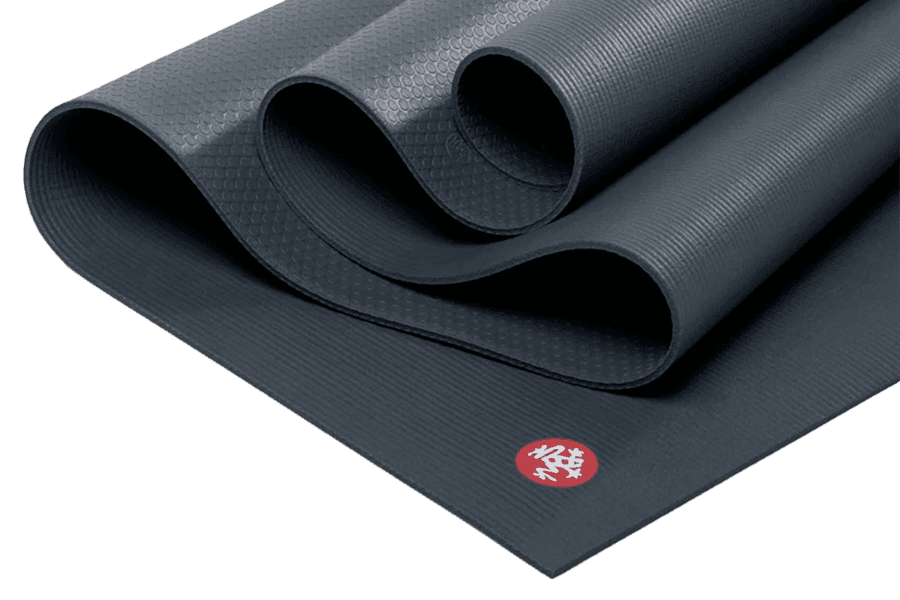
The PROlite is Manduka’s carryable serious mat: 4.7 mm of dense German PVC at 4.6 pounds and $112, backed by a guarantee measured in years. The Yoloha Unity Pro is about as far from that as a yoga mat gets: cork and natural rubber over a plant-based foam core, made in the USA, 6 mm, 7 pounds, $159.
The $47 gap doesn’t buy a better mat in any general sense. It buys a completely different set of priorities, and it costs you 2.4 pounds and most of the warranty.
Grip: the Yoloha wins the first month
A new PROlite slides. It shares its surface with the Manduka PRO, and the traction turns up after a few weeks of regular practice rather than out of the wrapper; Manduka dropped its old sea-salt scrub advice and now says the mat sorts itself out through use. Broken in, it grips confidently with dry hands and keeps improving for years.
The Unity Pro grips immediately, rated 7.5 dry and 6 wet by GearLab. Cork does firm up with moisture, and Yoloha suggests sprinkling water where your hands and feet go before practice, but slickness when wet is still among the mat’s listed drawbacks because water sits on cork rather than soaking in.
Neither is a hot yoga mat. Closed-cell PVC leaves sweat with nowhere to go, and cork has a ceiling. If heated classes are the point, our GRP Adapt 2.0 vs B Mat Strong comparison covers the two surfaces that actually hold.
Weight: 4.6 pounds against 7
This is the most practical difference on the page. Seven pounds is Manduka PRO territory, and GearLab lists heavy and bulky among the Unity Pro’s cons; owners tend to leave one where they unrolled it.
The PROlite exists precisely because Manduka wanted a version of a heavy mat that leaves the house, and 4.6 pounds does that job well. If your mat commutes several times a week, this decides the comparison before grip does.
Feel: smooth slab against grainy cork
The PROlite practises like a firm floor. Dense PVC gives a millimeter under a hand and stops, and its fabric-like top is smooth under skin. That planted quality is what Manduka owners tend to mean when they say a mat feels serious.
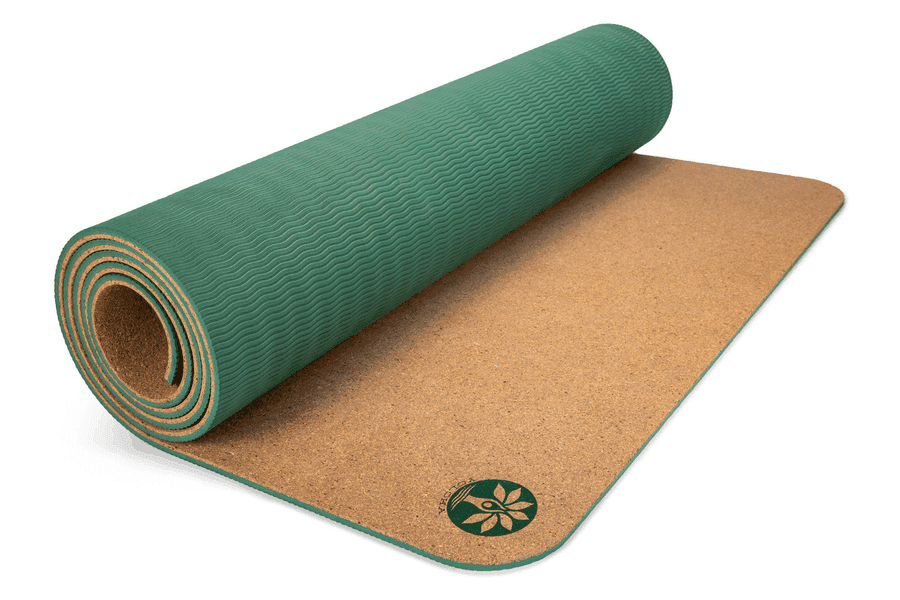
Cork reads as textured and slightly dry, and firmer than 6 mm suggests; GearLab called the Unity Pro extra firm and among the most stable mats it tested. It’s the one surface in this category that photographs nothing like it feels, so put a hand on a cork mat before spending $159 if you possibly can.
Size and options
The Unity Pro is 72″ × 26″, two inches wider and one longer than the PROlite’s 71″ × 24″. Twenty-four inches is the old standard, and the width is what runs out first in a wide stance.
Both lines go bigger. Yoloha sells an 80″ × 26″ Long at $179 and an 84″ × 30″ XL at $219, the latter being one of very few genuinely wide mats made from natural materials. Manduka offers a 79″ PROlite Long and a 79″ × 30″ Long & Wide.
Care: the PROlite asks for nothing
Wipe it down and store it anywhere. A closed PVC surface absorbs nothing, so there’s no routine beyond that and no way for the mat to get sour.
GearLab rated the Yoloha’s care and cleaning 5 out of 10, the lowest of the 19 mats in its test, because cork is porous, takes on moisture and wants thorough drying rather than a quick pass with a cloth. Its compensation is real: cork is naturally antimicrobial, so what it absorbs is less likely to smell. Both should stay out of direct sun and hot cars.
Durability: one decade, one returns window
The PROlite’s case here is the strongest in the comparison. Dense PVC barely wears, and Manduka’s lifetime guarantee is written as roughly ten years of regular use plus one replacement, from a seller it recognizes; on Amazon that means the first-party listing rather than a marketplace one.
Yoloha offers 30 days and no warranty, with its 84 by 30 inch size excluded from free return shipping. Cork resists compression well and the Unity Pro came through GearLab’s test period intact, so it may hold up better than that paperwork implies. Only one of the two is making a promise, though.
Materials, allergies, and the eco case
If renewable content is what you’re shopping for, the Yoloha wins outright: 83% USDA-certified renewable materials, cork and natural rubber over plant-based foam, made in the USA, fully vegan, with no PVC or plasticizers anywhere in it.
The PROlite is exactly what the Yoloha defines itself against, though it’s responsibly made German PVC with an OEKO-TEX Standard 100 certification, and a mat that runs a decade is its own quiet environmental argument. The allergy note runs the other way: the Yoloha blends natural rubber into its cork top, so the trace-latex caution applies, and the PROlite contains none.
Bottom line
Get the PROlite if the mat travels, if you want one purchase to last a decade, or if a latex allergy decides it. It’s $47 cheaper, 2.4 pounds lighter, easier to clean, and the only one here with a real guarantee. Give it a month before you judge the grip. Check the current price on Amazon, where it discounts fairly often.
Get the Unity Pro if you want renewable materials rather than PVC, a wider and thicker mat, grip on day one, or a surface you can take outside. It sells direct through yolohayoga.com, and the 84 by 30 inch cut is one of the few genuinely wide natural mats anyone makes.
Manduka PROlite
List price $112
Yoloha Unity Pro Cork
List price $159
Frequently Asked Questions
- Which grips better?
- The Yoloha, in the first month decisively. A new PROlite is slick and takes a few weeks of practice before the traction arrives; Manduka dropped its old sea-salt scrub advice and now says the surface sorts itself out through use. The Unity Pro grips immediately, rated 7.5 dry and 6 wet by GearLab. Neither is a hot yoga mat: PVC leaves sweat sitting on top, and water sits on cork rather than soaking in, which is why slickness when wet is among the Yoloha's listed drawbacks.
- Is 2.4 pounds a meaningful difference?
- It is the most practical difference on this page. Seven pounds is Manduka PRO territory, and GearLab lists heavy and bulky among the Unity Pro's cons; owners tend to leave one where they unrolled it. The PROlite exists precisely because Manduka wanted a version of a heavy mat that leaves the house, and 4.6 pounds does that job well.
- What does cork feel like?
- Grainy and slightly dry under the hand, quite unlike the smooth fabric-like finish of the PROlite. GearLab called the Unity Pro extra firm and among the most stable mats it tested, which suits standing work and outdoor practice. Whether you like it against bare skin is genuinely personal and product photos convey none of it, so put a hand on a cork mat before spending $159 if you possibly can.
- Which is easier to look after?
- The PROlite, by a wide margin. It wipes down and asks for nothing else, because a closed PVC surface absorbs nothing. GearLab rated the Yoloha's care and cleaning 5 out of 10, the lowest of the 19 mats in its test, because cork is porous, takes on moisture and wants thorough drying rather than a quick wipe. Cork's compensation is that it is naturally antimicrobial, so what it absorbs is less likely to smell.
- How do the guarantees compare?
- This is the PROlite's strongest section. Manduka's lifetime guarantee is written as roughly ten years of regular use plus one replacement, from a seller it recognizes, and dense PVC genuinely does last that long. Yoloha offers a 30-day return window and no warranty, with its largest 84 by 30 inch size excluded from free return shipping. Cork resists compression well, so the Yoloha may hold up better than that paperwork implies, but only one brand is putting anything in writing.
- Which is the better environmental buy?
- The Yoloha, and comfortably. It is built from 83% USDA-certified renewable materials, cork and natural rubber over plant-based foam, made in the USA, with no PVC or plasticizers anywhere in it. The PROlite is PVC, though responsibly made German PVC with an OEKO-TEX Standard 100 certification, and its decade lifespan is its own quiet argument: one mat that lasts ten years is a smaller footprint than three that do not.
Related comparisons
- Manduka PROlite vs JadeYoga Harmony 74"
- Manduka PROlite vs Lululemon The Mat 5mm
- Manduka PROlite vs JadeYoga Harmony 68"
- Manduka PROlite vs b, halfmoon B Mat Everyday 4mm
- Manduka PRO vs Yoloha Unity Pro Cork
- Manduka PROlite vs Suga SugaMat
- Manduka PROlite vs Yoga Design Lab Combo 3.5mm
- Manduka PRO Long vs Yoloha Unity Pro Cork
- JadeYoga Harmony XW vs Yoloha Unity Pro Cork