Manduka PROlite vs Retrospec Solana 1/2": Which One Should You Buy?
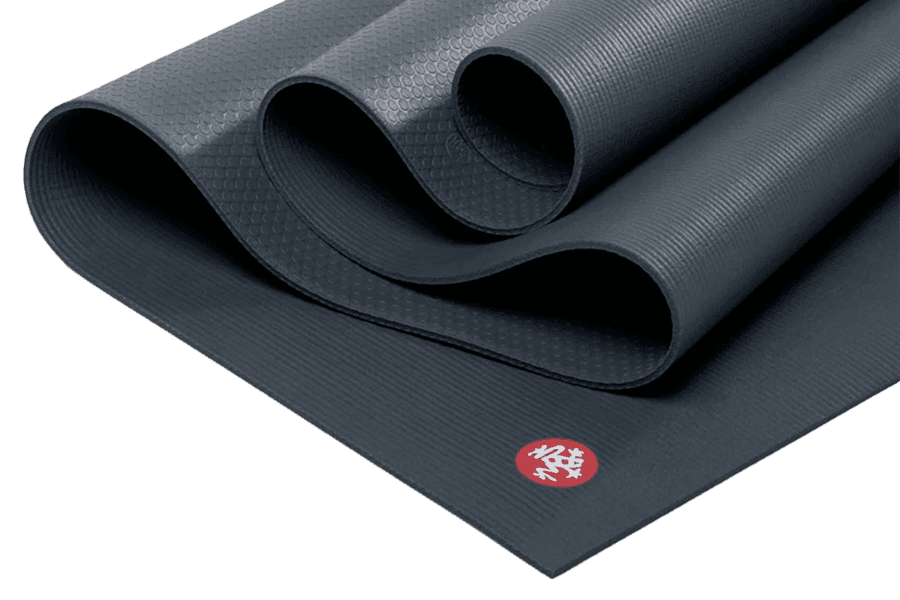
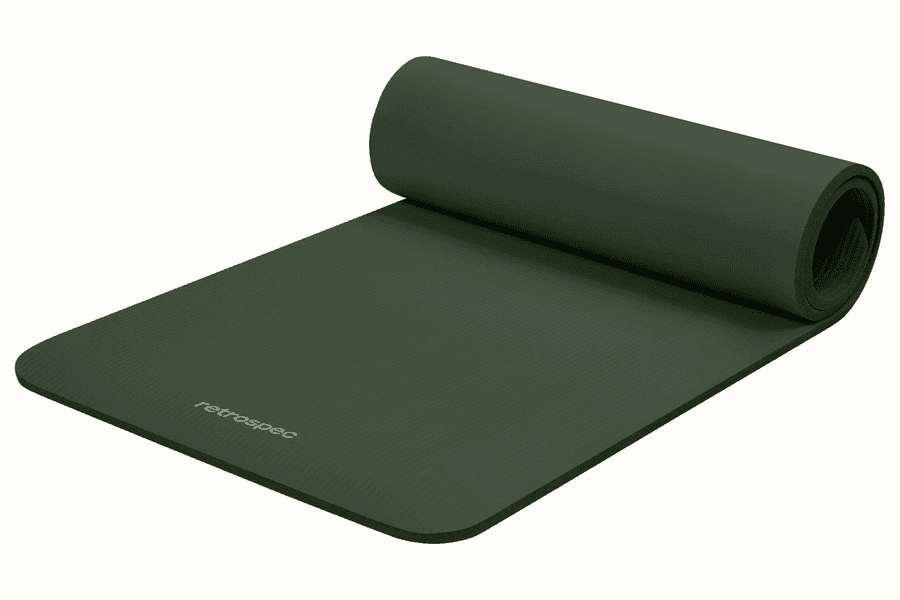
Put these two side by side and the outlines almost match: 71 by 24 inches for the PROlite, 72 by 24 for the Solana. Everything under the outline is different. One is dense German PVC built to last a decade, the other is half an inch of soft foam built to cushion a hard floor, and there is about $87 between them.
As an Amazon Associate, we earn from qualifying purchases made through links on this page. How this works
The quick answer
The PROlite is the PRO's construction in a lighter cut: 4.7 mm of closed-cell PVC, 4.6 pounds, made in Germany, OEKO-TEX certified, and covered by Manduka's lifetime guarantee. The Solana 1/2" is 12.7 mm of NBR foam with a ribbed surface and a nylon strap, about $25, and roughly 9,200 Amazon ratings averaging 4.4 stars.
For actual yoga the PROlite is the better mat: it stays put under a standing foot, it does not dent, and it will outlast several Solanas. Take the Solana if your knees are the limiting factor, if your session is mostly floor work, or if you need a cheap mat for a room where a $112 one would feel wasted.
Get the Manduka PROlite if...
- You practice standing sequences and want stable footing
- You want Manduka density in a mat you can actually carry
- You want a mat that runs for years rather than seasons
- You want a lifetime guarantee behind the purchase
Get the Retrospec Solana 1/2" if...
- Your knees or hips need padding on a hard floor
- You mostly stretch, do Pilates or follow floor workouts
- You want 3 pounds and a strap in the box
- You'd rather keep about $87
Side by side
Price
The Solana 1/2" lists for about $87 less.
$112
List price · check price at Amazon
$24.99
List price · check price at Amazon
Thickness
The Solana 1/2" is 170% thicker.
4.7 mm0.19″
12.7 mm0.5″
Weight
The Solana 1/2" is 1.6 lbs lighter.
4.6 lbs2.1 kg
3 lbs1.36 kg
Size
The Solana 1/2" is 1″ longer; same width.
Same on both
- 24 inches wide and around 72 inches long
- Closed-cell, so sweat sits on the surface
- Light enough to carry to class
- Wipe clean, no special products needed
Full specs
Dimensions
Materials & build
Buying
Same outline, opposite construction
Lay these two side by side and the footprints nearly match: 71″ × 24″ for the PROlite, 72″ × 24″ for the Solana. Underneath, they could not be less alike. The PROlite is 4.7 mm of PVC compressed until it weighs 4.6 pounds. The Solana is 12.7 mm of soft foam weighing 3.
The price gap is about $87, and it buys density and years rather than comfort. Whether that is the right purchase depends on whether your session is spent standing up or lying down.
Firmness is what the PROlite is selling
Manduka’s PVC is dense enough that 4.7 mm does not deflect under your weight. Standing on it feels like standing on the floor with a skin over it, which sounds unappealing until you try to balance on something soft. Your foot stays where you put it and the mat stops being a variable.
The Solana gives, and at half an inch it gives unevenly under one foot. Retrospec markets this version as the steadier of its two, which is true relative to the 1″ Solana. Relative to a yoga mat it is still a cushion, and in balance holds you feel that.
Where the foam wins
Kneeling on 4.7 mm of dense PVC over tile is not fun, and that is the PROlite’s clearest weakness. The Solana was built for exactly this: low lunges, table top, seated work and anything spent on the ground are noticeably more comfortable on half an inch of NBR foam.
The cheap fix on the Manduka side is a folded blanket or a knee pad, which adds padding where it helps and leaves the rest of the mat firm. If most of your session is on the floor, though, buying the padding into the mat makes more sense than working around it.
The PROlite’s break-in period is real
A new Manduka closed-cell mat is slick on top for the first few weeks. This is the most common complaint about the PROlite and it catches people out at $112. Manduka retired its old salt-scrub recommendation and now says the slickness resolves with regular use, which matches what owners report, but it does mean the mat is at its worst when you unroll it.
The Solana has no break-in and no improvement curve either. Its ribbed surface is what it will always be: fine under a dry bare foot, unhelpful under a damp palm.
Grip: both closed-cell, so both fail wet
Neither mat absorbs anything, so in a warm room sweat sits on the surface on both. GearLab did not test the PROlite specifically, but it tested the PRO, which shares the material and the factory, and scored it 7 out of 10 for wet grip, mid-pack among 19 mats. The PROlite behaves similarly.
If sweaty hands are your actual problem, neither of these solves it. Natural rubber or an absorbent top does, and our PROlite vs Jade Harmony comparison covers that route properly.
Unrolling day
Retrospec tells buyers the foam may release a harmless odor and asks them to unroll the mat and air it for a day or two before use. NBR is known for this and it is worth planning around if the mat lives in a bedroom.
The PROlite has a milder PVC smell that fades within a couple of weeks. Neither mat should be stored in direct sunlight, which is hard on PVC and harder on foam.
Lifespan and warranties
The PROlite is built on the same PVC as the PRO, which GearLab found testers still using after 20 years. Manduka’s lifetime guarantee works out in the fine print to roughly ten years of regular use, one replacement, and proof of purchase from an authorized seller, with Amazon qualifying only when the mat is sold and shipped by Amazon itself.
The Solana takes permanent dents where your knees, elbows and heels land, usually inside a year of steady use, and its edges tear before the middle fails. Retrospec warrants manufacturing defects for six months and takes returns within 30 days for unused product.
Sizes
The PROlite comes in a 68″ Short, this 71″ standard, a 79″ Long and a 79″ × 30″ Long & Wide. If you want the same construction with more thickness and width, the PRO is 6 mm and 26 inches across.
Retrospec sells the Solana only at 72″ × 24″, in half inch and one inch. The one inch version is softer still, and we would steer anyone doing yoga away from it.
Price and value
List prices are $112 and $24.99. Check the current price on the PROlite and the Solana at Amazon, where the Solana holds 4.4 stars across roughly 9,200 ratings.
Four Solanas cost about one PROlite, and you would work through several of them in the decade a PROlite lasts. That only matters if you keep practicing. If you are still deciding, $25 is a sensible amount to risk.
Bottom line
Buy the Manduka PROlite if you practice yoga regularly and want a firm, stable surface you will not replace. It is the PRO in a carryable cut, and the break-in period is the price of admission.
Buy the Retrospec Solana 1/2″ if padding is the point, if your knees hurt on a hard floor, or if you want a cheap mat for a spare room. It cushions well, comes with a strap, and does not pretend to be a studio mat.
Manduka PROlite
List price $112
Retrospec Solana 1/2"
List price $24.99
Frequently Asked Questions
- Is the PROlite too thin at 4.7 mm?
- It is thinner than the Solana by a factor of nearly three, but density does most of the work. Manduka compresses the PVC hard enough that 4.7 mm resists your weight completely, so nothing sinks and nothing tips. What you give up is plushness on your kneecaps, and the usual fix is a folded blanket under the knee rather than a thicker mat under everything.
- Does the PROlite need breaking in?
- Yes, and it is the mat's best known flaw. A new PROlite has a slick top surface for the first few weeks. Manduka has retired its old salt-scrub advice and now says the slickness resolves with regular use, which matches what most owners report. If you want grip on day one, a natural rubber mat is the better choice; the Solana will not save you either, since its ribbed foam gets slippery the moment your hands are damp.
- Which is better for bad knees?
- The Solana, comfortably. Half an inch of soft NBR foam is far kinder on a kneecap than 4.7 mm of dense PVC, and joint padding is the whole point of the mat. The trade is that the same foam moves under your standing foot, so balance poses get harder. Plenty of people with sore knees keep a firm mat and add a knee pad, which is cheaper than either mat here.
- How long does each mat last?
- The PROlite is built on the same PVC as the PRO, which GearLab found testers still using after 20 years, and Manduka's lifetime guarantee amounts to roughly ten years of regular use with one replacement, from an authorized seller. Retrospec covers manufacturing defects for six months and takes returns within 30 days. NBR foam usually shows permanent dents where knees and elbows land within a year of regular practice.
- Do both mats smell when new?
- The Solana more than the PROlite. Retrospec tells buyers the foam may release a harmless odor and to air the mat for a day or two before use, which is standard for NBR. The PROlite has a milder PVC smell that fades within a couple of weeks of unrolling it.
- What if I want the same mat in a bigger size?
- The PROlite comes in a 68 inch Short, a 79 inch Long, and a 79 by 30 inch Long & Wide, and the full-fat PRO adds 6 mm of thickness and a 26 inch width. Retrospec only offers the Solana in 72 by 24, in half inch and one inch thicknesses.
Related comparisons
- Manduka PROlite vs JadeYoga Harmony 2.0 68"
- Manduka PROlite vs JadeYoga Harmony 74"
- Amazon Basics 1/2 Inch Extra Thick vs Retrospec Solana 1/2"
- Manduka PROlite vs Lululemon The Mat 5mm
- Manduka PROlite vs JadeYoga Harmony 68"
- Manduka PROlite vs b, halfmoon B Mat Everyday 4mm
- Manduka PROlite vs Suga SugaMat
- Manduka PROlite vs Yoga Design Lab Combo 3.5mm
- Retrospec Solana 1/2" vs Gaiam Essentials Fitness Mat 10mm