Manduka PROlite vs Jade Travel: Which One Should You Buy?
Only $32 separates these, and the Jade Travel is thick enough that plenty of owners use it as their only mat. Grip and lifespan pull in opposite directions here: one grips from the first minute and one is built to outlive everything you own.
As an Amazon Associate, we earn from qualifying purchases made through links on this page. How this works
The quick answer
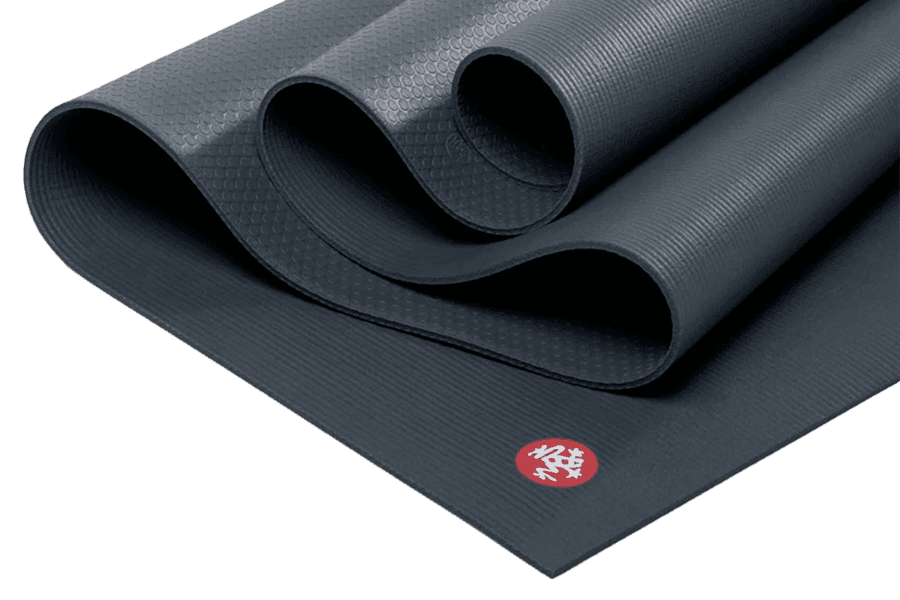
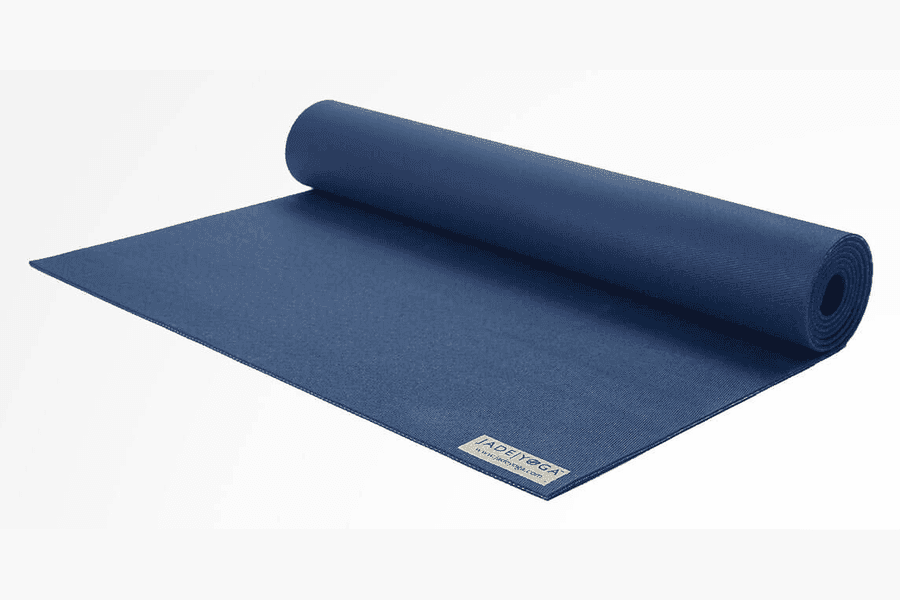
The PROlite is 4.7 mm of dense closed-cell PVC made in Germany, certified to OEKO-TEX Standard 100, three inches longer, and covered by a lifetime guarantee. It is also slick for the first few weeks. The Jade Travel is 3.2 mm of open-cell natural rubber made in the USA that grips immediately and folds flat into luggage at 3 pounds.
Buy the PROlite if this is the mat you want to still own in ten years. Buy the Jade Travel if the mat flies with you, or if grip on day one matters more than lifespan.
Get the Manduka PROlite if...
- You want a mat that lasts a decade, backed by a lifetime guarantee
- You want denser cushioning for daily practice
- You want an OEKO-TEX certified mat and a latex-free surface
- You want longer or wider sizes in the same model
Get the Jade Travel if...
- The mat travels and needs to fold flat rather than roll
- You want rubber tack from the first minute, with no break-in
- You want the lighter mat, 3 pounds against 4.6
- You'd rather keep about $32
Side by side
Price
The Travel lists for about $32 less.
$112
List price · check price at Amazon
$79.95
List price · check price at Amazon
Thickness
The PROlite is 47% thicker.
4.7 mm0.19″
3.2 mm0.13″
Weight
The Travel is 1.6 lbs lighter.
4.6 lbs2.1 kg
3 lbs1.4 kg
Size
The PROlite is 3″ longer; same width.
Same on both
- Both are 24 inches wide
- Both lie flat once settled
- Neither ships with a carry strap
- Both are sold in a longer version
Full specs
Dimensions
Materials & build
Buying
A studio mat and a travel mat, $32 apart
The Manduka PROlite is $112 for 4.7 mm of dense closed-cell PVC made in Germany, certified to OEKO-TEX Standard 100 and covered by a lifetime guarantee. The Jade Travel is $79.95 for 3.2 mm of open-cell natural rubber made in the USA that folds flat into a suitcase.
The price gap is small enough that this is a real choice rather than a category mismatch, and the Travel is thick enough that plenty of owners use it as their only mat. Grip and lifespan pull in opposite directions here.
Grip: the Jade wins from the first minute
Jade’s open-cell rubber is tacky the moment you unroll it and it takes on moisture as a class goes on, which is why Jade mats hold up in warm rooms. The Travel was not in OutdoorGearLab’s 2026 lineup, but the Jade Harmony 2.0, which uses the same rubber family, scored 9.5 dry and 7 wet and took the roundup’s award for eco-friendly dry grip.
The PROlite is famously slick when new. Manduka has retired the salt-scrub advice it used to give and now says the slickness resolves with use, which matches owner reports of a few weeks of regular practice before the surface comes good. GearLab listed a break-in period among the PRO line’s downsides and rated the PRO 9 dry and 7 wet once it had settled. If you want grip on day one, the Jade is the answer.
Cushioning: 4.7 mm of dense PVC against 3.2 mm of rubber
The PROlite is denser as well as thicker, so the gap feels bigger than a millimeter and a half. Manduka’s PVC pushes back rather than compressing, which is why GearLab gave the thicker PRO a perfect 10 for comfort using the same construction.
The Travel is more cushion than most packable mats give you, and still thin by studio standards. It is comfortable on wood and thin on tile. If you spend real time on your knees, the PROlite is the more forgiving surface.
Portability: folding beats rolling for luggage
The Travel is 3 pounds and folds rather than rolls, so it lies flat in a suitcase instead of strapping to the outside of a bag. For anyone who flies with a mat, that format is the entire reason the product exists.
The PROlite is 4.6 pounds and exists because the full PRO is 7.5. It carries comfortably to a studio and it is a roll, not a fold, so it takes up length in a car boot or a closet.
Durability: the PROlite is built to outlive everything
Manduka’s lifetime guarantee on the PROlite means roughly ten years of regular use in the fine print, one replacement, proof of purchase from an authorized seller, with Amazon qualifying only when the mat is sold and shipped by Amazon itself. One GearLab tester has been practicing on the same PRO for twenty years.
The Travel is natural rubber, so it degrades in sunlight and it creases along the fold lines over time. Jade covers it for one year and excludes sun damage and harsh cleaners. Kept indoors it lasts years; left in a hot car it does not.
Size and sizes
The PROlite is 71″ × 24″ and the Travel is 68″ × 24″. Same 24 inch width, three inches of length in the PROlite’s favor, which matters if you are close to six feet.
Manduka sells the PROlite in four sizes, including a 79″ Long and a 79″ × 30″ Long & Wide, across thirteen colorways. Jade sells the Travel in three colorways and a 74″ length for $93.75.
Cleaning and upkeep
The PROlite is closed-cell, so nothing soaks in. A wipe after class is the routine, and it never develops the smell an absorbent mat can. Pale colorways show marks.
The Travel absorbs what you sweat on it, which is exactly what makes it grip, and the cost is an occasional deep clean and a slow dry afterwards. Jade’s warranty excludes harsh cleaners, so water and a cloth is the approved routine. Like all rubber mats it also attracts dust and lint.
PVC against natural rubber
The PROlite is PVC certified to OEKO-TEX Standard 100, made in a German factory Manduka names, in an emissions controlled process the brand publicises. It is latex free, which matters if you have an allergy, and it is not recyclable in any practical way.
The Travel is sustainably farmed natural rubber with no PVC, made in the USA, and Jade plants a tree for every mat sold, over two million so far. Jade describes its mats as 99 percent latex free rather than latex free, so it is out if you react to latex. It also smells of rubber for the first couple of weeks.
Price and where to buy
$112 against $79.95. Manduka discounts PROlite colorways through its own store, so compare that with the current Manduka PROlite price at Amazon. Buying from Manduka or from Amazon direct keeps the lifetime guarantee valid; a marketplace seller does not.
Jade sells the Travel through its own site and Amazon, so check the current Jade Travel price at Amazon too.
Bottom line
Buy the PROlite if this is the mat you want to still own in ten years. It is denser, longer, certified, and guaranteed, and for a home or studio practice it is the better surface once you have broken it in.
Buy the Jade Travel if the mat flies with you, or if grip on day one matters more than lifespan. At 3.2 mm it is a real mat rather than a topper, and folding beats rolling for luggage every time. If you want an even lighter Jade, the Travel against the Voyager covers the thin end of the range.
Manduka PROlite
List price $112
Jade Travel
List price $79.95
Frequently Asked Questions
- How long does the PROlite take to break in?
- Owners generally report a few weeks of regular practice. Manduka has retired the salt-scrub advice it used to give and now says the slickness resolves with use. GearLab listed a break-in period among the PRO line's downsides and rated the PRO 9 dry and 7 wet once settled. The Jade Travel needs none of this: open-cell rubber is tacky the moment you unroll it.
- Is 3.2 mm enough cushioning for regular practice?
- On wood or carpet, for most people, yes. The Jade Travel is meaningfully thicker than most packable mats and is not a topper. On tile or concrete you will notice it under a knee, and the PROlite's denser 4.7 mm is the more forgiving surface there.
- Which is better for hot yoga?
- The Jade Travel. Its open-cell rubber takes on moisture as a class goes on, and the Jade Harmony 2.0, which uses the same rubber family, scored 9.5 dry and 7 wet in GearLab's 2026 roundup. The PROlite is closed-cell PVC, so sweat sits on the surface, and GearLab describes the PRO line as more slippery when wet.
- Do the fold creases in the Jade Travel go away?
- They relax within a few minutes of unrolling and never disappear entirely. Over years, repeated folding along the same lines is where a travel mat eventually fails. The PROlite is rolled rather than folded and does not crease, though it takes up more length in a car or a closet.
- How is each one covered?
- Manduka's lifetime guarantee on the PROlite means roughly ten years of regular use in the fine print, one replacement, proof of purchase from an authorized seller, with Amazon qualifying only when sold and shipped by Amazon itself. Jade covers the Travel for one year and excludes sun damage and harsh cleaners, which matters because natural rubber degrades in sunlight.
- Which is safe for a latex allergy?
- The PROlite. It is PVC and latex free. Jade describes its mats as 99 percent latex free, which is not the same thing, so the Travel is out if you react to latex.
Related comparisons
- Manduka PROlite vs JadeYoga Harmony 74"
- Manduka PROlite vs Lululemon The Mat 5mm
- Manduka PROlite vs JadeYoga Harmony 68"
- Manduka PROlite vs b, halfmoon B Mat Everyday 4mm
- JadeYoga Travel 68" vs Manduka PRO Travel
- Manduka PROlite vs Suga SugaMat
- Manduka PROlite vs Yoga Design Lab Combo 3.5mm
- JadeYoga Travel 68" vs Hugger Mugger Earth Elements 5mm
- Manduka X vs JadeYoga Travel 68"