Manduka PROlite vs Gaiam Performance Dry-Grip Long & Wide: Which One Should You Buy?
The PROlite is Manduka's lifetime-guaranteed mat in a lighter cut, 71 by 24 inches of dense German PVC. The Gaiam Dry-Grip Long & Wide is 78 by 26 inches for $37 less, which is more floor than Manduka gives you at this price. Both are PVC and both carry a lifetime guarantee, so this comes down to how much the extra size is worth against how the two mats age.
As an Amazon Associate, we earn from qualifying purchases made through links on this page. How this works
The quick answer
The PROlite is 4.7 mm of closed-cell PVC made in Germany, OEKO-TEX certified, 4.6 pounds, with Manduka's lifetime guarantee behind it and thirteen colorways. The Gaiam is 5 mm of topcoated PVC at 78 by 26 inches and 5 pounds, $74.98, with a lifetime guarantee of its own and one color at a time. GearLab tested the standard 68 inch Dry-Grip at 62 out of 100, with 4 out of 10 for materials and 3.5 for wet grip, second worst in a field of 19.
Get the Gaiam if you want more mat for less money and your practice is dry. Get the PROlite if you want a mat that is still usable in ten years, since the density and the materials score are where the extra $37 goes.
Get the Manduka PROlite if...
- You want one mat that lasts a decade rather than two that don't
- You want OEKO-TEX certified material made in Germany
- You want a guarantee that Manduka actually honors
- You want thirteen colorways and three other sizes
Get the Gaiam Dry-Grip Long & Wide if...
- You are tall enough to want 78 inches
- You want 26 inches of width instead of 24
- You'd rather keep about $37
- You want cushioning now rather than durability later
Side by side
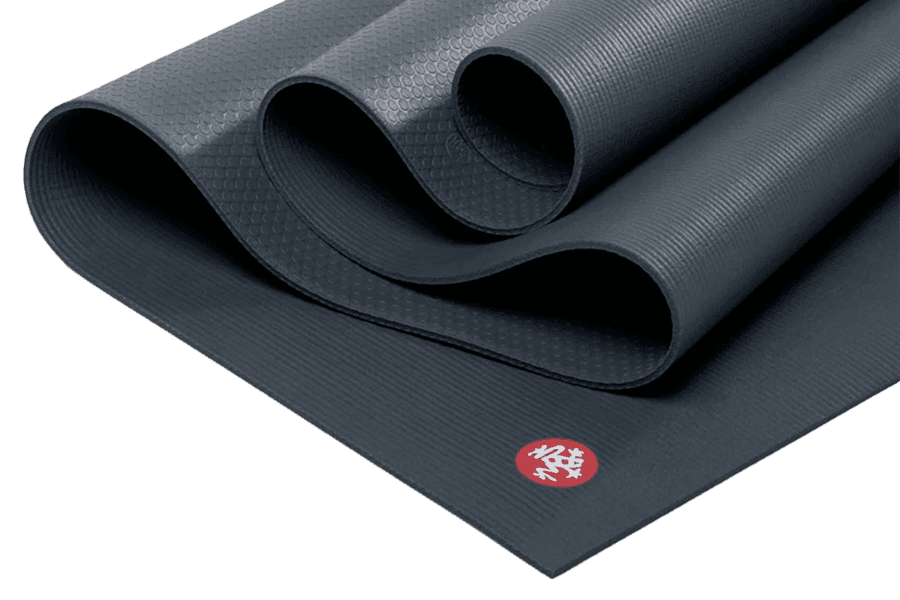
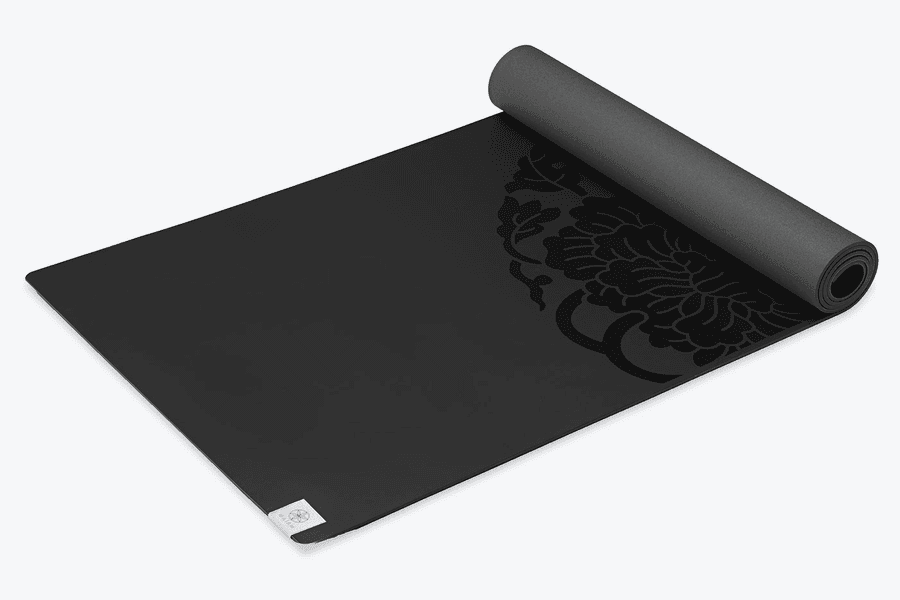
Price
The Dry-Grip L&W lists for about $37 less.
$112
List price · check price at Amazon
$74.98
List price · check price at Amazon
Thickness
The Dry-Grip L&W is 6% thicker.
4.7 mm0.19″
5 mm0.2″
Weight
The PROlite is 0.4 lbs lighter.
4.6 lbs2.1 kg
5 lbs2.27 kg
Size
The Dry-Grip L&W is 7″ longer; the Dry-Grip L&W is 2″ wider.
Same on both
- PVC construction, latex-free
- Closed surfaces, so sweat sits on top
- Around 5 pounds
- Both carry a lifetime guarantee on paper
Full specs
Dimensions
Materials & build
Buying
More mat, or a mat that lasts
The Gaiam Dry-Grip Long & Wide is 78″ × 26″ for $74.98. That is more floor than anyone else sells at this price, and seven inches longer and two wider than the PROlite, which is 71″ × 24″ for $112.
Both are PVC and both carry a lifetime guarantee on paper, so the spec sheets look closer than the mats are. The $37 goes into density, where the mat is made, and how long the surface stays usable.
Size is the Gaiam argument
At 78 by 26 inches the Gaiam fits most people over six foot in savasana and keeps your hands on the mat in wide-legged poses. The PROlite’s 71 by 24 is a standard cut that runs short above about five foot ten.
Manduka does sell bigger, and it costs more: the PROlite Long is 79″ × 24″ at $124 and the PROlite Long & Wide is 79″ × 30″. Both are well above the Gaiam’s price for the same idea.
Grip: neither one is a hot yoga mat
Gaiam markets the Dry-Grip for heated practice. GearLab tested the standard 68 inch version and measured 3.5 out of 10 when wet, second worst of the 19 mats in the 2026 field, against 6.5 dry. The topcoat sheds moisture rather than absorbing it, so sweat pools on top of it.
The PROlite is closed-cell PVC and does not absorb anything either. It also needs breaking in: a new one feels slick until the fabric-like surface has seen a few weeks of use. Manduka retired its old salt-scrub advice and now says the slickness resolves on its own, which matches what owners report.
Density against cushion
The PROlite is 4.7 mm of dense German PVC that barely compresses. That is why it feels planted in standing poses and why kneeling on it over a hard floor feels protected rather than padded.
The Gaiam is 5 mm of softer PVC. GearLab rated the standard version 8 out of 10 for comfort and support, better than most mats at this price, though its 4 out of 10 for materials is the lowest score in that column across the whole test.
Ten years against a few
The PROlite is the mat people are still using a decade later. Manduka’s PVC is dense and closed-cell, and the surface wears down slowly and evenly rather than failing at a point.
The Gaiam’s topcoat is a surface treatment, and it wears thin exactly where hands and feet land. Once it does, the grip goes with it. That is not a defect so much as what a $75 coated PVC mat does, and it is the practical difference the price is buying.
Two lifetime guarantees that are not the same
Manduka’s fine print works out to roughly ten years of regular use, one replacement, with proof of purchase from an authorized seller, and Amazon qualifies only when the mat is sold and shipped by Amazon rather than a marketplace seller. It is a claim people actually make.
Gaiam’s covers manufacturing defects on a $75 mat. Neither one covers a topcoat wearing thin or foam softening under normal use, which is how both of these mats end. The coverage terms line up with how the two materials wear.
Weight and bulk
4.6 pounds for the PROlite and 5 for the Gaiam, close enough not to matter. Both are far easier to carry than the 7.5 pound Manduka PRO, which is the whole reason the PROlite line exists.
Rolled, the Gaiam is the bulkier one because it is longer and wider. If it is going in a car footwell or a studio cubby, measure first; 78 by 26 inches of 5 mm PVC makes a large cylinder.
Colorways, price, and where to buy
The PROlite comes in around thirteen colorways. The Gaiam Long & Wide is sold one print at a time and was black at last count, so there is effectively no choice. Check the current prices for the PROlite and the Gaiam before you order.
One trap on the Gaiam side: its Amazon listing covers several sizes, and the default bullets describe the 68 inch standard mat while the detail table shows 78 by 26. Confirm the size in the cart. The standard Dry-Grip is $69.98, only five dollars less, which makes the bigger version the sensible one of the pair.
What each one is actually made of
The PROlite is closed-cell PVC made in Germany and certified to OEKO-TEX Standard 100, which means the finished material has been tested for harmful substances. That is close to the only meaningful third-party check available on a PVC mat, and most mats at this price do not carry it.
The Gaiam is latex-free PVC with a grip topcoat and no certification. GearLab rated the standard version 4 out of 10 for materials, the lowest mark in that column across all 19 mats it tested, which is a blunt read on what coated budget PVC is.
Neither is a natural-materials choice. Both are plastics and both are latex-safe, and if rubber or cork is what you are after, you are shopping in a different part of the market at a different weight.
Bottom line
Buy the Gaiam Dry-Grip Long & Wide if you want the most floor for the money and you practice in a cool room. Seven extra inches of length and two of width for $37 less is a genuinely good deal, as long as you are not counting on it for heated classes.
Buy the PROlite if you want one mat for the next ten years. It is denser, better made, certified, backed by a guarantee Manduka honors, and available in real colors. You pay for that with a standard-size mat and a few weeks of break-in.
Manduka PROlite
List price $112
Frequently Asked Questions
- Is the Gaiam really good for hot yoga?
- Its listing says so, and GearLab's testing says otherwise. The standard Dry-Grip scored 3.5 out of 10 for wet grip, second worst of the 19 mats in the 2026 roundup, against 6.5 dry. The topcoat repels moisture rather than absorbing it, so sweat pools. For heated classes, a mat towel is not optional on this one.
- Does the PROlite need breaking in?
- Yes, though less than the full PRO. A new PROlite feels slick until the fabric-like surface has been used for a few weeks. Manduka retired its old salt-scrub advice and now says the slickness resolves with use, which matches what owners report. If you want grip on day one, neither of these mats is really it.
- Do both lifetime guarantees mean the same thing?
- Not quite. Manduka's fine print works out to roughly ten years of regular use, one replacement, with proof of purchase from an authorized seller, and Amazon qualifies only when the mat is sold and shipped by Amazon. Gaiam's covers manufacturing defects. Neither covers foam softening or a topcoat wearing thin, which is how these mats actually end.
- How much bigger is the Gaiam?
- Seven inches longer and two inches wider, which is a meaningful amount of floor. At 78 by 26 it fits most people over six foot in savasana and keeps hands on the mat in wide-legged poses. The PROlite is a standard 71 by 24. Manduka does sell a Long at 79 by 24 for $124 and a Long & Wide at 79 by 30, both above the Gaiam's price.
- Which is heavier?
- The Gaiam, at 5 pounds against 4.6, which is close enough not to matter. Both are easy to carry compared to the 7.5 pound Manduka PRO. The Gaiam is bulkier rolled because it is longer and wider, so it takes up more room in a car or a studio cubby even though the weight difference is small.
- What if I want the standard Gaiam Dry-Grip?
- It is 68 by 24 inches at $69.98, only $5 less than the Long & Wide, and it is the version GearLab actually tested at 62 out of 100. Same surface, same construction, ten fewer inches of length and two of width. At a $5 gap the bigger one is the obvious pick of the two unless your practice space is genuinely small.
Related comparisons
- Manduka PROlite vs JadeYoga Harmony 2.0 68"
- Manduka PROlite vs JadeYoga Harmony 74"
- Manduka X vs Gaiam Performance Dry-Grip Long & Wide
- Manduka PROlite vs Lululemon The Mat 5mm
- Manduka PROlite vs JadeYoga Harmony 68"
- Manduka PROlite vs b, halfmoon B Mat Everyday 4mm
- Manduka PROlite vs Suga SugaMat
- Manduka PROlite vs Yoga Design Lab Combo 3.5mm
- Hugger Mugger Earth Elements 5mm vs Gaiam Performance Dry-Grip Long & Wide