Manduka PROlite Long & Wide vs Manduka eKO: Which One Should You Buy?
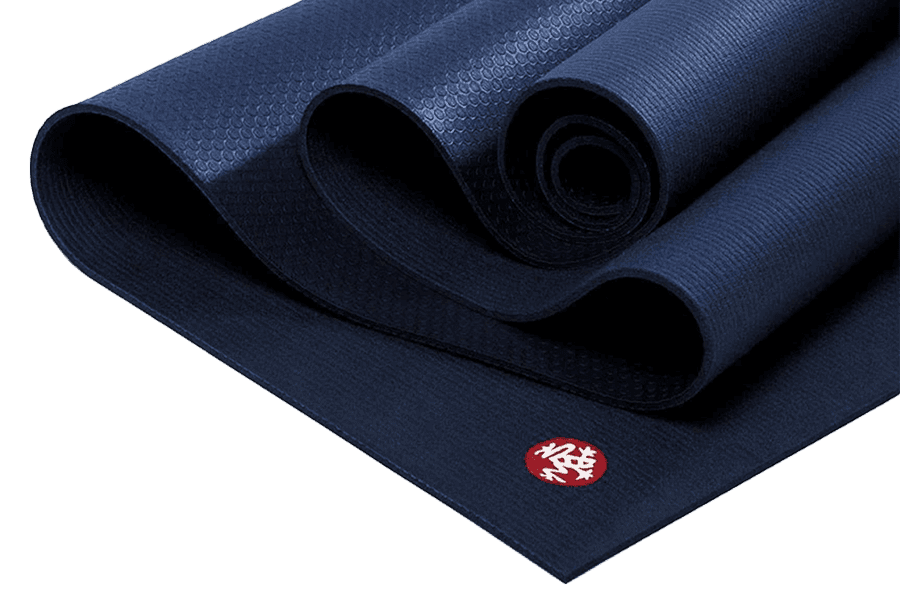
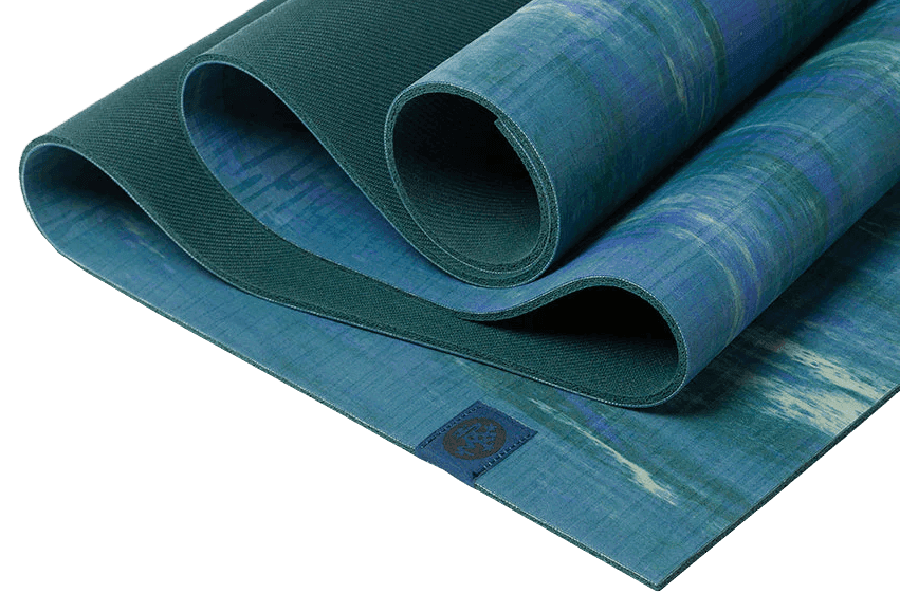
Same brand, two philosophies. The PROlite Long & Wide takes Manduka's most durable material, closed-cell PVC, and spreads it across 79" × 30" as a home practice deck with the lifetime guarantee attached. The eKO takes the opposite bet on material: 71" × 26" of natural rubber that grips from the box and reads greener, at $30 less, with a 30 day return window standing where the guarantee would be. Manduka's own catalog is telling you the trade: size and permanence on one side, grip and rubber on the other.
As an Amazon Associate, we earn from qualifying purchases made through links on this page. How this works
The quick answer
The eKO is the immediate-gratification Manduka: textured rubber traction from the first class, a standard commute-friendly footprint at 7 pounds, 5 colorways, and the eco story PVC can't tell. Its horizon is rubber's: visible surface aging within a few years of daily practice, sun as an enemy, and no warranty beyond returns. The PROlite Long & Wide is the long game: half a foot more length, four more inches of width, the same 7 pounds spread across far more mat, and PVC that Manduka backs for roughly a decade, once you've paid the break-in weeks.
Get the eKO if the mat travels and rubber grip is the draw; it does daily-studio life the big mat simply can't. Get the PROlite Long & Wide if you're setting up a home spot or need more mat than standard cuts offer; between the guarantee and the $30, make sure you actually want the rubber before picking the eKO on feel alone.
Get the PROlite Long & Wide if...
- You want a roomy, permanent home practice surface
- You're tall or broad; 79" × 30" fits where 71" × 26" doesn't
- You want the lifetime guarantee, not a 30 day window
- You want a mat that ignores sun, cleaners, and neglect
Get the eKO if...
- Your mat goes to a studio; the big Manduka won't
- You want rubber grip from day one, no break-in
- Natural rubber matters to you more than PVC longevity
- You'd rather keep $30 and take 5 colorways
Side by side
Price
The eKO lists for $30 less.
$144
List price · check price at Amazon
$114
List price · check price at Amazon
Thickness
The eKO is 6% thicker.
4.7 mm0.19″
5 mm0.2″
Weight
Identical weight.
7 lbs3.2 kg
7 lbs3.2 kg
Size
The Long & Wide is 8″ longer; the Long & Wide is 4″ wider.
Same on both
- Made by Manduka
- Both 7 pounds
- Closed-cell surfaces (sweat sits on top)
- Firm, supportive cushioning
Full specs
Dimensions
Materials & build
One brand, two materials
Manduka sells both of these, which makes the comparison unusually honest; the brand itself will tell you what each material is for. The PROlite Long & Wide is its durable PVC spread across a 79″ × 30″ home deck at $144, with the lifetime guarantee attached. The eKO is its natural rubber alternative in the standard 71″ × 26″ footprint at $114, grippy out of the box and covered by a 30 day return window and nothing else.
Both weigh 7 pounds. The similarities end at the scale. One is a surface you install; the other is a mat you use, carry, and eventually replace.
Footprints: a room against a commute
The eKO’s 71″ × 26″ is the standard premium footprint: length for practitioners to about six feet, a width already more generous than most mats, and a 26″ roll that fits normal straps and bags. Its 7 pounds carry fine for a studio run, if without joy.
The Long & Wide is 79″ × 30″, fits well past six feet, and keeps whole poses on the mat that the eKO’s edges would interrupt. The same geometry disqualifies it from travel; a 30″ roll fits nothing standard, and its natural life is unrolled in one spot. Buyers wanting rubber and length together should note the eKO Long, 79″ × 26″ at $124, which is the eKO argument at its strongest for tall practitioners.
Grip: day one against week three
The eKO’s textured rubber holds from the first practice, warm and slightly tacky in the way that makes rubber mats instantly likable. The PROlite Long & Wide opens slick, per PRO-family tradition, and comes good after a few weeks of regular use; Manduka’s current position is that practice alone resolves it, and it does. From then on the PVC’s dry grip is excellent and still improving.
Neither handles sweat well. Both surfaces are closed-cell, so moisture sits on top rather than absorbing, and Manduka itself describes the eKO’s grip as most reliable dry. Hot classes mean a towel on either; genuinely absorbent mats live elsewhere in the catalog, like the GRP Adapt 2.0.
The guarantee line runs through this page
Manduka’s lifetime guarantee covers its PVC mats and stops there. The Long & Wide gets roughly a decade of regular use with one replacement; the eKO gets 30 days of returns. That split is Manduka’s own wear data speaking: dense PVC that GearLab finds serving five to twenty years, against natural rubber that visibly ages within a few years of daily practice, dislikes sun, and wants gentle cleaners.
The eKO isn’t fragile; it’s consumable. Its owners accept a few-year cycle as the cost of practicing on rubber. The PVC deck simply doesn’t have a cycle.
The rubber question
The eKO is why eco-minded buyers stay with Manduka: tapped natural rubber, over 30% recycled content in the current Taiwan-made build, and no PVC. The Long & Wide is the material environmentalists avoid, defended by OEKO-TEX Standard 100 certification and the arithmetic of one purchase per decade. Note that the closed-cell eKO doesn’t carry latex-allergy marketing either way; sensitive buyers should treat any natural rubber mat with caution, and the PVC mat is the conservative choice there.
Colors and family options
The eKO offers 5 colorways at last count and one sibling size, the 79″ × 26″ eKO Long. The Long & Wide offers Black or Midnight and sits atop a four-size PROlite family that starts with the 71″ standard at $112. Whichever material you land on, size flexibility lives on the PVC side of the catalog.
Price and value
List prices are $144 for the PROlite Long & Wide and $114 for the eKO. Check current prices on the Long & Wide and the eKO.
The $30 premium on the Manduka buys a third more mat and a guarantee that outlives several eKOs, so its per-year cost is far lower for anyone who keeps practicing. The eKO’s $30 savings buys day-one grip, a mat that actually leaves the house, and rubber underfoot. The two value stories don’t overlap because the two mats don’t do the same job.
Bottom line
Buy the eKO if the mat commutes, if rubber’s immediate grip and eco story matter to you, and if a few-year lifespan with gentle care is an acceptable deal at $114. It’s the better mat to actually own for standard-size, studio-going practice.
Buy the PROlite Long & Wide if you’re building a home practice spot or standard mats never fit your frame. It’s the roomiest thing in this price class, the guarantee makes it a once-a-decade purchase, and the break-in weeks plus a towel on sweaty days are the entire cost of admission.
Manduka eKO
List price $114
Frequently Asked Questions
- Why does one Manduka get a lifetime guarantee and the other 30 days?
- Manduka guarantees its PRO-series PVC, roughly 10 years of regular use with one replacement, because dense closed-cell PVC barely wears. The eKO's natural rubber ages like rubber: surface wear within a few years of hard use, sun damage, and sensitivity to harsh cleaners, so it gets a 30 day return window and nothing after. The warranty gap is Manduka's own durability data expressed as policy.
- Which mat grips better?
- Out of the box, the eKO by a mile; its textured rubber holds from the first practice while the PROlite Long & Wide starts in Manduka's famous slick state and needs a few weeks of use to come good. Once broken in, the PVC's dry grip is excellent and keeps improving. Neither absorbs sweat; both are closed-cell, so heated classes mean a towel on either mat.
- Can either mat commute to a studio?
- Only the eKO, realistically. Both weigh about 7 pounds, but the eKO rolls into a standard 26" cylinder that fits bags and straps, while the Long & Wide's 30" roll fits nothing standard and sprawls in a crowded class. If you want rubber and length together for carrying, the eKO Long at 79" × 26" and $124 is the version to look at.
- Is the eKO actually the greener choice?
- By materials, yes: tapped natural rubber with over 30% recycled content in the current build, against PVC that can't practically be recycled. The PVC's rebuttal is longevity: one mat per decade produces less waste than a rubber mat replaced every few years. Both arguments are legitimate; Jade and other rubber brands force the same weighing. One nuance: the eKO is closed-cell rubber, so it doesn't absorb sweat the way open-cell rubber mats like the Jade Harmony do.
- Who actually needs the 30 inch width?
- Practitioners who notice edges: elbows off the mat in savasana, a foot on the floor in wide-legged poses, shoulders overhanging in side-lying work. Six extra inches ends all of it and makes the mat feel like a small dedicated floor. If you've never once noticed a mat edge, the eKO's standard 26", already wider than most mats, will serve fine and save $30.
- Do these mats smell?
- The eKO carries the natural rubber smell out of the box; it fades over the first weeks with airing but never fully reaches zero for sensitive noses. The PROlite Long & Wide has the much fainter new-PVC scent that disappears quickly. Between the two, smell-sensitive buyers should handle a rubber mat in person before committing.
Related comparisons
- Manduka PROlite Long & Wide vs JadeYoga Harmony XW
- Manduka PROlite Long & Wide vs Alo Warrior
- Manduka eKO vs Lululemon The (Big) Mat 5mm
- Lululemon The Mat 5mm vs Manduka eKO
- JadeYoga Harmony 74" vs Manduka eKO
- Manduka PROlite Long & Wide vs Lululemon The (Big) Mat 5mm
- Manduka PROlite Long & Wide vs b, halfmoon B Mat Strong 6mm
- Manduka eKO vs Suga SugaMat
- Manduka PROlite Long & Wide vs Yoloha Unity Pro Cork