Manduka PRO vs Suga SugaMat: Which One Should You Buy?
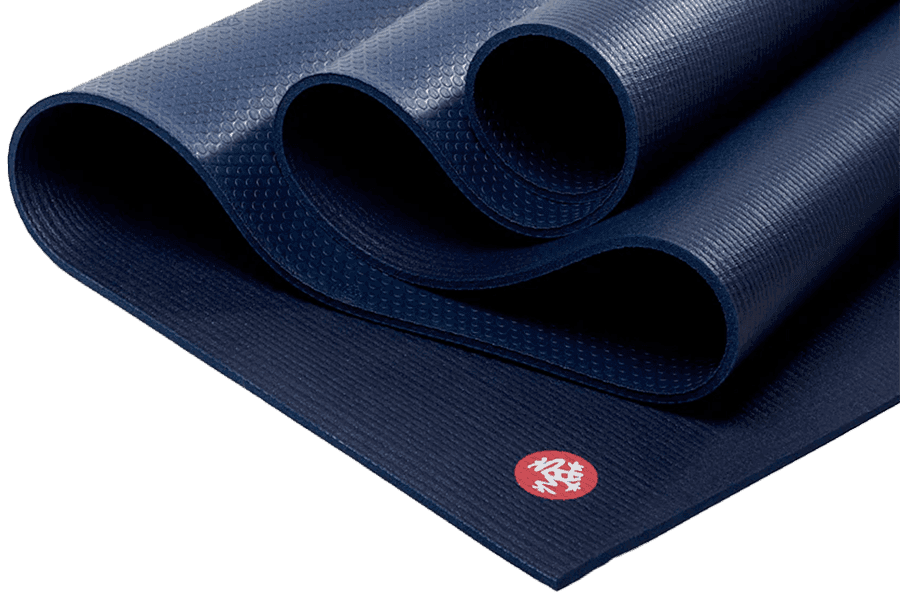
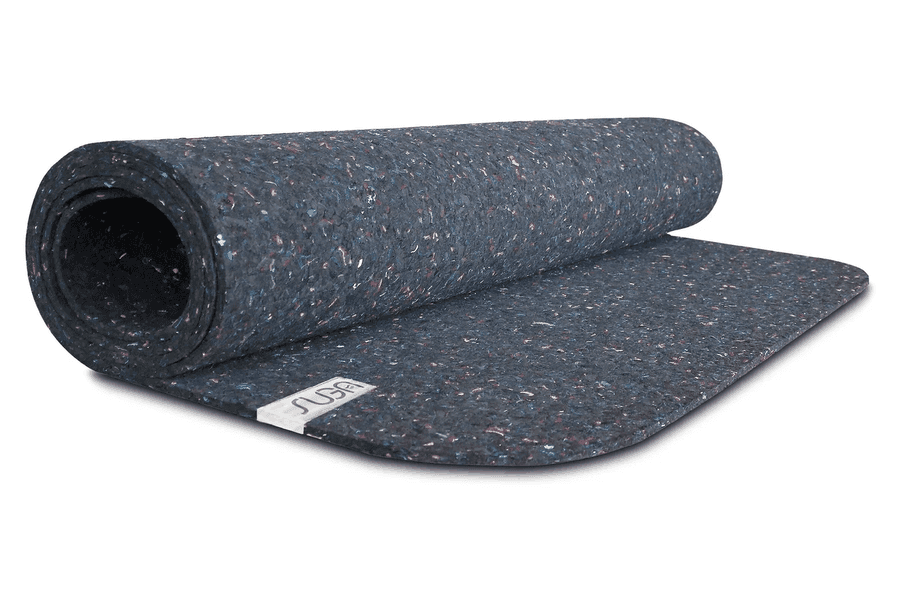
Both of these are closed-cell foam mats around 5 pounds and up, and that is where the similarity stops. The PRO is Manduka's decade-long studio mat, made in Germany and sold everywhere. The SugaMat is made in Encinitas from wetsuits that would otherwise sit in a landfill, and getting one has become the hard part.
As an Amazon Associate, we earn from qualifying purchases made through links on this page. How this works
The quick answer
The PRO is the more capable mat and the easier one to buy. It won GearLab's 2026 yoga mat test outright at 91 out of 100, with perfect scores for comfort and support and for materials, and Manduka's lifetime guarantee sits behind it. The SugaMat is a genuinely interesting product: 5mm of foam recycled from surfing wetsuits, made in California, tacky when damp, and hose-washable. It also weighs 2.5 pounds less than the PRO and costs $45 less.
Buy the PRO if you want the mat that will still be here in ten years, in stock, in fourteen colors, with a warranty department behind it. Buy the SugaMat if the recycled-material story is the point and you are willing to wait for stock, because both sizes have been showing sold out on Suga's own site and there is no Amazon listing to fall back on.
Get the Manduka PRO if...
- You want the highest-scoring mat in GearLab's 2026 test
- You practice several times a week and want one mat for a decade
- You want 26 inches of width instead of 25
- You want to be able to order it today, in the color you want
Get the Suga SugaMat if...
- You want a mat made from recycled wetsuits rather than new plastic
- You would rather carry 5 pounds than 7.5
- You want to rinse the mat in the shower instead of wiping it
- You can wait for Suga to restock, and you'd rather keep $45
Side by side
Price
The SugaMat lists for $45 less.
$144
List price · check price at Amazon
$99
List price · check price at sugamats.com
Thickness
The PRO is 20% thicker.
6 mm0.24″
5 mm0.2″
Weight
The SugaMat is 2.5 lbs lighter.
7.5 lbs3.4 kg
5 lbs2.3 kg
Size
The SugaMat is 1″ longer; the PRO is 1″ wider.
Same on both
- Closed-cell foam, so sweat sits on the surface
- Heavy enough to stay planted on a wood floor
- Wipe or rinse clean, nothing soaks in
- Both come in a dark, plain finish
Full specs
Dimensions
Materials & build
Buying
- Short68" × 26"
- Long85" × 26"
- Long & Wide79" × 52"
- Squared78" × 78"
- XL74" × 26"
- Travel (3 mm)72" × 25"
Two closed-cell mats with very different origins
Strip away the branding and both of these are dense closed-cell foam: sweat sits on the surface, nothing soaks in, and a damp cloth is the whole cleaning routine. The PRO gets there through PVC compressed in a German factory until 6 mm weighs 7.5 pounds. Suga gets there by collecting worn-out surfing wetsuits, grinding the neoprene down and pressing it back into a 5 mm mat in Encinitas, California.
The recycled mat is also the cheaper one, at $99 against $144. What the extra money buys is two decades of evidence and a company big enough to stand behind a warranty.
The wetsuit story is the whole point of the SugaMat
Neoprene is one of the harder materials to get rid of. It does not biodegrade, most recyclers will not take it, and a surf shop throwing out a season of split wetsuits is sending all of it to landfill. Suga built its business on that gap: it runs collection points, takes the suits back, and turns them into mats. It will also take a worn SugaMat back and recycle that.
One consequence is that the mat only comes in black and charcoal, because wetsuits are almost always black, and Suga is candid about that on its own site. The PRO offers black plus 13 more colorways at last count, made in Germany to OEKO-TEX Standard 100, which certifies the finished mat as free of a long list of harmful substances.
Feel: firm slab against dense sponge
The PRO is the firmest mainstream mat you can buy. GearLab gave it a perfect 10 for comfort and support in its 2026 test of 19 mats, which is a score about stability rather than softness. Nothing sinks underfoot, so a standing leg stays where you put it and knees land on something that holds rather than swallows.
The SugaMat has more give. Neoprene foam is springier than compressed PVC, so it reads as slightly cushier under a kneecap and slightly less planted in a balance. Suga argues on its own FAQ that density matters more than thickness for cushioning, which is true and also happens to be the argument for the PRO: at 5 pounds across a similar footprint, the SugaMat is the less dense of the two.
Grip: neither one absorbs, so sweat is a problem for both
Closed-cell construction means moisture has nowhere to go. GearLab scored the PRO 9 out of 10 dry and 7 out of 10 wet, mid-pack for wet grip in a field of 19, and it lists slickness when really wet as one of the mat’s two drawbacks. There is also a break-in period: a new PRO is genuinely slippery for the first few weeks. Manduka has retired its old salt-scrub advice and now says regular use resolves it, which matches what owners report.
Suga claims a textured surface that works wet or dry. That is the company’s own copy, not a test result, and no independent lab we would cite has put the SugaMat through a grip test. Owners describe it as grabby rather than tacky. If you practice in a hot room, plan on a towel with either mat, or look at natural rubber like the Jade Harmony instead.
Weight and size: 2.5 pounds and one inch apart
The PRO is 7.5 pounds and the SugaMat is about 5. Neither is a travel mat, but the gap is enough that the Suga goes over a shoulder without much thought while the PRO turns a short walk into a decision. GearLab lists heft as the PRO’s other main drawback, and plenty of owners end up leaving theirs permanently in one room.
On footprint, the SugaMat is 72″ long against the PRO’s 71″, and 25″ wide against 26″. That inch of width shows up in wide-legged stances. Suga makes an XL at 74″ × 26″ too. If you want Manduka density in something carryable, the PROlite is the obvious answer.
Buying one is the SugaMat’s real problem
At our last check, both the regular and XL SugaMat were showing sold out on sugamats.com, with an email notification form where the buy button should be. There is no Amazon listing to fall back on and no meaningful retail distribution, so when Suga is out of stock, the mat is simply unavailable.
Suga is a small company and stock has come and gone before, so this may not be permanent. It does change the decision, though. If you need a mat this month, the PRO ships from a dozen sellers. If the recycled-material story is what you want, sign up for the restock email rather than settling.
Care: one gets a wipe, one gets a shower
Suga’s cleaning advice is to hose the mat down or take it into the shower with you, then hang it in the shade to dry. Neoprene resists odor and nothing penetrates a closed-cell surface, so a full rinse is safe. For anyone who finds wiping a sweaty mat unsatisfying, that is a genuine advantage.
Manduka asks for a damp cloth rather than a soak, and because nothing soaks into the PRO either, deep cleaning never comes up. Both mats degrade in direct sun.
Durability and two very different warranties
Dense PVC barely wears. GearLab has testers still using the same PRO after 20 years, and it scored the mat a perfect 10 for materials. Manduka’s lifetime guarantee sits behind that, with fine print that works out to roughly ten years of regular use, one replacement, and proof of purchase from an authorized seller. An Amazon purchase qualifies only when the mat is sold and shipped by Amazon itself.
Suga offers 30 days. The company does sell a version called the SugaMat C2G, where you pay more up front and Suga replaces the mat whenever it wears out, so if you want the recycled mat to last, that is the one to look at. Recycled neoprene has no long public track record the way Manduka’s PVC does, which is the practical limit on what anyone can tell you about its lifespan.
Price and value
List prices are $144 for the PRO and $99 for the SugaMat, a gap of $45. Check the current price on the PRO at Amazon, and the SugaMat is sold direct by Suga only, when it is in stock at all.
Across ten years, $45 is not the deciding factor, and the PRO is the better mat on grip, stability and lifespan. For a few sessions a week at home, the SugaMat gives up very little you would notice and puts your money into a product that keeps neoprene out of a landfill.
Bottom line
Buy the Manduka PRO if you want the highest-scoring mat in GearLab’s 2026 test, if you practice several times a week, or if you simply want to place an order today and have a mat arrive. It is heavier and pricier and it will outlive almost anything else in the room.
Buy the Suga SugaMat if the recycled wetsuit story is the reason you are here, you like the idea of rinsing a mat in the shower, and you can wait for stock. If you want something equally unusual that is actually easy to buy, our PRO vs Yoloha cork comparison covers the other end of the sustainable mat market.
Manduka PRO
List price $144
Suga SugaMat
List price $99
Frequently Asked Questions
- Can you actually buy a SugaMat right now?
- That is the honest catch with this mat. At our last check both the regular and XL SugaMat were showing sold out on sugamats.com, with an email notify form in place of a buy button, and Suga does not sell through Amazon. The company is small and stock has come and gone before, so it is worth signing up for the restock email rather than assuming the mat is gone. If you need a mat this week, the PRO ships from a dozen retailers.
- Is the SugaMat really made from wetsuits?
- Yes. Suga collects worn-out neoprene wetsuits, most of them from surf shops in southern California, grinds them down and presses the material into mat foam. That is also why the mat only comes in black and charcoal: wetsuits are almost always black. Suga runs the recycling program itself and will take a worn SugaMat back for recycling.
- Which one grips better when you sweat?
- Neither absorbs sweat, so on both mats the moisture stays on top and you will eventually need a towel in a hot room. GearLab rated the PRO 7 out of 10 for wet grip, which was mid-pack in its 2026 test, and noted that a brand new PRO is slick until it breaks in. Suga has not been through an independent test we would cite, and the company's own claims about wet tackiness are marketing rather than a test result. Owners describe the surface as textured and grabby rather than sticky.
- How do the warranties compare?
- They are not close. Manduka's lifetime guarantee runs to roughly ten years of regular use with one replacement, and it requires proof of purchase from an authorized seller (Amazon counts only when the mat is sold and shipped by Amazon itself). Suga offers 30 days. Suga does sell a separate version called the SugaMat C2G, where you pay more up front and the company replaces the mat whenever it wears out, which is closer in spirit to what Manduka offers.
- Is the PRO worth $45 more?
- If you are on a mat several times a week, yes. The PRO's dense PVC barely wears, GearLab has testers still using theirs after 20 years, and it is 2.5 pounds heavier for a reason. If the mat mostly lives in one room and you like the idea of buying something made from recycled material in the United States, the SugaMat is not a downgrade in any way you would notice in a normal class.
- How do you clean a SugaMat?
- Suga's advice is to hose it down or take it into the shower with you, then hang it in the shade to dry. Neoprene is closed-cell and naturally resistant to odor, so nothing soaks in. The PRO gets the same treatment in principle but Manduka recommends a damp cloth rather than a full soak, and both mats degrade if you leave them in direct sun.
Related comparisons
- JadeYoga Harmony 68" vs Suga SugaMat
- Manduka GRP Adapt 1.0 vs Suga SugaMat
- Manduka eKO Lite vs Suga SugaMat
- Manduka PRO vs b, halfmoon B Mat Strong 6mm
- JadeYoga Harmony 74" vs Suga SugaMat
- Manduka PRO vs Alo Warrior
- Manduka PRO vs Yoloha Unity Pro Cork
- Manduka PROlite vs Suga SugaMat
- Manduka eKO Lite Long vs Suga SugaMat