Manduka PRO vs Lululemon The Mat 3mm: Which Should You Buy?
The Manduka PRO and Lululemon The Mat 3mm share an exact 71 by 26 inch footprint, then move in opposite directions. The PRO doubles the thickness to 6mm and weighs 8 pounds. The Mat stays close to the floor at 3mm, weighs 3.87 pounds and uses a sweat-ready polyurethane face over rubber.
As an Amazon Associate, we earn from qualifying purchases made through links on this page. How this works
The quick answer
The PRO is the better home mat for sensitive joints and long ownership. Its dense 6mm cushion, sealed surface and lifetime guarantee come with a slow break-in and excessive commuting weight. The Mat 3mm grips immediately, handles moisture more naturally, weighs 4.13 pounds less and saves $46, but it offers far less knee protection and vaguer coverage.
Get the PRO if the mat stays home and comfort or longevity leads the list. Get The Mat 3mm if you carry it to class, prefer close floor contact or practice with sweaty hands.
Get the Manduka PRO if...
- You want maximum firm support for knees and wrists
- The mat mostly stays in one room
- You want latex-free, low-maintenance construction
- You value a written lifetime guarantee
Get The Mat 3mm if...
- You commute to class regularly
- You want immediate wet-or-dry grip options
- You prefer direct floor feedback
- You would rather save 4.13 pounds and $46
Side by side
Price
The Mat 3mm lists for $46 less.
$144
List price · check price at Amazon
$98
List price · check price at lululemon.com
Thickness
The PRO is 100% thicker.
6 mm0.24″
3 mm0.12″
Weight
The Mat 3mm is 4.1 lbs lighter.
8 lbs3.6 kg
3.87 lbs1.76 kg
Size
Same length; same width.
Same on both
- Same 71-inch by 26-inch footprint
- Firm, stable platforms
- Premium practice-focused construction
- Current direct availability
- Need gentle cleaning rather than machine washing
Full specs
Dimensions
Materials & build
Buying
The same footprint supports two very different routines
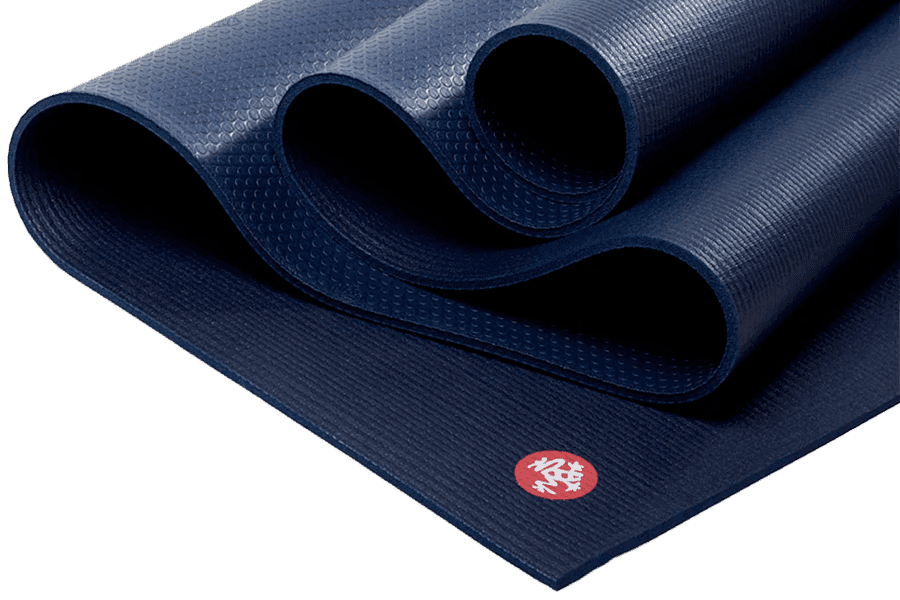
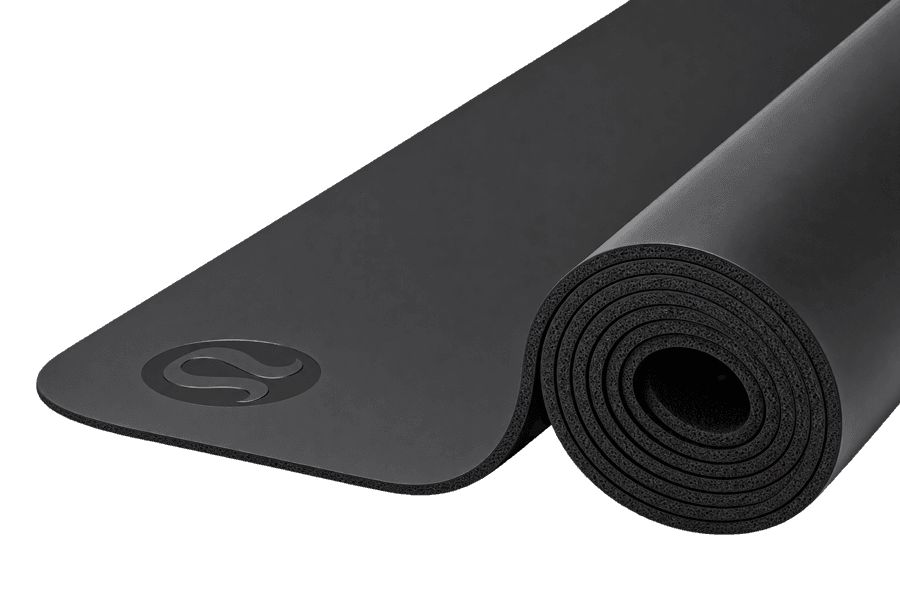
Both mats measure 71 by 26 inches, so the decision is not about elbow room. The Manduka PRO is a 6mm, eight-pound PVC mat built to stay useful for years in one practice space. Lululemon’s The Mat 3mm is a reversible polyurethane-and-rubber mat weighing less than half as much.
The PRO prioritizes joint support, simple cleaning, and documented longevity. The Mat prioritizes a lighter carry, closer floor feel, and traction when practice gets damp. The $46 price difference is substantial, but it should come after those functional differences. A cheaper mat is poor value if three millimeters leaves your knees asking for extra padding every class.
The PRO is the clear choice for joint support
The PRO puts twice the nominal thickness under you: 6mm against 3mm. Its PVC is dense rather than squishy, creating a firm barrier over wood, tile, or concrete. GearLab’s testers gave it their top cushion score and recommend its stable support for sensitive joints and rehabilitation work.
The Mat 3mm suits practitioners who prefer direct contact with the floor. Standing balances feel close and predictable, but a kneeling lunge concentrates pressure quickly. We would not choose it as the only mat for sore knees or frequent restorative work unless a small pad is already part of the kit. For comfort, this comparison is not close.
Lululemon removes the break-in wait
The Mat pairs a smooth, absorbent polyurethane face with a textured rubber side. Use the smooth face for moisture and flip to the rubber for a tackier dry session. The 3mm version is too new for us to copy the 5mm model’s independent test results, but its published surface construction targets the same wet-or-dry flexibility.
A new PRO often feels slick. Its fabric-like finish improves through regular use, and Manduka no longer recommends the old salt scrub. GearLab rates the mature PRO highly, yet buyers still have to reach that point. Lululemon is the easier recommendation for someone who wants useful grip from the first class rather than after several weeks.
The Mat is better suited to a sweaty commute
Lululemon’s polyurethane surface takes in moisture, which helps prevent sweat from sitting entirely between palm and mat. It needs cleaning and drying afterward, but it is the more useful design for heated classes or naturally damp hands.
The PRO is sealed. Sweat and bacteria cannot soak into its PVC body, so cleanup is quick, but pooled moisture remains on top. Current GearLab testers found the PRO broadly dependable, although a towel is still prudent in a very wet class. Anyone choosing between these two specifically for hot yoga should take The Mat, or compare the absorbent Manduka GRP Adapt 2.0.
The 3mm Mat saves more than four pounds
The Mat weighs 3.87 pounds. The standard PRO is 8. Both rolls are 26 inches wide, making the 4.13-pound gap impossible to dismiss as a small spec difference. Lululemon is reasonable on a walk, bike, or transit ride. The PRO becomes tiring quickly.
At home the PRO’s weight helps it settle flat and resist shifting. There is no benefit to carrying that stability on your shoulder, though. If the mat regularly leaves the house, The Mat is the clear answer. If it stays unrolled, weight should disappear from the decision and the PRO’s cushioning becomes far more attractive.
Manduka has the stronger evidence and warranty
PRO mats have a long studio record, including examples in GearLab’s reporting that remained in service well beyond a decade. Manduka’s lifetime guarantee defines useful life as roughly 10 years of regular practice, permits one replacement, and requires proof from an authorized seller.
The Mat 3mm uses an exposed polyurethane face that can absorb stains and gradually wear. Lululemon covers product failures through a Quality Promise with no stated term, assessed case by case. The thinner model is also too new for a solid long-term ownership record. None of that makes it fragile, but it cannot match the PRO’s evidence or specificity. Choose Manduka if replacement avoidance matters most.
Care and allergy concerns split cleanly
The PRO is latex-free PVC, made in Germany and certified to OEKO-TEX Standard 100. Wipe its closed surface with a damp cloth or approved cleaner and let it dry. It does not absorb sweat, stain as readily, or arrive with a strong rubber smell.
The Mat uses FSC-certified natural rubber beneath polyurethane and contains latex. It may smell when new, lighter surfaces can show hand and foot marks, and the absorbent face needs full drying before rolling. Keep it away from direct sun, hot cars, and harsh cleaners. Lululemon has the more renewable primary material; Manduka is safer for allergies and easier for inconsistent care.
The Mat saves $46 and buying direct matters
The PRO lists for $144; The Mat 3mm lists for $98. Check the current Manduka PRO price at Amazon and the Mat 3mm price at Lululemon. Lululemon has no authorized Amazon listing, so marketplace offers are third-party resales rather than a reliable price check.
Lululemon gives you lower weight and sweat-ready grip at a meaningfully lower initial cost. The PRO gives you twice the thickness and much stronger long-term protection. Pay the extra money when cushioning and lifespan will be used. Otherwise, The Mat is the more efficient purchase and considerably easier to carry.
Bottom line
Get the Manduka PRO for a home practice, sensitive joints, allergy safety, and the best chance of owning the same mat a decade from now. Its eight-pound weight and slow break-in are genuine drawbacks, but they matter less when it stays in one place.
Get The Mat 3mm for classes, sweaty practice, immediate grip, and closer floor contact. It costs $46 less and weighs under half as much. Buyers who kneel often or dislike caring for absorbent rubber should accept the PRO’s price and weight instead.
Manduka PRO
List price $144
Lululemon The Mat 3mm
List price $98
Frequently Asked Questions
- Which mat is better for sensitive knees?
- The Manduka PRO. It provides 6mm of dense support, twice The Mat's nominal thickness, and GearLab gave it a top cushioning score. The 3mm Lululemon favors floor feedback and may require a knee pad on hard surfaces.
- Which is better for hot yoga?
- The Mat 3mm has the more suitable construction because its polyurethane face absorbs moisture. The PRO is closed-cell, so sweat remains on top. The 3mm version does not yet have the independent hot-class testing history of The Mat 5mm, so this recommendation is based on its published surface design.
- How much lighter is The Mat 3mm?
- It is 4.13 pounds lighter. Current standard PRO variants weigh 8 pounds, while Lululemon lists The Mat 3mm at 3.87 pounds. Since both rolls are 26 inches wide, the weight difference directly determines which one is practical to commute with.
- Which mat lasts longer?
- The PRO has the stronger case. It has extensive long-term ownership evidence and Manduka's lifetime guarantee. The newer Mat 3mm uses an absorbent polyurethane face that can stain and wear, while Lululemon's Quality Promise provides no fixed coverage term.
- Is the Manduka PRO safe for latex allergies?
- Yes, the PRO is latex-free PVC. The Mat 3mm uses a natural-rubber base and contains latex, so it should be avoided by people with a rubber or latex allergy.
- Is the Manduka PRO worth $46 more?
- Yes if you will use the added cushioning and long warranty in a home practice. No if portability, immediate grip and a thinner floor feel suit you better. The higher price does not make the eight-pound PRO a practical commuter mat.
Related comparisons
- Lululemon The Mat 3mm vs Yoga Design Lab Infinity 3mm
- Manduka PRO vs Alo Warrior
- Manduka PRO vs b, halfmoon B Mat Strong 6mm
- Manduka eKO Lite vs Lululemon The Mat 3mm
- Manduka PRO vs Yoloha Unity Pro Cork
- Manduka GRP Adapt Lite 2.1 4mm vs Lululemon The Mat 3mm
- JadeYoga Travel 68" vs Lululemon The Mat 3mm
- JadeYoga Harmony 68" vs Lululemon The Mat 3mm
- Manduka PRO vs JadeYoga Harmony XW