Manduka PRO Long & Wide vs eKO Lite: Which One Should You Buy?
These sit at the far ends of everything Manduka makes. The PRO Long & Wide is 79" x 52" of German PVC, 22 pounds, 6 mm thick, $288, guaranteed for life. The eKO Lite is 71" x 24", 5 pounds, 4 mm of natural rubber, $96, with no warranty at all. One of them is furniture and the other one fits in a tote bag, so before comparing specs it helps to know which kind of mat you actually want.
As an Amazon Associate, we earn from qualifying purchases made through links on this page. How this works
The quick answer
The eKO Lite is the easier mat to live with: it grips immediately, weighs 5 pounds, comes in eight or so colorways, and costs $192 less. What you give up is cushion (4 mm against 6), lifespan, and any warranty coverage. The PRO Long & Wide is more than twice the surface area, considerably kinder to knees on a hard floor, and should still be usable in ten years, but it never leaves the room you put it in.
For most people the eKO Lite is the sensible buy, especially if the mat travels or the budget matters. Choose the Long & Wide only if you have a dedicated practice space and the width is the thing you keep wishing you had, because no amount of money turns a 24 inch mat into a wide one.
Get the PRO Long & Wide if...
- You want to sprawl and you have the floor to do it on
- You practice on tile or concrete and want the firmer 6 mm cushion
- You are taller than about six feet, which 71 inches will not fit
- You want a decade of use with a guarantee behind it
Get the eKO Lite if...
- You carry your mat to class
- You want grip on day one, with no break-in
- You'd rather keep $192
- You want colors, not a choice between two dark neutrals
Side by side
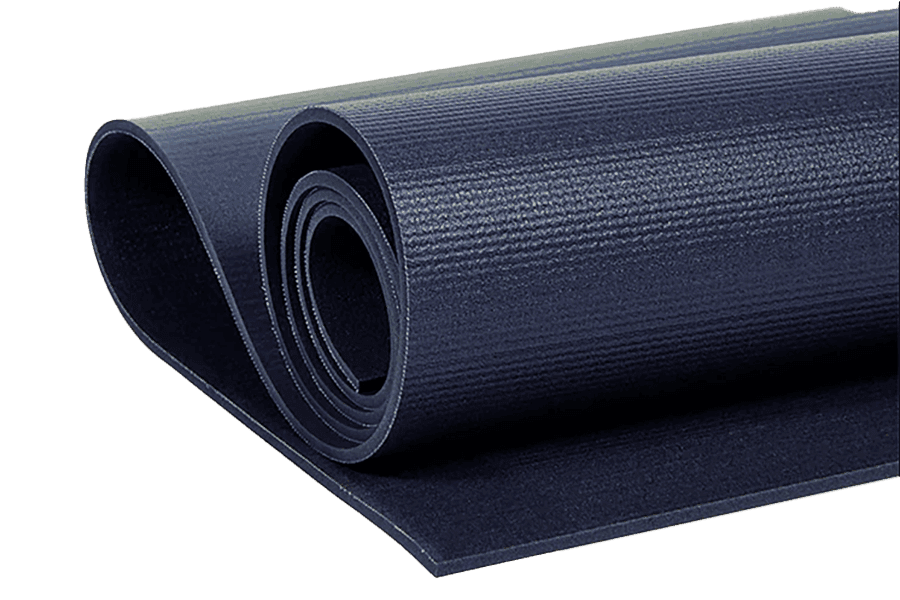
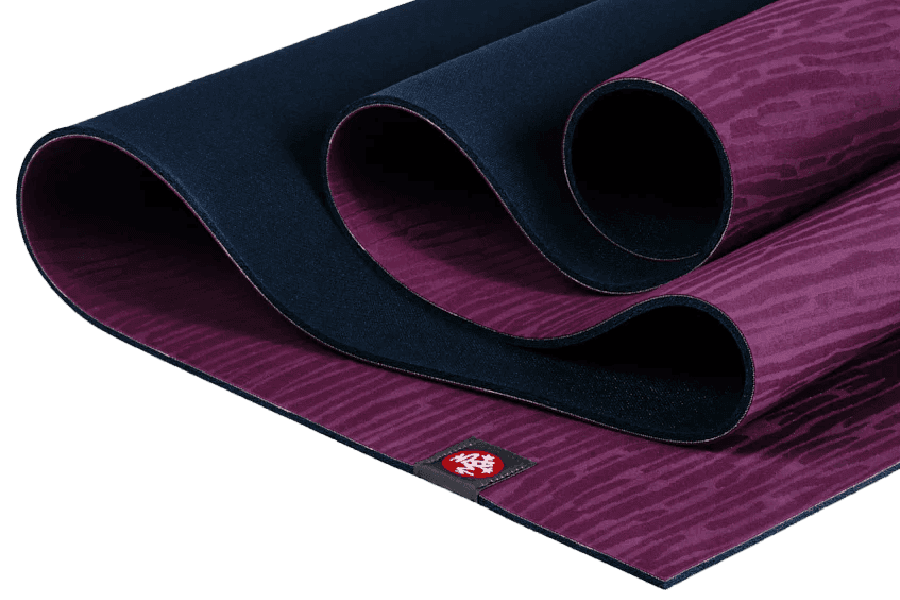
Price
The eKO Lite lists for $192 less.
$288
List price · check price at Amazon
$96
List price · check price at Amazon
Thickness
The Long & Wide is 50% thicker.
6 mm0.24″
4 mm0.16″
Weight
The eKO Lite is 17 lbs lighter.
22 lbs10 kg
5 lbs2.2 kg
Size
The Long & Wide is 8″ longer; the Long & Wide is 28″ wider.
Same on both
- Made by Manduka
- Closed-cell, so sweat sits on top
- Firm rather than plush
- Lies flat without curling
Full specs
Dimensions
Materials & build
The two ends of Manduka’s catalog
Manduka makes about a dozen mats, and these two sit at opposite edges of the range. The PRO Long & Wide is the biggest thing in the catalog: 79″ × 52″, 6 mm of dense PVC made in Germany, 22 pounds, $288, lifetime guarantee. The eKO Lite is the practical rubber mat most people actually carry: 71″ × 24″, 4 mm, 5 pounds, $96, no warranty at all.
Comparing them on specs alone misses the point, because they are not competing for the same job. One is a piece of home equipment you install. The other is a mat you sling over your shoulder. Deciding which of those you want settles most of the page before you get to grip and cushion.
Size: 24 inches against 52
The eKO Lite is 24 inches wide, two narrower than the usual 26. Most people never notice, though wide-legged standing poses can feel a little tight and taller practitioners sometimes want the extra couple of inches. Its 71 inch length fits bodies up to about five foot eleven.
The Long & Wide is more than twice its total surface, 4,108 square inches against 1,704, and nearly all of that difference is sideways. At 52 inches the edge of the mat is no longer something you track. Floor work, restorative shapes with props scattered around you, rolling from one side to the other: all of it stays on the mat. It is also 79 inches long, so it fits past six foot three.
The catch is a permanent one. The big mat needs a clear rectangle of roughly 6 feet 7 inches by 4 feet 4 inches, and it is not going back in a closet at 22 pounds. If you want rubber with a bit more room, the standard eKO is 26 inches wide for $114, but nothing in the rubber line approaches 52.
Weight: 5 pounds is the eKO Lite’s reason to exist
The Lite is the eKO trimmed down for carrying. Manduka took a millimeter of thickness and two inches of width off the standard eKO and got the weight to 5 pounds, which is light enough to walk to a studio with, throw in a car, or keep on a hook by the door.
The Long & Wide weighs 22 pounds, more than four eKO Lites, and rolls up closer to an area rug than to gear. No standard bag or strap will take it. That is not a flaw, it is a description of what the mat is for: it gets unrolled once, in the room where you practice, and stays flat. Closed-cell PVC is content to live that way for years.
Cushioning: 4 mm of rubber against 6 mm of dense PVC
The PRO construction is the comfort benchmark of the category. OutdoorGearLab’s testers gave it a perfect comfort score, and the density is why: 6 mm of closed-cell PVC compresses barely at all, so knees, forearms, and tailbone get real support on a hard floor without the wobble that soft foam brings.
At 4 mm the eKO Lite is thinner but not thin. Rubber has a mild rebound that helps, and on wood or carpet most people are perfectly comfortable practicing on it daily. On tile or concrete, though, kneeling work will remind you what you gave up. Neither of these is a plush mat; if your knees already complain, you want something nearer 8 mm than either of these.
Grip: rubber now, PVC eventually
The eKO Lite’s textured rubber grips from the first practice, with no ritual and no waiting. It also feels warmer under the hands than the PRO’s fabric-like surface.
A new Long & Wide ships slick. That is the standing complaint about the whole PRO line, and it takes a few weeks of regular use before traction shows up. Manduka has retired the old salt-scrub advice and now says the slickness resolves on its own with practice, which owners confirm. It does resolve, and a broken-in PRO grips well for years, but paying $288 and then waiting a month is a strange experience.
Sweat treats them about the same, and not kindly. Both are closed-cell surfaces, so moisture pools on top rather than soaking in. Manduka itself frames the eKO’s traction as reliable in dry conditions. Light sweat is fine on either mat; a hot room wants a towel on both.
Durability: Manduka guarantees one of these
The Long & Wide carries the lifetime guarantee, which the fine print puts at roughly ten years of regular use, one replacement per purchase, performance-affecting wear only, and proof of purchase from an authorized seller. Amazon qualifies when the mat is sold and shipped by Amazon itself. GearLab’s testers keep running into instructors’ PRO-family mats that are five to twenty years old and still in service.
The eKO Lite gets a 30 day return window and no coverage after it. Natural rubber oxidizes, wears under vigorous daily use, and degrades in sunlight, and eKO owners report visible surface wear after a few hard years. Manduka sells both materials and stands behind only one of them, which is the clearest signal on this page. The eKO Lite also wants gentler treatment: shade, mild soap, no harsh cleaners.
The eco case, and the latex caveat
On materials the eKO Lite is the cleaner choice: rubber tapped from trees, over 30% recycled content, no PVC. Manduka’s reply for the PRO is that a mat lasting twenty years can beat a rotation of shorter-lived ones on total footprint, and the PRO is certified to OEKO-TEX Standard 100. Both cases hold up, though 22 pounds of PVC asks a lot of the longevity argument.
The caveat is allergies. Manduka calls the eKO line 99% latex free, which is not latex free, and does not recommend it for latex-sensitive practitioners. That points you to the PVC.
Colors
This is one of the few rows the small mat wins outright. The eKO Lite comes in around eight colorways, including a few marbled ones, and there is a 79″ eKO Lite Long at $104 if you need the length. The Long & Wide comes in Black or Midnight and nothing else.
Price and value
List prices are $288 for the Long & Wide and $96 for the eKO Lite, a gap of $192. Street prices swing by colorway, so check the current price on both the PRO Long & Wide and the eKO Lite before buying.
Three eKO Lites cost about what one Long & Wide does, and since the eKO is the mat likelier to need replacing, that is not a silly way to look at it. Over a decade the PRO probably comes out even or ahead, with a guarantee attached. But value only works in your favor if the mat suits your practice, and for someone who carries a mat to class three times a week, a 22 pound slab is worth nothing at any price.
Bottom line
Get the eKO Lite if your mat leaves the house, if you want grip on day one, or if $96 is the right amount to spend on a mat. It asks much less of you day to day, and the compromises (4 mm of cushion, 24 inches of width, no warranty) are ones most practitioners never think about again.
Get the PRO Long & Wide if you have a room you practice in and you keep running out of mat sideways. It is the only way to buy 52 inches of Manduka, it will outlive several eKOs, and it never has to be carried anywhere. If the width tempts you but $288 and 22 pounds do not, look at our PRO Long & Wide vs PROlite Long & Wide comparison, which covers the lighter oversized option in the family.
Frequently Asked Questions
- Is the eKO Lite thick enough for daily practice?
- For most people, yes. At 4 mm it is a normal full-thickness mat, just a third thinner than the PRO Long & Wide's 6 mm, and natural rubber has a gentle rebound that helps. If you practice on carpet or wood it is plenty. If you practice on tile or concrete and spend real time on your knees, the extra millimeters and the density of the PRO construction are worth something, and OutdoorGearLab's testers gave that construction a perfect comfort score.
- How much space does the PRO Long & Wide actually need?
- A clear rectangle of about 6 feet 7 inches by 4 feet 4 inches, and realistically it stays there. At 22 pounds it rolls into something the size of an area rug that no mat bag will hold. The eKO Lite is 5 pounds and 71" x 24", so it rolls up small, tucks into a closet, and rides on your shoulder to a studio.
- Why does the PRO have a lifetime guarantee and the eKO Lite have none?
- Because the materials wear differently. Dense PVC barely degrades, and GearLab's testers have run into instructors still using PRO-family mats five to twenty years old, so Manduka backs the line with a lifetime guarantee, which the fine print defines as roughly ten years of regular use with one replacement. Natural rubber oxidizes, abrades under heavy use, and breaks down in sunlight, so the eKO Lite gets the standard 30 day return window and nothing more.
- Which mat grips better?
- The eKO Lite, at least at first. Its textured rubber has traction from the first practice, while a new PRO Long & Wide ships slick and takes a few weeks of use to come good. Manduka has retired the old salt-scrub break-in ritual and now says the slickness simply resolves with practice. Once broken in, the PRO grips well for years. Both are closed-cell, so sweat sits on the surface of either and heavy sweaters want a towel regardless.
- Is the eKO Lite safe if I have a latex allergy?
- No. Manduka describes the eKO line as 99% latex free, which is not the same as latex free, and it is not recommended for people with a latex sensitivity. The PRO Long & Wide's PVC construction contains no latex, so that is the side of this comparison to be on if allergies are a concern.
- Is the eKO Lite too narrow at 24 inches?
- It is two inches narrower than the standard 26 inch mat, which most people never notice in a class setting but a few find tight in wide-legged standing poses. If you want rubber with the standard width, the regular eKO is 71" x 26" for $114. And if width is what you are chasing in the first place, nothing in the rubber line answers it; only the 52 inch PRO Long & Wide does.
Related comparisons
- JadeYoga Harmony 68" vs Manduka eKO Lite
- Manduka eKO Lite vs Suga SugaMat
- Manduka eKO Lite vs Lululemon The Mat 3mm
- Manduka eKO Lite vs JadeYoga Harmony 2.0 68"
- JadeYoga Harmony 74" vs Manduka eKO Lite
- Manduka eKO Lite vs Yoga Design Lab Combo 3.5mm
- Manduka eKO Lite vs b, halfmoon B Mat Everyday 4mm
- Manduka eKO Lite vs Gaiam Performance Dry-Grip Long & Wide
- Manduka eKO Lite vs 42 Birds The Robin