Manduka eKO Lite vs B Mat Everyday: Which One Should You Buy?
Both are 4 mm of rubber at a serious-mat price: $96 for the eKO Lite, $118 for the B Mat Everyday. Twenty two dollars apart is close enough that the specs decide this rather than the budget. The difference that matters is what each surface does with sweat. The eKO Lite is closed cell, so moisture sits on top and wipes off. The B Mat is tacky rubber that keeps holding wet or dry, which is why it turns up constantly in hot yoga recommendations.
As an Amazon Associate, we earn from qualifying purchases made through links on this page. How this works
The quick answer
The B Mat is the grippier mat and it is not close. GearLab scored its grip 9 out of 10 and called it one of the grippiest mats it has tested dry or wet, with no break-in needed, reporting traction that held through sprinkles, puddles and waves of sweat. It is also two inches wider, a pound lighter, warrantied for a year and OEKO-TEX certified, where Manduka offers nothing beyond 30 day returns.
The eKO Lite's case is its texture and its price. Manduka scopes its own grip claim to dry conditions, and the moderate surface does not catch your skin the way the B Mat can, which suits a fast flow. It also discounts, where the B Mat almost never does. Buy the B Mat if you sweat; buy the eKO Lite for a normal room.
Get the Manduka eKO Lite if...
- You practice in a normal, unheated room
- You slide a hand or foot between poses and want a calmer surface
- You want a 79 inch long version as an option
- You would rather buy on sale than pay full list
Get the B Mat Everyday if...
- You sweat and want the grippiest rubber available
- You want 26 inches of width instead of 24
- You want a written one year warranty and an OEKO-TEX certification
- You want to carry a pound less
Side by side
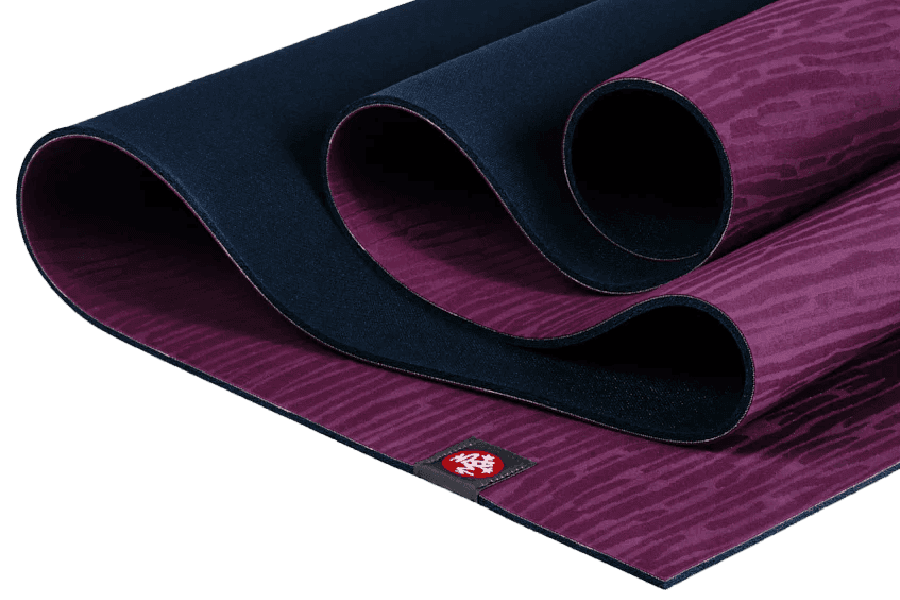
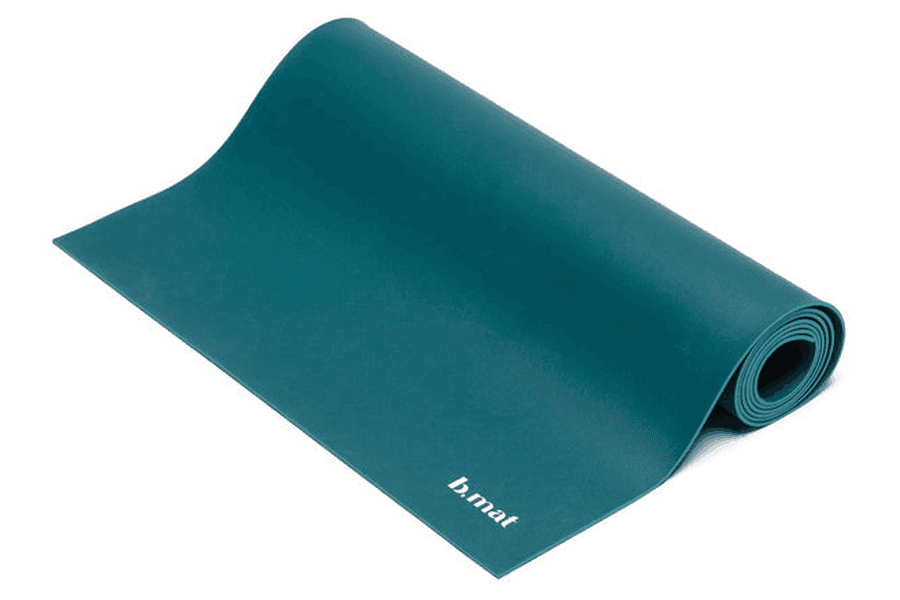
Price
The eKO Lite lists for $22 less.
$96
List price · check price at Amazon
$118
List price · check price at bhalfmoon.com
Thickness
Identical thickness.
4 mm0.16″
4 mm0.2″
Weight
The B Mat Everyday is 0.9 lbs lighter.
5 lbs2.2 kg
4.1 lbs1.86 kg
Size
Same length; the B Mat Everyday is 2″ wider.
Same on both
- 4 mm of rubber, dense rather than plush
- 71 inches long
- Not latex safe
- Strong rubber smell for the first week or two
- No alcohol, vinegar or oils when cleaning
- A longer version exists in each line
Full specs
Dimensions
Materials & build
Buying
Two rubber mats at the same thickness
Both are 4 mm of rubber, both weigh around four to five pounds, and both are priced like a serious mat: $96 for the eKO Lite, $118 for the B Mat Everyday. Twenty two dollars apart is close enough that the specs decide this rather than the budget.
The difference that matters is what the surface does with sweat. The eKO Lite is closed cell, so moisture sits on top and wipes off. The B Mat is tacky rubber that keeps holding whether it is wet or not, which is why it turns up constantly in hot yoga recommendations.
Grip: the B Mat is the specialist here
GearLab reviewed the B Mat Everyday and scored its grip 9 out of 10, calling it one of the grippiest mats it has tested dry or wet with no break-in period needed. Its testers reported traction holding through sprinkles, puddles and waves of sweat, and said a hand resting in a puddle still felt planted. The mat also holds the floor unusually well, so it does not creep when you jump back.
The eKO Lite has not been through that lab, and we are not going to hand it the thicker eKO’s scores. Manduka’s own claim is careful and worth reading literally: textured natural grip that provides reliable traction in dry conditions. In a normal room it grips confidently, and in a heated one moisture sits on the closed surface and it gets slick.
When maximum traction is the wrong thing
The B Mat’s grip is strong enough to be a complaint. GearLab found the rubber held skin firmly enough that sliding a hand or foot between poses felt sticky, and several testers changed their practice to step rather than glide. The review called it a poor match for styles built on quick transitions, and noted the texture is less pleasant against bare skin in floor poses.
The eKO Lite’s texture is more moderate. It holds without catching, which suits a fast vinyasa or anyone who slides a foot forward rather than lifting it. If you have ever found a mat too grabby, that is a real preference and it points at the Manduka.
Footprint and weight
The B Mat is 71″ × 26″. The eKO Lite is 71″ × 24″. Same length, two extra inches of width on the B Mat, and that width is the thing you notice: 24 inches puts your hands close to the edge in a wide down dog.
The B Mat is also the lighter mat at 4.1 pounds against 5, so it wins the carry as well as the footprint. If length is what you need, Manduka answers with the eKO Lite Long at 79″ × 24″ and b, halfmoon with an Everyday Long at 85″ × 26″.
Cushion at 4 mm
Both are thin by modern standards and both are denser than their thickness suggests. GearLab scored the B Mat 8 out of 10 for comfort and support, describing it as looking thin while the dense rubber compresses slightly and rebounds quickly. Its testers liked that spring under elbows and knees enough to recommend it for slower yin work as well as hot classes.
Manduka describes the eKO Lite’s rubber foam the same way, as soft cushioning that gently rebounds with movement. Neither mat is a fix for painful knees. If that is the problem, b, halfmoon sells the same rubber in the 6 mm B Mat Strong, and Manduka’s full eKO is 5 mm.
Durability, stains and coverage
The B Mat’s weakest score is materials at 6 out of 10. GearLab found water stains on the side after its test period and recommends a darker color for that reason, and its market research turned up owner reports of the hand and foot areas peeling with prolonged use, taking the grip with them. The grippy surface also picks up hair, dirt and lint, so it wants a mat bag rather than a car trunk.
The eKO Lite thins gradually instead. There is no coating to lose, and rubber sheds fine dust at the contact points over the years. Coverage favors the B Mat: b, halfmoon warranties it for one year and it carries an OEKO-TEX Standard 100 certification, while Manduka offers nothing beyond 30 day returns on the eKO line. Manduka’s lifetime guarantee is for its PVC mats, not this one.
Cleaning and smell
Both are simple to clean and both hate the same things. A dry wipe and then a damp cloth handles either mat; use heavily diluted mild detergent when it needs more, rinse, and dry flat out of direct sunlight. Alcohol, vinegar, oils and abrasive sponges break down rubber surfaces on both.
Both smell strongly of rubber out of the packaging, which GearLab listed among the B Mat’s downsides and which is normal for natural rubber. Unroll whichever one you buy in a ventilated room and give it a week or two. One tip from b, halfmoon worth repeating: roll the B Mat with the logo side facing out to keep the grip surface from being compressed inward.
Materials and latex
Neither is safe with a latex allergy. The eKO Lite is natural rubber made in Taiwan with over 30 percent recycled content. The B Mat is rubber made in Spain, mostly natural with some synthetic content, and carries the OEKO-TEX certification that the Manduka does not.
Both are credible eco choices next to a PVC mat, and both are harder to dispose of thoughtfully than the marketing suggests. If certifications matter to you as documentation rather than as vibe, the B Mat is the one with paperwork.
Price and where to buy
The eKO Lite lists at $96 and sells on Amazon as well as manduka.com, where colorways drift and frequently sit under list. The B Mat Everyday is $118 direct from us.bhalfmoon.com and rarely discounts; it is not sold on Amazon, so listings there are resold stock with no coverage.
In practice the eKO Lite is often the cheaper mat by more than the twenty two dollar list gap, and the B Mat is the one you pay full price for. Set against that, the B Mat gives you two more inches of width, a pound less to carry, and a written warranty.
Bottom line
Get the B Mat Everyday if you sweat. It is the grippier mat by a wide margin, wider, lighter, warrantied and certified, and it is the one independent testers reach for in a hot room. Accept that it stains, collects lint, and can feel too sticky in a fast flow.
Get the eKO Lite if you practice in a normal room, want a more forgiving texture under a sliding hand, and would rather buy on sale than at list. If sweat is really the problem you are solving, our GRP Adapt 2.0 vs B Mat Everyday comparison covers the two mats built specifically for it.
B Mat Everyday 4mm
List price $118
Frequently Asked Questions
- Which one grips better?
- The B Mat, by a wide margin. GearLab scored its grip 9 out of 10, called it one of the grippiest mats it has tested dry or wet, and found it needed no break-in period, with traction holding even when a hand sat in a puddle of sweat. The eKO Lite has not been through the same lab, and Manduka's own claim is scoped carefully to reliable traction in dry conditions, which matches what owners report.
- Can a mat be too grippy?
- The B Mat is the usual example. GearLab's testers found the rubber held skin firmly enough that sliding a hand or foot between poses felt sticky, and several of them changed their practice to step rather than glide. The review called it a poor match for styles built on quick transitions, and noted the texture is less pleasant against bare skin in floor poses. The eKO Lite's texture is more moderate.
- Is 4 mm enough cushion?
- For most practices, yes, and both feel denser than the number suggests. GearLab scored the B Mat 8 out of 10 for comfort and support, describing dense rubber that compresses slightly and rebounds quickly, enough spring that its testers liked it for slower yin work too. Manduka describes the eKO Lite's rubber foam the same way. If sore knees are the problem, look at the 6 mm B Mat Strong or Manduka's 5 mm eKO instead.
- Which one is covered if something goes wrong?
- The B Mat. b, halfmoon warranties it for one year and it carries an OEKO-TEX Standard 100 certification. Manduka offers no warranty on the eKO line, only 30 day returns, and its lifetime guarantee applies to PVC mats like the PRO rather than to rubber. GearLab scored the B Mat 6 out of 10 on materials after finding water stains and owner reports of the hand and foot areas peeling with heavy use, so coverage is not theoretical.
- Do they stain?
- The B Mat does. GearLab found water marks on the side after its test period and recommends a darker color for that reason, and noted the grippy surface picks up hair, dirt and lint aggressively, so it wants a mat bag rather than a car trunk. The eKO Lite's closed-cell surface is more forgiving; nothing soaks in and a damp cloth handles it.
- Where do you buy them?
- The eKO Lite lists at $96 and sells on Amazon as well as manduka.com, where individual colorways drift and frequently sit well under list. The B Mat Everyday is $118 direct from us.bhalfmoon.com and rarely discounts; it is not sold on Amazon, so listings there are resold stock with no coverage attached. In practice the price gap is often wider than the $22 on paper.
Related comparisons
- Yoga Design Lab Combo 3.5mm vs b, halfmoon B Mat Everyday 4mm
- b, halfmoon B Mat Everyday 4mm vs Manduka GRP Adapt Lite 2.1 4mm
- JadeYoga Harmony 68" vs Manduka eKO Lite
- Manduka eKO Lite vs Suga SugaMat
- Manduka PROlite vs b, halfmoon B Mat Everyday 4mm
- Lululemon The Mat 5mm vs b, halfmoon B Mat Everyday 4mm
- Manduka PROlite Long vs b, halfmoon B Mat Everyday 4mm
- Manduka eKO Lite vs Lululemon The Mat 3mm
- b, halfmoon B Mat Everyday 4mm vs Manduka PRO Lite Terra 4.7mm