Manduka eKO vs Gaiam Premium Reversible: Which One Should You Buy?
OutdoorGearLab tested both of these in its 2026 roundup and the gap is wide: 87 of 100 for the eKO, second of nineteen mats, against 54 for the Gaiam, which came fifteenth. That is the honest starting point. The rest is whether the $74 matters to you more than the difference does.
As an Amazon Associate, we earn from qualifying purchases made through links on this page. How this works
The quick answer
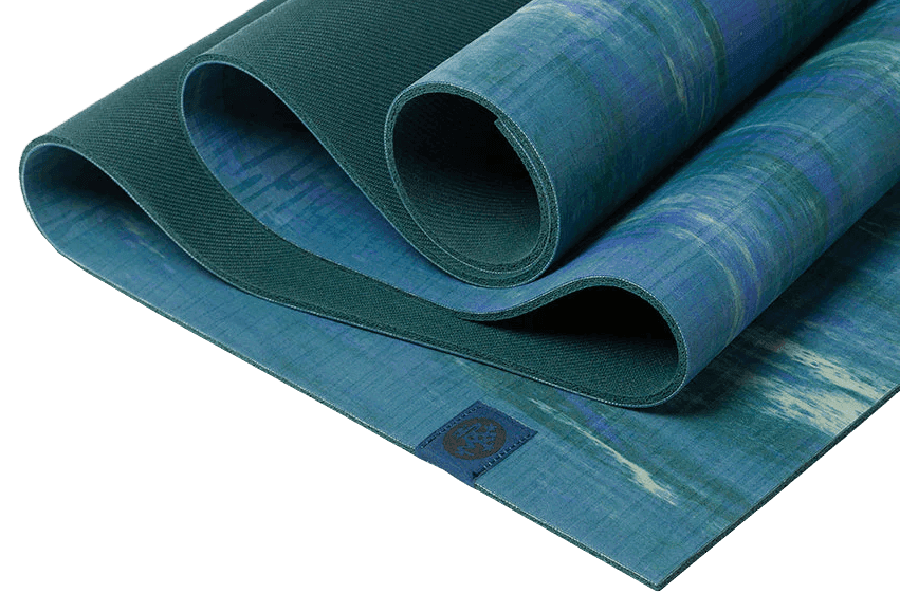
The eKO is 5 mm of dense closed-cell natural rubber, rated 9 of 10 for grip with a perfect 10 dry, and 9 of 10 for comfort. The Gaiam is 6 mm of soft printed PVC foam, rated 4 of 10 for grip and 6 for comfort, with poor cushion first among its listed downsides. It is also four pounds lighter and $74 cheaper.
If you practice more than occasionally, buy the eKO. Buy the Gaiam if the budget is the constraint or the prints are what you want.
Get the Manduka eKO if...
- You want grip that works, at 10 of 10 dry in GearLab's testing
- You practice regularly and need a mat that holds its shape
- You want the bigger surface, 71" × 26" against 68" × 24"
- You'd rather buy natural rubber than PVC foam
Get the Gaiam Premium Reversible if...
- Forty dollars is the budget and it needs to work today
- You want a light mat to carry, at 3.3 pounds against 7
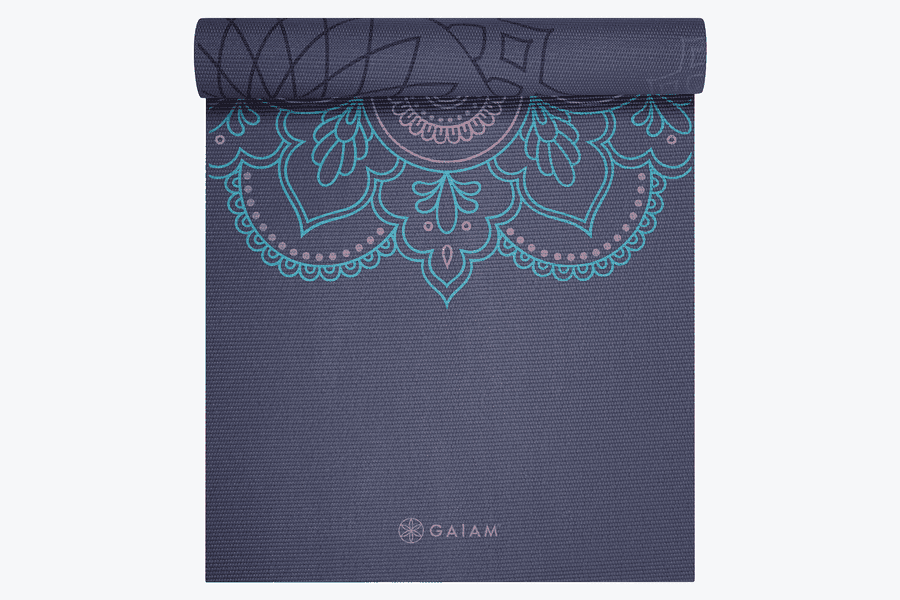
- You want a printed design on both faces
- You need a latex-free mat
Side by side
Price
The Gaiam Reversible lists for about $74 less.
$114
List price · check price at Amazon
$39.98
List price · check price at Amazon
Thickness
The Gaiam Reversible is 20% thicker.
5 mm0.2″
6 mm0.24″
Weight
The Gaiam Reversible is 3.7 lbs lighter.
7 lbs3.2 kg
3.3 lbs1.5 kg
Size
The eKO is 3″ longer; the eKO is 2″ wider.
Same on both
- Both are closed-cell, so sweat stays on the surface
- Both lie flat without curling
- Neither ships with a carry strap
- Neither carries a third-party certification
Full specs
Dimensions
Materials & build
Buying
What $74 buys you in a yoga mat
The Gaiam Premium Reversible is $39.98 for 6 mm of printed PVC foam with a different design on each face. The Manduka eKO is $114 for 5 mm of closed-cell natural rubber.
OutdoorGearLab tested both in its 2026 roundup and the gap is wide: 87 of 100 for the eKO, second of nineteen mats, against 54 for the Gaiam, which came fifteenth. That is the honest starting point, and the rest of this page is about whether the $74 matters to you more than the difference does.
Grip: the biggest gap between them
The eKO scored 9 of 10 for grip, and in GearLab’s separate wet and dry testing it took a perfect 10 dry, a score only the Prana Verde matched, with 7 wet. Their testers noted it grips from the first class with no break-in period.
The Gaiam scored 4 of 10 for grip, 5 dry and 5 wet, and “slippery when wet” is on its list of cons. PVC foam gets its traction from surface texture rather than tack, and once there is moisture on it, that texture stops doing much. If your hands slide forward in down dog on your current mat, the Gaiam will not fix it.
Cushioning: the thicker mat is not the more comfortable one
The Gaiam is a millimeter thicker on paper, and GearLab still scored its comfort 6 of 10 against the eKO’s 9. “Poor cushion” is the first item on the Gaiam’s list of downsides, which sounds strange for a 6 mm mat until you press a hand into it: soft foam compresses out of the way rather than supporting you.
The eKO’s rubber has spring in it. GearLab called it good on hard and soft ground and praised its stable foundation. Density is what separates a comfortable mat from a squishy one, and it is most of what you are paying for here.
Size
The eKO is 71″ × 26″; the Gaiam is 68″ × 24″. Three inches of length and two of width in the eKO’s favor, and 26 inches is the standard studio width, so a wide-legged stance stays on the mat.
Manduka also sells a 79″ eKO Long for $124. Gaiam sells the Reversible in one size only, though it offers around ten printed designs, which is more visual choice than Manduka gives you.
Weight: the Gaiam is much easier to carry
The Gaiam is 3.3 pounds and GearLab weighed theirs at 3.2. That is genuinely convenient for a mat that commutes to a class, and it is the Gaiam’s clearest advantage.
The eKO is 7 pounds, and GearLab listed “heavier” as its first con. Neither comes with a strap. If you walk a mile to a studio, that four pound gap is real.
Durability: where the price gap shows up
Soft PVC foam compresses with use, and the Gaiam shows it: flattened patches where hands and feet land, then a mat that has stopped cushioning. Gaiam does back it with a lifetime guarantee, which is unusual at this price, though a mat that has gone flat is rarely the kind of failure people claim on.
The eKO is dense rubber and lasts years with one condition: natural rubber degrades in sunlight, so it should be stored indoors and out of a hot car. Manduka gives it a 30 day return window and nothing more, since the lifetime guarantee applies to the PRO line rather than everything Manduka sells.
Cleaning, and the ink problem
Both wipe clean, and both are closed-cell so nothing soaks into the mat. GearLab scored the eKO 8 of 10 for care and the Gaiam 7.
One specific warning on the Gaiam: GearLab listed “can stain clothing” among its cons, and printed Gaiam mats have a reputation for transferring ink onto light leggings in the first few weeks. Buffing the surface with a damp cloth before first use helps. The eKO has no equivalent issue.
PVC against natural rubber
The Gaiam is latex-free PVC and Gaiam does not say where it is made. GearLab scored its materials 5 of 10. The latex-free part matters if you have an allergy, and it is the one material argument the Gaiam wins outright.
The eKO is natural tree rubber, non-Amazon harvested, made in Taiwan, and GearLab scored its materials 8 of 10, behind only the Manduka PRO. It is not latex free. Rubber also smells for the first couple of weeks, which foam does not.
Price and where to buy
$114 against $39.98. The Gaiam is on Amazon constantly and discounts often, so check the current Gaiam Premium Reversible price at Amazon before paying list.
Manduka runs colorway sales on the eKO through its own site, so it is worth comparing that against the current Manduka eKO price at Amazon.
Bottom line
Buy the eKO if you practice more than occasionally. Better grip by a wide margin, better cushioning despite being thinner, a bigger surface, and a material that holds its shape for years. Seven pounds and a rubber smell are what it costs you.
Buy the Gaiam Reversible if the budget is the constraint or you want the prints. It is a fine mat for stretching, a slow flow on carpet, or a mat that lives behind a sofa and comes out on Sundays. It is not a hot yoga mat. If you want a cheap Gaiam that cushions better, the plain Premium 6mm against this one is the comparison to read.

Manduka eKO
List price $114
Gaiam Premium Reversible 6mm
List price $39.98
Frequently Asked Questions
- Is the Gaiam Reversible slippery?
- GearLab rated it 4 of 10 for grip and 5 dry, 5 wet in its separate testing, with slippery when wet on its list of cons. Foam gets its traction from surface texture rather than tack, and texture stops doing much once there is moisture on it. If your hands slide forward in down dog on your current mat, this will not fix it.
- The Gaiam is thicker. Why is it less comfortable?
- Because density matters more than depth. GearLab scored the Gaiam 6 of 10 for comfort against the eKO's 9, and poor cushion is the first item on the Gaiam's list of downsides even at 6 mm. Soft foam compresses out of the way instead of supporting you; the eKO's rubber has spring in it, which GearLab called good on hard and soft ground alike.
- Does the Gaiam stain clothing?
- It can. GearLab listed can stain clothing among its cons, and printed Gaiam mats have a reputation for transferring ink onto light leggings in the first few weeks. Buffing the surface with a damp cloth before first use helps. The eKO has no equivalent issue.
- Which lasts longer?
- The eKO, by years. Soft PVC foam compresses with use and shows flattened patches where hands and feet land. Gaiam does back the Reversible with a lifetime guarantee, which is unusual at this price, though a mat that has gone flat is rarely the kind of failure people claim on. The eKO is dense rubber, with the usual condition that natural rubber degrades in sunlight.
- Which is safe for a latex allergy?
- The Gaiam. It is latex-free PVC. The eKO is natural tree rubber, so it is out if you react to latex. That is the one material argument the Gaiam wins outright.
- Does the Manduka eKO smell?
- Yes, for the first couple of weeks, which is normal for a natural rubber mat and something PVC foam does not do. Unrolling it somewhere ventilated for a few days speeds that up considerably. It fades with use and is not a long-term problem.
Related comparisons
- Manduka eKO vs Lululemon The (Big) Mat 5mm
- Lululemon The Mat 5mm vs Manduka eKO
- Gaiam Premium Reversible 6mm vs Gruper TPE 6mm
- JadeYoga Harmony 74" vs Manduka eKO
- Amazon Basics 1/4 Inch Thick TPE vs Gaiam Premium Reversible 6mm
- Gaiam Premium Reversible 6mm vs YogaAccessories Extra Thick Deluxe 1/4"
- Manduka eKO vs Suga SugaMat
- JadeYoga Harmony 68" vs Manduka eKO
- Manduka eKO vs Yoga Design Lab Combo 3.5mm