Manduka eKO vs 42 Birds The Robin: Which One Should You Buy?
The eKO and the Robin are both 5 mm thick, nearly the same size, and only $22 apart. The eKO is natural rubber, tested by GearLab and ranked second of 19. The Robin is cork on foam at under a third of the weight, with no independent test behind it.
As an Amazon Associate, we earn from qualifying purchases made through links on this page. How this works
The quick answer
The eKO is the proven mat. GearLab ranked it second of 19 at 87 out of 100, with a 10 out of 10 for dry grip and a 9 for comfort. It is also heavy, gets more slippery when wet, smells of rubber at first and contains latex. The Robin weighs 1.9 pounds, has no rubber at all, and relies on cork's tendency to grip better when slightly damp, which nobody has tested independently.
If you practice at home in a cool room, buy the eKO. If you carry your mat, sweat through class, or need a latex-free surface, buy the Robin, which also costs $22 less.
Get the eKO if...
- You practice in a cool room and want top-rated dry grip
- You want springy cushioning under your knees and wrists
- The mat mostly stays home, so 7 pounds doesn't matter
- You want a mat with independent test results behind it
Get the Robin if...
- You carry your mat and want it under two pounds
- Your hands get damp and you want cork, which gets tackier with moisture
- You have a latex allergy or dislike the smell of rubber
- You'd rather keep $22 and try it under a 30-day return policy
Side by side
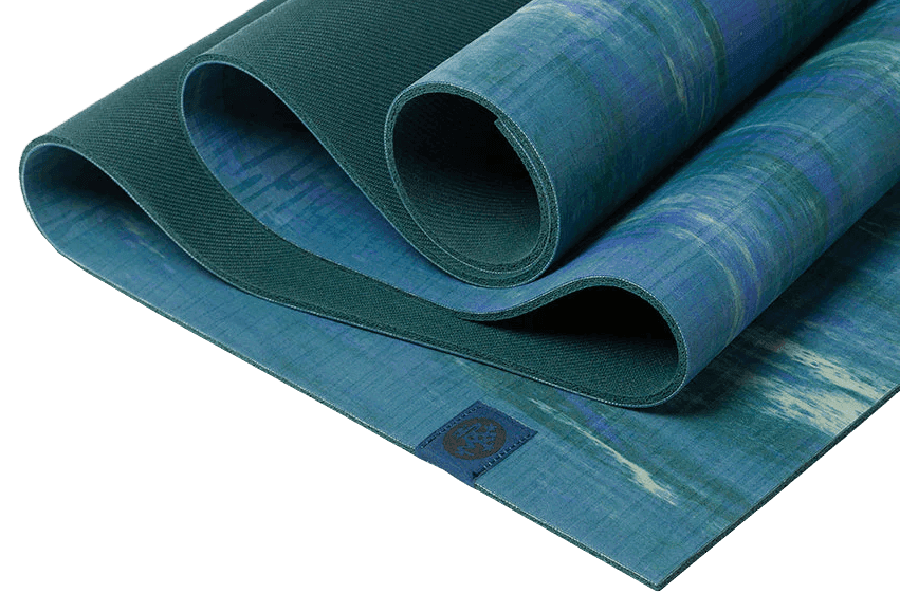
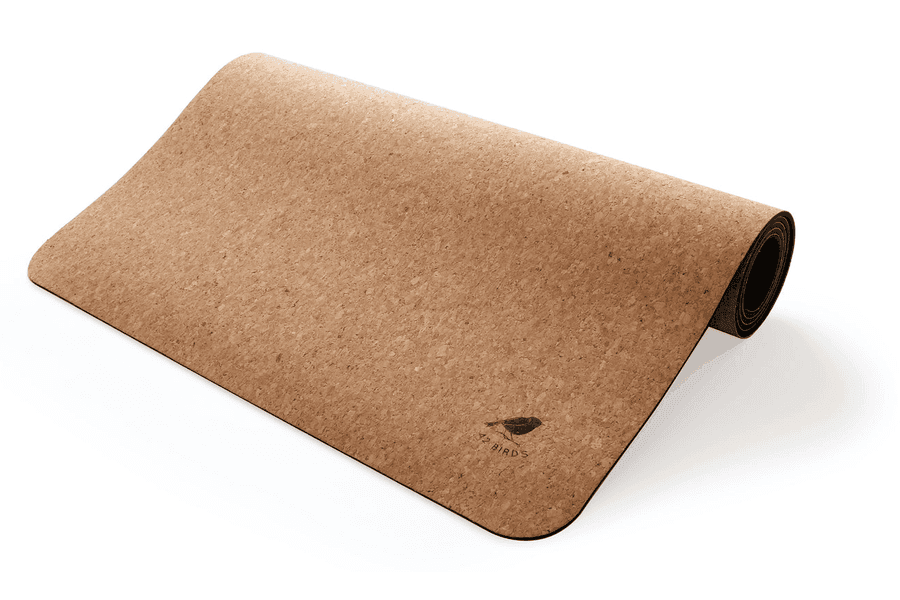
Price
The Robin lists for $22 less.
$114
List price · check price at Amazon
$92
List price · check price at Amazon
Thickness
Identical thickness.
5 mm0.2″
5 mm0.2″
Weight
The Robin is 5.1 lbs lighter.
7 lbs3.2 kg
1.9 lbs0.86 kg
Size
The Robin is 1″ longer; same width.
Same on both
- 5 mm thick
- 26 inches wide
- PVC-free
- No warranty beyond a 30-day return window
Full specs
Dimensions
Materials & build
Buying
A tested rubber mat and an untested cork one
Manduka’s eKO is a solid sheet of natural rubber, 5 mm thick, 71″ × 26″ and 7 pounds, for $114. The Robin from 42 Birds puts cork on a foam base at the same thickness, 72″ × 26″, and weighs 1.9 pounds for $92. With only $22 between them, this comes down to grip conditions, weight, smell and latex.
Of the 19 mats in GearLab’s 2026 roundup, only the Manduka PRO outscored the eKO, which took second at 87 out of 100. The Robin has never been through a test like that, so the eKO’s side of this page rests on measured results and the Robin’s on 42 Birds’ specs, cork’s known behavior, and owner reviews on 42birds.com.
Dry grip: a perfect 10 for the eKO
GearLab gave the eKO a 10 out of 10 for dry grip, a score only one other mat in the test matched, and its testers singled out the striped texture on the surface for unheated classes. It grips from the first day with no break-in.
The number drops once hands get wet. Wet grip came in at 7, and its cons include getting more slippery when wet. The rubber does not soak anything up, so sweat sits on top. That keeps it easy to clean, and it also leaves a sweaty palm resting on a film of water.
Where cork is supposed to pull ahead
Cork is said to work the other way. 42 Birds says the Robin’s surface gains traction with moisture, pitches it for sweaty and hot yoga, and suggests a light mist of water before practice. Several reviewers on its site who take hot classes say it holds better as they sweat.
That is not unanimous, and it is not tested. One owner on the same site says the Robin slipped in hot yoga, and cork does not absorb anything, so once sweat pools you are back to a towel. On what we have, dry hands in a cool room favor the eKO, and damp hands lean toward the cork. For truly hot rooms, read our page on the eKO and GRP Adapt 2.0.
The eKO weighs more than three Robins
Our spec for the eKO is 7 pounds. GearLab weighed its test mat at 6.3 and still listed heavier among the cons. The Robin weighs 1.9 pounds and rolls into a tube about four inches thick, so by either figure the eKO is more than three times as heavy.
That density is part of why GearLab found the eKO stable on both hard floors and carpet. If you want Manduka rubber for travel, the eKO SuperLite is the thin version, and our eKO SuperLite vs Robin page weighs that trade. GearLab found the SuperLite so thin that it works better as a topper than as a mat by itself.
Cushion: springy rubber, firm cork
The eKO’s comfort and support score was 9 out of 10, and GearLab described its rubber as having a resilient spring, a little bouncier than the PRO. Manduka calls it soft cushioning that rebounds with movement.
There is no comfort rating for the Robin to compare. The one cork mat GearLab did test, the Yoloha Unity Pro, came across as extra-firm. Owners on 42birds.com mostly like the Robin’s feel, with one praising the balance of cushion and contact and another finding it a bit thin. If knee comfort ranks high for you, the eKO has the measured edge.
Smell, latex and what each is made of
The eKO holds 4.0 stars from about 700 ratings on Amazon, and a recurring complaint in those reviews is the natural rubber smell out of the box, which fades as the mat airs out.
The Robin has no rubber in it. Reviews on 42birds.com that bring up odor say there isn’t any, and 42 Birds says the base is latex-free. The eKO is natural rubber through and through, so it is a no for anyone with a latex allergy.
Both have a sustainability story. Manduka says the eKO contains over 30% recycled rubber and is made in Taiwan, and GearLab notes the rubber is biodegradable. The Robin’s cork is harvested in Spain and Portugal, and 42 Birds calls its foam base fully recyclable.
Creases, track lines and replacement
GearLab lists creases easily among the eKO’s cons and notes that rubber mats tend to wear grooves along the paths your hands and feet slide. Even so, the practitioners it spoke with got three to six years of hard daily practice from an eKO before retiring it.
The eKO sits outside Manduka’s lifetime guarantee, which is reserved for the PRO and PROlite, so you get 30-day returns. 42 Birds has no warranty either, but its 30-day guarantee covers a mat you have already used. The one long-term Robin report on its site is an owner who went through a first Robin in three years of near-daily hot yoga and bought a second.
Long versions and colorways
Manduka’s longer version, the eKO Long, runs 79″ × 26″ for $124. The Robin’s Extra Long is 85″ × 26″ for $108 and still weighs only 2.5 pounds, so tall practitioners get more length for less from 42 Birds.
Manduka sells the standard eKO in 5 colorways at last count. 42 Birds makes the Robin in one finish, plain cork.
Only $22 apart
List price is $114 for the eKO and $92 for the Robin. You can buy the eKO from Manduka or check its price at Amazon. For the Robin, go to 42birds.com; the Amazon listing under its name describes a narrower, heavier mat than the one 42 Birds sells now.
At this gap, price should not decide it. If you practice dry and mostly at home, the extra $22 gets you the eKO’s tested grip and cushion. If you carry your mat or sweat a lot, the Robin is the better fit and happens to cost less.
Bottom line
Pick the eKO for cool-room practice, dry grip that tied for the top score in GearLab’s test, and springy cushion, as long as the weight does not bother you. It is the better-proven mat of the two. Give it time to air out before you judge the smell.
Pick the Robin if the mat travels, your hands get damp, or latex is a problem. It weighs under two pounds, does not smell like rubber, and can go back after a month of real use if it is wrong for you. For the eKO against a heavier cork mat, see our eKO vs Yoloha Unity Pro comparison.
Manduka eKO
List price $114
Frequently Asked Questions
- Which grips better, the eKO or the Robin?
- It depends on how wet your hands get. GearLab scored the eKO 10 out of 10 for dry grip, tied for the best of the 19 mats it tested, but 7 for wet, and listed more slippery when wet among its cons. 42 Birds says the Robin's cork gains traction with moisture and suggests misting it before practice, but that claim has not been tested independently and cork does not absorb pooled sweat. In a cool room with dry hands the eKO is the safer choice.
- Does the Manduka eKO smell?
- Yes, at first. The eKO has 4.0 stars from about 700 Amazon ratings, and a recurring complaint is the natural rubber smell out of the box, which fades as the mat airs out. The Robin has no rubber in it, and owners on 42birds.com who mention odor say it has none.
- Is the eKO or the Robin better for a latex allergy?
- The Robin. The eKO is made of natural rubber, so it contains latex. The Robin is a cork top on a foam base that 42 Birds says is latex-free, with no rubber anywhere in the mat.
- Which is better for travel?
- The Robin, by a wide margin. It weighs 1.9 pounds and rolls to about four inches across, while the eKO is 7 pounds by our data and 6.3 by GearLab's scale. If you want Manduka's rubber for travel, the eKO SuperLite is the thin version, though GearLab found it so thin that it works better as a topper than as a mat on its own.
- Does the eKO have Manduka's lifetime guarantee?
- No. Manduka's lifetime guarantee covers the PRO and PROlite only, and the eKO gets 30-day returns. 42 Birds has no warranty on the Robin either, but its 30-day happiness guarantee accepts returns even after you have sweated on the mat.
- How long does each mat last?
- Practitioners GearLab spoke with got three to six years of vigorous daily use from an eKO, although it creases easily and rubber mats tend to wear grooves where hands and feet slide. Nobody has published a long-term test of the Robin; the one multi-year report on 42birds.com is an owner who replaced a Robin after three years of hot yoga six days a week.
Related comparisons
- 42 Birds The Robin vs Hugger Mugger Earth Elements 5mm
- Manduka eKO vs Lululemon The (Big) Mat 5mm
- Lululemon The Mat 5mm vs Manduka eKO
- JadeYoga Harmony 74" vs Manduka eKO
- Manduka GRP Adapt 1.0 vs 42 Birds The Robin
- Suga SugaMat vs 42 Birds The Robin
- 42 Birds The Robin vs IUGA Eco Friendly Non Slip PU
- Manduka eKO vs Suga SugaMat
- JadeYoga Harmony 68" vs 42 Birds The Robin