Manduka eKO Lite vs Gaiam Premium: Which One Should You Buy?
The Gaiam Premium 6mm is GearLab's pick for a first yoga mat at $29.98. The Manduka eKO Lite is $96 of natural rubber. The obvious assumption is that the expensive one is better in every direction, and that is not what happens: the eKO Lite is 4 mm against the Gaiam's 6 mm, so this particular upgrade makes your mat thinner and firmer. That is the point, and it is also why some people regret it.
As an Amazon Associate, we earn from qualifying purchases made through links on this page. How this works
The quick answer
The eKO Lite fixes grip and stability. Rubber grabs skin rather than depending on a printed texture, and dense rubber does not give way under a standing foot the way soft foam does. GearLab rated the Gaiam Premium 5 out of 10 for grip overall, 6 dry and 4 wet, listed poor wet grip among its three downsides, and quoted a tester losing confidence in a wide-legged forward fold as moisture built up.
It does not fix knees. GearLab praised the Gaiam's thick padding for kneeling poses and long floor sequences, and 4 mm of firm rubber is less forgiving than 6 mm of soft foam. Work out which problem you actually have before spending $66 more.
Get the Manduka eKO Lite if...
- Your hands slide on your current mat
- Balance poses feel unsteady on soft foam
- You want three more inches of length
- You want a mat that thins slowly rather than flattening
Get the Gaiam Premium if...
- Kneeling is what hurts
- You are new or unsure how much you will practice
- You want the lighter mat and the easier carry
- You need a latex-free mat
Side by side
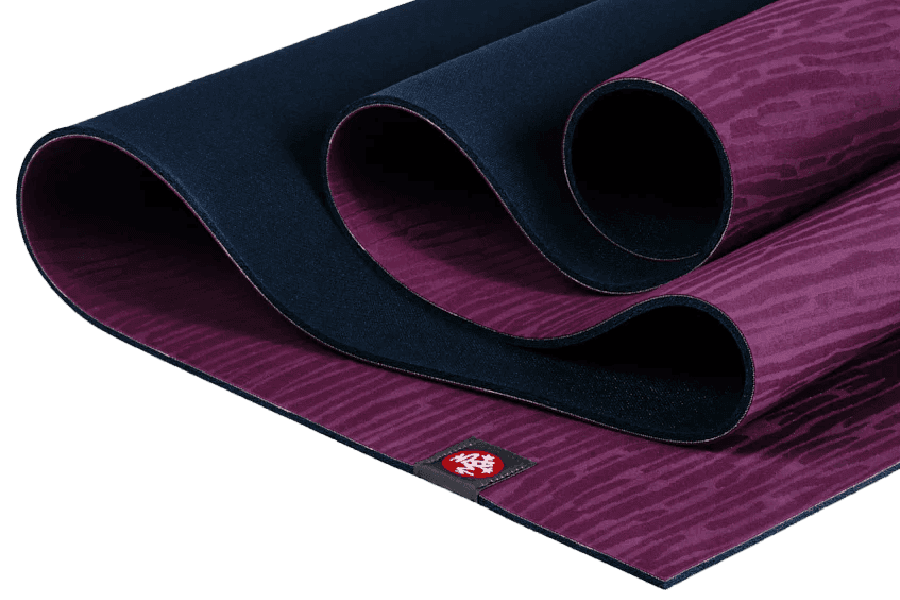
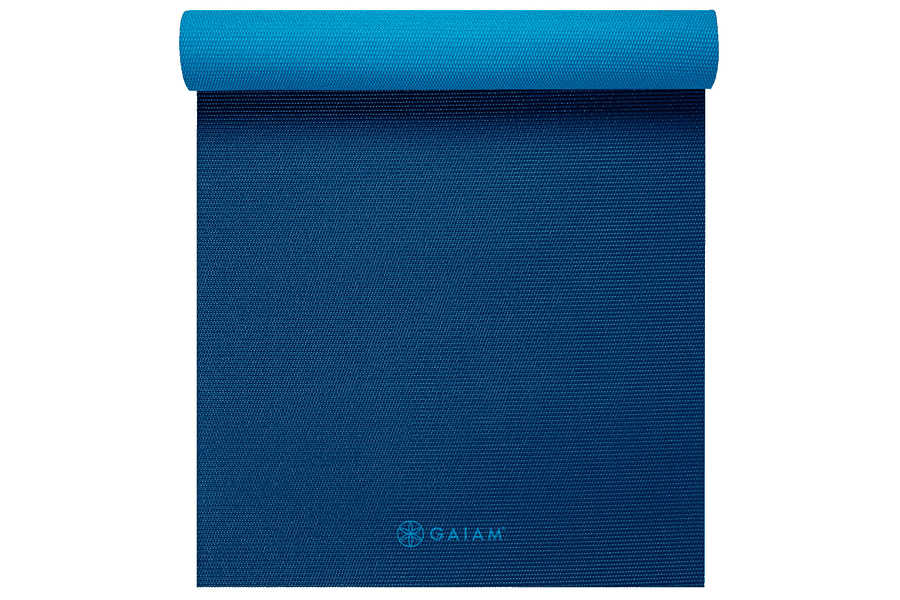
Price
The Gaiam Premium lists for about $66 less.
$96
List price · check price at Amazon
$29.98
List price · check price at Amazon
Thickness
The Gaiam Premium is 50% thicker.
4 mm0.16″
6 mm0.24″
Weight
The Gaiam Premium is 1.7 lbs lighter.
5 lbs2.2 kg
3.3 lbs1.5 kg
Size
The eKO Lite is 3″ longer; same width.
Same on both
- 24 inches wide
- Both smell strongly when first unrolled
- Neither one belongs in direct sunlight
- Neither includes a carry strap
Full specs
Dimensions
Materials & build
Buying
An upgrade that costs you cushion
The Gaiam Premium 6mm is GearLab’s pick for a first yoga mat at $29.98. The Manduka eKO Lite is $96 of natural rubber. The obvious assumption is that the expensive one is better in every direction, and that is not what happens here.
The eKO Lite is 4 mm against the Gaiam’s 6 mm, so this particular upgrade makes your mat thinner and firmer. That is the point, and it is also the reason some people regret it.
Grip: rubber against printed texture
GearLab rated the Gaiam Premium 5 out of 10 for grip overall, 6 dry and 4 wet, and listed poor wet grip among its three named downsides. One tester described the foam surface becoming slippery as moisture built up, enough to lose confidence in a wide-legged forward fold. Dry and gentle, it is fine.
The eKO Lite has not been through that lab and we are not lending it the thicker eKO’s excellent scores. What we can say is that Manduka describes it as textured natural grip with reliable traction in dry conditions, and that rubber grabs skin rather than depending on a printed finish, which is why owners consistently describe it as a step change from a budget mat in a dry room. It is closed cell, so heavy sweat still sits on top and it still wants a towel.
Standing poses are the real gain
Six millimeters of soft PVC gives way unevenly under a loaded foot. GearLab noted that pressing a hand into the Gaiam leaves the print for a moment and that it compresses over time, and scored it 6.5 out of 10 for comfort and support despite being the thicker mat.
The eKO Lite is dense rubber. You feel the floor through it and nothing shifts, which makes balance work noticeably steadier. If tree pose has felt like a wrestling match with your mat, this is the change that fixes it, and no amount of extra foam would have.
For knees, the cheap mat is better
Worth being blunt about, because it is where the upgrade disappoints. Kneeling on 4 mm of firm rubber over a hardwood floor is less comfortable than kneeling on 6 mm of soft foam. GearLab praised the Gaiam’s thick padding for knees and wrists and quoted a tester calling it comfortable for kneeling poses, seated stretches and long floor sequences.
If sore knees are your problem, spending $96 makes it worse. Manduka’s answer within its own range is the 5 mm eKO or folding a blanket under the knee, which is what most teachers would tell you anyway.
Size and weight
The eKO Lite is 71″ × 24″ against the Gaiam’s 68″ × 24″, so three more inches of length at the same width. Both are 24 inches, which is the old standard and feels tight in a wide down dog.
The Gaiam is lighter, 3.3 pounds against 5, and GearLab called it one of the easiest mats to carry in its test. Neither ships with a strap. If you want more length, Manduka sells the eKO Lite Long at 79″ × 24″.
Lifespan and the guarantee that goes the wrong way
Gaiam covers the Premium for life; Manduka gives you 30 days to return the eKO Lite and nothing after. Manduka’s lifetime guarantee covers its PVC mats like the PRO, not the rubber eKO line, which is a deliberate choice because the rubber is biodegradable.
Read past the paperwork, though. GearLab found the Gaiam showing compression, scuffs and wear with regular use and listed shorter lifespan among its downsides, and its lifetime guarantee addresses manufacturing defects rather than foam that has flattened. Rubber wears by thinning at the contact points, and GearLab’s testers spoke to practitioners who got three to six years of vigorous daily use out of the thicker eKO. The unwarrantied mat is the one that lasts.
Materials, latex and smell
The eKO Lite is natural rubber made in Taiwan with over 30 percent recycled content, and it is not safe with a latex allergy. It smells strongly of rubber for the first week or two and it hates direct sun, alcohol, vinegar and oils.
The Gaiam is PVC, latex free, and cleans with any mild product. GearLab scored it 8 out of 10 for care and cleaning, its best category. Gaiam asks you to unroll the mat and air it for two to three days before the first session because PVC comes out of the wrap smelling strong, and publishes a guide on removing the odor. Both mats smell; neither smell lasts.
Price and where to buy
The eKO Lite lists at $96 and is on Amazon and manduka.com, where colorways drift and frequently sit under list. The Gaiam Premium is about $29.98 on Amazon, also drifting by color.
Three Gaiams cost about one eKO Lite. If the Gaiam is doing everything you need, replacing it every couple of years is not a bad plan. The upgrade earns its money when grip or stability is the thing actually limiting your practice.
Bottom line
Buy the eKO Lite if your hands slide or your balance feels unreliable. Rubber solves both, it runs three inches longer, and it wears down slowly instead of flattening. You give up cushion, you take on seventeen more ounces, and you get no warranty.
Buy the Gaiam Premium if you are starting out, if you want padding under your knees, or if you are not yet sure how much you will practice. It is GearLab’s best first mat pick for good reasons. When you outgrow it, our Manduka eKO vs Gaiam Premium comparison covers the thicker, grippier version of this upgrade.
Gaiam Premium 6mm
List price $29.98
Frequently Asked Questions
- Why is the more expensive mat thinner?
- Because thickness and stability pull against each other. The Gaiam's 6 mm of soft PVC foam gives way unevenly under a loaded foot, which GearLab noted by pointing out that pressing a hand into it leaves the print for a moment. The eKO Lite's 4 mm of dense rubber lets you feel the floor and does not shift. Thin and firm is what a mat for standing poses looks like.
- Will the upgrade help my sore knees?
- No, it will make them worse. GearLab praised the Gaiam Premium's thick padding for knees and wrists and quoted a tester calling it comfortable for kneeling poses, seated stretches and long floor sequences. Kneeling on 4 mm of firm rubber over hardwood is less pleasant than 6 mm of soft foam. Manduka's answer within its own range is the 5 mm eKO, or fold a blanket under the knee.
- How much better is the grip?
- Meaningfully better dry, still limited when wet. GearLab scored the Gaiam Premium 6 out of 10 dry and 4 wet. The eKO Lite has not been through the same lab, so we are not lending it the thicker eKO's scores, but Manduka describes it as textured natural grip with reliable traction in dry conditions and rubber grabs skin rather than relying on a printed finish. It is closed cell, so heavy sweat still sits on top and still wants a towel.
- Which one lasts longer?
- The Manduka, despite having no warranty. GearLab found the Gaiam showing compression, scuffs and wear with regular use and listed shorter lifespan among its downsides, and its lifetime guarantee addresses manufacturing defects rather than flattened foam. Rubber wears by thinning at the contact points, and GearLab's testers spoke to practitioners who got three to six years of vigorous daily use out of the thicker eKO.
- Is the Gaiam Premium really a good beginner mat?
- Yes, and GearLab named it its best first yoga mat in the March 2026 update, scoring it 62 out of 100 for eleventh of 19. It combines thick cushioning with a low price and comes in more colors and patterns than anything else in the test. Its limits are grip when you sweat and foam that compresses over time, which are exactly the limits that eventually push people toward rubber.
- Are they safe with a latex allergy?
- Only the Gaiam. It is PVC and latex free. The eKO Lite is natural rubber, so it is out if latex is a medical issue for you, and it carries a rubber smell for the first week or two as a result. Both mats need airing when new; Gaiam asks for two to three days unrolled before the first session and publishes a guide on removing the odor.
Related comparisons
- Gaiam Premium 6mm vs Gruper TPE 6mm
- Amazon Basics 1/4 Inch Thick TPE vs Gaiam Premium 6mm
- Gaiam Premium 6mm vs YogaAccessories Extra Thick Deluxe 1/4"
- JadeYoga Harmony 68" vs Manduka eKO Lite
- Manduka eKO Lite vs Suga SugaMat
- JadeYoga Harmony 74" vs Manduka eKO Lite
- Manduka eKO Lite vs Yoga Design Lab Combo 3.5mm
- Manduka eKO Lite vs b, halfmoon B Mat Everyday 4mm
- Manduka eKO Lite vs Gaiam Performance Dry-Grip Long & Wide